Restaurant · Guide Updated July 2026
5 AI Tools That Can Increase Your Restaurant Profits in 2026
Five categories of AI tools are now accessible and affordable for independent restaurants in 2026: voice AI agents for phones, all-in-one HR platforms, AI-driven menu pricing, predictive inventory management, and automated marketing. Operators who have worked with us have seen meaningful revenue increases after implementing these. Each tool replaces a specific, painful manual process that is costing you time or money right now.
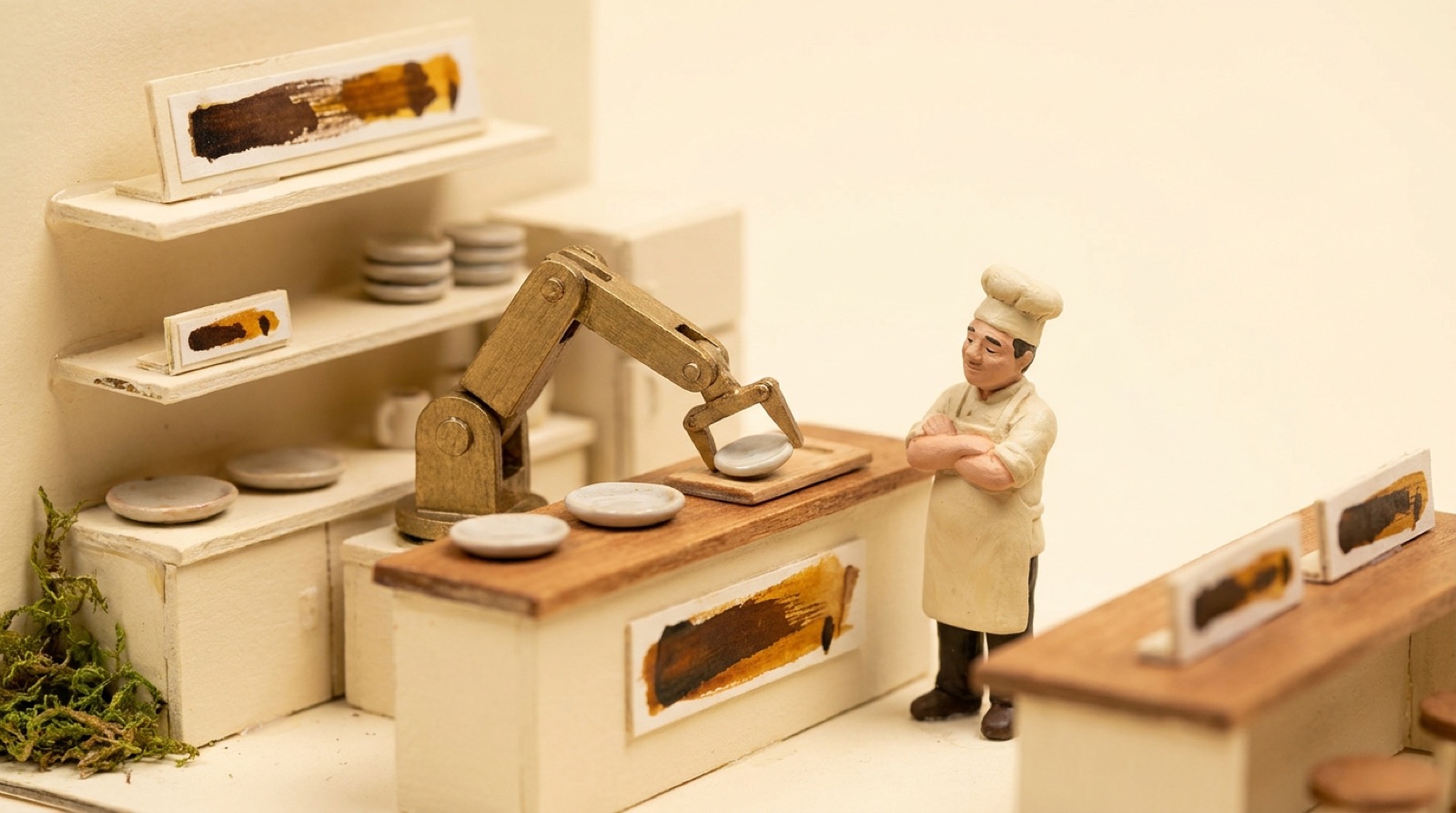
For years, the high-tech tools that make restaurant operations run smoothly were reserved for large chains with large budgets. That has completely changed. In 2026, the same AI systems the big operators use are accessible and affordable for independent restaurants. Here are the five areas where you should be using them, and why each one matters to your bottom line.
Why Is the Phone Still Costing You Money?
The phone is the most painful, most overlooked problem in restaurant operations. It rings in the middle of a rush, nobody picks it up, and a booking disappears.
I was talking to a restaurant owner last week who told me that missing calls was literally costing her tens of thousands of dollars a year. Her restaurant has hundreds of seats and takes on multiple events every month, from weddings to corporate dinners. One missed call can mean a lost party of fifty.
Voice AI agents fix this. Think of them as a perfect employee who picks up every call, 24 hours a day, seven days a week, and never calls in sick. These systems are built specifically for restaurants. They plug directly into your POS, including systems like Toast, and they can take orders, handle modifications, relay daily specials, and even process payments over the phone. They also upsell on every single call, whether that means suggesting the famous scarlet fries with a burger or prompting the customer to add something extra.
Tools like Lumen and Checkmate are designed for small independent restaurants. They are relatively easy to set up and genuinely affordable. Do not treat this as a cost. Treat it as an investment in revenue you are currently leaving on the table.
How Do You Stop HR Compliance from Becoming a Financial Emergency?
Hiring, payroll, and compliance are the hardest parts of running a restaurant. Not the food. The people.
A friend of mine shared an operational nightmare with me recently. He was hit with a $75,000 compliance penalty because his team failed to properly log dinner breaks for staff. That is a massive number for something that sounds administrative. The traditional approach, having your GM call every applicant individually, tracking hours in Excel or handwritten time sheets, and patching together five different software subscriptions, creates constant opportunities for expensive mistakes.
A platform like Workstream puts everything under one roof: hiring, onboarding, timekeeping, payroll, and state-specific compliance. Your GM stops bouncing between apps. Errors go down. Your exposure to the kind of penalty that wiped out $75,000 in profit goes down with it.
Investing in your people and the systems that support them is one of the core ingredients of a successful restaurant. Do not skip this one.
Are You Pricing Your Menu on Gut Feel?
A lot of operators price by doubling ingredient cost, or by undercutting whatever the competitor down the street is charging. In 2026, pricing your menu on gut feel is a recipe for disaster.
AI-driven menu and price optimization uses your actual data to maximize profit. It connects to your POS to see what you are charging, pulls in your inventory costs, and tells you what you should be charging. It can also benchmark your prices against competitors running similar items. This is called menu engineering, and it goes far beyond setting prices.
Here is a practical example. Your inventory system flags a case of avocados about to expire. The AI recommends running a special to move them before they go bad, turning potential waste into real revenue. On the flip side, it stops you from underpricing your highest-margin winners and overpricing the items that are already slowing down.
This is not a luxury feature. It is the difference between leaving money on the table and actually taking it home.
What Is Really Taking 2 to 3 Percent Off Your Bottom Line?
Food waste is the silent thief. Gallons of milk that expire, produce that goes bad in the walk-in, ingredients that get over-ordered and never used. You are literally throwing cash into the bin, and it quietly strips two to three percent from your bottom line every single month.
The old way is a manager with a clipboard doing manual counts, full of errors and guesswork. AI-driven inventory management replaces that with predictive analysis. The software connects to your sales data and figures out what you actually need. It knows you sell more fish on Fridays. It knows patio orders pick up when the weather turns warm. It knows that a big game means you need more fries. Based on all of that, it can automate your ordering so you never over-stock or run out of a bestseller.
Some of these platforms also include computer vision. You bring a camera into your walk-in, take a photo, and the system automatically categorizes everything it sees. No clipboard, no manual entry.
Platforms like MarketMan, Whisk, Crunchtime, and even Square offer these solutions for independent restaurants, not just chains. Reducing food waste is one of the most direct ways to increase the money you actually take home.
How Do You Stay in Front of Customers Without Hiring a Marketing Agency?
Most great restaurant operators are not marketing experts. They are food experts, hospitality experts, operators. Who has time to post on Instagram every day while running a kitchen?
The problem is that if you are not staying top of mind, you are not building retention or loyalty. Customers forget about you, not because they stopped liking your food, but because something else showed up in their feed first.
AI marketing platforms like Bloom and PopMenu put your marketing on autopilot while keeping a personal touch. They connect to your ordering and reservation systems and learn how your customers behave. Here is what that looks like in practice. A customer, call her Sarah, orders vegan curry from you every couple of weeks. She goes quiet for a few months. An AI-powered CRM automatically sends her a personalized message with a 15% discount to bring her back. That is the kind of treatment that turns a one-time visitor into a regular. Research shows that more than a third of customers are excited to return to a restaurant specifically because of loyalty programs like this.
AI also handles your online presence. A chatbot on your website or Google Business Profile can answer common questions, whether you are open on holidays, whether you have gluten-free options, without any staff involvement.
For content creation, tools like Predis and Content Studio generate post ideas and full content calendars based on what is actually trending. The AI features built into Canva let you design professional-looking posts and updated menus in minutes. This is not about producing generic, robotic content. It is about using AI to handle 80% of the repetitive work so you can add the human touch that makes it feel like you. You stay top of mind. You build loyalty. And you do not need to spend tens of thousands of dollars on a marketing agency to make it happen.
The Bottom Line
These five tools, voice AI, all-in-one HR, menu pricing, inventory management, and automated marketing, each target a specific, measurable pain point in your operation. None of them require a chain-sized budget. All of them are available to independent restaurants right now. Taking the first step with new technology feels daunting when you are already juggling everything, but the operators who fall behind are the ones who wait. Start with the biggest pain point in your business, implement one tool well, and build from there. The best investment you can make in your restaurant is removing the friction that is quietly draining your profits every single day.
Watch the full video
Source — YouTube · the full breakdown, free
Tool — free · not sponsored, I built it
Want your exact numbers for a restaurant? The free calculator runs your cost to open, the ×1.4 cash reserve, and your break-even in about 30 seconds. Prefer paper? The One-Page Fundable Business Plan is the printable version.
Run your numbers →Questions owners actually ask
Which of the five AI tools should a restaurant owner implement first?
Start with the biggest pain point in your specific operation. If you are missing phone calls and losing bookings, voice AI is the first move. If payroll and compliance are keeping you up at night, an all-in-one HR platform like Workstream deserves your immediate attention. Pick the tool that solves the problem that is costing you the most right now, get it running well, then layer in the next one.
What AI tools are recommended for restaurant phone and reservation management?
Lumen and Checkmate are both built specifically for small independent restaurants. They plug into POS systems like Toast, handle inbound calls around the clock, take orders, manage modifications, and can upsell on every call. Wilson recommends trying both since performance can vary by restaurant type and call volume.
How much can food waste really affect a restaurant's profitability?
Food waste quietly takes two to three percent off your bottom line every month. That is money leaving through expired produce, over-ordered ingredients, and spoiled dairy. AI-driven inventory platforms like MarketMan, Whisk, Crunchtime, and Square use predictive analysis and sales data to reduce over-ordering and flag items before they go bad, turning a hidden drain into a recoverable cost.
What AI tools help with restaurant marketing without hiring an agency?
Platforms like Bloom and PopMenu connect to your ordering and reservation systems to automate personalized outreach, including re-engagement offers for customers who have gone quiet. For content creation, tools like Predis, Content Studio, and the AI features in Canva can generate post ideas, full content calendars, and designed graphics in minutes. Research shows more than a third of customers return to a restaurant specifically because of loyalty programs.
Can AI really handle restaurant HR and compliance?
Yes. A platform like Workstream consolidates hiring, onboarding, timekeeping, payroll, and state-specific compliance into one system. The risk of skipping proper HR systems is real: one operator Wilson spoke with paid a $75,000 compliance penalty simply because dinner breaks were not logged correctly. One platform replacing five separate tools also reduces your subscription costs.
How does AI menu pricing actually work for a small restaurant?
AI-driven menu pricing connects to your POS and inventory data to calculate true costs and suggest optimal prices. It can also benchmark your prices against competitors running similar items. Beyond pricing, it functions as menu engineering, identifying your high-margin winners so you stop underpricing them, and flagging slow items that may be priced too high. It can even recommend running a special when inventory is about to expire, turning potential waste into revenue.
The Weekly Receipt
One brand story, one number, one answered question. 2 minutes, Tuesdays.
Free. Unsubscribe anytime, one click, no games.
You're in, friend. See you Tuesday.
Keep going: restaurant guides
How Much Does It Cost to Open a Restaurant? (2026 Complete Breakdown)
The real, itemized cost to open a full-service restaurant in 2026, including Wilson's x1.4 cash rule, break-ev
12 Restaurant Assets Every Owner Needs to Build
The 12 restaurant assets that build your brand, from logo to uniforms, ranked by priority before you open in 2
3 Tactics to Position Your Restaurant Brand for Growth
Awards, media features, and strategic associations are the three free tactics that build customer trust and po
3 Things to Know Before Opening a Restaurant (And What Happens If You Skip Them)
Wilson K Lee breaks down the three foundational principles every restaurant owner must master: know your numbe
360 Ads for Restaurants: How to Build Customer Touchpoints Across Every Channel
Learn how 360-degree advertising builds the 20 touchpoints your restaurant needs to turn strangers into custom
Low Labor Restaurant Concepts: Fast vs QSR Compared
Fast concept and QSR are the lowest labor restaurant concepts. See real costs, staffing needs, and revenue to
4 Actionable Steps to Prevent Your Restaurant from Going Bankrupt During a Crisis
Four concrete steps every restaurant owner needs to assess financial health, cut inefficiencies, secure fundin
5 Deadly Mistakes Every New Food Business Owner Makes
60% of restaurants fail in year one. Wilson K Lee breaks down the 5 deadly mistakes killing food businesses in