Restaurant · Guide Updated July 2026
How a Bar Owner Added $49K in Revenue by Turning His Skills Into a Digital Product
Kyle, co-owner of Nimble Bar Company in Victoria, generated at least $49,000 in additional revenue by building a bartending school on top of his existing bar business. He validated the idea with a simple sales page before building the product, filled his first class of 11 students at $1,300 each through word-of-mouth, and has since expanded into digital programs. Any F&B operator with deep craft knowledge can replicate this model.
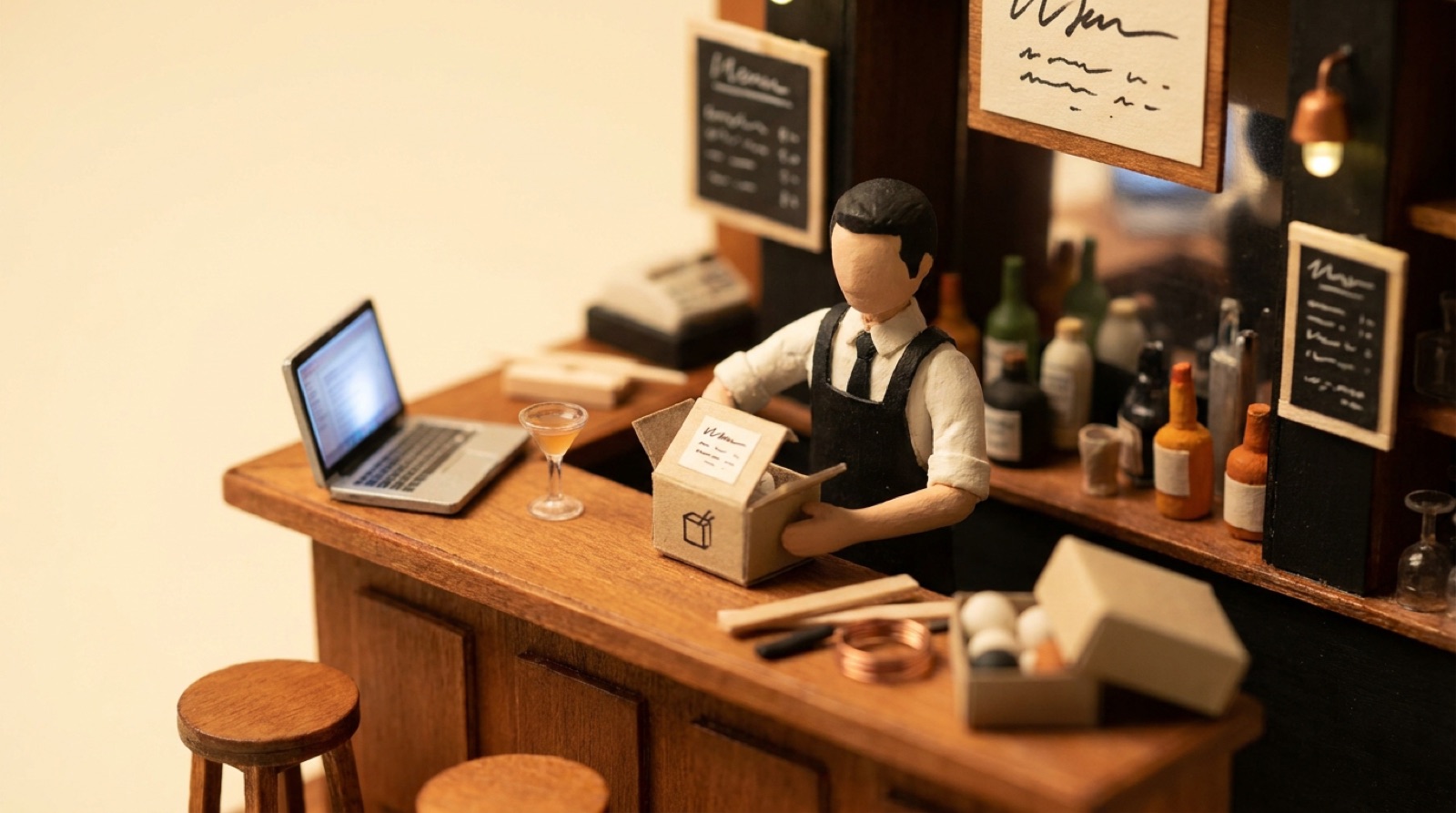
Kyle, co-owner of Nimble Bar Company in Victoria, added at least $49,000 in revenue to his bar business without opening a second location, without raising prices, and without running a single paid ad at first. He built a bartending school on top of what he already had. The playbook is simple enough that you can copy it inside your own F&B business, whatever your concept is.
What Was the Real Opportunity Kyle Was Sitting On?
Kyle and his partner started Nimble Bar Company in 2017 as a pair of bar tutors. They tried building an event company first, galivanting across Canada making drinks in national parks. That burned time and money. When they came back and regrouped, they finally listened to the question people had been asking them all along: where did you learn to bartend that well?
That question was the product. Kyle just had not heard it that way yet.
Their bar was open from 5 p.m. onwards. During the day it sat largely dormant. That dead daytime inventory, the space, the team’s expertise, the brand, was an asset they were not putting to work. Once they reframed the question as “what does our customer already want from us that we are not selling yet,” the answer was obvious: teach people to bartend at a level most schools never reach.
This applies directly to your shop. If you run a barbecue joint, people want to know how you make that sauce. If you run a ramen shop, someone in your city will pay to learn your broth technique. The talent inside a bar or restaurant is extraordinary. Your team can talk for hours about what they do. That passion is a curriculum waiting to be structured.
How Do You Validate the Idea Before Building Anything?
Kyle’s smartest move was refusing to build the course before proving someone would buy it. He built a sales page first.
A sales page is a single webpage that answers the basic buying questions: who is this for, what is it, how long does it take, and how much does it cost. That is the whole thing. Kyle used a template, not a custom build. Tools like Leadpages and Clickfunnels have built-in templates you can fill with your own words and launch in a day.
He built the page, showed it to his partner (who was skeptical), and then started sending every person who asked “where did you learn to bartend?” directly to that URL. He talked about it like it was already a going concern. Two months later, someone paid.
He had not built the course yet. That first payment was validation. He told his partner someone had bought a bartending school they did not have yet. She was not thrilled. But they had thrown their hat over the fence, so they had to build it. It worked out.
The lesson: a sales page costs you almost nothing. If you send four or five people to it and nobody raises their hand with money, you tweak the message or the offer. If someone pays before you have even built the thing, you have your answer.
How Did Kyle Fill His First Class?
He did not run ads. He worked his network.
Kyle went to people who came into the bar, people he knew through an entrepreneur network, and anyone who had already asked him about bartending. He sent them to the page. He followed up in person. He gave discounts, which he called bursaries, to people at the bar who could not afford the full price, including a dishwasher he believed in. That dishwasher eventually became their bar manager.
It took about two months to fill a class of 11 students at $1,300 each. That is roughly $14,300 from a single cohort, four months after the sales page went live.
Kyle’s advice for the smarter version of himself: before you spend anything on ads, email everyone you know. Tell them what you are building. Ask if they know anyone who might be interested. Cold traffic is a hard way to sell a $600 to $1,300 product to someone who has never heard of you. Warm relationships close at a much higher rate.
What Did the First Class Actually Look Like?
It was messier than it looked from the outside.
Kyle had outlined three-hour classes and felt responsible for filling every minute with content. Thirty minutes into the first session, he had already covered everything he had planned. In his head, it was a disaster.
It was not. As soon as he shifted from lecturing to drilling, the class opened up. Students practiced shaking, pouring, flipping tins. They asked what they personally wanted to get out of the program. The instruction became student-led rather than instructor-led, and the completion rates proved that approach worked.
One specific regret: they did not have a videographer document the first cohort. If you record your first run-through, you can turn the knowledge-heavy portions into pre-recorded digital modules students watch before class. That frees up in-person time for skills practice, which is where the real learning happens. Kyle and his team eventually made that shift. Their first class did not have that advantage.
When you run your first version of something like this, take notes on everything. What flowed, what stalled, what questions came up repeatedly. You do not need perfect documentation. You need enough to make the second run better than the first.
How Do You Price It and What Tiers Make Sense?
Kyle launched at $1,300 per student, which was more than twice the price of most bartending schools at the time. The premium was justified because the curriculum was modern, the instruction drew on multiple experts including a sommelier and a beer specialist, and students received custom box kits with bar tools.
Having a higher price point gave Kyle flexibility. He could offer bursaries to people who deserved a shot but could not pay full price. He could discount for his own staff. That flexibility disappears when you price low from the start.
Since launch, they have brought the price down and introduced multiple tiers and packages to reach a wider audience. The structure now includes different entry points, not just one price. That is the natural evolution once you know who your buyers are.
How Does an In-Person Program Become a Digital Product?
This is the leverage point most operators miss. Kyle’s in-person program generated the proof of concept, the testimonials, the curriculum, and the student evangelists. Those evangelists became word-of-mouth for the next cohort.
Once you have run the live version two or three times and you know what works, you record the knowledge components. For bartending, Kyle notes that roughly 20 percent of the skill is knowledge and 80 percent is physical practice and personality. The knowledge modules, cocktail history, ingredient information, spirit categories, are ideal for pre-recorded digital delivery. That content can become an ebook, an online course, or a hybrid program that students complete partly on their own time.
The result is a product that generates revenue whether or not you are physically present, and one that continues earning even after COVID-era restrictions have lifted. That was Kyle’s explicit goal: build something that keeps producing after the immediate crisis is over.
What Makes Students Actually Complete and Get Results?
Kyle and his team ask every student to state their desired outcome when they enter the program. At the end, there is a certification process. That certification is not a credential for job applications. It is an insurance policy on the outcome the student set for themselves.
When someone tells you what they want and you build the program around making sure they get it, completion rates go up. Students who complete the program become evangelists. Evangelists fill the next class without you spending on ads.
This is a better student acquisition flywheel than any paid channel at the early stage.
The Bottom Line
Your bar, your kitchen, your shop is full of expertise people in your city would pay to learn. The bar is open at night. The kitchen is quiet in the morning. That dormant time is a product waiting to be built. Start with a sales page, send warm leads to it, and do not build anything until someone pays. Kyle did not make $49,000 by accident. He did it by finally listening to the question customers had been asking him for years.
The maxim: your most valuable product is probably already in your building. You just have not packaged it yet.
Watch the full video
Source — YouTube · the full breakdown, free
Tool — free · not sponsored, I built it
Want your exact numbers for a restaurant? The free calculator runs your cost to open, the ×1.4 cash reserve, and your break-even in about 30 seconds. Prefer paper? The One-Page Fundable Business Plan is the printable version.
Run your numbers →Questions owners actually ask
How much did Kyle charge for his bartending school and was it worth the price?
Kyle launched at $1,300 per student, which was more than twice the price of most bartending schools. The premium was supported by a modern curriculum, multiple expert instructors including a sommelier and a beer specialist, and custom bar tool kits. He has since introduced lower-priced tiers and packages to reach a broader audience, but starting at a higher price gave him room to offer bursaries and discounts to students who deserved a shot but could not pay in full.
How long did it take Kyle to make his first sale and how did he get students without running ads?
It took two months from building the sales page to getting the first paying student. Kyle drove traffic entirely through warm outreach: sending people who asked about his bartending skills directly to the page, emailing his network, and talking to people who came into the bar. He sent the page to roughly four or five people before anyone paid. He did not run paid ads during this initial phase.
Do you need to have everything built before you start selling a course or program?
No. Kyle sold his first spot before the course existed. He built a sales page that answered the basic buying questions, who it is for, what it is, how long it takes, and how much it costs, and accepted payment before finishing the curriculum. That first sale forced him and his partner to build the product. Validating before building saves you from investing months of work into something nobody wants.
What tools did Kyle use to build his sales page?
Kyle used Leadpages for his first sales page. He also mentions Clickfunnels and the Elementor plugin for WordPress as tools that work well for this. All three offer built-in templates you can fill with your own copy, which means you do not need a web developer to get started. Many of these platforms offer free trials.
Can this model work for restaurants that are not bars?
Yes. Kyle explicitly applies the same thinking to other concepts. A barbecue restaurant with a famous sauce, a ramen shop with a signature broth, a bakery with a distinctive technique, all of these have expertise customers would pay to learn. The key question is the same: what do your customers already ask you about that you are not selling yet? The answer to that question is usually the product.
What was the biggest mistake Kyle made when running his first class?
Not documenting it on video. Kyle says that if they had brought in a videographer for the first cohort, they could have turned the knowledge-heavy portions of the curriculum into pre-recorded digital modules. That would have improved the in-person learning experience and created assets for future digital products. His advice: document everything from day one, even if it is just written notes, so you can systematize the program and eventually scale it digitally.
The Weekly Receipt
One brand story, one number, one answered question. 2 minutes, Tuesdays.
Free. Unsubscribe anytime, one click, no games.
You're in, friend. See you Tuesday.
Keep going: restaurant guides
How Much Does It Cost to Open a Restaurant? (2026 Complete Breakdown)
The real, itemized cost to open a full-service restaurant in 2026, including Wilson's x1.4 cash rule, break-ev
12 Restaurant Assets Every Owner Needs to Build
The 12 restaurant assets that build your brand, from logo to uniforms, ranked by priority before you open in 2
3 Tactics to Position Your Restaurant Brand for Growth
Awards, media features, and strategic associations are the three free tactics that build customer trust and po
360 Ads for Restaurants: How to Build Customer Touchpoints Across Every Channel
Learn how 360-degree advertising builds the 20 touchpoints your restaurant needs to turn strangers into custom
Low Labor Restaurant Concepts: Fast vs QSR Compared
Fast concept and QSR are the lowest labor restaurant concepts. See real costs, staffing needs, and revenue to
4 Actionable Steps to Prevent Your Restaurant from Going Bankrupt During a Crisis
Four concrete steps every restaurant owner needs to assess financial health, cut inefficiencies, secure fundin
3 Things to Know Before Opening a Restaurant (And What Happens If You Skip Them)
Wilson K Lee breaks down the three foundational principles every restaurant owner must master: know your numbe
5 Deadly Mistakes Every New Food Business Owner Makes
60% of restaurants fail in year one. Wilson K Lee breaks down the 5 deadly mistakes killing food businesses in