Boba / bubble tea · Guide Updated August 2026
Boba Shop vs Coffee Shop: Which Should You Open in 2026?
Open a boba shop if you can lock down a high-foot-traffic spot near a young crowd and you are ready to engineer a fast line, because the whole business is throughput on a $7 ticket. Open a coffee shop if you want the bigger morning habit market and can live with 6am starts, because it costs more ($457,000 vs $374,000) and needs 84 customers a day to break even against boba's 87.
I built a bubble tea brand from one shop to seven locations and sold it, and I have walked hundreds of operators through the coffee version of the same dream. So this comparison is personal. Here are the two concepts side by side, standard build, mid-size US market, 2026:
| The numbers | Boba shop (~1,000 sq ft) | Coffee shop (~1,200 sq ft) |
|---|---|---|
| Total cost to open | $374,000 | $457,000 |
| Planning band | $280,500 to $467,500 | $343,000 to $571,500 |
| Cash before the lease (x1.4 rule) | $523,500 | $640,000 |
| Average ticket | $7 | $8 |
| Monthly burn at zero sales | $10,500 | $12,000 |
| Break-even |
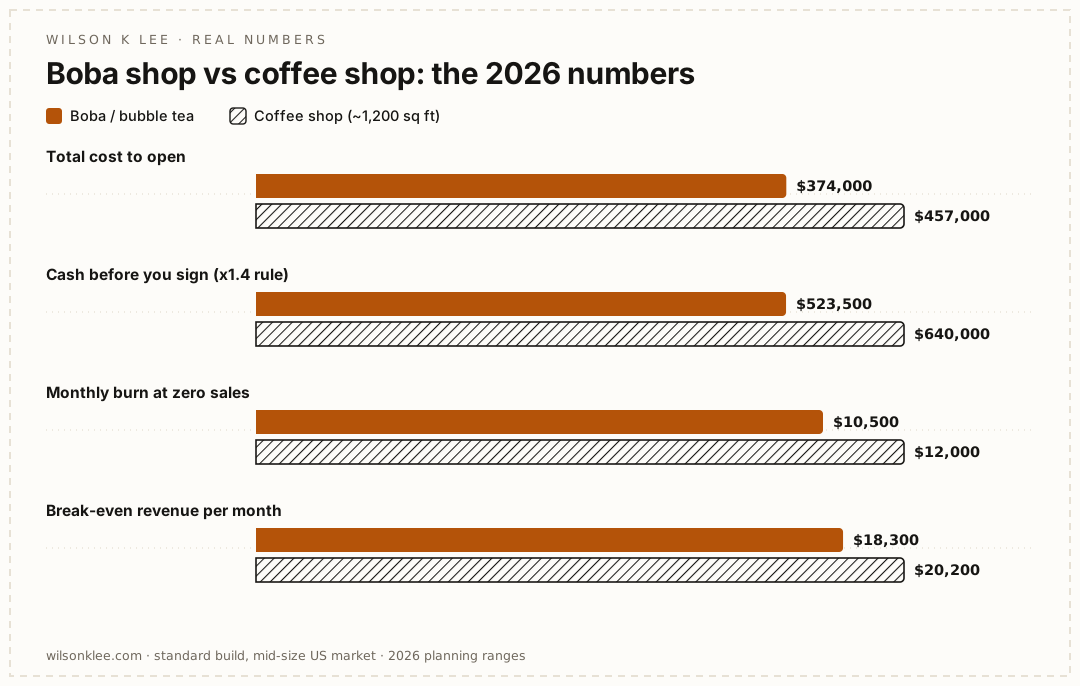
Want this chart for your own article or deck? Take it, just credit wilsonklee.com.
On paper they look like cousins. A drink in a cup, a small ticket, a counter and a line. The numbers are close too. But they are different businesses run on different clocks, and the winner for you comes down to your location options and the daypart you want to own.
Which is cheaper to open?
The boba shop, by $83,000. Most of that gap is equipment and size. Espresso is where coffee budgets blow up: a 2-group machine, grinders, and water treatment run more than most first-timers plan for, before you pour your first latte. The standard coffee build is also a little bigger, 1,200 square feet against 1,000.
Do not read “cheaper” as “cheap.” With the x1.4 rule, boba still needs $523,500 in accessible cash before you sign, and coffee needs $640,000. The rule exists because build-outs run over and openings start slow, for everyone.
Which breaks even faster?
Call it a tie, and that is the honest answer. Boba needs about 87 customers a day at $7, coffee about 84 at $8. Both concepts live or die on covers per hour, not on price. You cannot raise a $7 ticket your way out of a slow line.
The difference is where those covers come from. Coffee gets its number from a habit: the same commuters, every morning, at speed. Your morning rush is 80 percent of your day, and if throughput chokes at 8am, you lose the whole day’s money. Boba gets its number from social traffic: afternoon to late, a younger crowd, waves that follow school schedules and weekends more than commutes.
What is each one really like to run?
A coffee shop is a 6am life. The rush decides your income before most people finish breakfast, and rent as a share of a $5 to $9 ticket is brutal, so every slow morning stings. The craft is real and so is the routine: long hours on your feet, mostly before noon.
A boba shop is an afternoon-to-late life with high throughput when it hits. At 720 Sweets we ran two drinks a minute at peak, and I will tell you exactly how: systems, not talent. We designed the line, the stations, and the builds so that speed did not depend on a hero behind the counter. Design the line before you sign the lease. If the shop only hits its numbers when your best person is on shift, you do not have a business yet.
The trap that sinks each one
The coffee trap is the 8am chokepoint. A beautiful shop that serves 40 drinks in its rush hour will lose to an ugly one that serves 90. Throughput is the business.
The boba trap is the bloated menu. Every extra topping, tea base, and seasonal special adds builds to your line, slows your queue, and raises your waste. The fewer builds, the faster the line and the lower the waste. The second trap is location: foot traffic and a young, social crowd beat cheap rent in the wrong spot, every time.
So which should you open?
Decide on three questions.
Where can you actually get a lease? Boba needs to sit where young, social foot traffic already walks. If the sites available to you are commuter corridors and office blocks, that is coffee territory. The location decides more than your preference does.
Which clock can you live on for five years? Coffee is 6am, every day. Boba is afternoons and nights. Both are long. Pick the one that fits the family and body you have, because you will not out-discipline a schedule you hate.
Can you engineer speed? Both concepts are throughput machines on a small ticket. If building a line that runs two drinks a minute without you sounds like the fun part, boba rewards exactly that skill. If your edge is consistency and craft at dawn, take the espresso machine.
And if you are stuck at 50/50, the cash decides: boba’s $523,500 all-in cash requirement is $116,500 lighter than coffee’s $640,000, and the extra buffer in your pocket is worth more in the slow first year than either concept’s upside.
Tool — free · not sponsored, I built it
Want your exact numbers for a boba / bubble tea? The free calculator runs your cost to open, the ×1.4 cash reserve, and your break-even in about 30 seconds. Prefer paper? The Startup Budget Worksheet is the printable version.
Run your numbers →Questions owners actually ask
Is a boba shop cheaper to open than a coffee shop?
Yes. A standard boba shop costs $374,000 to open in 2026 versus $457,000 for a coffee shop, in a mid-size US market. With the x1.4 cash rule applied, you need $523,500 within reach for boba and $640,000 for coffee before signing a lease.
Why does a coffee shop cost more to open than a boba shop?
Espresso equipment is where coffee budgets blow up. A 2-group machine, grinders, and water treatment run more than most first-timers plan for, and the standard coffee build is bigger too, about 1,200 square feet versus 1,000 for boba. The gap between the two concepts is $83,000 on the total.
How many customers a day does a boba shop need to break even?
About 87 customers a day at a $7 average ticket, which is roughly $18,300 a month in revenue. A coffee shop needs about 84 customers a day at an $8 ticket, roughly $20,200 a month. Both concepts live or die on covers per hour, not on price.
Are boba shops still profitable in 2026?
A well-run boba shop is profitable when the line is fast and the menu is tight. I built 720 Sweets to seven locations on exactly that math: two drinks a minute at peak, on systems rather than talent. The shops that struggle are the ones with a bloated menu and a slow line in a low-traffic spot.
What hours does each shop demand from the owner?
A coffee shop opens around 6am and lives off its morning rush, so you are on your feet early and long. A boba shop runs afternoon to late for a younger crowd. Neither is easy, but they are opposite days, so pick the rhythm you can sustain for years, not weeks.
Which matters more for a boba shop, rent price or location?
Location, clearly. Foot traffic and a young, social crowd matter more than cheap rent in the wrong spot. A $7 ticket cannot pay for a destination visit, so the shop has to sit where its customers already walk.
The Weekly Receipt
One brand story, one number, one answered question. 2 minutes, Tuesdays.
Free. Unsubscribe anytime, one click, no games.
You're in, friend. See you Tuesday.
Keep going: boba / bubble tea guides
How Much Does It Cost to Open a Boba Shop? (2026 Complete Breakdown)
The real line-by-line cost to open a boba shop in 2026: $374,000 total, $523,500 cash to sign a lease, and the
How to Open a Boba Shop in 2026: The 9-Step Blueprint
Learn how to open a boba shop in 2026 with this 9-step blueprint covering community, vertical focus, location
How to Start a Boba Shop: A Step-by-Step Guide
A step-by-step guide to starting a boba shop: customer, location, menu, equipment, and systems, from an operat
How to Start a Boba Tea Booth Business at Farmers Markets and Events
A step-by-step guide to launching a bubble tea booth at farmers markets and events, covering licensing, brandi
Why Bubble Tea Shops Close Even When They're Busy (The Real Rent-to-Revenue Math)
A busy line doesn't mean a healthy shop. Wilson breaks down the real numbers behind boba shop failures and whe