Restaurant · Guide Updated August 2026
How to Choose a Restaurant Concept That Matches Your Lifestyle
The right restaurant concept is not the one that looks most profitable on paper. It is the one that fits your stress tolerance, your risk appetite, and the work level you can actually sustain. Get those three variables wrong and you will build a business that traps you, not frees you.
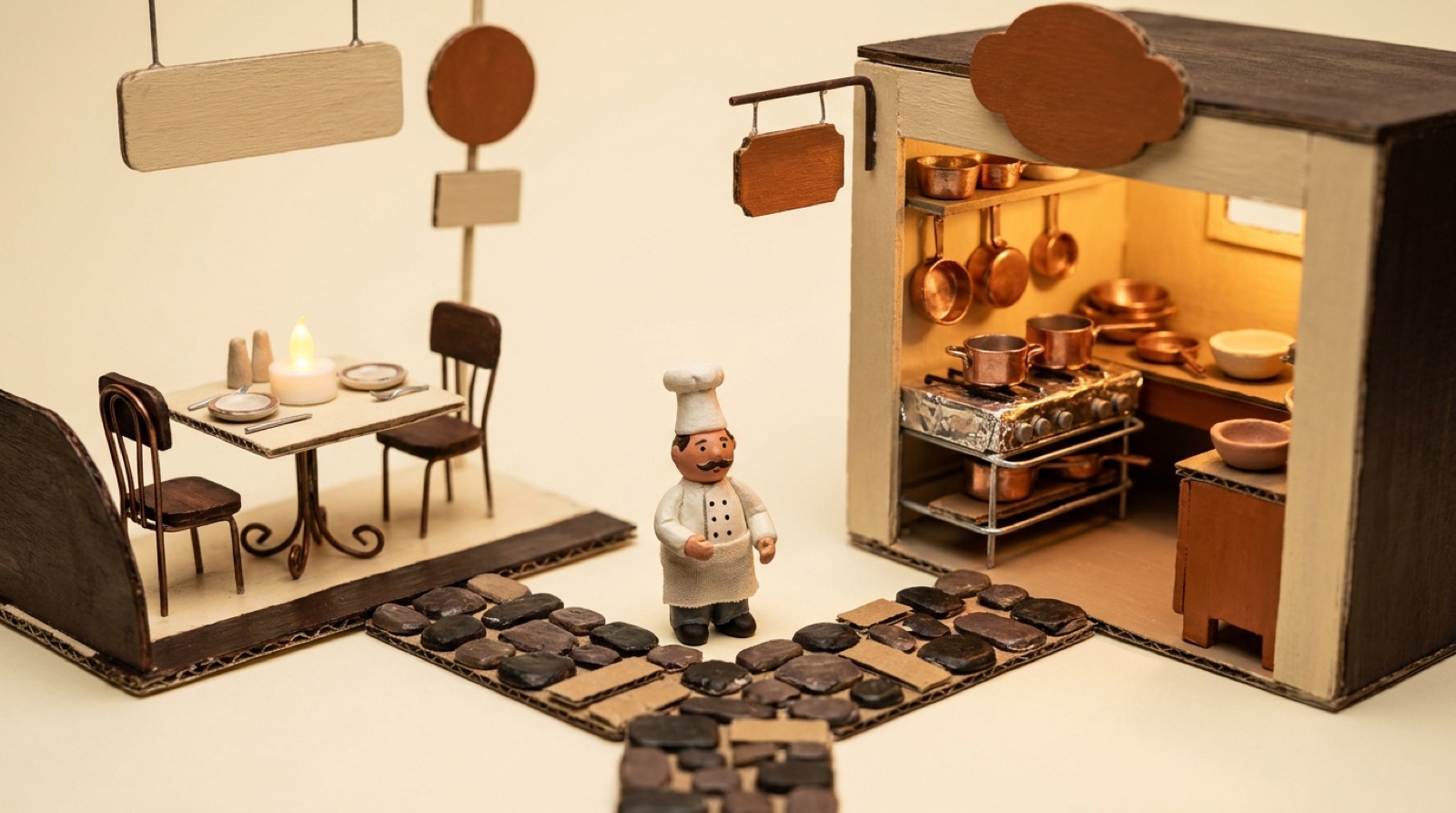
The right restaurant concept is not the one that looks most profitable on paper. It is the one that fits your stress tolerance, your risk appetite, and the work level you can actually sustain. Get those three variables wrong and you will build a business that traps you, not frees you.
Why Concept Choice Is a Personal Decision, Not Just a Business One
Most aspiring operators pick a concept based on what food they love or what looks cool on Instagram. That is the wrong starting point.
The operators I mentor who end up miserable did not fail because they chose a bad cuisine. They failed because they chose a concept that did not match who they are. They wanted freedom. They got 12-hour days, seven days a week, for years. That became a huge regret.
The goal is to find what I call the Golden Trifecta: the overlap between your concept, your customers, and your location. All three have to align for you to have the highest chance of success. A lot of restaurants open because the owner has one strong pillar, a great location, a loyal following, or a compelling concept. Without all three overlapping, the chances of success drop significantly.
Before you lock in a concept, you need to answer three questions honestly.
What Is Your Real Stress Tolerance?
Ask yourself this directly: would you rather manage a full-service team of 20-plus people, covering front of house and kitchen, or would you rather run a tight crew of three or four?
There is no right answer. Some people thrive in a chaotic, high-energy environment. They get genuine satisfaction from leading a large team and running a packed dining room. Others do their best work in a calmer setting with a small group they know well.
The same logic applies to customer expectations. A fine dining experience comes with a specific set of expectations. Guests arrive with high standards, and your job is to meet every single one of them, consistently, every service. A quick-service or counter concept carries far less of that weight.
Know your own personality before you choose. The concept you pick sets the emotional tone of your day, every day.
How Much Risk Are You Willing to Take On?
Risk tolerance is one of the biggest factors operators ignore when choosing a concept.
A fine dining restaurant can cost millions to build out and can generate millions if it works. If you have deep pockets and a genuine passion for that world, that math can make sense. But if your risk tolerance is low, putting that much capital on the line in an industry with thin margins is a recipe for sleepless nights and a very expensive lesson.
When I opened my first ice cream shop, I spent $100,000. My risk tolerance for the restaurant and food and beverage industry was low at that point. I wanted to test the water without betting everything. That decision matched where I was at the time.
Today, after building 720 Sweets from one shop to seven locations, I would be comfortable spending somewhere between $600,000 and close to a million dollars to build a concept, because my experience and financial position have changed. Your number will be different, and that is completely fine.
Location ties directly into your risk appetite too. A high-traffic, prime location will cost you significantly more in rent. The trade-off is that foot traffic already exists. Your food just needs to be solid and your marketing needs to be consistent. In a high-traffic spot, you are not starting from zero every month.
A destination location in a quieter area costs less in rent. You get more runway before the financial pressure becomes critical. But that location is entirely dependent on word of mouth and marketing. If you do not execute, you will be sitting there with an empty dining room. Lower rent does not mean lower risk when your customer acquisition is entirely on you.
What Work Level Can You Actually Sustain?
Work level is separate from stress tolerance, and it matters just as much.
Running a 15-person operation is a fundamentally different job than running a two-or-three-person counter concept. The management load, the scheduling complexity, the HR headaches, the training requirements: they all scale with team size.
Ask yourself honestly whether you are a person who wants to be in the middle of a high-volume, fast-moving operation, or whether you would rather work at a pace where you can have real one-on-one conversations with your customers and actually enjoy the craft.
Neither is better. But choosing the wrong one means you will be fighting your own nature every shift. That wears you down fast.
A quick-service or fast concept typically runs on a smaller team and a tighter operation. Casual dining and fine dining require more people, more systems, and more of your leadership bandwidth. Know which version of yourself shows up on a hard Tuesday and build the concept around that person.
Matching the Four Restaurant Types to the Three Variables
Here is a straightforward way to think about it across the four main types.
A fast concept or quick-service restaurant generally means lower startup costs, a smaller team, less customer-expectation pressure, and a high volume of transactions. The work is fast and repetitive. The stress comes from throughput, not from curating an experience.
Casual dining sits in the middle. You are managing a larger team and a fuller service model, but the expectation bar is more forgiving than fine dining. You need decent foot traffic or strong community ties to make the numbers work.
Fine dining is high cost, high expectation, and high potential reward. It demands the most from your leadership, your attention to detail, and your financial cushion. It is the right choice for the right person, and the wrong choice if you chose it because it seemed impressive.
The concept that wins for you is the one where your stress tolerance, risk level, and work capacity all point in the same direction.
The Bottom Line
Choose the concept that matches who you actually are, not who you think you should be as a restaurant owner. Your stress tolerance, risk appetite, and sustainable work level are not weaknesses to hide. They are the blueprint for your business model. Build a restaurant around your real life and it can fund that life. Build one against your nature and it will consume it. The restaurant that sets you free is the one you would still want to own on your worst day.
Watch the full video
Source — YouTube · the full breakdown, free
Tool — free · not sponsored, I built it
Want your exact numbers for a restaurant? The free calculator runs your cost to open, the ×1.4 cash reserve, and your break-even in about 30 seconds. Prefer paper? The One-Page Fundable Business Plan is the printable version.
Run your numbers →Questions owners actually ask
Are casual dining or fine dining better choices for a low-traffic location?
Both can work in a low-traffic location, but only if you are prepared to be fully dependent on word of mouth and active marketing to drive customers to you. A destination location costs less in rent and gives you more financial runway, but if your execution is not strong enough to generate buzz, you will struggle with an empty room. High-traffic spots carry higher rent but remove some of that marketing burden because foot traffic already exists. Whichever concept you pick for a quiet location, your customer acquisition strategy needs to be airtight from day one.
How much should I expect to spend opening a restaurant?
It depends heavily on the concept type and your market. Wilson spent $100,000 on his first ice cream shop when his risk tolerance was low, and says he would spend between $600,000 and close to $1,000,000 on a concept today given his experience. As of 2026, a full restaurant build-out in the US runs roughly $727,000 to $1,211,500, with a planning target of around $969,000. Before you sign a lease, you should have approximately 1.4 times your build-out cost in cash available to cover pre-opening costs and early operating losses.
What is the Golden Trifecta in restaurant planning?
The Golden Trifecta is the overlap between your concept, your customers, and your location. All three need to align for you to have the highest chance of success. Many restaurants open with only one strong pillar, a great concept, a loyal following, or a prime location, but without all three working together, the chance of long-term success drops significantly.
What restaurant concept is best for someone who wants a simpler, lower-stress operation?
A fast concept or quick-service restaurant is typically the lower-stress choice. It runs on a smaller team of three to four people, has lower startup costs, and carries less customer-expectation pressure than casual or fine dining. The trade-off is that your revenue comes from volume rather than high ticket sizes, so location and throughput matter a lot.
How do I know if my stress tolerance is suited to fine dining?
Fine dining guests arrive with specific, high expectations every single service, and your job is to meet all of them consistently. If you thrive on leading a large team, curating a detailed experience, and operating under that kind of pressure, fine dining can be deeply rewarding. If that description already sounds exhausting, a smaller-format concept will serve you and your customers better.
Does team size really affect which restaurant concept I should choose?
Absolutely. Managing a 15-plus person full-service team is a completely different job than running a two-or-three-person counter shop. Larger teams mean more scheduling, more training, more HR complexity, and more of your leadership energy every day. If your honest answer is that you want a manageable, close-knit operation, build your concept around a smaller team from the start rather than scaling into one you are not suited to lead.
The Weekly Receipt
One brand story, one number, one answered question. 2 minutes, Tuesdays.
Free. Unsubscribe anytime, one click, no games.
You're in, friend. See you Tuesday.
Keep going: restaurant guides
How Much Does It Cost to Open a Restaurant? (2026 Complete Breakdown)
The real, itemized cost to open a full-service restaurant in 2026, including Wilson's x1.4 cash rule, break-ev
12 Restaurant Assets Every Owner Needs to Build
The 12 restaurant assets that build your brand, from logo to uniforms, ranked by priority before you open in 2
3 Tactics to Position Your Restaurant Brand for Growth
Awards, media features, and strategic associations are the three free tactics that build customer trust and po
3 Things to Know Before Opening a Restaurant (And What Happens If You Skip Them)
Wilson K Lee breaks down the three foundational principles every restaurant owner must master: know your numbe
360 Ads for Restaurants: How to Build Customer Touchpoints Across Every Channel
Learn how 360-degree advertising builds the 20 touchpoints your restaurant needs to turn strangers into custom
Low Labor Restaurant Concepts: Fast vs QSR Compared
Fast concept and QSR are the lowest labor restaurant concepts. See real costs, staffing needs, and revenue to
5 Deadly Mistakes Every New Food Business Owner Makes
60% of restaurants fail in year one. Wilson K Lee breaks down the 5 deadly mistakes killing food businesses in
4 Actionable Steps to Prevent Your Restaurant from Going Bankrupt During a Crisis
Four concrete steps every restaurant owner needs to assess financial health, cut inefficiencies, secure fundin