Restaurant · Guide Updated August 2026
How a Dumpling Business Hit $20,000 a Month on Instagram
Tarn, founder of Dumpling Drop in Victoria, BC, built a business selling over $20,000 worth of dumplings every month starting with nothing but an Instagram account, a cooler on a street corner, and a deeply personal reason to cook. She scaled from 25 deliveries a week to 250 at the peak of COVID by pivoting fast and treating her community, staff, and customers like family.
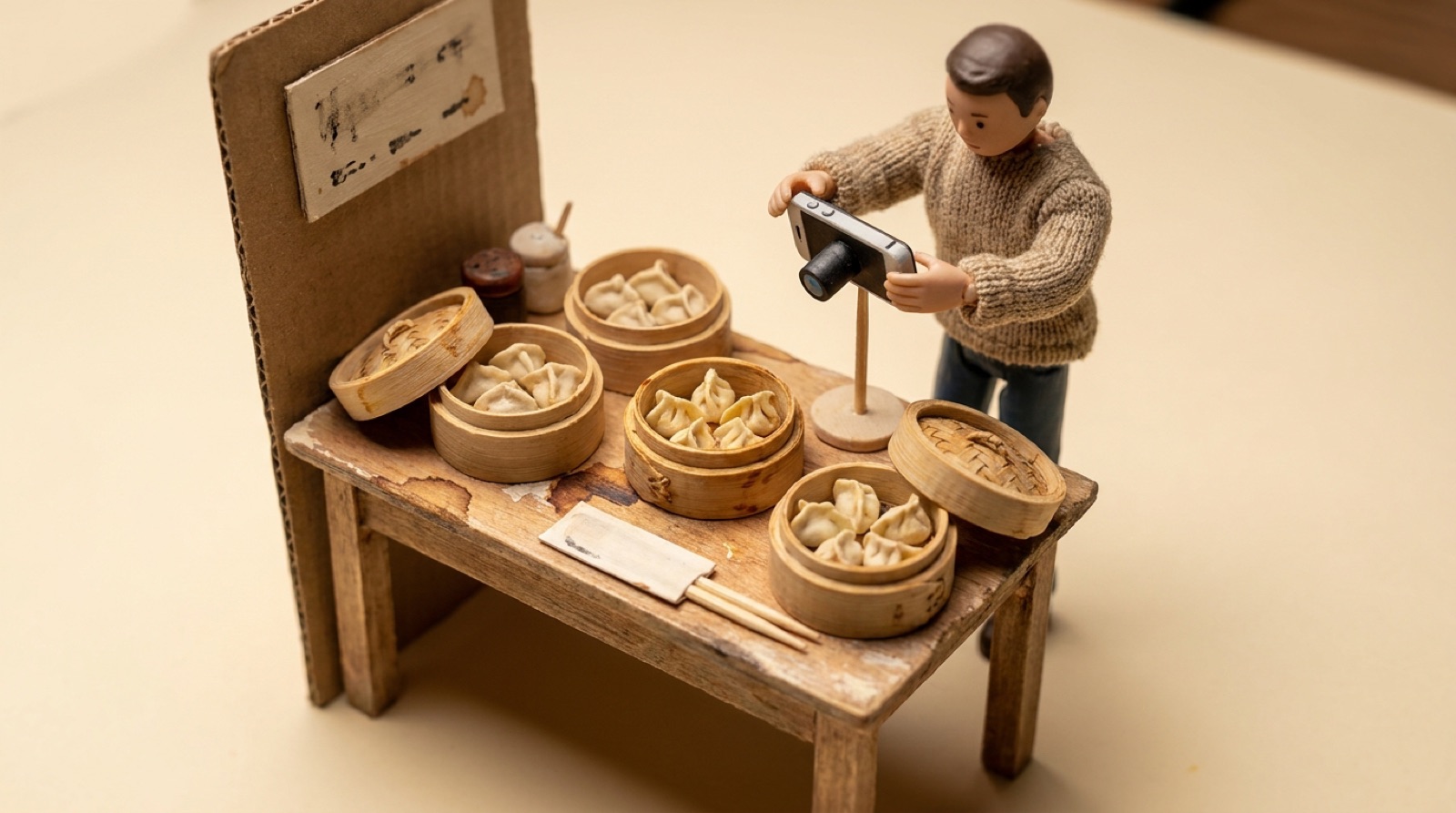
Tarn built a $20,000-a-month dumpling business starting with an Instagram poll and a cooler on a sidewalk in downtown Victoria, BC. No commercial kitchen lease, no food truck, no investors. Just great food, a real story, and a community that showed up for her. Here is exactly how she did it.
How Did Dumpling Drop Actually Start?
The origin is not a business plan. Tarn spent 16 years working at a Thai restaurant in Springfield, moving from dishwasher to prep cook to server. She then became a GM at another restaurant for six months, then managed a full Asian street food concept for about a year and a half. After two decades of making other people’s restaurants work, she decided she could do it better herself.
The dumplings came from an even more personal place. Her mom was showing signs of Alzheimer’s, and the doctor’s advice was to create good memories and keep her hands and mind active. For Tarn’s family, that meant sitting around a big dinner table rolling dumplings together, the way they had with her grandmother growing up. So that is what they did. They made so many dumplings they could not eat them all. Friends told her to start selling them. She did.
That is the real reason Dumpling Drop exists. Not a market gap analysis. A daughter trying to take care of her mom.
How Do You Build a Customer Base from Zero?
Tarn’s first move was Instagram. She posted polls, people ordered through DMs, and then they came to pick up from a cooler she set up in front of a building in downtown Victoria. No storefront, no signage, just a time, a location, and word of mouth.
That is how her first loyal customers found her. They were picking dumplings out of a cooler on a street corner. And they stayed. When she eventually opened a physical shop at 556 Pandora Avenue in Victoria’s old Chinatown, those same people were still there.
The reason they stayed is straightforward. Tarn was authentic about everything, the food, the story, the struggle. When a customer posted a photo of her dumplings that was not perfectly styled, Tarn reposted it. She was not building a curated brand portfolio. She was building a community where people felt seen. That distinction is everything.
Her words on this are worth keeping: cook the food you love, cook the food you understand, and be exactly yourself. Every operator who has built a loyal following says some version of this, and Tarn lives it.
What Was the Pop-Up Strategy Before COVID?
After the street-corner pickups gained traction, Tarn moved into pop-ups. Her first venue was Fantan Alley in Victoria, the oldest alley in Canada, narrow and atmospheric, with a fire, smells, sounds, and lights. It was something Victoria had not seen before in that format.
She ran 13 of the 14 permitted pop-up events that summer, saving the last permit for Brewery and the Beast, one of Victoria’s bigger food festivals. Going from a cooler on a corner to an invite to a major food festival in one season shows how fast momentum can build when the food and the story are both real.
By January of the following year, she had 45 pop-up bookings lined up for the coming summer, including food festivals. Then COVID hit and everything was cancelled.
How Did She Go from 25 to 250 Deliveries a Week During COVID?
This is the pivot that defines her as an operator.
With every pop-up cancelled, Tarn went back to basics: frozen dumpling delivery. She scaled from 25 deliveries a week to 250 deliveries a week at the peak of COVID restrictions. Each delivery averaged about six bags, which means she was moving roughly 600 bags of dumplings a week through delivery alone. That required six people running eight-hour delivery shifts.
She also added soup kits for the winter so families could make dumpling soup at home. The product evolved to match what people actually needed in that moment.
The mindset behind this matters as much as the tactics. A lot of operators got angry at restrictions. Tarn’s response was to ask what she could still do within those restrictions, and then do that thing at full speed. The rules changed, so she changed what she was selling and how she was delivering it. That is not a personality trait you are born with. It is a decision you make.
How Did She Manage Orders at That Scale?
At first, everything ran through Instagram DMs. It worked, but it got chaotic fast. Her fix was simple: she built a Squarespace website so customers could order online directly. Nothing custom, nothing expensive. A basic online store so she could stop missing orders and stay organized.
The channel stayed Instagram. That is where her community lived, where she posted, where customers shared photos, and where new people found her. The website was just the operational layer underneath.
One viral post helped accelerate her reach significantly. During the height of anti-Asian hate incidents in 2021, Tarn wrote a post connecting the long-standing stigma around MSG to anti-Asian racism. She had grown up believing MSG was bad, the way many Asian families did, and she had watched that narrative play out in restaurant kitchens for 20 years. With more research coming out questioning the MSG myth, and with people more open to listening during that moment, she decided to say the thing directly. It was a risky post. It went viral. It brought a wave of new people into her community and started a conversation she genuinely cared about.
That is how you create content that spreads. You say something true that you actually believe, at a moment when people are ready to hear it.
What Does She Do Differently With Her Team?
Tarn pays her staff well and gives them benefits. In a mom-and-pop restaurant context, that is genuinely rare.
Her reasoning is personal. She spent 20 years in restaurant kitchens and only had benefits for six months of that entire stretch. By 40, her body was in constant pain from the physical demands of the work. She does not want her team to be in that position. So she makes sure they have the tools to take care of themselves.
Her staff are also mostly her friends. They worked together in restaurants before Dumpling Drop existed. She runs the kitchen the way she always said she would if she were in charge: treat people well, pay them fairly, build something you can be proud of.
The culture of a restaurant is not something you write in a mission statement. It is how you behave on a Tuesday when no one is watching. Tarn’s culture is real because she built it out of things she genuinely believes, not things that looked good on an about page.
The Bottom Line
You do not need a big launch budget or a perfect brand aesthetic to build a loyal food business. You need a real reason to cook, a product people want, and the willingness to show up as yourself every single time. Tarn went from a sidewalk cooler to $20,000 a month by staying authentic, pivoting fast when the rules changed, and treating every customer and employee like they mattered. The maxim that holds this whole story together: cook the food you love, and be exactly who you are.
Watch the full video
Source — YouTube · the full breakdown, free
Tool — free · not sponsored, I built it
Want your exact numbers for a restaurant? The free calculator runs your cost to open, the ×1.4 cash reserve, and your break-even in about 30 seconds. Prefer paper? The One-Page Fundable Business Plan is the printable version.
Run your numbers →Questions owners actually ask
Is Tarn from Dumpling Drop Korean?
Tarn has a Thai background. She spent 16 years working at a Thai restaurant in Springfield and grew up in a Thai family where rolling dumplings together was a family tradition. Her mom worked as a server in a Thai restaurant her whole life. Dumpling Drop reflects that Asian heritage, not a Korean one.
How did Dumpling Drop get its first customers with no marketing budget?
Tarn started by posting on Instagram and taking orders through DMs. Customers picked up their orders from a cooler she set up on a street corner in downtown Victoria. There was no paid advertising. The community grew because the story was real and the food was good, and early customers stayed loyal through every stage of the business.
What platform did Dumpling Drop use to handle online orders?
Tarn built a basic Squarespace website to take orders online once Instagram DMs became too chaotic to manage. It was a simple online store, not a custom build. Instagram remained the main channel for community and discovery.
How did Dumpling Drop pivot during COVID?
With 45 summer pop-up bookings cancelled, Tarn returned to frozen dumpling delivery. She scaled from 25 deliveries a week to 250 deliveries a week at peak, with each delivery averaging about six bags. She also launched dumpling soup kits in winter to match what families needed at home during restrictions.
What made Tarn's MSG post go viral?
During the rise of anti-Asian hate incidents in 2021, Tarn wrote a post connecting the long-standing cultural stigma around MSG to anti-Asian racism. It came from 20 years of working in Asian restaurant kitchens and watching that stigma play out daily. The post resonated because it was timely, honest, and grounded in her real experience. It brought significant new attention to Dumpling Drop.
Why does Tarn offer employee benefits at a small restaurant?
Tarn spent 20 years in the restaurant industry and only received benefits for six months of that entire career. By 40, the physical demands of kitchen work had left her body in constant pain. She gives her staff benefits because she knows firsthand what it costs to go without them, and she built her business specifically to run it differently than the places she worked before.
The Weekly Receipt
One brand story, one number, one answered question. 2 minutes, Tuesdays.
Free. Unsubscribe anytime, one click, no games.
You're in, friend. See you Tuesday.
Keep going: restaurant guides
How Much Does It Cost to Open a Restaurant? (2026 Complete Breakdown)
The real, itemized cost to open a full-service restaurant in 2026, including Wilson's x1.4 cash rule, break-ev
12 Restaurant Assets Every Owner Needs to Build
The 12 restaurant assets that build your brand, from logo to uniforms, ranked by priority before you open in 2
3 Tactics to Position Your Restaurant Brand for Growth
Awards, media features, and strategic associations are the three free tactics that build customer trust and po
3 Things to Know Before Opening a Restaurant (And What Happens If You Skip Them)
Wilson K Lee breaks down the three foundational principles every restaurant owner must master: know your numbe
360 Ads for Restaurants: How to Build Customer Touchpoints Across Every Channel
Learn how 360-degree advertising builds the 20 touchpoints your restaurant needs to turn strangers into custom
Low Labor Restaurant Concepts: Fast vs QSR Compared
Fast concept and QSR are the lowest labor restaurant concepts. See real costs, staffing needs, and revenue to
5 Deadly Mistakes Every New Food Business Owner Makes
60% of restaurants fail in year one. Wilson K Lee breaks down the 5 deadly mistakes killing food businesses in
4 Actionable Steps to Prevent Your Restaurant from Going Bankrupt During a Crisis
Four concrete steps every restaurant owner needs to assess financial health, cut inefficiencies, secure fundin