Restaurant · Guide Updated July 2026
5 Psychological Marketing Tricks Dunkin Uses to Sell 2.9 Billion Donuts a Year (And How Small F&B Owners Can Copy Them)
Dunkin Donuts sells 2.9 billion donuts a year by applying five documented psychological tactics: color psychology, habit formation, the Barnum effect, sensory marketing, and gamification. These are not corporate secrets locked behind a massive budget. Every small F&B operator can apply a version of each one starting this week.
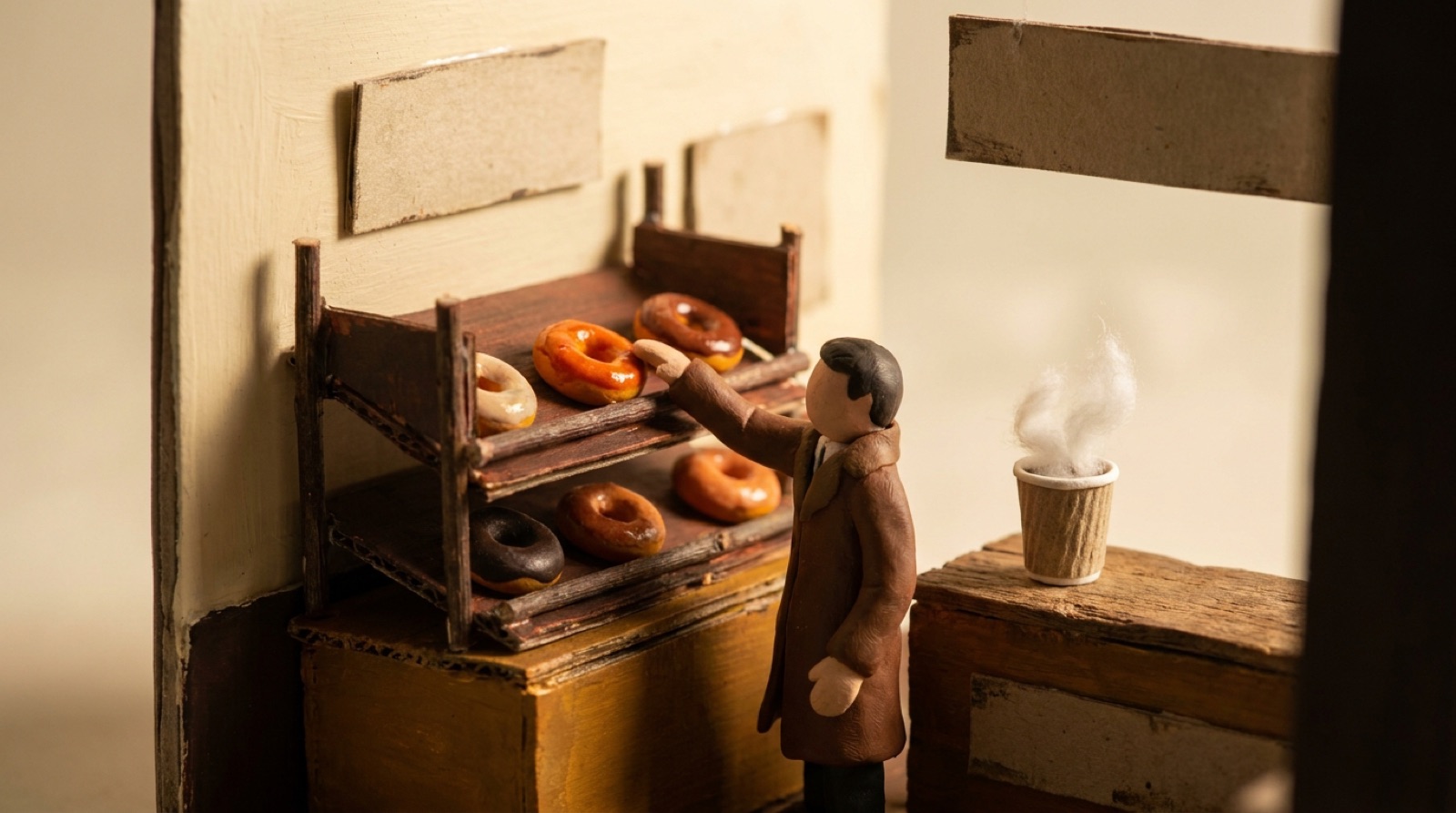
Dunkin Donuts sells 2.9 billion donuts every year and serves more than 3 million customers every single day across 11,000 storefronts worldwide. That does not happen by accident. It happens because their marketing team applies well-researched psychological tactics at every touchpoint, from the color of their logo to the smell near a bus stop in Seoul. The good news is none of these tactics require a corporate budget. Here are all five, broken down so you can put them to work in your own shop.
How Does Color Psychology Drive Sales?
Colors shape how customers feel before they read a single word on your menu. That is not a soft claim. Big brands pay serious money to get this right, and the difference shows up the moment you compare Dunkin and Starbucks side by side.
Dunkin uses orange and pink. Orange signals energy, enthusiasm, excitement, and warmth. It draws attention. Pink adds joyfulness, creativity, and softness. Together they say: this place is fun, affordable, and for everyone. Starbucks uses deep greens and neutrals that communicate exclusivity, status, and premium quality. Neither is wrong. They are just talking to different people.
Dunkin reinforces those color signals inside the product itself. Their donuts are bright, playful, and visually loud. Every sprinkle and glaze shade is a brand statement.
For your shop: before you pick a logo color or repaint a wall, write down three words that describe how you want customers to feel. Inclusive and affordable? Lean into warm, energetic tones. Refined and premium? Go cooler and more restrained. Apply that palette consistently across your signage, packaging, social media graphics, and website. The first impression your brand makes is almost always visual.
How Does Selling to Habits Keep Customers Coming Back?
The easiest repeat customer is one who buys from you as part of something they already do every day. Dunkin understood this in the early 2000s when they made a deliberate pivot to coffee.
They spotted that coffee is woven into daily life in a way donuts are not. So they started with simple, affordable, no-fuss coffee and let their menu grow more complex as their customers’ palates developed. According to CEO Nigel Travis, beverages now account for more than 60 percent of Dunkin’s annual sales. And here is the compounding benefit: people rarely come in just for coffee. They add a donut, a drink, a sandwich. The coffee habit becomes the hook; everything else is the sale.
KitKat did the same thing by linking their bar to the idea of taking a break. Coca-Cola attached their brand to Christmas. These companies did not create new habits. They inserted themselves into habits that already existed.
For your shop: study what your customers do before and after they visit you. If your neighborhood has a strong morning commute culture, a simple, well-executed coffee program could become your most reliable revenue line. If foot traffic spikes on weekend evenings, build an experience around that window. Host a weekly event on your slowest night to create a new anchor habit. The question to ask is always: what are my customers already doing, and how do I fit into that routine?
What Is the Barnum Effect and How Did Dunkin Use It?
The Barnum effect is the human tendency to believe that personality descriptions apply specifically to you, even when those descriptions are broad enough to fit almost anyone. It is why horoscopes work. It is why personality quizzes go viral. And it is why the horoscope industry in the United States is worth more than 2.2 billion dollars, with more than 90 percent of Americans knowing their star sign and more than 50 percent reading their horoscope regularly.
In 2017, on National Donut Day, Dunkin launched their “My Donut Personality” campaign. It matched your donut order to a personality type and then recommended the coffee that paired best with your personality. The internet went loud. People shared their results because sharing a personality result is a way of talking about yourself, and talking about yourself is the most interesting conversation any person can have.
Starbucks, Cha Time, and Krispy Kreme all use versions of this same tactic in their social media marketing.
For your shop: look at your most loyal customer segments and build a dish or an identity around them. Create menu items named “for the early riser,” “for the adventurous,” or “for the family table.” Let customers self-select and self-identify. When a customer feels like a product was made for them specifically, they do not just buy it once. They defend it.
How Can You Use Sensory Marketing Without a Big Budget?
Sensory marketing stimulates one or more of the five senses to change how a customer feels and, more importantly, what they buy. Dunkin ran one of the more creative examples of this on record.
In South Korea, customers saw Dunkin as a donut shop first and a coffee shop second. Dunkin wanted to change that. They knew their target coffee buyer was commuting to work by bus. So they installed “flavor radio” boxes at bus stops across Seoul. When a Dunkin jingle played on the radio, those boxes released the scent of fresh coffee. They also placed advertisements on the buses and at the stops themselves. The result: a 16 percent sales increase at Dunkin locations near those bus stops, and a 30 percent increase across the chain from that campaign alone. That is the power of combining two senses, smell and sound, with a visual cue, at the exact moment the target customer is in the right mental state.
You do not need flavor radio boxes to apply this. Here is what you can do right now.
Costco places tasting stations at the ends of their aisles intentionally. Customers pushing a cart past a sample do not just taste the product. They put it in the cart. One sample, one extra item. That math adds up fast.
At my own ice cream shop, we installed an insert that made smoke rise from the cup when customers ordered. Taste plus a dramatic visual made the product feel worth sharing, and customers shared it everywhere.
If you run a coffee shop, a barbecue joint, a pizza spot, or anything that produces a great smell: open your front door. Let the aroma do the selling on the sidewalk. If you run a restaurant, give a small sample of a dish the customer did not order alongside what they did order. You stimulate curiosity, you generate a possible add-on order, and you give the customer a reason to come back and try that dish properly.
Does Gamification Actually Work for Small F&B Operators?
Yes. Achievement is one of the strongest emotional drivers humans have. When you make a customer feel like they are making progress toward something, they come back to finish that progress.
Dunkin runs a points-based loyalty program where purchases earn redeemable points for donuts and coffee, with bonus days that double point accumulation. McDonald’s and Starbucks do the same. The structure triggers two things: the satisfaction of earning, and the reluctance to walk away from accumulated progress.
You do not need an app to do this. A physical stamp card works. Any coffee shop or bubble tea spot that runs a stamp card is running a gamification program. Square and other point-of-sale platforms have built-in loyalty tools you can turn on today.
One rule when designing your reward: if you would not do the required action to earn the reward yourself, your customers will not either. Make the prize worth the effort, and make sure the math keeps your margins intact.
Add an exclusivity layer by tying double points or a special freebie to specific holidays or slow-night events. This brings customers in during times they would not normally visit, and it makes loyalty feel like belonging to something rather than just collecting stamps.
The Bottom Line
Dunkin’s playbook is not magic. It is consistent application of how people actually think and feel. Color sets expectation before a word is read. Habits create automatic repeat business. The Barnum effect turns a product into a personal identity statement. Sensory cues trigger desire at the right moment. Gamification makes coming back feel like winning. You do not need 11,000 locations to use any of these. You need one shop and the willingness to be intentional. The operator who understands their customer’s psychology will always outsell the one who is just hoping for foot traffic.
Watch the full video
Source — YouTube · the full breakdown, free
Tool — free · not sponsored, I built it
Want your exact numbers for a restaurant? The free calculator runs your cost to open, the ×1.4 cash reserve, and your break-even in about 30 seconds. Prefer paper? The One-Page Fundable Business Plan is the printable version.
Run your numbers →Questions owners actually ask
Can these psychological marketing tactics work for selling candy in a convenience store?
Every single one of them applies. Color psychology works on packaging and shelf placement. Habit formation works by positioning your candy near something customers already buy daily, like a morning coffee or a lottery ticket. The Barnum effect works with personality-themed packaging or 'pick your mood' displays. Sensory appeal works by opening wrappers for samples near the register. A simple stamp card brings gamification to any retail environment with no tech required.
What percentage of Dunkin's sales come from coffee rather than donuts?
According to CEO Nigel Travis in an interview, beverages account for more than 60 percent of Dunkin's annual sales. That shift was intentional. Dunkin began focusing heavily on coffee in the early 2000s because coffee is a daily habit for most people in a way that donuts are not.
What was the result of Dunkin's sensory marketing campaign in South Korea?
Dunkin installed scent-emitting 'flavor radio' boxes at bus stops in Seoul that released a coffee aroma when a Dunkin jingle played. Dunkin locations near those bus stops saw a 16 percent increase in sales. Across the full chain in South Korea, the campaign produced a 30 percent sales increase.
What is the Barnum effect and how did Dunkin apply it?
The Barnum effect is the human tendency to believe that a personality description applies specifically to you, even when it is general enough to fit almost anyone. In 2017, on National Donut Day, Dunkin launched a 'My Donut Personality' campaign that matched your donut choice to a personality type and paired it with a coffee recommendation. Customers shared their results widely, generating buzz and sales because the campaign made the purchase feel personally meaningful.
How can a small food business use gamification without an expensive app?
A physical stamp card is the simplest version and it works. Many point-of-sale systems like Square also have built-in loyalty features you can activate immediately. The key rule is that the reward must be attractive enough that customers actually want to earn it. Design the reward so it is genuinely appealing while still keeping your margins profitable.
How did Dunkin use habit formation to grow its coffee business?
Dunkin identified that coffee is part of most people's daily routine in a way donuts are not. Starting in the early 2000s, they built out a coffee program priced to appeal to the mass market, much more affordably than Starbucks. As customer tastes developed, they expanded into more complex coffee drinks. The strategy made Dunkin a daily stop rather than an occasional treat, and beverages now account for more than 60 percent of their annual revenue.
The Weekly Receipt
One brand story, one number, one answered question. 2 minutes, Tuesdays.
Free. Unsubscribe anytime, one click, no games.
You're in, friend. See you Tuesday.
Keep going: restaurant guides
How Much Does It Cost to Open a Restaurant? (2026 Complete Breakdown)
The real, itemized cost to open a full-service restaurant in 2026, including Wilson's x1.4 cash rule, break-ev
12 Restaurant Assets Every Owner Needs to Build
The 12 restaurant assets that build your brand, from logo to uniforms, ranked by priority before you open in 2
3 Tactics to Position Your Restaurant Brand for Growth
Awards, media features, and strategic associations are the three free tactics that build customer trust and po
3 Things to Know Before Opening a Restaurant (And What Happens If You Skip Them)
Wilson K Lee breaks down the three foundational principles every restaurant owner must master: know your numbe
360 Ads for Restaurants: How to Build Customer Touchpoints Across Every Channel
Learn how 360-degree advertising builds the 20 touchpoints your restaurant needs to turn strangers into custom
Low Labor Restaurant Concepts: Fast vs QSR Compared
Fast concept and QSR are the lowest labor restaurant concepts. See real costs, staffing needs, and revenue to
4 Actionable Steps to Prevent Your Restaurant from Going Bankrupt During a Crisis
Four concrete steps every restaurant owner needs to assess financial health, cut inefficiencies, secure fundin
5 Deadly Mistakes Every New Food Business Owner Makes
60% of restaurants fail in year one. Wilson K Lee breaks down the 5 deadly mistakes killing food businesses in