Restaurant · Guide Updated August 2026
How Fergie's Cafe Rebuilt Into a $1.7M Award-Winning Destination Restaurant
Jake and Jess rebuilt Fergie's Cafe in Squamish, BC after a total fire loss, investing $1.7 million into a sustainably designed brunch restaurant with a $25 average ticket. The business works because the restaurant is supported by the resort and wedding venue on the same five-acre property. Their secret: ruthless authenticity, deep community roots, and a willingness to make decisions that made zero business sense on paper but made perfect sense to guests.
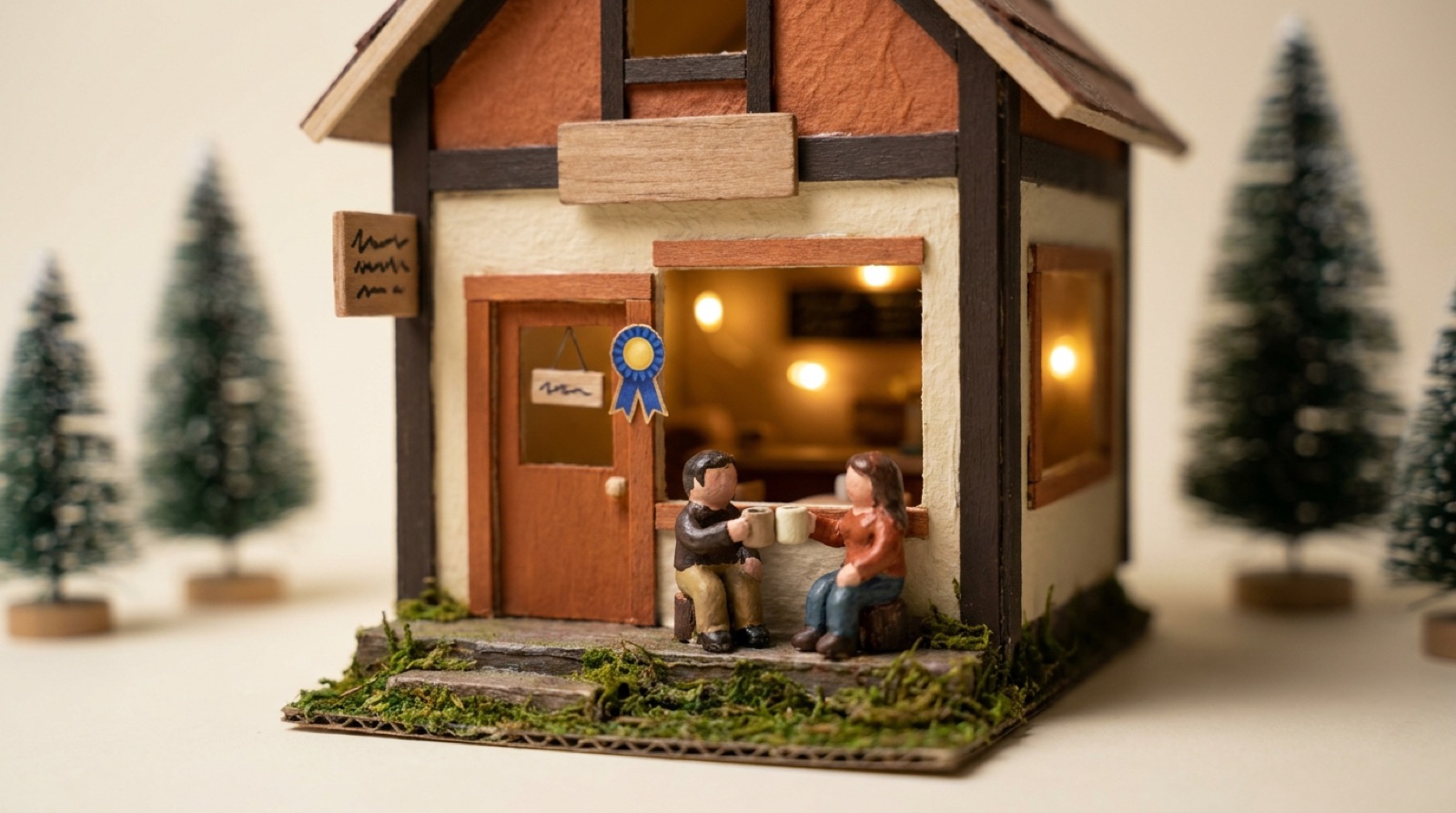
Fergie’s Cafe in Squamish, BC proves that a destination restaurant can thrive with a $25 average ticket if the experience around the food is strong enough. Jake and Jess rebuilt their riverside brunch spot from ashes for $1.7 million, turned a $500 auction smoker into a signature menu identity, and grew from a quirky wilderness shack into one of the most talked-about brunch destinations in British Columbia. Here is exactly how they did it.
How Did Fergie’s Cafe Get Started?
Jake and Jess did not set out to open a restaurant. They bought a five-acre riverside property in Squamish Valley to run a rafting and cabin resort business. The property had a long history: the Fergie’s name came from the Ferguson family, who originally ran it as a fishing resort. When Jake and Jess arrived, the whole place was run down. Their plan was simple: clean up the cabins, hand guests the keys, and run rafting trips on the river.
Then something shifted. People started loving just being on the property. The walnut tree, the lawns, the river, the mountains. Once Jake and Jess saw that, they kept adding to the experience. The small restaurant they opened in the original “little blue shack” became the heart of the property.
Jess describes their role well: “Jake and I often feel like we are the custodians of a very magical place.”
What Happened in the Fire?
The original restaurant burned to the ground in the middle of the night. Jess was woken by Jake running up the stairs in his boots, face in hers, saying, “Fergie’s is on fire. Do you want to come say goodbye?” By the time she got outside, flames were 20 feet above the building.
No one knows the exact cause. A guest staying in the logger’s shack at the back of the property spotted the flames first and called 911. By the time the fire crews arrived, it was already gone.
What happened next surprised Jake and Jess. Food showed up on their doorstep. Messages came in from people all over the world. They had not realized how deeply the community had connected with the place. That response made one thing clear: they had to rebuild.
How Much Did the Rebuild Cost?
All in, including equipment and furniture, the rebuild came to $1.7 million. That is the number Jake and Jess put into a brand new structure designed around the natural environment.
The building’s position was not entirely their choice. Local regulations required the restaurant to be raised ten feet off the ground on stilts so flood water from the river could pass underneath without destroying it. That created real operational challenges: difficult deliveries, accessibility considerations, and extra work for the service team every shift.
But they made the constraint work for them. Raising the building meant guests could now see the river from their seats, which was never possible before.
How Did They Design the Building Around the Mountain View?
This is one of the best operator details in the whole story. Jake and Jess wanted every seated guest at the bar to be able to see the top of Mount Alfa in the distance. The architect’s original plans called for a ten-foot ceiling. Jake, standing six feet tall, worked out that he could just barely not see the top of the mountain from a seated position at that height.
So he and Jess pulled out Google Maps, calculated the distance to the mountain, found the peak elevation, and used basic trigonometry to work out exactly how much higher the ceiling needed to be. The answer: six inches. A ten-and-a-half-foot ceiling let the average seated guest see the full mountain.
They brought those hand-drawn calculations to their architect, Chris Hunter, who is described as a perfectionist. He made it work. The beam at the top of the structure had to be lowered into position by crane between two specific branches of the black walnut tree. The crane operator could not believe what they were asking him to do.
What Is the Sustainability System in the Kitchen?
The kitchen at Fergie’s has no active heating. Instead, Jake built what he calls “a poor man’s geothermal” cooling system. Four 18-inch diameter tubes, each 150 feet long, run underground from the kitchen, buried ten feet below the surface, and draw air in through a steel intake boulder visible on the property exterior.
Air enters at around 25 degrees Celsius on a summer day. By the time it travels through those underground tubes, it drops to about six degrees. It arrives in the kitchen at roughly eleven degrees. The fan does the rest. The system handles the cooling load that would normally require a full mechanical HVAC setup, and it uses a fraction of the energy.
For an industry that burns through energy costs at every service, this is a real operating advantage. It also tells the story that guests want to hear: the whole property, including the kitchen, is built around the natural world.
How Did a $500 Smoker Shape the Entire Menu?
Jake and Jess gave themselves a total equipment budget of $5,000 to kit out their commercial kitchen. They went to an auction looking for a fryer and other basics. A smoker came up. Nobody was bidding. Jess elbowed Jake. His hand went up. Silence. They bought it for $500.
Neither of them had planned to smoke anything.
That smoker became the foundation of the whole menu. Smoked salmon. Pulled pork. Brisket. House-smoked bacon, made entirely in-house, nothing bought pre-made. The slow-cooked pulled pork runs for 16 hours overnight. On those nights, Jess says, the whole valley smells of it. Regulars in Squamish wake up and know exactly what is cooking.
It is a textbook example of a constraint forcing a better creative decision than a bigger budget would have.
How Does a $25 Average Ticket Make the Business Work?
On its own, it is hard. Jess is direct about this: “I know we’ve been talking about 50 to 10,000 days. That’s a lot of eggs and potatoes.” The math on $25 average tickets at a wilderness destination with high build costs is brutal.
Fergie’s works because the restaurant is not carrying the whole property alone. The resort cabins and an active wedding venue on the same five-acre site generate separate revenue streams. The restaurant builds the emotional pull that drives people to book cabins and rent the venue. The venue and resort revenue support the restaurant’s ability to keep prices accessible.
The three businesses feed each other. Guests who come for brunch want to stay the night. Couples who fall in love with the tree-lit walnut canopy want to get married under it. That cycle is the actual business model.
How Do You Market a Restaurant an Hour Outside the City?
Slowly, and mostly through the experience itself. Jess describes the first months after opening as slow going. The word spread gradually. Now, the drive up from Vancouver has become part of the appeal. Squamish is a scenic hour north of downtown Vancouver, and Fergie’s has become a reason to make the trip, not just a stop along the way.
The framing matters: “Let’s go to Fergie’s” competes with “Let’s go to the beach” or “Let’s go to the lake” as a way to spend a day. The restaurant has become an activity, not just a meal.
Local Squamish regulars are the foundation. They kept the business alive in the early years. Now some of them avoid the busiest summer weekends and return on rainy days when the crowds thin out.
When the original restaurant was open, people warned Jake and Jess that no one would ever drive out there. Previous operators had tried and failed to make it work. That warning sat with them briefly, and then they decided to try anyway.
The Bottom Line
Fergie’s Cafe is proof that passion and place can carry a business through a $1.7 million rebuild, a $25 average ticket, and a location that every so-called expert said would not work. The restaurant does not succeed despite being a destination. It succeeds because it is one. Build something worth the drive, keep your food honest, and let the community tell the story for you. As Jess puts it, authenticity is not a buzzword here: it is the whole business.
Watch the full video
Source — YouTube · the full breakdown, free
Tool — free · not sponsored, I built it
Want your exact numbers for a restaurant? The free calculator runs your cost to open, the ×1.4 cash reserve, and your break-even in about 30 seconds. Prefer paper? The One-Page Fundable Business Plan is the printable version.
Run your numbers →Questions owners actually ask
What licenses do I need to open a coffee shop or cafe?
The specific licenses Fergie's Cafe holds are not detailed in this account of their story. That said, any food and beverage operator in Canada or the US will typically need a food service establishment permit, a business license, food handler certifications for staff, and in most jurisdictions a health inspection approval before opening. If you plan to serve alcohol, a separate liquor license is required. Check with your local municipal authority and health department for the exact requirements in your area, as they vary by city and province or state.
How much did it cost to rebuild Fergie's Cafe after the fire?
Jake and Jess invested $1.7 million to rebuild Fergie's Cafe from the ground up, including all equipment and furniture. The original restaurant burned completely to the ground overnight. The rebuild included a raised structure on stilts (required by flood regulations), a sustainable earth-tube cooling system, and the custom architecture designed around the mountain view and the black walnut tree on the property.
How did Fergie's Cafe build its reputation as a destination restaurant?
Word spread slowly over months and years through the quality of the guest experience itself. The cafe became a day-trip destination for people driving up from Vancouver, about an hour away, who wanted the combination of stunning mountain and river scenery, unique architecture, and high-quality smoked-meat brunch food at accessible prices. The loyal Squamish local community was the foundation that kept the business alive in the early years before the wider reputation grew.
What is the average order value at Fergie's Cafe and how does the business stay profitable at that price?
The average order value at Fergie's Cafe is $25. Jess acknowledges openly that the restaurant alone does not carry all the financial weight on that ticket size. The business works because the restaurant sits within a broader five-acre property that includes resort cabins and a wedding venue. The restaurant builds the emotional draw that fills the resort and attracts wedding bookings, and those revenue streams support the cafe's ability to keep food prices accessible.
How did the $500 smoker shape the Fergie's menu?
Jake and Jess bought the smoker by accident at an auction while working with a total kitchen equipment budget of only $5,000. Nobody else was bidding, Jess encouraged Jake to go for it, and they got it for $500. With no prior plan to smoke anything, they built their entire menu around it: smoked salmon, pulled pork, brisket, and house-made bacon. The pulled pork is slow-cooked for 16 hours overnight, and Jess says the whole Squamish valley can smell it on those nights.
What is the earth tube cooling system Jake built at Fergie's?
The kitchen at Fergie's uses four 18-inch diameter tubes, each 150 feet long, buried ten feet underground. Air is drawn in through a steel boulder intake on the property exterior, travels through the underground tubes where it cools to around six degrees Celsius, and enters the kitchen at roughly eleven degrees. Jake calls it a poor man's geothermal system. It replaces the active mechanical heating and cooling that most commercial kitchens require, reducing energy consumption significantly.
The Weekly Receipt
One brand story, one number, one answered question. 2 minutes, Tuesdays.
Free. Unsubscribe anytime, one click, no games.
You're in, friend. See you Tuesday.
Keep going: restaurant guides
How Much Does It Cost to Open a Restaurant? (2026 Complete Breakdown)
The real, itemized cost to open a full-service restaurant in 2026, including Wilson's x1.4 cash rule, break-ev
12 Restaurant Assets Every Owner Needs to Build
The 12 restaurant assets that build your brand, from logo to uniforms, ranked by priority before you open in 2
3 Tactics to Position Your Restaurant Brand for Growth
Awards, media features, and strategic associations are the three free tactics that build customer trust and po
3 Things to Know Before Opening a Restaurant (And What Happens If You Skip Them)
Wilson K Lee breaks down the three foundational principles every restaurant owner must master: know your numbe
360 Ads for Restaurants: How to Build Customer Touchpoints Across Every Channel
Learn how 360-degree advertising builds the 20 touchpoints your restaurant needs to turn strangers into custom
Low Labor Restaurant Concepts: Fast vs QSR Compared
Fast concept and QSR are the lowest labor restaurant concepts. See real costs, staffing needs, and revenue to
4 Actionable Steps to Prevent Your Restaurant from Going Bankrupt During a Crisis
Four concrete steps every restaurant owner needs to assess financial health, cut inefficiencies, secure fundin
5 Deadly Mistakes Every New Food Business Owner Makes
60% of restaurants fail in year one. Wilson K Lee breaks down the 5 deadly mistakes killing food businesses in