Restaurant · Guide Updated July 2026
How to Brand Your Restaurant: 4 Steps That Build Real Customer Loyalty
A restaurant brand is the feeling customers get every time they interact with your business, not just your logo or colors. Strong branding is why one burger joint charges $5 and another charges $12 for the same patty. Build it in four steps: define your core values, identify your ideal customer, craft your story, and then design everything to communicate all three consistently.
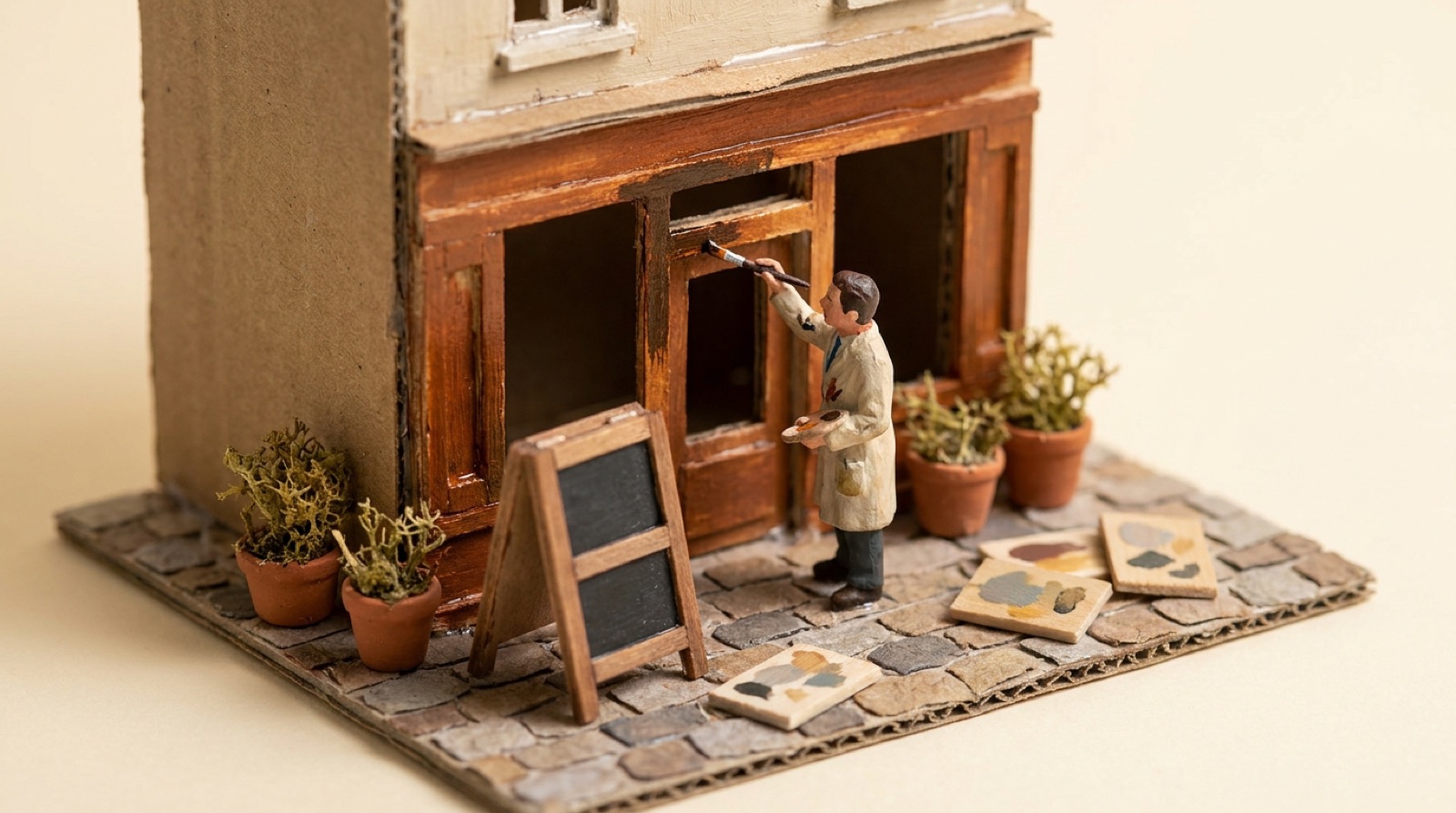
Your brand is the reason one restaurant charges $5 for a burger and another charges $12 for the exact same thing. The $12 place is not selling better beef. It is selling a feeling. That feeling is your brand, and you can build it deliberately.
Most operators fixate on the logo and call it done. The logo matters, but it is one small piece. Your brand lives in your signage, your uniforms, your music, your social media, your website, the way your staff greet a guest, and the story you tell about why you exist. When all of those things point in the same direction, customers feel something. When they feel something consistently, they come back. When they come back, you can charge a premium.
Here are the four steps to get there.
Step 1: Define Your Core Values
Your core values are not a mission statement you print and forget. They are the filter for every decision you make, from hiring to menu design to what music plays on a Tuesday afternoon.
Start by asking: what do I genuinely believe about food, hospitality, or my community? Then get specific. “Quality” is not a value. “We use locally sourced ingredients because we believe our neighborhood’s farmers deserve our business” is a value. The more precise you are, the easier it becomes to make consistent decisions.
Write your values down. Every team member, every design choice, and every customer interaction should reflect them. When your actions match your stated values, customers feel that alignment without being able to name it. That unnamed feeling is brand trust. Brand trust is what lets you charge a premium and still have a line out the door.
Step 2: Identify Your Ideal Customer
You cannot serve everyone. Trying to appeal to every person who might walk by kills your brand before it starts.
Picture one specific person. Not a demographic category, one human being. How old are they? Where do they hang out on a Saturday morning? What are they posting on Instagram? What do they care about beyond food? The more vividly you can describe this person, the more precisely you can build an experience they love.
When you know your customer this specifically, your design, your menu language, your social media tone, and even your playlist all start to align around one coherent signal. People who match that profile feel seen. They tell their friends. They become regulars.
This also answers the location question directly. Your ideal customer and your location are connected. If you have already identified your customer profile in detail, use that profile to evaluate locations. Ask whether the foot traffic, neighborhood character, and nearby businesses match the person you described. If they do not match, move on, no matter how cheap the rent looks.
Branding consistency is what makes this pay off. When people see your social media, then walk into your shop, then visit your website, the experience should feel like the same personality across every touchpoint. That consistency is what makes customers feel they know you. People trust what they know, and they pay more for what they trust.
Step 3: Craft Your Story
People do not connect with menus. They connect with stories. Your story is the conflict you faced and how you resolved it, and it gives customers a reason to root for you.
Every compelling brand story has tension. Maybe you struggled to find a product that served your community, so you built it yourself. Maybe you failed at something before this, and this business is the answer you found. Do not sand down the hard parts. The conflict is exactly what makes the story human and worth remembering.
When I built 720 Sweets from one shop to seven locations, the story we told was not “we make ice cream.” It was rooted in the experience we wanted people to have and the specific community we wanted to serve. That story gave customers something to believe in beyond the product. They were not just buying a dessert. They were part of something.
Your story also gives your team something to believe in. Staff who understand why the business exists show up differently than staff who just know their shift hours. That difference is visible to every customer who walks in.
Write your story down. Share it on your website, in your social media bio, and in how you train new hires. The story is not marketing fluff. It is the spine of your brand.
Step 4: Design Everything to Communicate Your Brand
Now you earn the right to think about your logo. After you have your values, your customer profile, and your story locked in, design becomes much easier because you know exactly what you are trying to communicate.
Your visual identity is not just a logo. It is your color palette, your typography, your signage, your packaging, your uniforms, your physical space, and every image you post online. Every one of those elements either reinforces your brand or contradicts it. There is no neutral.
A professionally polished design matters even at the early stage. Design agencies and experienced freelancers can be expensive. If your budget is tight, explore more affordable tools that let you create a cohesive starting point for your logo and brand materials. The goal is not perfection on day one. The goal is consistency from day one.
Your website deserves special attention. Research shows that around 70% of customers check a restaurant online before visiting. If your website is slow, hard to read on a phone, or looks nothing like your physical space, you are sending mixed signals before anyone even tastes your food. Make sure your website is mobile-friendly, loads fast, and clearly shows your hours, location, and menu. What people find online shapes whether they bother showing up in person.
Your in-store experience is the final and most powerful design element. The music, the lighting, the way the space smells, the friendliness of your staff, the texture of your packaging: all of it contributes to the feeling customers associate with your name. That feeling is what they describe when they recommend you to a friend. Make it intentional.
The Bottom Line
Your brand is built before anyone sees your logo. Define your values, know your customer precisely, tell a real story with real conflict, then design everything to communicate all three with total consistency. Customers who feel something become loyal. Loyal customers come back and bring others. As I learned scaling 720 Sweets, the product gets people in the door once. The brand is what keeps them coming back.
Watch the full video
Source — YouTube · the full breakdown, free
Tool — free · not sponsored, I built it
Want your exact numbers for a restaurant? The free calculator runs your cost to open, the ×1.4 cash reserve, and your break-even in about 30 seconds. Prefer paper? The One-Page Fundable Business Plan is the printable version.
Run your numbers →Questions owners actually ask
Where do I find data on my ideal restaurant customer?
Start with observation before you spend money on formal research. Spend time in the neighborhood where you plan to open, note who is already there, what they wear, where they eat, and what they post on social media. Platforms like Instagram let you study the followers of nearby businesses to build a detailed picture of the real humans in that area. Professional market research exists, but close observation of actual behavior in your target location is often more useful at the early stage.
Should I choose my location first or identify my target customer first?
Identify your target customer first. Once you have a specific, detailed profile of the person you want to serve, use that profile to evaluate locations. Ask whether the foot traffic, the neighborhood character, and the surrounding businesses match your ideal customer. A cheap lease in the wrong neighborhood will cost you far more in the long run than paying a little more to be where your customer already spends time.
Why does restaurant branding matter more than just having a good logo?
The logo is one small element. Your brand is the total feeling a customer gets every time they interact with your business, including your signage, uniforms, music, social media, website, and staff behavior. That consistent feeling is what lets one burger place charge $12 for the same product another sells for $5. The premium comes from the emotional experience, not the ingredients.
Why pay a monthly fee for a logo tool instead of just hiring a designer once?
A logo tool with a subscription gives you ongoing access to update your brand assets as your business evolves, create new materials like merchandise, social media graphics, and signage, and make tweaks without hiring a designer every time. For early-stage operators with tight budgets, the lower upfront cost and flexibility often outweigh the one-time design fee, especially when you are still refining what your brand communicates.
How important is a restaurant website if I have a strong social media presence?
Extremely important. Around 70% of customers check a restaurant online before visiting. Social media and a website serve different purposes. Your website is where people confirm your hours, find your address, and read your menu before making the decision to come in. Make sure your site is mobile-friendly, since most searches happen on phones, and that it visually matches the experience inside your shop.
The Weekly Receipt
One brand story, one number, one answered question. 2 minutes, Tuesdays.
Free. Unsubscribe anytime, one click, no games.
You're in, friend. See you Tuesday.
Keep going: restaurant guides
How Much Does It Cost to Open a Restaurant? (2026 Complete Breakdown)
The real, itemized cost to open a full-service restaurant in 2026, including Wilson's x1.4 cash rule, break-ev
12 Restaurant Assets Every Owner Needs to Build
The 12 restaurant assets that build your brand, from logo to uniforms, ranked by priority before you open in 2
3 Tactics to Position Your Restaurant Brand for Growth
Awards, media features, and strategic associations are the three free tactics that build customer trust and po
3 Things to Know Before Opening a Restaurant (And What Happens If You Skip Them)
Wilson K Lee breaks down the three foundational principles every restaurant owner must master: know your numbe
360 Ads for Restaurants: How to Build Customer Touchpoints Across Every Channel
Learn how 360-degree advertising builds the 20 touchpoints your restaurant needs to turn strangers into custom
Low Labor Restaurant Concepts: Fast vs QSR Compared
Fast concept and QSR are the lowest labor restaurant concepts. See real costs, staffing needs, and revenue to
5 Deadly Mistakes Every New Food Business Owner Makes
60% of restaurants fail in year one. Wilson K Lee breaks down the 5 deadly mistakes killing food businesses in
4 Actionable Steps to Prevent Your Restaurant from Going Bankrupt During a Crisis
Four concrete steps every restaurant owner needs to assess financial health, cut inefficiencies, secure fundin