Restaurant · Guide Updated August 2026
How to Build Your 1,000 Loyal Fans as a Restaurant Owner
You only need 1,000 customers spending $20 with you every week to run a million-dollar restaurant. Getting there requires mapping every stage of your customer journey, setting a goal for each stage, and then closing the gaps that are silently bleeding your repeat business. This guide walks through Phase 1 of that framework: discovering your customer journey stages and defining what your customer wants at each one.
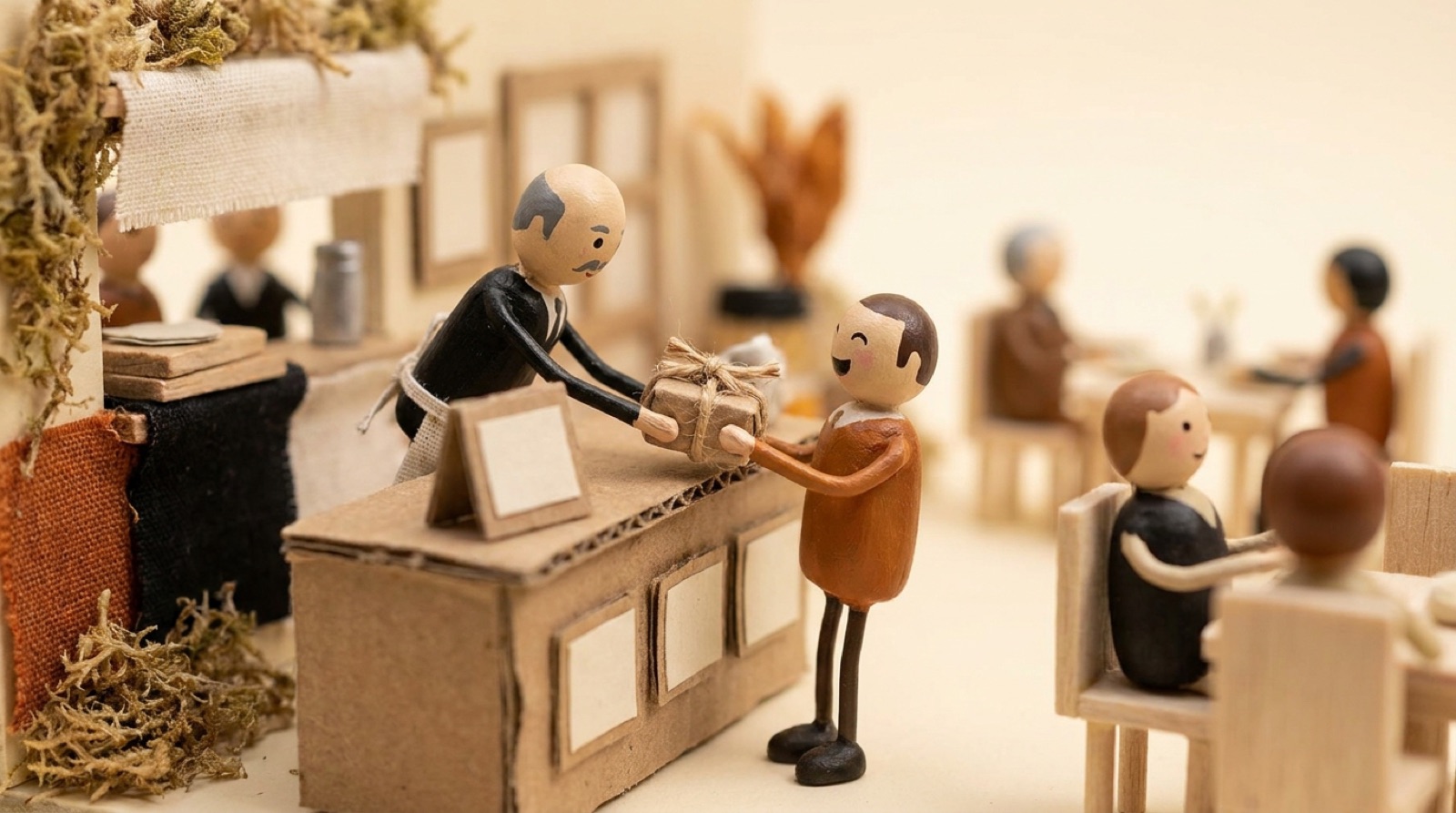
The math is simple: 1,000 customers spending $20 with you every single week equals a million-dollar business. That is the benchmark. That is the milestone. And the way you get there is not by running more ads or posting more content. It starts by mapping the journey your customers take before they ever sit down at your table.
This is Phase 1 of the 1K Loyal Fan Journey framework. We are zooming out, identifying every stage of your customer journey, and defining the goal your customer has at each stage. Phase 2 gets granular, but you cannot do the detail work until you do this first.
Before you read another sentence, pull out your Master Customer Avatar worksheet and your Winning Matrix. These two documents are not optional context. They are the inputs. Without them, you are designing a journey for a customer you have not defined yet.
Why Does a Restaurant Need 1,000 Loyal Fans?
Because 1,000 loyal fans spending $20 a week is a million dollars a year. That is the number I use as a success milestone when I work with operators. If you land at 500 loyal fans, that is still a strong business. But 1,000 is the target, and naming the target is how you build toward it.
Most restaurant owners I talk to already have this vision somewhere in their head. They want a full room, repeat faces, and word-of-mouth that actually works. The 1K Loyal Fan Journey is the structure that turns that vision into a plan you can execute stage by stage.
What Is the 1K Loyal Fan Journey?
It is a journey crafted by you, for every stage of interaction you have with your customers. That journey is almost never linear. It is multi-channel, it zigzags, and it includes touch points you did not even know existed in your business.
Here is a real example of how it plays out. A friend tells someone about a new restaurant in town. Two days later, that same person sees the restaurant on a foodie’s Instagram. On Saturday, they are planning a night out with another friend and they bring up that restaurant. They check Google reviews to confirm it is worth going. Then they finally show up. That is four to five touch points before they even walk through your door. Your job is to control as many of those touch points as possible and make each one work for you.
Why Should You Spend Time Mapping This Out?
Three reasons, and all three are concrete.
First, it shows you the gaps you would never spot otherwise. If you never map the journey, you might never realize that customers are leaving you reviews on Google Maps and you are not responding to a single one. To anyone searching your restaurant, silence looks like indifference. You are not indifferent. You just never knew to look there.
Second, it tells you where to put your marketing energy. If 90 percent of your customers are coming through referrals, you should be building a referral incentive program, not spending money on cold advertising. The journey map shows you what is already working so you can double down on it.
Third, it lets you intentionally design the experience. Every touch point your customer has with your restaurant either raises their expectation or lowers it. When you map the journey, you get to set the bar deliberately and make sure every interaction clears it.
What Are the Stages of a Restaurant Customer Journey?
A restaurant journey can be broken into the following stages. Your concept might have more or fewer, but this is a solid working framework.
Awareness. The customer first hears about you, usually through a friend, family member, or social media.
Research. They go looking for proof. They check Instagram, review sites, your website, or foodie accounts to find out what other people are saying. This stage is where trust is won or lost before you have even met them.
Decision. They commit. They decide your place is worth their time and money.
Arrival. They show up. Can they find you? Is parking clear? Is the entrance obvious? The arrival experience starts before they touch the door handle.
Ordering. They interact with your menu and your team. Some customers want to try something new. Others will order the same safe dish every single time. Both behaviors are valid. Your ordering experience needs to serve both.
Waiting. The food is being made. What is happening to the customer right now? Is the ambience holding them? Is there something to look at, listen to, or talk about? A 15 to 30 minute wait either builds anticipation or kills the mood.
Eating. The food arrives. In that first bite, they are deciding two things: how great is this, and am I coming back?
Leaving. They want to pay quickly, get out comfortably, find their car, and go. Make that process as frictionless as possible.
Feedback and return. They either tell someone about you or they do not. They either come back or they do not. This last stage feeds directly back into the first stage for someone new.
How Do You Define the Goal for Each Stage?
Listing the stages is only half the work. For each stage, you also need to name what your customer is actually trying to achieve. This is where your Master Customer Avatar becomes essential, because the goals shift depending on who your customer is.
At the awareness stage, the customer’s goal is to hear about somewhere new they can bring a date or their family. They are not thinking about you yet. They are thinking about their next social occasion.
At the research stage, the goal is validation. They want to know whether the trip is worth their time. They are reading reviews, looking at photos, checking prices. Give them reasons to say yes at this stage and you earn the visit.
At arrival, the goal is speed and ease. They want to get inside quickly and not stress about parking or finding the entrance.
At ordering, the goal splits. Some customers want discovery. Others want comfort. Your menu and your team need to handle both.
During the wait, the goal is not to get bored. Entertainment, atmosphere, and great service all serve this goal.
While eating, the goal is satisfaction and the internal question: is this worth repeating?
When leaving, the goal is a frictionless exit. Tap to pay, out the door, find the car. Done.
At the feedback stage, the goal is expression. A great experience gets shared. A bad one does too. Map this stage carefully because it feeds your next wave of awareness.
How Does This Connect to Your Master Customer Avatar and Winning Matrix?
Every goal I listed above is a generalization. Your actual customer’s goals are more specific, and you find those specifics inside your Master Customer Avatar. Who is this person? What do they care about when they are planning a night out? What would make them feel like a visit to your restaurant was worth it?
The Winning Matrix sits alongside this because it captures what your restaurant does better than anyone else. When you overlay your strengths against each stage of the customer journey, you start to see exactly where you can create a moment that turns a first-time visitor into a loyal fan.
These worksheets are not homework for homework’s sake. They are the raw material this entire framework runs on.
The Bottom Line
You need 1,000 loyal fans spending $20 a week. That number is achievable, but only if you can see the full path your customer walks from first hearing your name to coming back for the fourth time. Map the stages. Name the goal at each one. Then you will know exactly where the cracks are and exactly where to focus. The restaurant that controls the customer journey controls its own growth.
Watch the full video
Source — YouTube · the full breakdown, free
Tool — free · not sponsored, I built it
Want your exact numbers for a restaurant? The free calculator runs your cost to open, the ×1.4 cash reserve, and your break-even in about 30 seconds. Prefer paper? The One-Page Fundable Business Plan is the printable version.
Run your numbers →Questions owners actually ask
How many loyal customers does a restaurant actually need to make a million dollars?
The benchmark is 1,000 customers spending $20 with you every single week. That averages out to a million dollars a year. If you build 500 loyal fans at that same spend, you still have a strong business. But 1,000 is the milestone worth targeting.
What is the 1K Loyal Fan Journey?
It is a customer journey framework you build specifically for your restaurant. It maps every stage of interaction a customer has with your business, from the moment they first hear about you to the moment they leave feedback and decide whether to return. The journey is multi-channel and rarely linear.
Why do I need to map my customer journey instead of just focusing on marketing?
Mapping the journey shows you gaps you would never find otherwise. For example, customers may be leaving reviews on Google Maps that you are not responding to, which signals indifference to anyone searching your restaurant. It also tells you where your customers are already coming from so you can invest in what is already working rather than guessing.
What stages does a restaurant customer journey typically include?
The core stages are awareness, research, decision, arrival, ordering, waiting, eating, leaving, and feedback and return. Your specific concept may have more or fewer stages. The key is to identify each one for your own restaurant rather than borrowing a generic template.
What worksheets do I need before I start mapping the 1K Loyal Fan Journey?
You need your Master Customer Avatar and your Winning Matrix. Both are required before you can map the journey properly. Without knowing exactly who your customer is and what your restaurant does best, you are designing an experience for someone you have not defined.
Why does defining the customer's goal at each journey stage matter?
Each stage has a different job to do for the customer. At research they want validation, at arrival they want ease, at the waiting stage they want not to be bored. When you name the goal at each stage, you can design the experience to meet it rather than leaving it to chance.
If most of my customers come through referrals, should I change my marketing strategy?
Yes. If 90 percent of your customers are coming through referrals, you should focus your energy on building referral incentives that reward your existing customers for sending friends your way. The journey map tells you where your business is already strong so you can double down there rather than spreading effort thin.
The Weekly Receipt
One brand story, one number, one answered question. 2 minutes, Tuesdays.
Free. Unsubscribe anytime, one click, no games.
You're in, friend. See you Tuesday.
Keep going: restaurant guides
How Much Does It Cost to Open a Restaurant? (2026 Complete Breakdown)
The real, itemized cost to open a full-service restaurant in 2026, including Wilson's x1.4 cash rule, break-ev
12 Restaurant Assets Every Owner Needs to Build
The 12 restaurant assets that build your brand, from logo to uniforms, ranked by priority before you open in 2
3 Tactics to Position Your Restaurant Brand for Growth
Awards, media features, and strategic associations are the three free tactics that build customer trust and po
3 Things to Know Before Opening a Restaurant (And What Happens If You Skip Them)
Wilson K Lee breaks down the three foundational principles every restaurant owner must master: know your numbe
360 Ads for Restaurants: How to Build Customer Touchpoints Across Every Channel
Learn how 360-degree advertising builds the 20 touchpoints your restaurant needs to turn strangers into custom
Low Labor Restaurant Concepts: Fast vs QSR Compared
Fast concept and QSR are the lowest labor restaurant concepts. See real costs, staffing needs, and revenue to
4 Actionable Steps to Prevent Your Restaurant from Going Bankrupt During a Crisis
Four concrete steps every restaurant owner needs to assess financial health, cut inefficiencies, secure fundin
5 Deadly Mistakes Every New Food Business Owner Makes
60% of restaurants fail in year one. Wilson K Lee breaks down the 5 deadly mistakes killing food businesses in