Restaurant · Guide Updated August 2026
How to Create a Customer Avatar for Your Restaurant (4-Step Method)
To create a useful restaurant customer avatar, study three direct competitors online, observe their customers in person, then interview real buyers with a small gift card incentive. This four-step process, find your dream dogs, dissect their online channels, set up a tent, and talk to customers, gives you concrete demographic and psychographic data before you spend a dollar on your concept. Most operators skip this entirely, and that is exactly why they struggle.
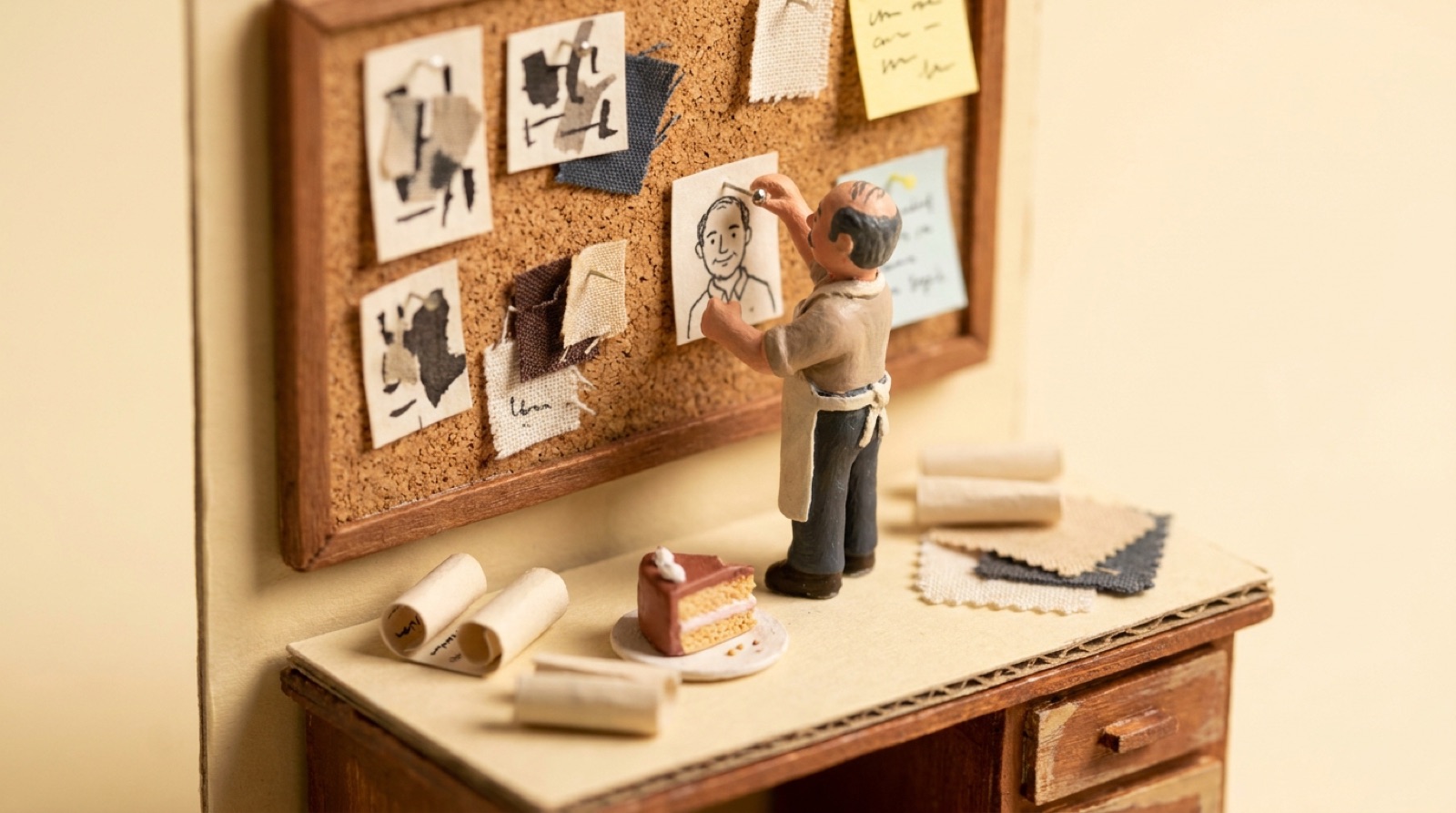
Your customer avatar is not a marketing exercise you do once and forget. It is the foundation that decides your menu language, your pricing, your packaging, and your promotions. Get it wrong and every dollar you spend on marketing pulls in the wrong crowd.
Here is the four-step method I use, and the same one I walked through before opening my own shops.
What Is the Customer Avatar and Why Does It Matter?
Your customer avatar is a detailed profile of the single person you are building your restaurant for. Not “everyone who eats food.” One specific person, with a specific income, specific habits, and specific reasons for choosing you over the place next door.
This avatar sits at the center of what I call the Golden Trifecta: the overlap between what you love, what the market needs, and what your ideal customer will actually pay for. Without a clear avatar, you are guessing at all three. With one, your decisions get much faster and much cheaper.
Step 1: Find Your Dream Dogs
Start by listing three food and beverage brands that inspire you and serve a customer close to the one you want. These are your direct competitors, and they are also your research subjects.
Do not pick random brands. Pick the ones you actually want to compete with, the ones whose customers you want walking into your shop. If you are opening a bubble tea concept in Vancouver, that might be Coco, Cha Time, and The Alley. Your three will be specific to your city and concept.
These three brands are what you are going to dissect in step two.
Step 2: Dissect Their Online Channels
For each of your three dream dogs, go through their full website, every social media channel, and every review platform you can find. You are looking for patterns in language, positioning, and customer response.
Ask yourself four specific questions as you work through each brand.
What language do they use to talk about themselves and their food? The language a brand chooses reflects the customer it is serving. A brand that leads with “fresh and natural ingredients,” “high-quality natural flavors,” and specific health benefits like skin care and stress relief is telling you its customer cares deeply about what goes into their body. A brand that leads with “indulgent,” “loaded,” and “treat yourself” is serving a completely different person.
How do they talk directly to their customers? Look at calls to action, product descriptions, and email language. Are they formal or casual? Do they explain ingredients or just list names? When I studied Cha Time, I noticed they use creative product names like “Secret Blossom” but then immediately list the ingredients underneath. That tells me their customer wants a little mystique but also needs transparency. That is a specific personality type.
What language do their customers use? Read the reviews carefully, both the four and five stars and the one and two stars. The positive reviews tell you what to do more of. The negative reviews tell you what to eliminate before you open. For Cha Time, I found that miscommunication around promotions and drinks coming out wrong were the top complaints. That is a direct instruction: build a protocol to repeat every order back to the customer before it is made.
What do high-engagement posts look like? When a brand posts something that gets significantly more comments and shares than usual, that content hit a nerve with its audience. When Cha Time introduced reusable cups with a discount, engagement spiked. That told me this customer demographic cares about environmental purpose. It also told me something sharper: even a 25-cent discount was enough to drive conversation. That means this customer is price-conscious. A fine-dining customer does not notice 25 cents. This one does.
After you finish dissecting all three competitors online, you will already have a rough sketch of your target customer. Step three sharpens it considerably.
Step 3: Set Up a Tent
Go to the physical location of your top competitor and stay there for an extended stretch of time. When I opened my first restaurant, I spent five hours doing exactly this. I was about to put hundreds of thousands of dollars and years of my life into this business. What is one day of observation worth compared to that? Nothing. Go do it.
You are not literally setting up a tent. You are sitting in your car, walking around the area, or grabbing a seat at a nearby spot. You are watching and recording.
Track these specific things:
- Types of customers: Are they couples, families, solos, or groups? When I observed a Cha Time location I clocked 37 couples, 5 families, 56 solos, and 15 groups.
- Age range: Get an honest estimate. Do not just guess “young people.”
- What they are wearing: Casual wear, work attire, athletic gear, trendy streetwear? Clothing signals income level, lifestyle, and identity.
- Language spoken: Both the language itself and the lingo within it. Are they using industry-specific terms, slang, or keeping it general?
- What they order: Keep a tally. You are building your own data on the most popular items. If brown sugar pearls come up constantly, that is a trend signal you can use.
- How they arrived: Walking, transit, driving? This affects your location criteria and your marketing channels.
- What they do while waiting: Are they on their phones? Talking in groups? This tells you how long a wait is acceptable.
- Questions they ask at the counter: This is gold. If 20 people in a row ask “what is your monthly special?”, that tells you this customer base expects and responds to rotating limited-time items. That is a programming decision for your own shop before you even open.
- Dine-in vs. take-out split: When I observed, roughly 80% ordered and left. That changes how you think about seating, packaging, and throughput.
Write everything down. The pattern that emerges from five hours of real observation is worth more than any survey you could buy.
Step 4: Talk to Them
After someone makes a purchase and steps away from the queue, approach them. Offer a $10 gift card for five minutes of their time. This works. I have done it. Most people will say yes.
You are trying to uncover three things: who they are, why they came, and what matters to them. The demographic data fills in the pattern the observation started. For a bubble tea shop, I found people like a 21-year-old student at UBC with zero income, and a 23-year-old accountant earning around $40,000 a year who came with his girlfriend. Two different people, but part of the same customer cluster.
The why matters just as much as the who. When people told me they came for a “bubble tea fix,” for “dessert after lunch,” or for a “snack after Korean BBQ,” they were telling me exactly where bubble tea fits into their day. That is a positioning insight. It tells you when to run promotions, what to put on your signage, and how to describe your shop to someone who has never heard of you.
Over 80% of people who open a restaurant never conduct research this thorough. That is not a criticism of them. It is an opportunity for you. The operators who do this work come in with real data instead of assumptions, and real data produces real decisions.
How Do the Four Steps Connect?
Each step builds on the last. The online research gives you a hypothesis about your customer. The in-person observation tests it with your own eyes. The interviews confirm it with the customer’s own words.
By the end of this process you have a customer avatar built from three data sources: the competitor’s own messaging, live behavioral observation, and direct conversation. That is not a persona from a template. That is a real profile you built from the ground up.
Once you have it, every other decision in your business becomes easier. Your menu language either speaks to this person or it does not. Your price point either fits their budget or it does not. Your promotions either land or they fall flat. You will know which, because you know exactly who you are talking to.
The Bottom Line
Building a customer avatar is not optional prep work. It is the first real decision you make about your restaurant. Find three competitors you respect, pull apart everything they publish, go watch their customers in person, and then talk to those customers directly. The four steps take time and they require you to get out of your comfort zone, especially the interviews. Do them anyway. You are about to invest serious money and years of your life into this business. A few days of focused research is the cheapest investment you will ever make.
Watch the full video
Source — YouTube · the full breakdown, free
Tool — free · not sponsored, I built it
Want your exact numbers for a restaurant? The free calculator runs your cost to open, the ×1.4 cash reserve, and your break-even in about 30 seconds. Prefer paper? The One-Page Fundable Business Plan is the printable version.
Run your numbers →Questions owners actually ask
How many competitors should I research for my customer avatar?
Research three direct competitors, the ones whose customers you actually want to attract. Wilson calls these your "dream dogs." Three is enough to find patterns without creating analysis paralysis. Pick brands specific to your city and your concept category.
What should I look for when studying a competitor's social media?
Focus on the language they use to describe their food, how they speak directly to customers, and which posts get unusually high engagement. High engagement signals what that audience cares about most. Also read both the positive and negative reviews to find what to copy and what to avoid.
How long should I spend observing a competitor's location in person?
Wilson spent five hours at a single location and considers that a minimum for meaningful data. You need enough time to track customer types, age ranges, ordering habits, arrival methods, and the questions people ask staff. Half an hour gives you anecdotes. Five hours gives you patterns.
How do I get strangers to talk to me about why they visit a competitor?
Offer a $10 gift card for five minutes of their time. Approach people after they have made their purchase and stepped away from the line. Wilson has used this method and reports strong success rates. The courage to ask is the only thing standing between you and the data.
What specific questions should I ask during customer interviews?
Focus on demographics (age, occupation, income), why they came that day, what they ordered, how often they visit, and what else they do around that visit. Wilson's interviews uncovered key context like "snack after Korean BBQ" and "dessert after lunch," which directly shaped positioning decisions.
Does the customer avatar process work for restaurants other than bubble tea shops?
Yes. Wilson presents bubble tea and Cha Time as one worked example, but the four-step framework applies to any food and beverage concept. The specific data points you track, health-consciousness, price sensitivity, customization preference, will simply vary based on the competitor brands you choose to study.
What do negative reviews tell me about my target customer?
Negative reviews reveal the gaps your competitors have created that you can close before you open. In Wilson's Cha Time example, complaints about miscommunication on promotions and incorrect orders pointed directly to a need for clear order-confirmation protocols. One and two-star reviews are a free instruction manual.
The Weekly Receipt
One brand story, one number, one answered question. 2 minutes, Tuesdays.
Free. Unsubscribe anytime, one click, no games.
You're in, friend. See you Tuesday.
Keep going: restaurant guides
How Much Does It Cost to Open a Restaurant? (2026 Complete Breakdown)
The real, itemized cost to open a full-service restaurant in 2026, including Wilson's x1.4 cash rule, break-ev
12 Restaurant Assets Every Owner Needs to Build
The 12 restaurant assets that build your brand, from logo to uniforms, ranked by priority before you open in 2
3 Tactics to Position Your Restaurant Brand for Growth
Awards, media features, and strategic associations are the three free tactics that build customer trust and po
3 Things to Know Before Opening a Restaurant (And What Happens If You Skip Them)
Wilson K Lee breaks down the three foundational principles every restaurant owner must master: know your numbe
360 Ads for Restaurants: How to Build Customer Touchpoints Across Every Channel
Learn how 360-degree advertising builds the 20 touchpoints your restaurant needs to turn strangers into custom
Low Labor Restaurant Concepts: Fast vs QSR Compared
Fast concept and QSR are the lowest labor restaurant concepts. See real costs, staffing needs, and revenue to
5 Deadly Mistakes Every New Food Business Owner Makes
60% of restaurants fail in year one. Wilson K Lee breaks down the 5 deadly mistakes killing food businesses in
4 Actionable Steps to Prevent Your Restaurant from Going Bankrupt During a Crisis
Four concrete steps every restaurant owner needs to assess financial health, cut inefficiencies, secure fundin