Restaurant · Guide Updated August 2026
How to Design a Winning Food Menu Using the Four-Item Framework
A winning menu is not a long list of options. It is four strategically placed items: a hero that anchors your pricing, a decoy that makes the hero look like a deal, an alternative that gets hesitant buyers in the door, and an upsell that grows every order total. Cut the excess flavors, apply Pareto's Law, and every item on your menu earns its spot.
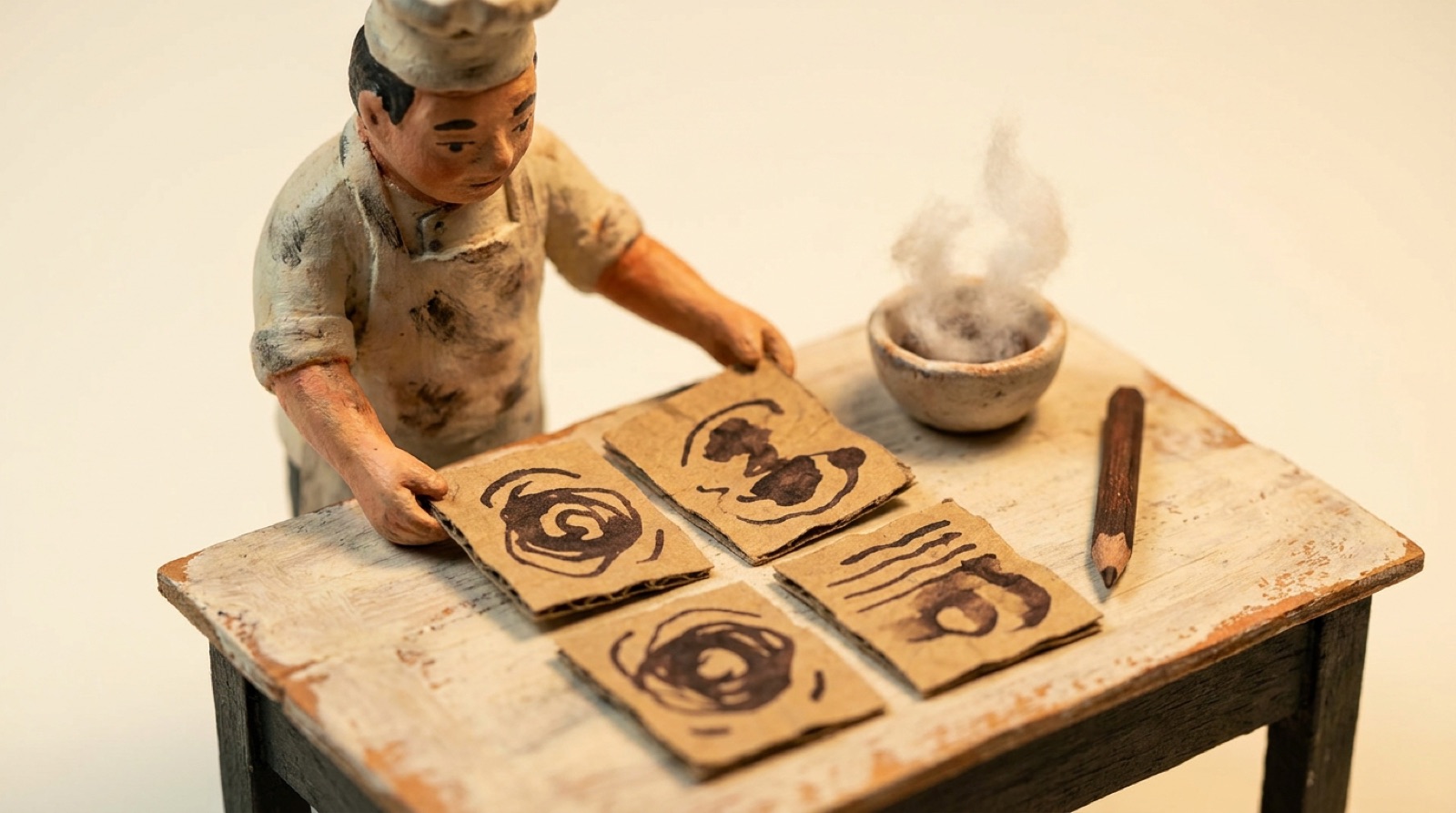
A winning menu appeals to a wide range of taste preferences while still speaking directly to your specific customer avatar. It also makes you as much money as possible from every single order. Those two goals are not in conflict. The four-item framework below shows you exactly how to achieve both.
What Makes a Menu “Winning” in the First Place?
A winning menu does three things. It appeals to the range of tastes within your customer base. It increases the chance that people order from you again and again. And every single item on it serves a specific, intentional purpose.
You are not throwing items on the menu because a customer asked for them. You are building a tool that earns money.
What Is the Biggest Menu Mistake Small F&B Businesses Make?
The most common mistake is offering too many variations of the same product.
A cupcake business decides to offer ten flavors because they want to appeal to everyone. Customers keep requesting new flavors, so the owner keeps adding them. It feels like good customer service. It is actually a profitability trap.
Here is why. Pareto’s Law tells you that 20% of your items will make up 80% of your revenue. That means the other 80% of your menu is mostly dead weight. Worse, when you carry ten flavors and cannot sell out every day, you get spoilage. Spoilage destroys your margins.
The smarter move is to cut down to the five most popular flavors and then offer those same flavors in different formats. For a cupcake shop that could look like normal-size cupcakes, cupcakes in a jar to go, and mini cupcake samplers. You are offering different variations of the same product, not a never-ending list of flavors. You appeal to more people, waste less product, and keep your operations clean.
What Is the Hero Item?
The hero item is your baseline. It anchors the pricing for your entire menu.
Before you can set it, you need to know where you stand competitively. What are your competitors charging? What quality and experience are you offering compared to them? Once you have done that competitive analysis, you can place yourself confidently in the market and name your price.
In my dessert brand, we landed on $5.95 for our signature ice cream cup. That became the hero item. Every other pricing decision on our menu was made in relation to that number. Your hero item works the same way: identify it first, price it based on your competitive positioning, and build the rest of the menu around it.
What Is a Decoy Item and Why Do You Need One?
A decoy item is a much more expensive version of your hero item. Its job is not to sell in volume. Its job is to make your hero item look like an obvious, attractive deal by comparison.
When you place a $30 gold flake ice cream next to a $6 ice cream cup, that $6 cup suddenly looks exceptional value. The comparison does the selling for you.
The best real-world example I know of is Steveston Pizza in Vancouver. They have a pizza on the menu for $850. It comes with tiger prawns, lobster, ratatouille, steelhead, and caviar. They are not banking on selling dozens of those every night. That pizza exists as a decoy. Once it is on the menu, their other pizzas at $45 feel like a bargain. Put a $45 pizza next to a Domino’s or Pizza Hut menu and it looks expensive. Put it next to an $850 pizza and customers think “you know what, $45 is totally reasonable.” That is the power of a decoy item.
A practical pro tip: many small businesses use extremely high-priced items specifically to lead customers to believe the main hero item is an amazing deal. You do not need a $850 pizza to pull this off. You just need a premium variation that sits noticeably higher than your hero price.
What Is an Alternative Item?
The alternative item is priced lower than your hero item. It exists to get hesitant customers in the door.
Sometimes a customer browsing your menu is not quite ready to commit to your main product. A cheaper option gives them a low-risk entry point. They try it, they love the quality, and now you have a foot in the door to sell them the full experience next time.
The alternative item should be a smaller or simpler variation of your hero, not a completely different product. It gives them a taste. It should not cannibalize the hero item either. In my dessert brand, ice cream sandwiches worked as an alternative to the cup of ice cream because they serve different moments. The sandwich goes in the freezer for later; the cup is enjoyed right there. They also attract slightly different customers. Some people are cup-of-ice-cream people. Some are ice cream sandwich people. The alternative item captures both without hurting the hero’s sales.
Price it a little lower than the hero. The lower price is the teaser that gets them started with you.
What Is an Upsell Item?
An upsell item is an add-on that increases the total value of each order. The critical rule here is that it has to be an easy yes.
Think about ordering an ice cream and hearing, “Would you like to add a toasted marshmallow for $1.95?” Almost nobody says no to that. It is a small amount of money, it sounds delicious, and it adds a moment of delight to the experience. That $1.95 adds up across every single order you take.
Most effective upsell items are priced under $10. Below that threshold, customers stop calculating whether it is worth it and just say yes. Above $10, they start thinking. You want to eliminate that friction completely.
The upsell is not a hard sell. It is a small, complementary offer that customers feel good saying yes to.
Do All Four Items Need to Be Available at Launch?
No. This is one of the most relieving things I can tell any operator building out their menu for the first time.
You are doing a lot of work to get your food business off the ground. Launching all four item types simultaneously is not a requirement. It is completely normal for businesses to show a “coming soon” label on certain menu items, whether that is on your website or your Instagram. That teaser actually builds anticipation. Your customers get a preview of what is coming, and you buy yourself time to get ready.
Not having every item on day one will not break your brand. Plan for each item, build it properly, and launch it when you are ready.
The Bottom Line
Four items, four purposes: hero anchors your pricing, decoy makes the hero look like a deal, alternative gets hesitant buyers started, upsell grows every ticket. Cut your flavor list down to what actually sells, stop the spoilage, and make every item on your menu earn its place. The menu is not a wish list. It is a profit system.
Watch the full video
Source — YouTube · the full breakdown, free
Tool — free · not sponsored, I built it
Want your exact numbers for a restaurant? The free calculator runs your cost to open, the ×1.4 cash reserve, and your break-even in about 30 seconds. Prefer paper? The One-Page Fundable Business Plan is the printable version.
Run your numbers →Questions owners actually ask
How many items should a small food business have on its menu?
There is no single magic number, but the guiding principle is Pareto's Law: 20% of your items will drive 80% of your revenue. That means a long menu is usually working against you. Cut down to your most popular flavors or products, then offer those in different formats or sizes rather than adding entirely new products. Fewer items means less spoilage and simpler operations.
What is a decoy item and does it actually work?
A decoy item is a significantly more expensive version of your hero product. Its purpose is not to sell in volume but to make your main item look like an obvious deal by comparison. Steveston Pizza in Vancouver prices one pizza at $850, which makes their $45 pizzas feel very reasonable to customers. You do not need an extreme price to use this strategy. You just need a premium option that sits noticeably above your hero price.
How do I price my hero item?
Start with a competitive analysis of what similar businesses in your market are charging. Determine where you sit in terms of quality and customer experience relative to those competitors, then set your price to reflect that positioning. The hero item price becomes the anchor for your entire menu, so getting this right first is essential before pricing anything else.
What makes a good upsell item for a food business?
A good upsell is a complementary add-on priced under $10, ideally well under. The goal is to make it an easy yes with no friction. A $1.95 toasted marshmallow added to an ice cream order is a good example: it is small, it sounds great, and almost nobody declines it. If your add-on requires the customer to think hard about whether it is worth it, the price is too high.
What is the difference between an alternative item and just having a smaller size?
An alternative item can absolutely be a smaller size or simpler version of your hero product. The key is that it gives customers a lower-priced entry point without cannibalizing sales of the hero item. An ice cream sandwich and a cup of ice cream, for example, serve different occasions and different customer preferences, so offering both does not hurt the hero. The alternative item should feel like a teaser that leads customers toward the full experience over time.
Should I launch all four menu items on opening day?
No. Launching all four item types at once is not required and can add unnecessary stress when you are already managing everything else that comes with opening. It is common and completely acceptable to launch with your hero item and one or two others, then add remaining items with a 'coming soon' teaser. Your brand will not suffer from a staged rollout, and customers often appreciate the anticipation it builds.
The Weekly Receipt
One brand story, one number, one answered question. 2 minutes, Tuesdays.
Free. Unsubscribe anytime, one click, no games.
You're in, friend. See you Tuesday.
Keep going: restaurant guides
How Much Does It Cost to Open a Restaurant? (2026 Complete Breakdown)
The real, itemized cost to open a full-service restaurant in 2026, including Wilson's x1.4 cash rule, break-ev
12 Restaurant Assets Every Owner Needs to Build
The 12 restaurant assets that build your brand, from logo to uniforms, ranked by priority before you open in 2
3 Tactics to Position Your Restaurant Brand for Growth
Awards, media features, and strategic associations are the three free tactics that build customer trust and po
3 Things to Know Before Opening a Restaurant (And What Happens If You Skip Them)
Wilson K Lee breaks down the three foundational principles every restaurant owner must master: know your numbe
360 Ads for Restaurants: How to Build Customer Touchpoints Across Every Channel
Learn how 360-degree advertising builds the 20 touchpoints your restaurant needs to turn strangers into custom
Low Labor Restaurant Concepts: Fast vs QSR Compared
Fast concept and QSR are the lowest labor restaurant concepts. See real costs, staffing needs, and revenue to
5 Deadly Mistakes Every New Food Business Owner Makes
60% of restaurants fail in year one. Wilson K Lee breaks down the 5 deadly mistakes killing food businesses in
4 Actionable Steps to Prevent Your Restaurant from Going Bankrupt During a Crisis
Four concrete steps every restaurant owner needs to assess financial health, cut inefficiencies, secure fundin