Restaurant · Guide Updated August 2026
How to Get Free Press for Your Restaurant: A 4-Step PR Toolkit
You can earn press coverage that would otherwise cost thousands of dollars by following four steps: build a wow factor, craft an irresistible press release, do targeted journalist outreach, and trigger a FOMO loop so more outlets follow the first one. At 720 Sweets, these four steps generated tens of thousands of dollars in free press coverage across multiple markets.
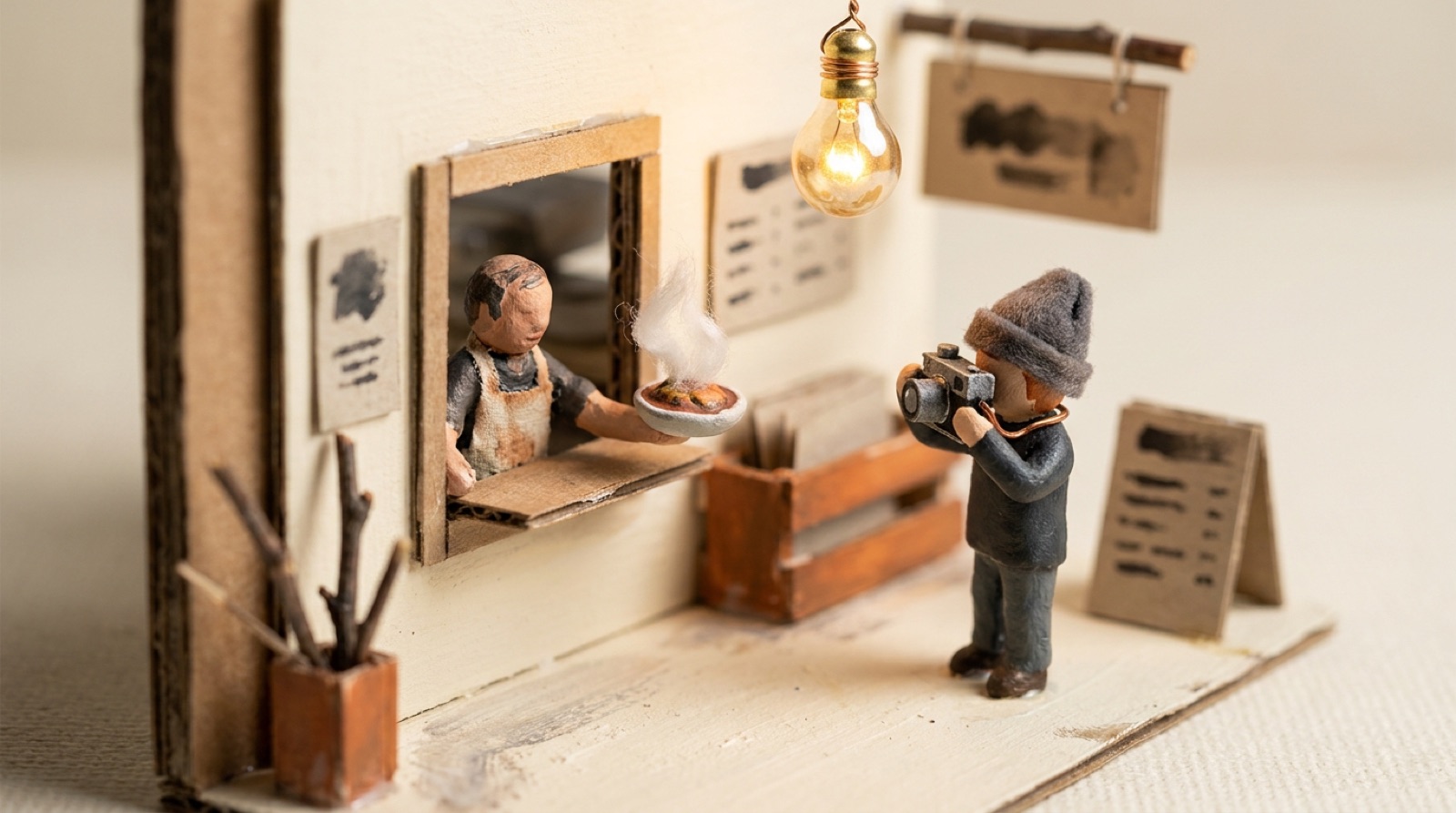
PR is a gift that always keeps giving. One earned article costs you nothing, builds brand awareness, drives organic traffic, boosts your Google ranking through link credibility, and creates social proof that compounds over time. When we used this system at 720 Sweets, we earned tens of thousands of dollars in free press. One paid article cost us over two thousand dollars. That context alone should tell you why getting earned media right matters.
Here is the four-step toolkit: wow factor, irresistible press release, journalist outreach, and FOMO enhancer. Work them in order.
What Is Earned Media and Why Does It Beat Paid?
PR falls into two buckets. Earned media is organic and free. A food blogger writes a lengthy post about your menu. A local radio show talks up your happy hour. A publication lists you in their “best cafes” roundup. You did not pay for any of it.
Paid media is sponsored. You pay the publication to appear in that top-five list. You pay the blogger or the radio show. Results can be real, but the price is steep. We paid over two thousand dollars for a single article. One well-placed earned mention covers that cost and then some.
There is also a compounding effect with earned media. When one outlet covers you, other journalists get FOMO. They do not want to miss the next big story. One article becomes two becomes five. That ripple effect does not happen with paid placements.
How Do You Find Your Wow Factor?
Journalists need content that makes them stop and say “wow.” That reaction matters because their audience’s attention is what sells ad space. Your job is to hand them a story their readers will want to read. No story, no coverage.
Three reliable ways to find your wow factor:
Look for trends in other markets. There is always a cultural lag between cities and countries. When I traveled to Korea, smoking honeycomb ice cream was a full movement. In North America, it had not started yet. I spotted the gap and built our ice cream chain around it. The trend already had proof of concept. I just brought it home first. Your wow factor could be a specific item, a particular ingredient, a cooking style, or a completely different ambience.
Do something polarizing. Going against local convention creates buzz. Charging a deposit for reservations is normal in New York. In Vancouver, it is almost unheard of. If you introduce it for a good reason, that contrast alone generates conversation. Polarizing moves carry risk, but a tasteful risk usually works.
Be timely and relevant. Journalists are always hunting for content that fits the current season or moment. A five-course Valentine’s dinner, a pumpkin spice flavor for fall, a watermelon shaved ice for summer. These are not revolutionary, but they are current and they are new to readers right now.
At 720 Sweets we repackaged existing products to hit this mark. We took our green tea ice cream, styled it to look like a Christmas tree, and launched it as a seasonal item. We took milk tea ice cream we had been selling for years and gave it a reindeer presentation. Both went huge because the timing was right and the visual was shareable. The product was not new. The story was.
When we expanded into Edmonton, no one there was doing smoking ice cream. That novelty was enough. Multiple radio stations and publications covered us because they knew their audience had never seen it before. Find the gap in your market and own it.
How Do You Build an Irresistible Press Release?
Pitching a story is like selling a product. Your customer is the journalist. You need to understand what they need before you write a single word.
There are three sub-steps here.
Step one: find the right outlets. Go to the websites of your top three competitors. Look for their press or media page. Make a list of every outlet that has featured them. If they do not have a dedicated press page, Google their name and scan the first five pages of results for magazine and publication coverage. You are building a target list of outlets that have already proven they cover your type of restaurant.
Step two: study the journalists. Every journalist has a style. Some write listicles: “Top 10 sushi restaurants in Vancouver.” Some write features, giving one or two restaurants an in-depth spotlight. Some write reviews based on their personal dining experience. Click into each journalist’s profile within the outlet. Read their last several articles. Ask yourself what patterns you see. Do they lean toward listicles or long-form features? Is the tone opinionated or objective? Once you know their style, you can shape your pitch to match it. You are doing the work for them before they ever ask.
Do not rush this step. You are building a long-term relationship with these journalists. Every new menu item, every new location, every new wow factor is another reason to reach out again. Treat them with respect from the first contact.
Step three: craft the press release itself. The press release is a concise document that gives the journalist the angle, the story, and the talking points. It lets them decide in minutes whether your story is worth covering. Keep it clear, focused, and easy to skim. The next lesson in this series covers the actual writing of a press release in full detail. For now, know that your press release is the foundation everything else rests on.
How Do You Reach Out to Journalists?
You have your outlet list. You have studied your journalists. You have your press release ready. Now you need to get it in front of the right person.
Find their contact information in two ways. First, click into their bio on the publication’s website. Email, Twitter, and Instagram handles are often listed there. Second, Google their name alongside the publication name. Journalist contact details show up more often than you would expect.
When you send the outreach email, do three things.
First, reference one of their recent articles as a connection point. If they wrote a listicle that performed well, mention it. Show them you did the homework and that your pitch fits their wheelhouse.
Second, paste your press release directly into the email body. Do not make them download an attachment to understand what you are asking.
Third, create a shared Google Drive folder and include the link. That folder should hold your press release, campaign photos, and a photo of you or your team. Journalists are often working on multiple stories at once. If they like your pitch and need to move fast, everything is already there. The last thing you want is for them to be excited about your story and then get bogged down chasing assets from you.
Two timing tips. Send your outreach at 8:55 AM, just before their workday starts, or at 10:10 AM when they are deciding where to have lunch. Use a tool called MixMax in Google Chrome to see whether your email has been opened.
Follow up two days after your first send. Journalists get 20 to 30 pitches every single day. Your email can get buried. A follow-up after two days is not rude. It is a friendly nudge, and it may be the first time they actually see it.
How Does the FOMO Loop Work?
Once one outlet covers you, your job is to make every other journalist feel like they are missing the story of the week.
Here is the cycle. Monitor all outlets after you send your press release. When one publication covers you, share that article across all your social media channels and your website. Tag the handles of other outlets and publications you want to target. Then, if you have the budget, run a paid engagement ad on that post. Set the geographic targeting to the city where those publication headquarters are located. Set a second ad with an engagement objective aimed at your customer avatar so your own audience sees the coverage and reacts to it.
When journalists see your post lighting up with comments and engagement, and they see a competitor outlet featured you, their FOMO kicks in. They do not want to be the publication that missed the flaming king salmon roll story while everyone else ran it.
To make this concrete: say the Georgia Straight covers your restaurant. You post the article on Facebook and Instagram. You tag outlets like Vancouver Courier, Dish Vancouver, Vancouver Sun, and Vancouver Is Awesome. You run one ad targeting people near those publication offices and a second ad for social proof with your customers. Now repeat every time a new outlet covers you. Each cycle feeds the next one.
The Bottom Line
PR is not a one-time campaign. It is an ongoing practice tied to every new launch, every seasonal menu change, and every new location you open. The four steps, wow factor, press release, journalist outreach, and FOMO loop, work together as a system. Master the first one and the rest gets easier. The operator maxim worth remembering: give journalists a story their audience wants to read, make it easy for them to run it, and the coverage takes care of itself.
Watch the full video
Source — YouTube · the full breakdown, free
Tool — free · not sponsored, I built it
Want your exact numbers for a restaurant? The free calculator runs your cost to open, the ×1.4 cash reserve, and your break-even in about 30 seconds. Prefer paper? The One-Page Fundable Business Plan is the printable version.
Run your numbers →Questions owners actually ask
How much does a single paid media article typically cost?
Based on direct experience running 720 Sweets, a single paid media article can cost over two thousand dollars. That figure is what makes earned media so valuable: one well-placed organic feature covers that cost entirely. Paid placements also do not carry the same credibility signals that earned coverage does.
How many pitches does a journalist receive each day?
Journalists receive around 20 to 30 pitches every single day, regardless of the size of the publication. That volume is exactly why your outreach needs to be easy to read, formatted to match their writing style, and supported by a complete asset folder. Make it easy and you stand out from most of the other pitches in their inbox.
When is the best time to send a journalist outreach email?
Send at 8:55 AM, just before their workday starts, or at 10:10 AM when they are deciding how to spend their late morning. Use a tool called MixMax in Google Chrome to confirm whether your email was opened. Follow up two days after your initial send if you have not heard back.
What should I include in my shared Google Drive folder for journalists?
The folder should contain your press release, campaign photos, and a photo of you or your team. The goal is to give the journalist everything they need to run the story without any back-and-forth coordination. If they have to ask for assets, there is a real chance they move on to a simpler pitch instead.
What is the FOMO loop and how do I trigger it?
The FOMO loop works by making journalists at other outlets feel like they are missing a trending story. When one publication covers you, share that article on all your social channels, tag other target outlets, and run a paid engagement ad targeted geographically near those publication offices. When journalists see strong engagement and a competitor outlet already ran the story, they do not want to be left behind.
Does my wow factor have to be a completely new product?
No. At 720 Sweets, existing products were repackaged into seasonal presentations, green tea ice cream styled as a Christmas tree and milk tea ice cream shaped like a reindeer, and both generated significant press coverage. The product was not new. The timing, the visual, and the story angle were. Novelty in presentation or context counts as a wow factor.
The Weekly Receipt
One brand story, one number, one answered question. 2 minutes, Tuesdays.
Free. Unsubscribe anytime, one click, no games.
You're in, friend. See you Tuesday.
Keep going: restaurant guides
How Much Does It Cost to Open a Restaurant? (2026 Complete Breakdown)
The real, itemized cost to open a full-service restaurant in 2026, including Wilson's x1.4 cash rule, break-ev
12 Restaurant Assets Every Owner Needs to Build
The 12 restaurant assets that build your brand, from logo to uniforms, ranked by priority before you open in 2
3 Tactics to Position Your Restaurant Brand for Growth
Awards, media features, and strategic associations are the three free tactics that build customer trust and po
3 Things to Know Before Opening a Restaurant (And What Happens If You Skip Them)
Wilson K Lee breaks down the three foundational principles every restaurant owner must master: know your numbe
360 Ads for Restaurants: How to Build Customer Touchpoints Across Every Channel
Learn how 360-degree advertising builds the 20 touchpoints your restaurant needs to turn strangers into custom
Low Labor Restaurant Concepts: Fast vs QSR Compared
Fast concept and QSR are the lowest labor restaurant concepts. See real costs, staffing needs, and revenue to
5 Deadly Mistakes Every New Food Business Owner Makes
60% of restaurants fail in year one. Wilson K Lee breaks down the 5 deadly mistakes killing food businesses in
4 Actionable Steps to Prevent Your Restaurant from Going Bankrupt During a Crisis
Four concrete steps every restaurant owner needs to assess financial health, cut inefficiencies, secure fundin