Restaurant · Guide Updated July 2026
How to Market Your Food Business on Instagram
To market your food business on Instagram, you need two things before you ever post: a clearly defined customer avatar and a measurable goal. Without those, you are creating content for nobody. Once you have them, Instagram lets you build multiple positive touch points every single day, turning strangers into loyal paying customers, all without spending a dollar on ads.
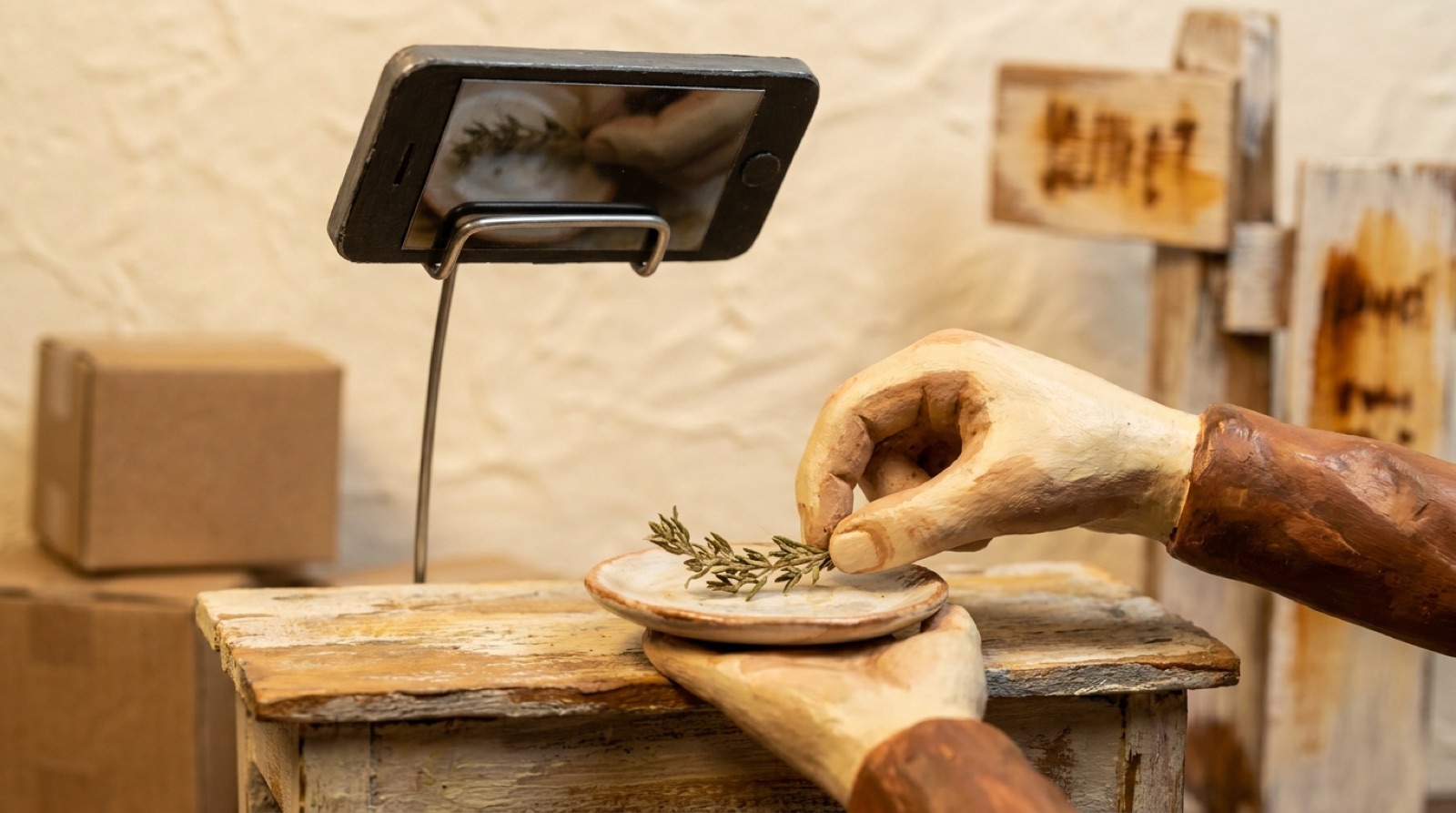
If your food business is not on Instagram, you basically do not exist. That is not a scare tactic. It is the reality of where customers decide what to eat, what to buy, and who to support. This guide walks you through the exact framework I use to market food on Instagram, the same one I built across seven locations of 720 Sweets before I sold the business.
Why Instagram Is Non-Negotiable for Food Businesses
It does not matter whether you run a cloud kitchen, a home bakery, a farmer’s market stall, or a catering operation. Instagram gives you three things every food business needs: brand awareness, direct engagement with customers, and a channel to actually take orders.
The numbers back this up. Instagram has more than one billion active monthly users. More than 500 million people use Stories every single day. The average user spends more than 30 minutes on the platform daily. And research from Facebook found that 86 percent of millennials try a new restaurant after seeing food-related content online.
I will make it personal. When my wife Cass and I decide where to eat, the first thing she does is pull up Instagram and scroll her saved feeds. That is how the decision gets made. If you are not showing up there, you are not in the running.
Every month you are not on Instagram, or not doing it properly, the competition gets thicker. Start now.
Step 1: Identify Your Customer Avatar
This is the foundation of everything. I preach it constantly and I will keep preaching it until it sticks: you must know exactly who you are trying to serve before you post a single photo or write a single caption.
Your customer avatar drives every decision in your business. The pricing of your menu items, your packaging design, your logistics, your promotions, and yes, your entire Instagram strategy. Skip this step and you are building on sand.
Let me tell you about one of my students. He had an ice cream shop at a mall location and he was struggling. He noticed a macaroon kiosk nearby doing around $50,000 a month. That kiosk owner eventually retired and moved out, so my student started sourcing and selling macaroons. His macaroon sales came in around $5,000. He then saw a cookie shop doing well, started selling cookies too, and again he was doing a fraction of their revenue.
The problem was not the products. The problem was that he had no defined customer in mind. He was throwing spaghetti at the wall. The macaroon kiosk thrived because it owned a specific space in the customer’s mind. People walking into that mall already knew where they were going when they needed a special treat to bring to a gathering. Every part of that kiosk, the products, the display, the experience, spoke directly to that one customer. My student’s shop was selling ice cream, milkshakes, bubble tea, cookies, and macaroons. He was talking to everyone and reaching no one.
Now think about what this means for Instagram. If you target a 60-year-old man, that is a completely different strategy than targeting a 12-year-old. Different platforms, different content formats, different reasons for being online. One might be there for information, the other purely for entertainment. When you know your customer, you know which channel to use and what to say on it.
A lot of people start posting on Instagram without this clarity, get a few hundred followers after months of work, decide Instagram does not work, and quit. Instagram did not fail them. They just never had a specific person to talk to.
Step 2: Create a Clear Goal for Your Instagram
What you do not measure does not get managed. I say this because I have seen two failure patterns play out over and over.
Pattern one: you get excited, post every day for a week, get some likes from friends and family, then life takes over, you post less and less, and by week four you have decided Instagram is dead.
Pattern two: you hear that you need to post constantly. Reels, Stories, IGTV, carousels, every day. You burn yourself out in two weeks. The likes are coming in but none of it is turning into sales. By week three you are done.
Both patterns come from the same root cause: no goal.
A goal tells you whether your effort is actually moving the business forward. Without one, you have no baseline, no way to know if a strategy is working, and no reason to keep going when it gets hard. Instagram is not a sprint. It is a long game that rewards consistency. You need a goal to stay consistent.
How Touch Points Turn Followers into Customers
Here is how I think about Instagram’s real purpose for a food business. It is the best platform available for building positive touch points with your audience.
A touch point is any interaction a customer has with your brand. The more positive touch points they accumulate, the more likely they are to buy from you and become loyal fans. Google’s research on the food industry specifically says customers need roughly 20 positive touch points before they decide to purchase from a brand.
That sounds like a lot. But Instagram is uniquely powerful here because you can create multiple touch points in a single day. Compare that to a 20-second TV ad, which gives you one touch point per airing, or email marketing, where each touch point is one email. On Instagram, in a single day, you can post behind-the-scenes content of your kitchen, have your followers see other customers tagging your shop, run a live Q&A, and share a story of your process. That is four to six touch points before the day is over.
Take a coffee shop as a simple example. You share a behind-the-scenes video of making your signature cookie. Touch point. A customer tags your shop in their story. Touch point. You go live and answer questions about your ingredients. Touch point. Someone new lands on your profile and sees dozens of other people loving your product. Touch point. That is how window shoppers become buyers.
Why User-Generated Content Does the Heavy Lifting
What other people say about your brand is far more powerful than what you say about yourself. Here is the data on that: 92 percent of consumers turn to people they know for referrals before any other source. Millennials trust user-generated content more than 50 percent over branded content. And 93 percent of consumers say user-generated content is helpful when deciding where to eat.
That means your goal on Instagram is not just to post great photos of your food. It is to create conditions where your customers post for you.
A branded hashtag is one practical way to do this. When your customers use it, their followers see your food. You also get free content you can repurpose. Invite influencers to try your food, collaborate with businesses that complement yours, create moments worth sharing. McDonald’s worked with Travis Scott and BTS for exactly this reason: influencer marketing creates touch points at enormous scale.
You do not need McDonald’s budget to run this playbook. You need the right approach and the right message when you reach out.
Organic Growth Is Real and It Is Free
Everything I described above, the touch points, the user-generated content, the influencer outreach, can be done without paying for Instagram ads. Organic growth is slower but it works. You can build tens of thousands of followers, generate real engagement, and drive sales without a paid media budget.
What it requires is the right strategy, patience, and consistency. Mix your regular posts with Reels, Stories, and carousels. Be intentional about user-generated content. Be strategic with collaborations. Show up for your specific customer avatar, not for everyone.
The Bottom Line
Instagram is not optional for a food business in 2026. Know your customer avatar before you post anything. Set a measurable goal so you know if what you are doing is working. Then build as many positive touch points as you can every single day. The operator maxim I keep coming back to: if you are talking to everyone, you are talking to no one.
Watch the full video
Source — YouTube · the full breakdown, free
Tool — free · not sponsored, I built it
Want your exact numbers for a restaurant? The free calculator runs your cost to open, the ×1.4 cash reserve, and your break-even in about 30 seconds. Prefer paper? The One-Page Fundable Business Plan is the printable version.
Run your numbers →Questions owners actually ask
Does writing better captions affect how you connect with your target market?
Captions are a direct communication channel with your customer avatar, and every word either speaks to them or it does not. Once you know exactly who you are serving, your captions become specific, relevant, and engaging rather than generic. That specificity is what drives comments, DMs, and shares. Captions written for a defined audience create the kind of touch points that build loyalty over time.
I want to target anyone who loves food. Why is that not specific enough?
A 60-year-old man who loves food and a 12-year-old teenager who loves food are on different platforms, consume different content formats, and respond to completely different messaging. When you try to reach everyone who loves food, your content ends up speaking to nobody specifically. The macaroon kiosk in one of my student case studies succeeded because it owned one clear space in the customer's mind. Broad targeting means your Instagram presence never occupies any specific space in anyone's mind.
Should a home baker run a business page for selling products and a separate personal brand for online courses?
The two audiences and the two purposes are genuinely different, and mixing them on one account creates the same problem as the student who sold ice cream, macaroons, and cookies all at once: no clear identity for any customer to latch onto. A business page for your cakes, jams, and snacks speaks to buyers looking for those products. A personal brand for your baking courses speaks to aspiring bakers who want to learn from you. Keeping them separate lets you build a precise customer avatar and a focused content strategy for each.
I am a chocolatier. How do I start marketing my business on Instagram?
Start with step one: write out exactly who your customer is, their age, where they shop, what occasions they buy chocolate for, and what they care about. Every post, caption, and collaboration decision flows from that. Then set a specific goal, whether it is growing to a target follower count, generating a set number of DMs per week, or driving a specific number of orders. From there, focus on creating multiple positive touch points daily through behind-the-scenes content, customer tags, and strategic collaborations with accounts your customer avatar already follows.
Is it viable to run a food business alongside selling stationery and clothing?
The core problem with mixing categories is the same one my ice cream shop student ran into: when you sell too many different things to too many different people, you occupy no specific space in any customer's mind. A customer who comes to you for food has a very different avatar than one shopping for stationery or clothing. Instagram rewards accounts with a clear, consistent identity because that clarity is what makes people follow, engage, and buy. Getting the food side right first, with a defined avatar and a focused strategy, is the stronger move before expanding into other categories.
Does Instagram marketing work the same way outside the US, for example in Germany or Colombia?
The framework described here, identifying your customer avatar, setting measurable goals, and building positive touch points, is not geography-specific. The business fundamentals are the same whether you are opening a coffee shop in Berlin or running a restaurant in Bogota. The platform itself has more than one billion active monthly users globally. What changes is the specific customer avatar for your local market, which is exactly why that step comes first before any content strategy is built.
The Weekly Receipt
One brand story, one number, one answered question. 2 minutes, Tuesdays.
Free. Unsubscribe anytime, one click, no games.
You're in, friend. See you Tuesday.
Keep going: restaurant guides
How Much Does It Cost to Open a Restaurant? (2026 Complete Breakdown)
The real, itemized cost to open a full-service restaurant in 2026, including Wilson's x1.4 cash rule, break-ev
12 Restaurant Assets Every Owner Needs to Build
The 12 restaurant assets that build your brand, from logo to uniforms, ranked by priority before you open in 2
3 Tactics to Position Your Restaurant Brand for Growth
Awards, media features, and strategic associations are the three free tactics that build customer trust and po
3 Things to Know Before Opening a Restaurant (And What Happens If You Skip Them)
Wilson K Lee breaks down the three foundational principles every restaurant owner must master: know your numbe
360 Ads for Restaurants: How to Build Customer Touchpoints Across Every Channel
Learn how 360-degree advertising builds the 20 touchpoints your restaurant needs to turn strangers into custom
Low Labor Restaurant Concepts: Fast vs QSR Compared
Fast concept and QSR are the lowest labor restaurant concepts. See real costs, staffing needs, and revenue to
4 Actionable Steps to Prevent Your Restaurant from Going Bankrupt During a Crisis
Four concrete steps every restaurant owner needs to assess financial health, cut inefficiencies, secure fundin
5 Deadly Mistakes Every New Food Business Owner Makes
60% of restaurants fail in year one. Wilson K Lee breaks down the 5 deadly mistakes killing food businesses in