Restaurant · Guide Updated July 2026
How to Partner with UberEats and Avoid the Mistakes That Kill Your Margins
Partnering with delivery apps like UberEats, DoorDash, and Postmates is a marketing strategy, not a profit strategy. These platforms charge 15 to 35 percent per order, which wipes out a typical restaurant's 5 to 15 percent margin if you treat every delivery order as pure revenue. Done right, the goal is to convert delivery customers into loyal dine-in regulars who sustain your business long-term.
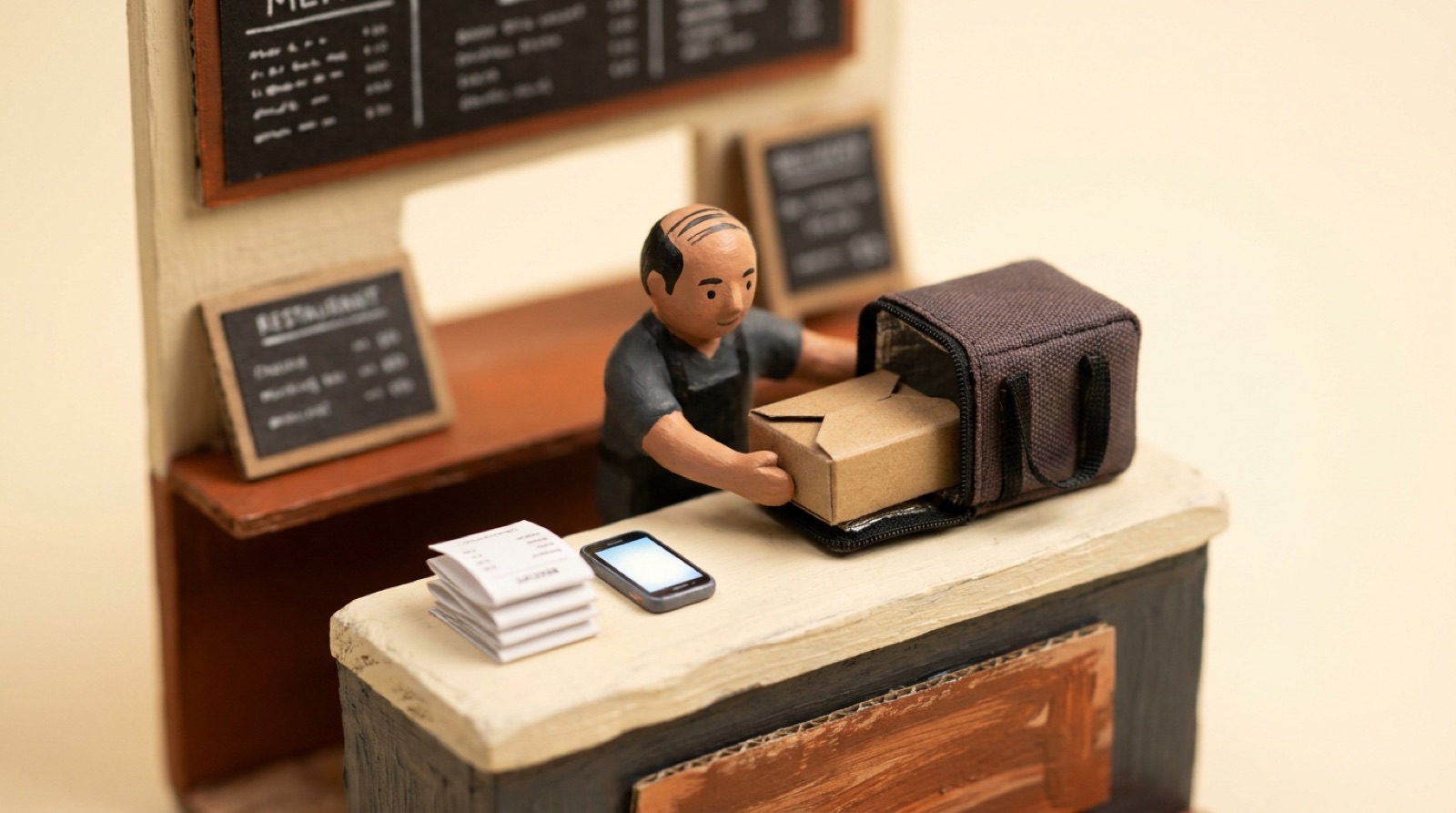
Partnering with delivery apps is one of the fastest ways to reach new customers without spending your own marketing budget. It is also one of the fastest ways to bleed money if you go in without a clear strategy. Here is everything you need to know to do it right.
Why Partner with a Delivery App at All?
There are three solid reasons, and you should be clear on all three before you sign anything.
Exposure to a brand-new audience. UberEats, DoorDash, Postmates, and their competitors have raised tens of millions of dollars and spend heavily on marketing just to keep people using their platforms. When your restaurant is listed on their app, you get in front of customers who have never heard of you. You are riding their advertising budget instead of paying for your own.
No delivery staff headaches. Managing in-house employees is already hard. Managing a separate delivery team, with their own schedules, benefits, and HR issues, is a whole other layer of pain you do not need. Pay the platform fee and let them handle the drivers entirely.
Offsetting sunk costs during slow periods. You are already paying rent. You are already paying your cook. During slow hours, a delivery order that does not return your full margin is still better than an empty kitchen. It helps cover costs you are stuck with regardless.
These three reasons are all about acquiring customers and covering fixed costs. None of them are about boosting your net profit per order. That distinction matters enormously, and it is exactly where most operators get into trouble.
What Do Delivery Apps Actually Charge?
Every platform charges a percentage of each order, not a flat monthly fee. The range runs from 15% to 35%, depending on the platform and the deal you negotiate. UberEats charges 30% as a standard rate. Some apps go as low as 15%, though those services typically send the customer to you without providing their own drivers.
In practice, most restaurants end up in the 25% to 35% range.
Put that in dollar terms. If a delivery app generates $10,000 in revenue for your restaurant in a month, the platform keeps $2,000 to $2,500. That is their fee off the top, before you pay for ingredients, labor, or packaging.
Now compare that to your margin. A well-run restaurant or cafe earns 5% to 10% net margin. Exceptional operators who are obsessive about cost control might hit 15% to 20%, but that is genuinely rare. Most shops are working with slim single digits.
The math tells you everything: delivery apps cannot be your profit engine. They are your customer acquisition channel.
Pitfall 1: Ignoring the Logistics Inside Your Kitchen
This is the operational mistake that kills staff morale fast. Your team is already slammed during a rush. Then a tablet beeps with an online order, the driver shows up before the food is ready, your cashier has no idea who handles it, and the whole kitchen gets thrown off rhythm.
Before you go live on any platform, you need a real system. Assign who receives the order, who preps it, and who hands it to the driver. Train your staff on that workflow before the first order comes in. Going live and figuring it out in real time is not a plan. It is a recipe for your team to resent the whole program and quietly deprioritize every delivery order that comes in.
Pitfall 2: Not Building a Separate Delivery Menu
Because there is no upfront fee to join most platforms, operators treat the whole thing as free money and never do the math. Then every order quietly erodes their margin until the monthly statement shows up and the numbers make no sense.
The fix is a dedicated delivery menu with two non-negotiable criteria: high margin and easy to produce.
A dessert shop, for example, might sell a brownie that costs $0.40 to make at $5 per order. It is simple to grab, pack, and hand off. The margin holds up even after the platform takes its 30%. That is the kind of item you build your delivery menu around.
Items that are complicated to make under pressure, or that involve expensive ingredients at thin margins, do not belong on a delivery-only menu.
Pitfall 3: Choosing an App Purely on the Lowest Commission Rate
This feels like smart cost control. It is not. If a platform has a poor user interface, slow customer support, or unreliable drivers, every bad experience reflects directly on your restaurant, not on the app. The customer does not blame the app for cold food or a confusing checkout. They blame you.
A platform with a better interface, faster support, and a smoother experience is worth a few percentage points more in commission. You are paying for the quality of the first impression your brand makes on a customer who has never visited your physical location. That first impression determines whether they ever walk through your door.
Pitfall 4: Putting Items on the Menu That Do Not Travel Well
High margin and quick to make are the starting criteria. But you also have to ask: will this item still be good when it arrives?
French fries are the obvious example. By the time a driver picks them up, sits in traffic, and delivers them, the fries are soggy and cold. The customer is disappointed. They do not come back. You just paid a 30% commission for a bad experience that actively works against your brand.
Every item on your delivery menu needs to hold up through a 20 to 40 minute journey. Think about packaging, temperature retention, and how the food looks when the container opens. Test it. Order from yourself and see what arrives.
Pitfall 5: Treating Delivery Customers Like Regular Customers
This is the most expensive mistake on the list, and the easiest to overlook.
A customer who orders through a delivery app is not a customer yet. They are a lead. You are paying 30% of that order for the chance to turn them into a regular. If you just fulfill the order and move on, you spent 30% and got nothing but one transaction.
The strategy is to convert them. Include a coupon in every delivery order, something like a free drink when they dine in. It costs you almost nothing to add, and it gives a first-time customer a concrete reason to visit your physical location. They already like your food. Now they have a reason to come in, sit down, and start building a real relationship with your restaurant.
Be deliberate about this. Every delivery order is a marketing touchpoint. Use it.
Should a Ghost Kitchen or Home-Based Business Use Delivery Apps?
Ghost kitchens are an ideal fit for delivery platforms because there is no dine-in option at all. The entire model is built around off-premise orders. The same five pitfalls apply, especially the delivery menu strategy and the food quality check, but the core logic holds. Focus on high-margin, travel-friendly items and build your menu specifically for the delivery context.
For a ghost kitchen, you cannot hand a customer a dine-in coupon the same way a physical restaurant can. The conversion strategy looks different. You might include a card that directs customers to follow you on social media, join a loyalty program, or save a direct ordering link. The goal is the same: move them off the third-party platform and into a direct relationship with your brand over time.
For home-based food businesses, whether you can use these platforms depends on local licensing and health regulations in your area. The business fundamentals are the same as any other operator. Get your licensing in order first, then apply the same menu and logistics principles.
The Bottom Line
Delivery apps are a customer acquisition tool, not a profit center. You are paying 25% to 35% per order to rent access to someone else’s audience, and that cost almost always exceeds your normal margin. The only way this works in your favor is if you convert those delivery customers into loyal, dine-in regulars. Build a lean, high-margin delivery menu. Nail your internal logistics before you go live. Choose the platform with the best experience, not just the lowest fee. And put something in every single delivery bag that gives the customer a reason to come back. Do that consistently, and the math starts working for you.
Watch the full video
Source — YouTube · the full breakdown, free
Tool — free · not sponsored, I built it
Want your exact numbers for a restaurant? The free calculator runs your cost to open, the ×1.4 cash reserve, and your break-even in about 30 seconds. Prefer paper? The One-Page Fundable Business Plan is the printable version.
Run your numbers →Questions owners actually ask
Can I sell food from my home kitchen through UberEats or Postmates?
Whether a home-based food business can list on these platforms depends on your local business license and health regulations. The operational principles are the same as any restaurant: build a high-margin delivery menu, use items that travel well, and have a plan to convert one-time customers into repeat buyers. Get your licensing sorted first, then apply to the platform.
Is it okay to charge higher prices on my delivery menu to cover the commission fees?
Yes, and it is standard practice. Building a separate delivery-only menu with pricing that accounts for the 25% to 35% platform commission is one of the core strategies for making delivery work. The goal is to put items on that menu that are high in margin and easy to produce, so the numbers still make sense after the platform takes its cut.
Does the restaurant pay the delivery driver, or does the platform handle that?
The platform handles driver payment entirely. As a restaurant partner, you pay the platform a commission percentage on each order, and they manage all driver compensation from that fee. You have no direct financial relationship with the drivers and no HR responsibility for them. That separation is one of the main reasons to use a delivery platform instead of hiring your own drivers.
How does a ghost kitchen use delivery apps without a physical location to bring customers back to?
Ghost kitchens are well-suited to delivery platforms since off-premise orders are the entire model. The pitfall to avoid is the same: do not treat each order as a one-time transaction. Instead of a dine-in coupon, include something in the packaging that moves customers toward a direct relationship with your brand, such as a loyalty program or direct ordering option. The goal is to eventually reduce your dependence on the platform's 30% commission.
Can I use my existing restaurant kitchen to run a separate delivery concept on UberEats?
Running a separate delivery concept out of the same kitchen is something operators do. The same rules apply: that concept needs its own dedicated menu built around high-margin, travel-friendly items, and your kitchen team needs a clear logistics system so the second concept does not disrupt your primary restaurant operations.
How do I receive and print delivery orders in my restaurant?
Delivery platforms typically provide a tablet for receiving orders, and some integrate with existing point-of-sale systems. The specific hardware and printing setup varies by platform and your existing equipment. The operational priority is to have a clear system in place before you go live, so your staff knows exactly who handles incoming orders and how they are printed and relayed to the kitchen.
If my margins are already thin, how do I make coupons or conversion tactics worthwhile?
The coupon is not an additional cost on top of the delivery order. You are already paying 30% of that order to the platform with no guarantee the customer returns. A low-cost incentive, like a free drink on a future dine-in visit, gives you a chance to convert a one-time delivery customer into a regular who orders at full margin. Without that conversion, every delivery order is just an expense. With it, you are buying a long-term customer at the cost of one discounted drink.
The Weekly Receipt
One brand story, one number, one answered question. 2 minutes, Tuesdays.
Free. Unsubscribe anytime, one click, no games.
You're in, friend. See you Tuesday.
Keep going: restaurant guides
How Much Does It Cost to Open a Restaurant? (2026 Complete Breakdown)
The real, itemized cost to open a full-service restaurant in 2026, including Wilson's x1.4 cash rule, break-ev
12 Restaurant Assets Every Owner Needs to Build
The 12 restaurant assets that build your brand, from logo to uniforms, ranked by priority before you open in 2
3 Tactics to Position Your Restaurant Brand for Growth
Awards, media features, and strategic associations are the three free tactics that build customer trust and po
3 Things to Know Before Opening a Restaurant (And What Happens If You Skip Them)
Wilson K Lee breaks down the three foundational principles every restaurant owner must master: know your numbe
360 Ads for Restaurants: How to Build Customer Touchpoints Across Every Channel
Learn how 360-degree advertising builds the 20 touchpoints your restaurant needs to turn strangers into custom
Low Labor Restaurant Concepts: Fast vs QSR Compared
Fast concept and QSR are the lowest labor restaurant concepts. See real costs, staffing needs, and revenue to
4 Actionable Steps to Prevent Your Restaurant from Going Bankrupt During a Crisis
Four concrete steps every restaurant owner needs to assess financial health, cut inefficiencies, secure fundin
5 Deadly Mistakes Every New Food Business Owner Makes
60% of restaurants fail in year one. Wilson K Lee breaks down the 5 deadly mistakes killing food businesses in