Restaurant · Guide Updated August 2026
How to Run a Successful Poke Shop: Lessons from The Poke Guy in Vancouver
A poke shop is one of the most accessible food-and-beverage concepts to open, with startup costs ranging from $200,000 to $300,000, far below a full restaurant. The Poke Guy in downtown Vancouver built its reputation on three non-negotiables: ocean-wise certified fish cut fresh every morning, zero overnight carry-over on protein, and genuine customer service. Those three things, done consistently, are the entire playbook.
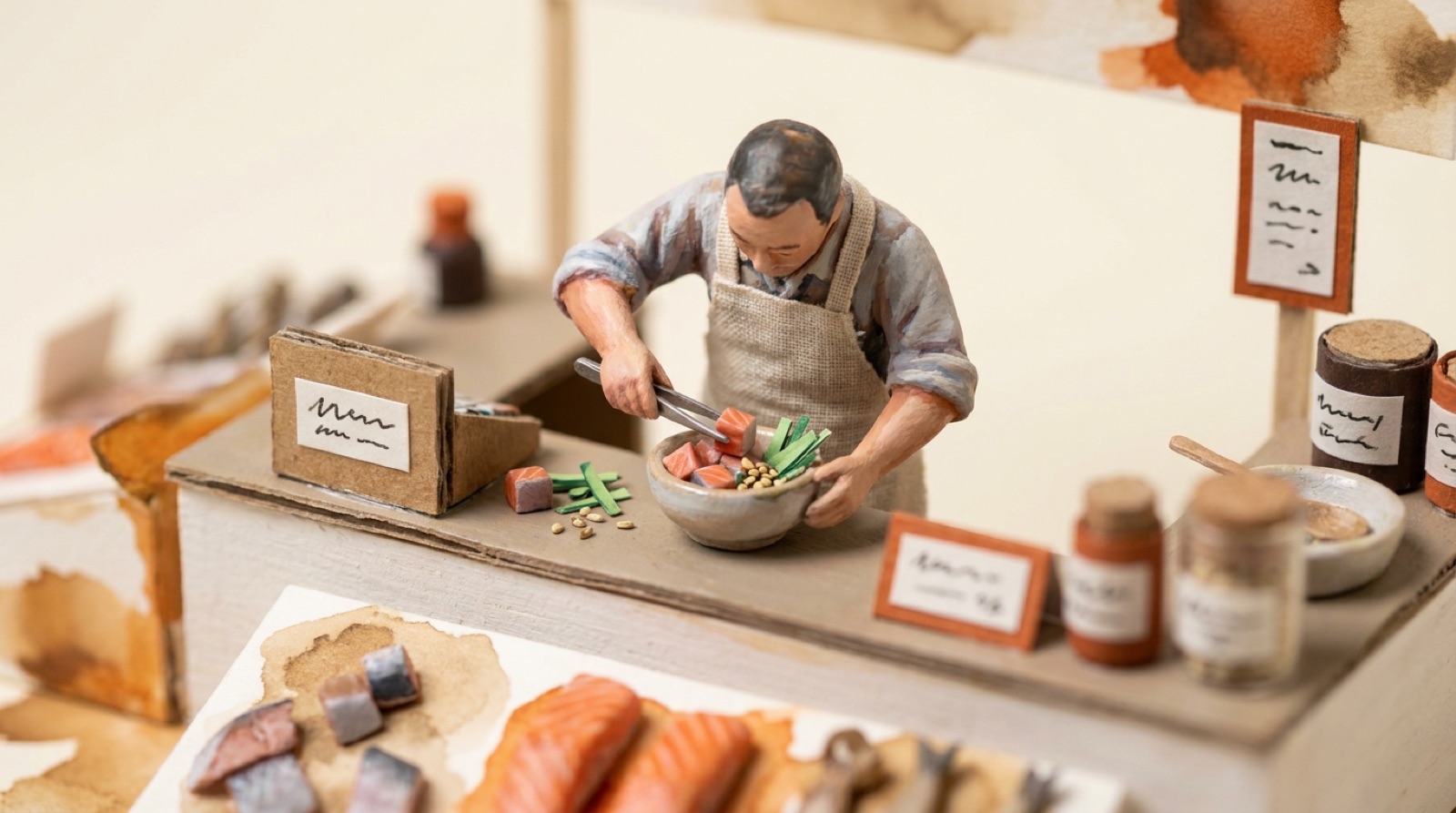
Why Poke Works as a Restaurant Concept
Poke is a native Hawaiian dish: diced fresh fish, a bed of rice, and a pile of toppings. It is simple in concept and demanding in execution. The reason it spread so fast, especially in health-conscious cities like Vancouver, is that it delivers freshness and customization at a lunch-friendly price point.
The Poke Guy, one of the most well-known poke shops in downtown Vancouver, sits in prime real estate and pulls in a core lunchtime crowd of downtown office workers. Their average ticket is $15. That is not a high-margin price point, which means every other decision in the operation has to be tight.
What Makes the Initial Investment Lower Than a Full Restaurant
Opening a full-service restaurant in the US costs roughly $727,000 to $1,211,500 as of 2026. A poke shop is a different animal entirely.
At The Poke Guy, the startup cost came in at $200,000 to $300,000. The reason is structural. A poke shop does not need a commercial hood system, grills, or the heavy mechanical infrastructure that a full kitchen requires. No cooking over open flame means a dramatically simpler buildout. That one factor strips out a huge chunk of the construction and equipment budget.
Staffing reflects the same simplicity. A poke shop typically runs on three to five people per shift, not the eight to twelve you might schedule in a full-service restaurant. Lower labor, lower equipment, lower complexity. That is why the concept pencils out for operators who want to get into food and beverage without betting seven figures on day one.
How Does Fresh Sourcing Actually Work Day-to-Day?
This is the detail most aspiring operators get wrong. They think “fresh” is a marketing word. At The Poke Guy, it is an operational discipline with real daily consequences.
Every morning, the team cuts fresh fish for the day. They estimate how much they will sell based on experience and weather patterns (rain in Vancouver kills foot traffic, so they cut less on grey days). When the fish is gone, it is gone. They do not prep extra protein and carry it overnight into the next service. Not ever.
On a typical day, they go through about 30 pounds of fish. That is a meaningful volume, and it requires real knife skill. The wild sockeye salmon is skinned by hand, and the technique matters. The fat sits just under the skin, and that is where the fishy taste lives. You sacrifice a little meat to get clean flavor. That is a deliberate quality trade-off made every single morning.
What Is Ocean-Wise Fish and Why Does It Cost More?
Ocean-Wise is a certification program that supports sustainable fishing. To carry the label, every fish the shop buys has to come from a certified sustainable source. The Poke Guy sources ocean-wise certified ahi tuna and wild sockeye salmon, among others.
It costs more. Rich, the owner, is upfront about that. But his position is simple: the quality is better, you are doing right by the environment, and customers who care about what they eat will notice the difference the moment they take a bite. He is not wrong. The freshness and cleanliness of the flavor is the first thing customers comment on.
How Do You Control Food Cost When You Sell Out Every Day?
Portion control is the answer. At The Poke Guy, every component in the bowl is portioned by weight. Each scoop of rice, each portion of protein, each topping has a known weight. You find out the cost per pound for every ingredient, then do the math on every scoop. Nothing is eyeballed.
This matters because a $15 average ticket leaves thin margins. If one staff member scoops 10% more rice than another, that adds up across hundreds of bowls. Consistency in portioning is what protects your food cost percentage. It is not glamorous, but it is the mechanism behind the numbers.
When fish is left over at the end of a slow day, the options are: throw it away, let staff take it home, or prepare bowls for people in need in the community. The Poke Guy does all three, with the third being a genuine part of their ethos. What they do not do is hold the fish and serve it the next day.
What Is the Real Secret to Getting Customers Through the Door?
Rich’s answer is boring in the best possible way. Fresh product. Every day. No shortcuts on sourcing. Honest portioning. Good service.
He is specific about customer service: he personally would not return to a restaurant with bad service, even if the food was great. So his standard is that both have to be right, every shift. That is not a strategy. That is a baseline.
The payoff is the customer who finishes their bowl, walks back to the counter, and tells you it is the best poke in town. Rich says that happens every day, and it is what keeps him from getting tired. That emotional feedback loop is real. It is also a signal of something operational: when customers voluntarily come back to compliment you, you are not just making them happy, you are building the kind of word-of-mouth that no advertising budget can replicate.
Can Someone With No Food Experience Run a Poke Shop?
The poke format is more forgiving than a full kitchen operation. No open flame, no complex cooking techniques, simpler equipment. But “more forgiving” is not the same as easy.
The non-negotiables still apply. You need someone on your team with real knife skills for daily fish prep. You need to understand sustainable sourcing and build supplier relationships that guarantee quality. You need to manage food cost at the portion level, every day. And you need to be present enough to enforce the service standard consistently across every shift.
What the poke format removes is some of the technical cooking complexity. What it does not remove is discipline, sourcing judgment, and the operational habits that protect quality over hundreds of service days.
The Bottom Line
A poke shop opens for $200,000 to $300,000, runs on three to five staff per shift, and lives or dies on one thing: whether the fish you cut this morning is the best version of that fish anyone in your market has tasted. Fresh sourcing, honest portioning, and genuine service are not three separate strategies. They are one standard, applied every day without exception. The maxim from The Poke Guy is worth writing on the wall of your prep kitchen: your fish does not go overnight, and neither does your reputation.
Watch the full video
Source — YouTube · the full breakdown, free
Tool — free · not sponsored, I built it
Want your exact numbers for a restaurant? The free calculator runs your cost to open, the ×1.4 cash reserve, and your break-even in about 30 seconds. Prefer paper? The One-Page Fundable Business Plan is the printable version.
Run your numbers →Questions owners actually ask
Is a poke shop actually profitable?
At a $15 average ticket, margins are tight, so profitability depends entirely on portion discipline and volume. The Poke Guy operates in prime downtown Vancouver real estate with a steady lunchtime crowd of business workers. Startup costs of $200,000 to $300,000 are far lower than a full restaurant, which means you reach breakeven on a smaller capital base. Keeping food cost in check through weight-based portioning is the core lever operators control.
Do you really need to bring out fresh fish every two hours because of room temperature?
At The Poke Guy, the approach is simpler than a two-hour rotation: they cut fresh fish every morning and sell until it is gone. They do not prep extra and carry protein overnight into the next day. On slower days, leftover fish goes to staff or is given to people in the community rather than held for the next service. That daily cut-and-sell discipline is what keeps the product tasting clean.
Can someone with no food and beverage background run a poke shop?
The poke format removes a lot of cooking complexity since there is no open flame, no hood system, and no sophisticated equipment. That makes it more accessible than a full kitchen operation. However, you still need skilled fish prep on your team, a reliable sustainable sourcing relationship, and the discipline to portion every bowl by weight every day. The format is simpler, not effortless.
What kind of rice does a poke shop use, and how do you manage portioning?
The Poke Guy uses triple-A sushi rice. Portioning is done by scoop, and each scoop has a known weight. Once you know the weight per scoop and the cost per pound for the ingredient, you can calculate the cost contribution of every component in the bowl. That weight-based system applied to every topping and protein is how you protect food cost at a $15 average ticket.
How much does it cost to open a poke shop compared to a full restaurant?
A poke shop like The Poke Guy runs $200,000 to $300,000 to open. A full restaurant in the US costs roughly $727,000 to $1,211,500 as of 2026. The gap exists because a poke concept does not require commercial hood systems, grills, or the heavy mechanical kitchen infrastructure a full-service restaurant needs. Lower equipment cost also means lower staffing needs, typically three to five people per shift.
What is ocean-wise fish and is it worth the higher cost?
Ocean-Wise is a certification program that verifies fish comes from sustainable, responsibly managed sources. The Poke Guy sources ocean-wise certified ahi tuna and salmon, and the owner acknowledges it costs more than conventional alternatives. His position is that the quality is visibly and tastefully better, and that customers who care about what they eat recognize the difference immediately. He treats the premium as a quality investment, not a marketing expense.
The Weekly Receipt
One brand story, one number, one answered question. 2 minutes, Tuesdays.
Free. Unsubscribe anytime, one click, no games.
You're in, friend. See you Tuesday.
Keep going: restaurant guides
How Much Does It Cost to Open a Restaurant? (2026 Complete Breakdown)
The real, itemized cost to open a full-service restaurant in 2026, including Wilson's x1.4 cash rule, break-ev
12 Restaurant Assets Every Owner Needs to Build
The 12 restaurant assets that build your brand, from logo to uniforms, ranked by priority before you open in 2
3 Tactics to Position Your Restaurant Brand for Growth
Awards, media features, and strategic associations are the three free tactics that build customer trust and po
3 Things to Know Before Opening a Restaurant (And What Happens If You Skip Them)
Wilson K Lee breaks down the three foundational principles every restaurant owner must master: know your numbe
360 Ads for Restaurants: How to Build Customer Touchpoints Across Every Channel
Learn how 360-degree advertising builds the 20 touchpoints your restaurant needs to turn strangers into custom
Low Labor Restaurant Concepts: Fast vs QSR Compared
Fast concept and QSR are the lowest labor restaurant concepts. See real costs, staffing needs, and revenue to
5 Deadly Mistakes Every New Food Business Owner Makes
60% of restaurants fail in year one. Wilson K Lee breaks down the 5 deadly mistakes killing food businesses in
4 Actionable Steps to Prevent Your Restaurant from Going Bankrupt During a Crisis
Four concrete steps every restaurant owner needs to assess financial health, cut inefficiencies, secure fundin