Restaurant · Guide Updated August 2026
How to Increase Restaurant Sales with Virtual Brands from One Kitchen
You can launch multiple virtual restaurant brands out of a single kitchen, list each one separately on delivery apps like DoorDash and Uber Eats, and capture customers who would never have found your main brand. The core steps are: research what is already selling in your area, build a new menu using equipment you already own, and onboard each brand on every major delivery platform. The whole model costs you nothing upfront because the service partner takes a small commission only when you actually make a sale.
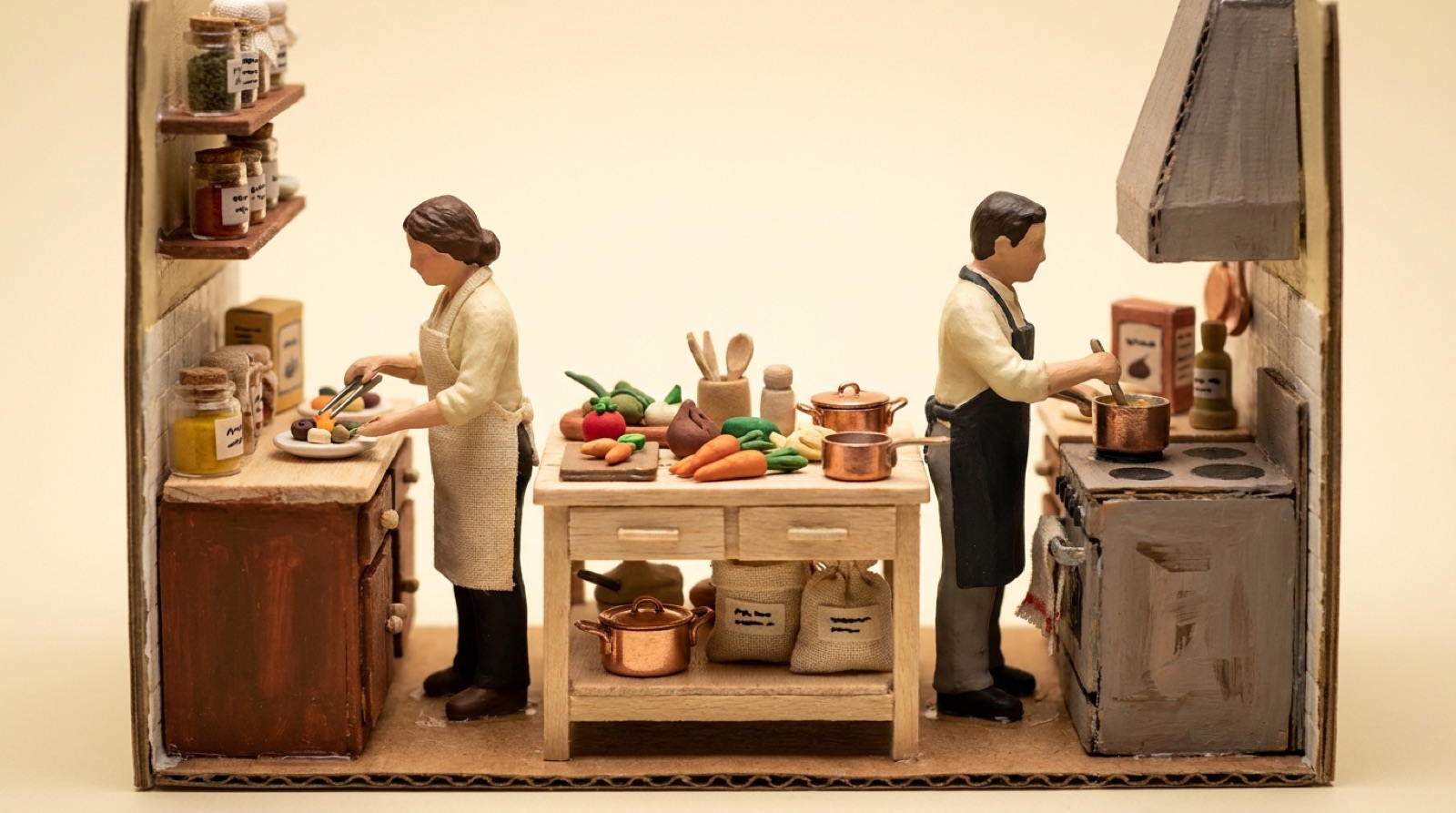
Running one kitchen but leaving sales on the table is one of the most common and fixable problems in the restaurant business. You already have the space, the staff, and the equipment. Virtual brands let you put all of it to work for more than one listing on every delivery app in your area.
Why Your Existing Menu Is Invisible to Most Delivery App Customers
Picture this. You run Peter’s Pizza Place. You make great pizza, and because you want more revenue, you also offer burgers and pasta. The problem is that your shop is known for pizza. When someone opens Uber Eats and searches “burgers,” Bob’s Burger pops up. When they search “pasta,” Penny’s Pasta is at the top. You are at the very bottom, or not there at all, because the search algorithm surfaces businesses by category.
Your burgers and pasta might genuinely be better than the competition. It does not matter. If the listing name and category do not match the search, you do not show up.
The fix is simple in concept: stop hiding those other menu items inside your pizza brand. Give them their own name, their own listing, and their own presence on every app. Peter’s Burger and Peter’s Pasta become separate storefronts. All three ship from the exact same kitchen. That is the entire model.
Step 1: Research What Is Actually Selling in Your Area
Do not guess what to add. Find out what is already in demand within your three to seven mile delivery radius, and then offer the same thing with your own twist.
There are software tools built specifically to analyze sales data by category and geography on delivery platforms. Use them. They tell you which cuisines are trending, which price points move, and which gaps exist in your local market before you build a single menu item.
If you do not have access to those tools yet, go old school. When I started my ice cream shop, we ran more than 2,000 surveys in two months across the neighborhoods around us. We asked people what flavors they wanted, what items they were looking for, and what age range they were in. That data shaped every decision we made. It is a lot of work, but it removes guesswork entirely.
The goal in both cases is the same: sell things people are already trying to buy.
Step 2: Build the New Menu Around Equipment You Already Own
Once you know what the market wants, build your new menu based on what your kitchen can actually execute today.
This is the constraint that protects you. Do not design a menu around equipment you do not have. If your kitchen has no deep fryer, do not build a brand around deep-fried items. Work with your chef and audit your current infrastructure first. The whole point is to maximize the efficiency of what you already operate, not to create a capital project.
When the new menu items fit your existing setup, you keep food costs predictable, training light, and ticket times consistent. A virtual brand that slows down your main kitchen hurts both revenue streams. Design it so the two run in parallel without friction.
Step 3: Create, Onboard, and Market Each Brand on Every Delivery App
Now you build the brand. Name it. Design the listing. Write the menu descriptions. Then onboard it on every major third-party delivery platform: Uber Eats, DoorDash, Grubhub, and Postmates.
Each platform is a separate customer acquisition channel. A customer who only uses DoorDash will never see your Grubhub listing. Being on all four means you show up wherever people are searching, under each of your brand names, in the right category every time.
Marketing through the apps matters too. Sponsored placements, promotional pricing, and strong photography on the listing page all move your brand up in search results. Treat each virtual brand as its own business for the purposes of app optimization, even though the kitchen behind it is shared.
How Much Does This Cost to Set Up?
Setting up the analytics, branding, menu creation, and multi-platform onboarding from scratch can easily run into thousands of dollars in time and fees. That is real money, and I know many operators are already stretched thin.
The model that makes this accessible is performance-based. A partner sets up everything, including the data analysis, custom menu creation, and full app onboarding, at no upfront cost to you. In return, they take a small commission on sales generated through those virtual brands. If your virtual brands make zero sales, they make zero money. Your risk exposure is nothing on the front end.
That structure matters. It aligns the partner’s incentive with yours. They only win when you win.
What If Your Kitchen Has Dietary Restrictions?
This is a real constraint that requires an honest answer. If your kitchen is certified vegan or operates under strict allergen controls, you cannot simply add non-vegan proteins to the line. Any virtual brand you build must stay within whatever your kitchen is permitted and set up to produce.
The good news is that the research step still applies. Look at what vegan and plant-based options are in demand in your delivery radius. There may be a gap in a specific cuisine style, a specific price tier, or a specific meal occasion that you can fill with an entirely plant-based virtual brand. The model works the same way. The menu just stays within your kitchen’s actual constraints.
Does This Work for Cloud Kitchens and Delivery-Only Operations?
Yes. In fact, delivery-only kitchens, sometimes called cloud kitchens or ghost kitchens, are the purest version of this model. There is no dine-in traffic to protect, no brand confusion at the front of house, and the entire operation is already optimized for delivery throughput.
If you are running a cloud kitchen, the virtual brand approach is exactly how you build revenue density out of a single leased space. Each brand targets a different search category, a different customer, and a different meal occasion, all from the same address.
The Bottom Line
One kitchen can support multiple revenue streams if each stream has its own identity on the apps where customers are searching. Research demand before you build anything. Use equipment you already own. Onboard every brand on every major delivery platform. The upfront cost can be zero if you choose the right partner structure.
As I tell every operator I work with: do not add complexity to your kitchen, add clarity to your customer. A separate brand name is just clarity for the algorithm.
Watch the full video
Source — YouTube · the full breakdown, free
Tool — free · not sponsored, I built it
Want your exact numbers for a restaurant? The free calculator runs your cost to open, the ×1.4 cash reserve, and your break-even in about 30 seconds. Prefer paper? The One-Page Fundable Business Plan is the printable version.
Run your numbers →Questions owners actually ask
My restaurant is a fully vegan kitchen. Can I still create virtual brands without preparing non-vegan food?
Yes, your virtual brands simply need to stay within what your kitchen is certified and set up to produce. Use the same research process: survey demand within your three to seven mile radius and look for gaps in plant-based or vegan options by cuisine type, price point, or meal occasion. The virtual brand model works the same way. The menu is just scoped to match your kitchen's actual constraints.
What software can I use to find out what is selling in my delivery area?
There are software tools built specifically to analyze category-level sales data on delivery platforms within a defined geography. They show you which cuisines are trending and which gaps exist in your local market before you build a menu. If you do not have access to those tools yet, the alternative is direct customer surveys. When Wilson launched his ice cream shop, the team ran more than 2,000 surveys in two months to identify exactly what people in the neighborhood wanted.
How does a virtual brand partner make money if there is no upfront setup fee?
They take a small commission on sales generated through the virtual brands they set up for you. If those brands produce zero sales, the partner earns nothing. That structure means their financial interest is directly tied to your sales performance, not to a flat fee collected before you have made a single dollar.
Does this virtual brand model work for a cloud kitchen or delivery-only operation?
It works especially well for delivery-only kitchens. The entire operation is already built around delivery throughput, so adding additional brand listings on Uber Eats, DoorDash, Grubhub, and Postmates creates revenue density from the same address with no changes to the physical setup.
Which delivery platforms should I onboard each virtual brand on?
Onboard on all four major platforms: Uber Eats, DoorDash, Grubhub, and Postmates. Each platform is a separate customer acquisition channel with its own user base. A customer who only uses DoorDash will never see your Uber Eats listing, so full coverage on all four maximizes how often each of your brands appears in search results.
The Weekly Receipt
One brand story, one number, one answered question. 2 minutes, Tuesdays.
Free. Unsubscribe anytime, one click, no games.
You're in, friend. See you Tuesday.
Keep going: restaurant guides
How Much Does It Cost to Open a Restaurant? (2026 Complete Breakdown)
The real, itemized cost to open a full-service restaurant in 2026, including Wilson's x1.4 cash rule, break-ev
12 Restaurant Assets Every Owner Needs to Build
The 12 restaurant assets that build your brand, from logo to uniforms, ranked by priority before you open in 2
3 Tactics to Position Your Restaurant Brand for Growth
Awards, media features, and strategic associations are the three free tactics that build customer trust and po
3 Things to Know Before Opening a Restaurant (And What Happens If You Skip Them)
Wilson K Lee breaks down the three foundational principles every restaurant owner must master: know your numbe
360 Ads for Restaurants: How to Build Customer Touchpoints Across Every Channel
Learn how 360-degree advertising builds the 20 touchpoints your restaurant needs to turn strangers into custom
Low Labor Restaurant Concepts: Fast vs QSR Compared
Fast concept and QSR are the lowest labor restaurant concepts. See real costs, staffing needs, and revenue to
5 Deadly Mistakes Every New Food Business Owner Makes
60% of restaurants fail in year one. Wilson K Lee breaks down the 5 deadly mistakes killing food businesses in
4 Actionable Steps to Prevent Your Restaurant from Going Bankrupt During a Crisis
Four concrete steps every restaurant owner needs to assess financial health, cut inefficiencies, secure fundin