Restaurant · Guide Updated July 2026
Is This a Good Restaurant Location? Answers to Your Toughest F&B Questions
A location with strong lunch traffic but slow evenings can absolutely work, if the numbers support running lunch-only hours. Customer retention problems almost always trace back to food quality or a shallow product offering. Third-party delivery apps charge 20 to 35%, so treat them as a marketing tool, not a profit center.
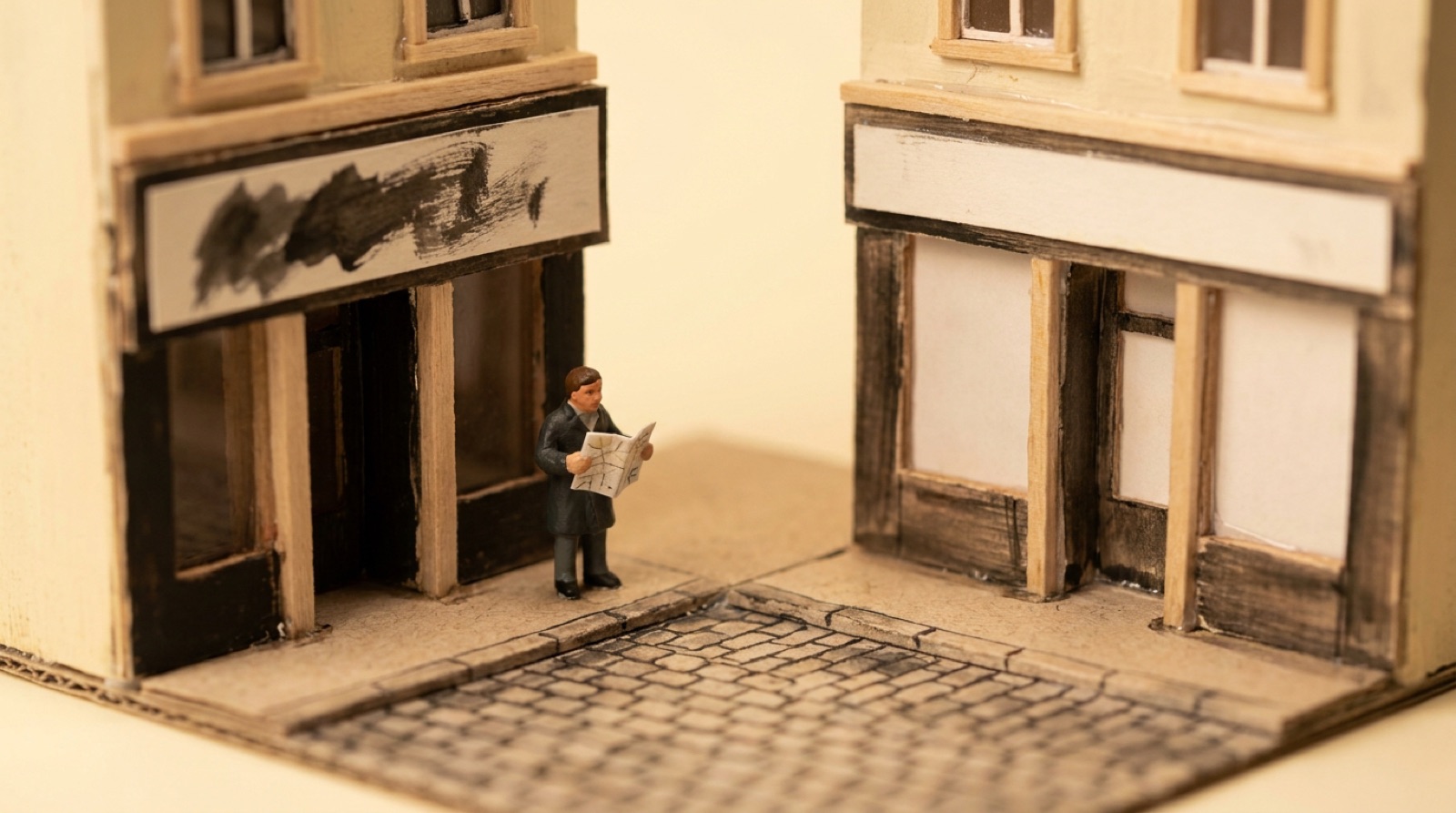
A location with strong lunch traffic but slow evenings can absolutely work. A customers-not-returning problem almost always points to food quality, not marketing. Third-party delivery apps are a marketing channel, not a profit source. Those are the verdicts. Here is the full breakdown.
Is a Location with Only Lunchtime Traffic Worth It?
The short answer is yes, if the numbers make sense for your concept.
A friend of mine owns a poke shop in downtown Vancouver. During the lunch rush from 10 a.m. to 2 p.m., they pull in upwards of $4,000 in revenue. That is a profitable four-hour window. They do not open at night because foot traffic simply is not there, and they do not need it to be.
The real question is not whether the street is dead after 6 p.m. The question is whether the daytime volume covers your rent, your labor, your cost of goods, and still leaves you a margin. If it does, a lunch-focused operation is a legitimate and lean business model.
Where this location type fails you is when your goal is to fully utilize every hour of your lease. If you want dinner sales, a bar program, or a late-night crowd, a business-district street that empties out after work will fight you every step. Know what you want out of the business before you sign anything. The location has to match the concept, not the other way around.
How Do You Drive Sales at an Ice Cream Shop During Winter?
You are asking exactly the right question, because seasonality is the number one margin killer for dessert concepts. We ran seven ice cream locations and learned this the hard way.
The first move is to make your shop feel seasonally relevant. We introduced pumpkin spice flavors in the fall. We introduced Christmas-tree-shaped flavors and Santa-shaped cup designs for December. People do eat ice cream in winter, but they need a reason to feel that your shop belongs in that season. Small product and packaging updates do that work.
The second move is to add warm items. The average ice cream ticket is around $5. That ceiling is low. Bakery items, waffles, warm grab-and-go desserts, these raise your average order value and give customers a reason to come in when it is cold outside. They want a warm spot to sit, not just a scoop.
The third move is hot drinks. Hot drinks carry high margins and they pair naturally with a dessert environment. A hot drink plus a dessert item creates a combo that raises your ticket and keeps your shop busy year-round.
Why Are Customers Not Coming Back?
This one is uncomfortable to hear, but I will say it plainly: if people come once and never return, the food is probably the problem.
People feel cheated when the quality does not match the price or the hype. They are polite enough not to say it to your face, but they will vote with their absence. We went through this at 720 Sweets. Our ice cream was Instagrammable, which drove first visits, but there was no depth to the product offering to bring people back a second or third time. We fixed it by upgrading the recipe and expanding the menu.
Before you spend a dollar on marketing or a loyalty program, answer this honestly: is your food genuinely good? Stamp cards and referral programs are acceleration tools. They speed up what is already working. They cannot rescue a product that is not there yet.
If the food is solid and people are still not returning, look at your product range. Is there enough variety to give a repeat customer a reason to try something new? And check your customer service. A bad interaction at the counter kills returns just as effectively as bad food.
How Do You Build a Bubble Tea Business Without Franchising?
The fundamentals come down to two things: demographic fit and quality calibration.
Bubble tea is not a universally familiar product in every market. You need a location where the customer base already wants it or is open to discovering it. Understand the density of your target demographic before you commit to a spot.
Beyond that, understand how sophisticated your local bubble tea drinkers are. In a dense, experienced market like downtown Vancouver, customers expect real tea leaves and premium ingredients. They know the difference. In a smaller city where bubble tea is newer, a more accessible product built on syrups and powders can work just fine. Neither approach is wrong. The mistake is applying the wrong quality tier to the wrong market.
How Do You Choose a Restaurant Concept?
Your concept is not the point. Your customer is.
A restaurant is a vehicle, nothing more. It exists to solve a problem for a specific group of people. The winning move is to identify a group with an unmet need, confirm that the supply of solutions in your area is thin, and then build the vehicle that delivers that solution.
Here is a concrete example. If your target customer is a downtown office worker who needs a healthy, fast lunch and does not want to wait in a 20-minute line, a quick-service healthy grab-and-go concept positioned near their office is a strong idea, because demand is high and supply may be low. Start with the person. The concept follows from that.
How Should You Handle Third-Party Delivery Apps?
Use them. Delivery is not a trend that will reverse. It is becoming a standard channel for how people consume meals.
That said, you need to be clear-eyed about the economics. Apps like Uber Eats, Skip the Dishes, and Grubhub take 20 to 35% off your top-line revenue. Most restaurants run 5 to 10% net profit margins. The math means you cannot make money on every delivery order if you treat it like a direct sale.
The right mental model is to treat delivery apps as a marketing channel. They put your brand in front of people who would never have walked past your shop. Your job is to convert those delivery customers into in-store regulars, where your margins are real. Use coupons and in-bag incentives to pull delivery customers into the physical location. Offer them something they can only get by coming in. That is how you make delivery work for you rather than against you.
When you design your delivery menu, build items that travel well and protect your margin even at the reduced rate. Not everything on your dine-in menu belongs on a delivery platform.
The Bottom Line
Location, product quality, and customer understanding are not separate decisions. They are one decision made at three different moments. A lunch-only street is a great location for a lunch-only concept. A dessert shop that does not evolve its offering will always fight winter. And no amount of marketing fixes a product that people do not want to come back for. Build the right thing for the right people in the right place, and the numbers take care of themselves.
Watch the full video
Source — YouTube · the full breakdown, free
Tool — free · not sponsored, I built it
Want your exact numbers for a restaurant? The free calculator runs your cost to open, the ×1.4 cash reserve, and your break-even in about 30 seconds. Prefer paper? The One-Page Fundable Business Plan is the printable version.
Run your numbers →Questions owners actually ask
I'm opening a bakery with a product most people in my city have never tried. How do I get people to try something new?
Start by making your product feel relevant to moments and seasons people already care about. We introduced themed flavors and packaging at 720 Sweets to tie our ice cream to holidays people were already celebrating. For a new product, pairing it with something familiar lowers the barrier to a first try. Your location doing the heavy lifting on foot traffic also matters. If people are already walking past you in volume, a low-cost sample or a recognizable combo item can convert curiosity into a first purchase.
I have a finished business plan. What do I do next, and in what order?
The business plan is the foundation, not the finish line. From there, your next step is understanding your funding picture clearly, because a signed lease requires you to have capital in hand before you commit. Permits, licenses, and location scouting happen in parallel once you know your budget and your target area. Do not sign a lease before you know your full cost picture, including build-out, equipment, and operating reserves.
My father has a space I can use, but the foot traffic is low. Can strong marketing and strategy overcome a bad location?
Marketing can drive awareness, but it cannot replace foot traffic over the long run. The downtown Vancouver poke shop I mentioned works because the lunch crowd is already there, not because they advertised their way to $4,000 days. A low-traffic location raises your customer acquisition cost on every single transaction. Before committing to the space, run the numbers honestly: how many covers per day do you need to break even, and is the realistic traffic in that location enough to hit it?
How do third-party delivery apps actually affect restaurant profitability?
Apps like Uber Eats and Grubhub take 20 to 35% off your revenue on every order. Since most restaurants operate on 5 to 10% net profit margins, you lose money on delivery orders if you treat them as a direct revenue source. The correct approach is to treat delivery apps as a marketing channel that extends your reach, and use in-bag coupons or incentives to convert delivery customers into higher-margin dine-in regulars.
What is the name of Wilson's ice cream shop?
The business is 720 Sweets. Wilson grew it from one location to seven before selling the chain, and much of the advice on seasonality, product development, and customer retention in this guide comes directly from running those locations.
How will delivery and off-premise dining shape restaurants going forward?
Delivery is moving from a novelty to a standard channel. The early-adopter phase is already behind us. Restaurants that build their menus, packaging, and customer conversion strategies around delivery as a permanent fixture will be better positioned than those treating it as a temporary add-on. The key discipline is designing delivery-specific menu items that protect margin even after the platform takes its 20 to 35% cut.
The Weekly Receipt
One brand story, one number, one answered question. 2 minutes, Tuesdays.
Free. Unsubscribe anytime, one click, no games.
You're in, friend. See you Tuesday.
Keep going: restaurant guides
How Much Does It Cost to Open a Restaurant? (2026 Complete Breakdown)
The real, itemized cost to open a full-service restaurant in 2026, including Wilson's x1.4 cash rule, break-ev
12 Restaurant Assets Every Owner Needs to Build
The 12 restaurant assets that build your brand, from logo to uniforms, ranked by priority before you open in 2
3 Tactics to Position Your Restaurant Brand for Growth
Awards, media features, and strategic associations are the three free tactics that build customer trust and po
3 Things to Know Before Opening a Restaurant (And What Happens If You Skip Them)
Wilson K Lee breaks down the three foundational principles every restaurant owner must master: know your numbe
360 Ads for Restaurants: How to Build Customer Touchpoints Across Every Channel
Learn how 360-degree advertising builds the 20 touchpoints your restaurant needs to turn strangers into custom
Low Labor Restaurant Concepts: Fast vs QSR Compared
Fast concept and QSR are the lowest labor restaurant concepts. See real costs, staffing needs, and revenue to
4 Actionable Steps to Prevent Your Restaurant from Going Bankrupt During a Crisis
Four concrete steps every restaurant owner needs to assess financial health, cut inefficiencies, secure fundin
5 Deadly Mistakes Every New Food Business Owner Makes
60% of restaurants fail in year one. Wilson K Lee breaks down the 5 deadly mistakes killing food businesses in