Restaurant · Guide Updated August 2026
How MrBeast Opened 300 Burger Restaurants Overnight Using Virtual Kitchens
MrBeast launched 300 burger restaurants practically overnight by partnering with Virtual Dining Concepts (VDC), a company that connects celebrity brands, underutilized restaurant kitchens, and third-party delivery apps into one turnkey system. VDC handles the menu, branding, and operator network; existing restaurants do the fulfillment; delivery apps handle logistics. The biggest ongoing challenge for any operator running this model is quality control across locations they do not directly manage.
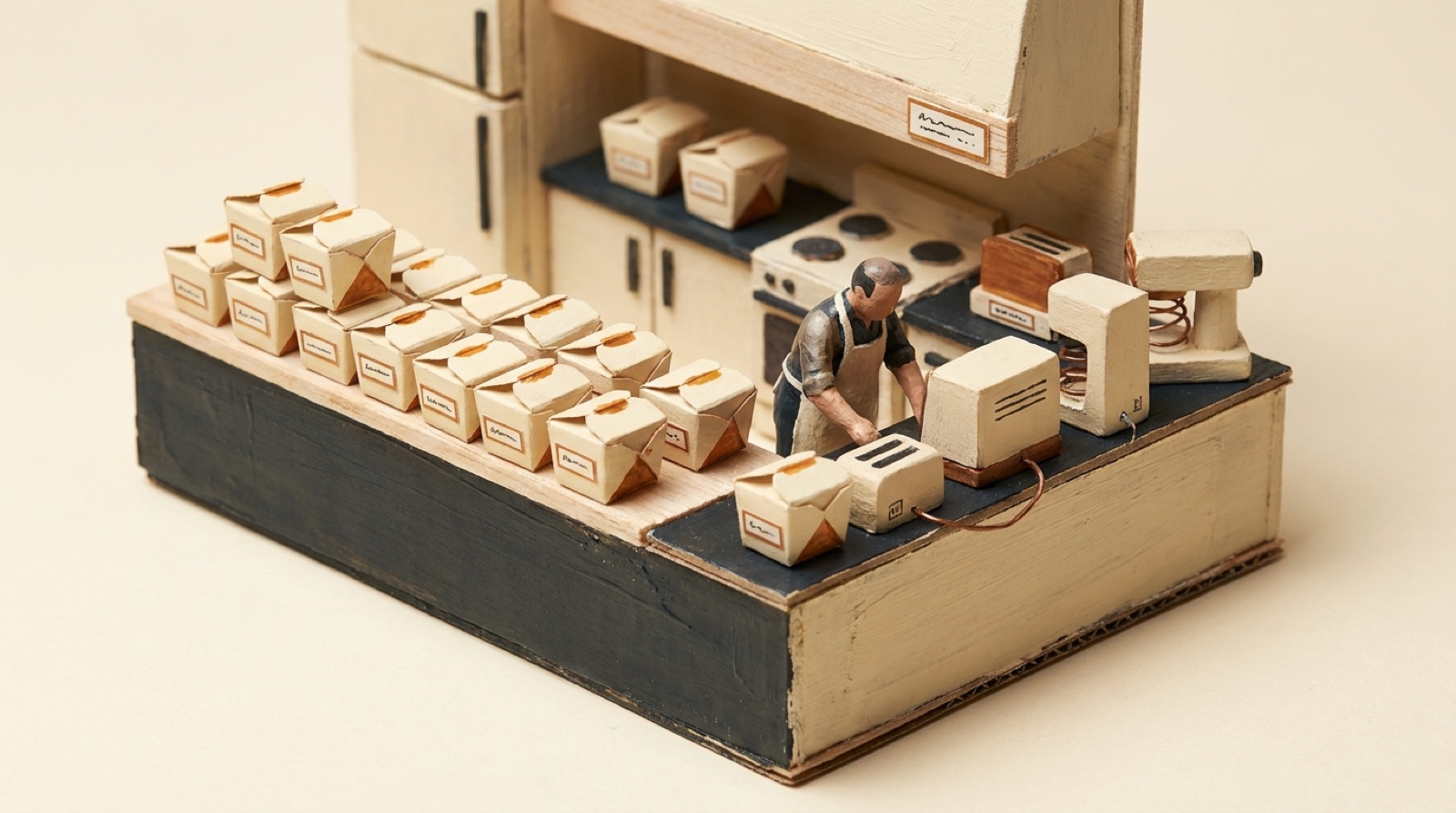
The Model Is Simpler Than You Think
MrBeast, a 22-year-old YouTuber with zero culinary experience, opened 300 burger restaurants practically overnight. He did not sign 300 leases, hire 300 kitchen teams, or build 300 supply chains. He partnered with a company called Virtual Dining Concepts, and that company did the heavy lifting. Understanding how that works gives you a real playbook for the future of food.
What Is Virtual Dining Concepts (VDC)?
Virtual Dining Concepts was created by Robert Earl, the CEO of Planet Hollywood and the founder of Hard Rock Cafe. VDC acts as a connector between three parties: celebrities, local restaurant operators, and delivery apps.
Here is how each piece fits together.
Celebrities and influencers bring massive demand. MrBeast had more than 75 million subscribers across his platforms. That audience creates instant consumer interest before a single burger is cooked. VDC’s job is to find talent whose existing content already points toward a food concept, so the brand feels authentic rather than slapped on.
Local restaurant operators bring the kitchens. Most restaurant kitchens are underutilized. Operators are paying rent and carrying equipment whether orders come in or not. VDC approaches these distressed operators and offers them a turnkey, nationally marketed, celebrity-backed brand to fulfill out of their existing space. The operator does not build anything new. They just add a new revenue stream to a kitchen that was already sitting idle.
Delivery apps handle the last mile. Once the food is made, third-party platforms pick it up and get it to the customer. VDC plugs into those networks to close the loop.
VDC holds all the intellectual property. They own the brand, the menu system, and the operational framework. They connect the dots, collect their fee, and the whole machine runs.
Why MrBeast’s Brand Was a Natural Fit
MrBeast had already made videos about trying to run a burger joint. Those videos went viral. VDC did not invent a food identity for him and then hope it stuck. They took something his audience already associated with him and turned it into a real product. That alignment between the creator’s content and the food concept is not accidental. It is a core part of how VDC selects its celebrity partners.
The Tyga Bites partnership is another good example. Tyga, the hip-hop artist, publicly talked about eating boneless chicken bites before performing. VDC built a brand called Tyga Bites around exactly that. Celebrity brings authenticity. Authenticity drives orders. Orders make the operators money.
How Is This a Win-Win-Win-Win?
Every party in the model gets something real.
The celebrity monetizes their existing audience through a food brand without operating a single kitchen.
The local operator generates new revenue from a kitchen they were already paying to maintain. They get a nationally marketed brand, a ready-made menu, and order volume they could not create on their own.
The delivery app gets more transactions running through its platform.
VDC gets paid for building and managing the system that holds it all together.
No one in this chain is carrying dead weight. That is why the model scaled to 300 locations so fast.
What Is the Real Challenge: Quality Control
Here is where the honest conversation starts.
Running seven locations of my dessert chain 720 Sweets was already a significant challenge. Ensuring every product that went out the door met the same standard across seven kitchens with seven different teams was one of the hardest operational problems I faced. VDC is managing 300 locations at once, with operators they did not hire and staff they did not train.
That is not a small problem.
There are three tools any operator running this kind of model needs to have in place.
Standard Operating Procedures (SOPs). Every location needs a clear, written manual covering exactly how each menu item is prepared. This is the baseline. Without it, you have no standard to hold anyone to.
Operational management in the field. SOPs alone are not enough because some operators will not read them and some staff will not follow them. You need secret shoppers visiting locations to verify quality. You need managers going out to train operators directly. Remote accountability only goes so far.
A star rating system with real consequences. Give every operator a quality rating. Set a minimum threshold. If an operator falls below it, pull the brand from their kitchen. That consequence gives operators a financial incentive to take the SOPs seriously. No rating floor means no floor on quality.
I do not know exactly which of these VDC has implemented. But if you are thinking about building your own version of this model, all three are non-negotiable. Without them, your customers in one city get a great burger and your customers in another city get something undercooked. That inconsistency will kill the brand faster than any competitor.
What Operators Should Take Away From This Playbook
Three things stand out that apply directly to anyone building or running a food business right now.
Virtual kitchens are not a trend. They are infrastructure. The model was not mainstream when this launched, but it was already changing how food gets fulfilled. Ghost kitchens give you the ability to test concepts, add revenue streams, and reach delivery customers without the overhead of a full front-of-house build-out. Pay attention to this space.
Delivery apps are a cost of doing business, not the enemy. The 20 to 30 percent commission stings. Complaining about it does not lower it. Your competitors are using those platforms whether you do or not. Build the commission into your pricing model and treat the app as a marketing and logistics channel, because that is what it is.
The next major restaurant chain will probably come from this hybrid model. A powerful brand identity combined with distributed ghost kitchen fulfillment and third-party delivery logistics is exactly the structure a new category-defining chain could run on. If you are building a concept today, you do not need to dismiss this as “not a real restaurant.” You need to understand how to use it.
The Bottom Line
The MrBeast burger story is not really about MrBeast. It is about what happens when you separate brand-building from kitchen operations and connect both to an existing delivery network. VDC figured out how to make 300 separate kitchens act like one restaurant chain overnight. Quality control remains the unresolved challenge in the model, and solving it is what separates a concept that scales from one that fades. As an operator, the maxim is simple: distribution gets you in front of customers, but consistency is what keeps them coming back.
Watch the full video
Source — YouTube · the full breakdown, free
Tool — free · not sponsored, I built it
Want your exact numbers for a restaurant? The free calculator runs your cost to open, the ×1.4 cash reserve, and your break-even in about 30 seconds. Prefer paper? The One-Page Fundable Business Plan is the printable version.
Run your numbers →Questions owners actually ask
How does a small restaurant operator get started with Virtual Dining Concepts?
VDC approaches local operators who have underutilized kitchen capacity. They pitch a turnkey, nationally marketed, celebrity-backed brand that the operator fulfills out of their existing space using equipment they already own. The operator does not build anything new. If you want to pursue this, the starting point is having a functioning kitchen with the right equipment, then reaching out to VDC directly to see whether your setup qualifies for one of their active brands.
Who owns the brand IP in a VDC arrangement, and is it negotiable?
VDC holds all the intellectual property. That is a core part of their business model. They own the brand, the menu system, and the operational framework. Whether any aspect of that is negotiable in a specific deal is something you would need to take up directly with VDC, but it is worth going in with clear eyes: the IP ownership is not a side clause, it is the foundation of how they make money and maintain control across hundreds of locations.
What is the biggest operational risk in the VDC or ghost kitchen model?
Quality control across locations you do not directly manage. When Wilson ran 720 Sweets across seven locations, maintaining a consistent product standard was already a major challenge. VDC is managing 300 locations with operators and staff they did not hire. Without strong SOPs, field operational management, and a minimum quality rating system with real consequences, product quality varies widely by location, and that inconsistency damages the brand.
Is a month-long pop-up a good way to test a virtual kitchen brand?
A pop-up can help you test a menu concept and gauge customer interest before committing to a ghost kitchen arrangement. The virtual kitchen model itself does not require a pop-up phase since VDC provides the brand and connects you to delivery apps directly. But if you are developing your own original brand to potentially license or scale, a short-run pop-up gives you real demand data and operational feedback before you build out SOPs for multiple locations.
Why did MrBeast's burger concept work as a VDC brand?
MrBeast had already made viral videos about attempting to run a burger joint, so his audience already connected him to the concept. VDC looks specifically for celebrities whose existing content and public identity align naturally with a food product. That authenticity is what converts the celebrity's following into actual customer demand. A celebrity-backed brand with no real connection to food is a much harder sell.
Are delivery app commissions worth it for a ghost kitchen operator?
The commission runs 20 to 30 percent, which is real money. But the alternative is having no delivery channel at all while your competitors use one. The practical approach is to build the commission into your menu pricing and treat the app as a combined marketing and logistics expense, not a pure cost. Operators who frame it as the enemy and opt out are effectively handing those customers to whoever is on the platform.
The Weekly Receipt
One brand story, one number, one answered question. 2 minutes, Tuesdays.
Free. Unsubscribe anytime, one click, no games.
You're in, friend. See you Tuesday.
Keep going: restaurant guides
How Much Does It Cost to Open a Restaurant? (2026 Complete Breakdown)
The real, itemized cost to open a full-service restaurant in 2026, including Wilson's x1.4 cash rule, break-ev
12 Restaurant Assets Every Owner Needs to Build
The 12 restaurant assets that build your brand, from logo to uniforms, ranked by priority before you open in 2
3 Tactics to Position Your Restaurant Brand for Growth
Awards, media features, and strategic associations are the three free tactics that build customer trust and po
3 Things to Know Before Opening a Restaurant (And What Happens If You Skip Them)
Wilson K Lee breaks down the three foundational principles every restaurant owner must master: know your numbe
360 Ads for Restaurants: How to Build Customer Touchpoints Across Every Channel
Learn how 360-degree advertising builds the 20 touchpoints your restaurant needs to turn strangers into custom
Low Labor Restaurant Concepts: Fast vs QSR Compared
Fast concept and QSR are the lowest labor restaurant concepts. See real costs, staffing needs, and revenue to
4 Actionable Steps to Prevent Your Restaurant from Going Bankrupt During a Crisis
Four concrete steps every restaurant owner needs to assess financial health, cut inefficiencies, secure fundin
5 Deadly Mistakes Every New Food Business Owner Makes
60% of restaurants fail in year one. Wilson K Lee breaks down the 5 deadly mistakes killing food businesses in