Bakery · Guide Updated August 2026
From Pop-Up Baker to Brick-and-Mortar: How Remy Built Remy Patisserie in Vancouver
Remy, a French-Asian pastry chef in Vancouver, built his bakery brand from a shared kitchen and Sunday pop-ups, growing to 200 Christmas cake orders before securing his own location. The biggest surprise was not the baking but the bureaucracy: a business license transfer that he expected to take one week took 18 weeks, followed by another 7 to 14 weeks for a building permit. His path shows that the real work of opening a bakery is navigating systems, not perfecting recipes.
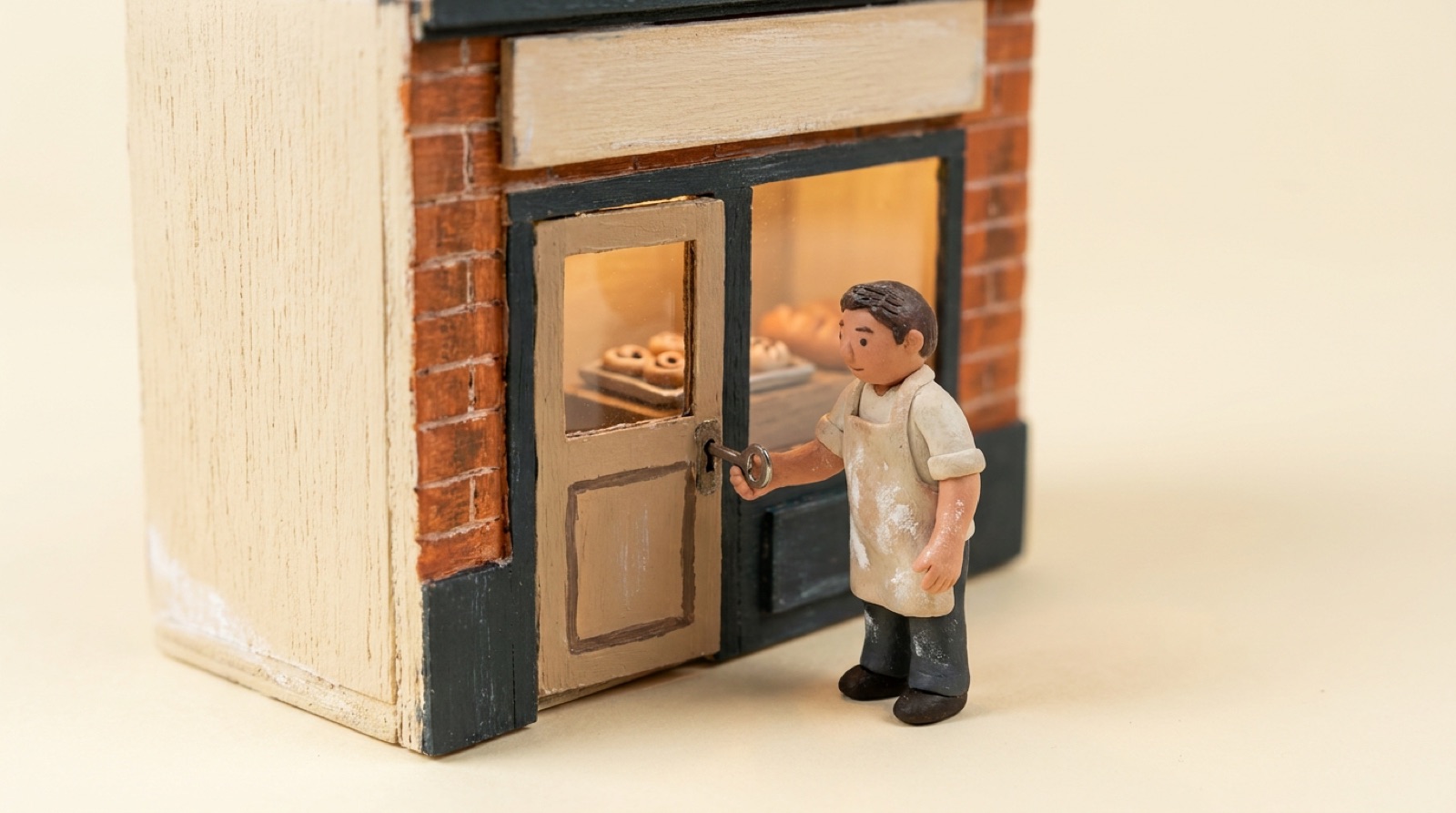
Opening a bakery looks like a recipe story. It is actually a permit story, a cash story, and a stamina story. Remy’s path from dishwasher to the owner of Remy Patisserie in Vancouver proves all three.
How Did Remy Start in the Industry?
Remy began as a dishwasher. He liked the kitchen environment because it was hectic, and he did not know what he wanted to do after high school. He kept moving from restaurant to restaurant on purpose, chasing faster growth, because large kitchens can trap you doing the same task for years with no path to management.
The shift happened at Cioppino’s, where he landed in the pastry section. He describes it as calmer than the hot line, more organized, more precise. Desserts require planning well in advance. That suited how his mind works. He then moved to a large Vancouver bakery called Chickpea, where he spent three years learning traditional French pastry. After those three years, he had one clear next thought: open his own store.
He knew he needed coffee knowledge first. Anyone running a bakery knows coffee is second on the menu. So he took a job at Aragon in Richmond, run by an owner who loved both wine and coffee. The owner trusted Remy because of his pastry background and supported him in learning the coffee side. He grew there too, until he hit that familiar ceiling. No more room to grow.
A former chef colleague in Toronto offered him a head baker role at a new 6,000-square-foot bakery facility. He was genuinely tempted. But he stopped and asked himself an honest question: after one or two years there, would he not hit the same ceiling again? His real goal was his own shop, his own freedom. If he had the courage to move to Toronto and leave everything behind, he had enough courage to open something small in Vancouver.
How Did He Build His Brand Before He Had a Storefront?
Remy rented kitchen space inside a cafe called Sweet Barrel. The owner was a friend, a coffee person, who had more kitchen than he needed and was looking for someone to sublet. Remy took it.
In the beginning, nobody knew his name except friends and colleagues. He sold his pastries to the cafe’s existing customers, introduced himself, and built from there. Then he started doing pop-ups, his most important early move.
Moving Coffee, run by his friend Edmond, gave him space on Sundays. Edmond’s customers already wanted something special with their coffee. Remy’s pastries fit. That environment helped catapult him from unknown to someone with a name in the city.
He ran his own Instagram entirely by himself. He was not posting daily. Early on, one photo every two days. Later, less. He admits that is not great marketing strategy, but he had no time. He was baking, selling, cleaning, and marketing alone.
In February he committed to starting the business formally. In March he quit his job at Aragon. At that point he had almost no revenue coming in. He set aside a defined chunk of money, told himself it was money he was willing to burn, and started. His starting budget was $30,000. About six months in, once he saw real traction, he put in another $20,000.
What Made the Pop-Up Model Work, and What Were Its Limits?
Location mattered more than anything for pop-ups. Remy learned this the hard way. His customers were concentrated on Vancouver’s east side and city center. When he did pop-ups far from that, like at UBC on the west side, people did not travel. Sales dropped even though people already knew his name.
His fix was to stop moving. He planted himself at Sweet Barrel and told his audience: this is where I am, if you want it, come here. That worked. Customers came to him. He also grew a new customer base in that neighborhood over time.
Still, pop-ups have a hard ceiling. He was operating once a week because that was all his shared kitchen situation could support. He was carrying delicate pastries by car in summer heat, racing to keep everything cold. The whole operation depended on another person’s infrastructure. He was also growing out of his lane in the shared fridge and workspace. His growth was outpacing his setup.
What Happened When He Hit 200 Christmas Cake Orders?
From October into November his business started climbing. By December, word had spread enough that when he announced his Christmas cake, orders came in so fast he had to cut off the list.
He stopped at around 150. Then a few friends who missed the cutoff asked him personally, so he pushed to roughly 200 cakes. He delivered all of them for Christmas Eve pickup. To do it, he slept four hours total over two days. He worked through the night, went home only to shower and eat, and came back around 2 a.m. to finish assembling, cutting, and pre-packaging.
He had hired one person to help with packaging. The lesson he took from that: hire people earlier than you think you need them, because December is the worst possible time to train someone. He was too busy to slow down and show anyone what to do. Next time, he would bring help on before the rush, not during it.
That Christmas season was the moment he decided he needed his own space. He could not scale further out of a shared kitchen. He needed his own hours, his own fridge, his own oven.
What Permit Nightmares Did He Face Opening His Own Location?
This is where Remy’s story becomes essential reading for any operator planning their first location.
He found a space that was already zoned for a bakery. The previous tenant had been selling cakes but was not baking on-site because she had no oven. In the city’s records, the space was not classified as a baking operation.
Remy assumed a simple business license transfer would take about a week. It took 18 weeks. Part of the delay was COVID, which backlogged city offices and slowed processing significantly. His application sat unread for weeks before anyone touched it.
Once the license finally arrived, he learned he needed a building permit before he could bring in an electrician and plug in ovens, even for minor work. As a new tenant doing anything to the space, a building permit was required. That permit was another 7 to 14 weeks.
From the day he signed the lease to the day he could bake on-site: close to seven months. During that gap his plan was to continue baking at Sweet Barrel and selling finished product at the new location. Not ideal, but workable.
The permit delays cost him nothing in fines but cost him months of potential revenue and real mental energy. He did not sleep well during this stretch. Not because of baking problems or customer problems, but because of city bureaucracy.
His honest reflection: he blames himself partly for not knowing how the system worked before he signed. If he had researched the permit process in Vancouver before taking the space, he would have budgeted those months into his timeline from the start.
Does Having a Business Partner Make Sense?
Remy ran everything solo. He baked, marketed, delivered, cleaned, and handled all admin himself. One reason that was survivable: he had no dependents, no mortgage, no obligations that required a steady income. He could set aside a defined amount, $30,000, decide it was money he could lose, and absorb the risk personally.
A business partner can help carry that risk, split the workload, and cover your blind spots. But a partner also means shared decision-making and shared ownership. Remy did not need a partner to get started. What he needed was a clear ceiling on how much he was willing to lose and the discipline to stop if he hit it.
If you are not in a position to absorb losses alone, a partner can make the risk survivable. If you are, going solo keeps the decisions clean. Neither path is automatically right. What matters is that you know exactly how much you can lose before you sign anything.
The Bottom Line
Remy’s story is not about pastry skill. He had that. It is about one operator who kept moving toward his real goal, step by step, even when the path took longer than planned. Permit delays, solo Christmas chaos, shared-kitchen growing pains: none of it stopped him. It just adjusted the timeline. Build your budget around what the process actually costs, not what you hope it costs, and you will not be surprised when the city takes 18 weeks to do what you thought would take one.
Watch the full video
Source — YouTube · the full breakdown, free
Tool — free · not sponsored, I built it
Want your exact numbers for a bakery? The free calculator runs your cost to open, the ×1.4 cash reserve, and your break-even in about 30 seconds. Prefer paper? The Startup Budget Worksheet is the printable version.
Run your numbers →Questions owners actually ask
Is a business partner necessary to open a bakery, or can you do it solo?
Remy built Remy Patisserie entirely on his own, from pop-up to brick-and-mortar. He was able to do that partly because he had no mortgage or dependents, which meant he could define a fixed amount he was willing to lose ($30,000 to start) and absorb the risk himself. A business partner helps when you cannot carry the financial or workload risk alone. If you can set a firm loss limit and stick to it, solo is workable. If you cannot absorb the downside alone, a partner makes the math survivable. What matters most is knowing your risk ceiling before you sign a lease.
How long does it realistically take to open a bakery after signing a lease?
Remy's experience in Vancouver shows the gap can be far longer than expected. He anticipated a one-week business license transfer and faced 18 weeks instead, compounded by COVID-related backlogs. After that, a building permit added another 7 to 14 weeks. From lease signing to being able to bake on-site, he was looking at close to seven months. Research your city's permit process before you sign anything, and build that timeline into your plan from day one.
How did Remy grow his bakery brand without a storefront or a big marketing budget?
Remy used two tools: a shared kitchen sublet and friend-hosted pop-ups. He started by selling to the existing customers of the cafe where he rented kitchen space, introducing himself directly. Then he did Sunday pop-ups at a coffee shop run by a friend, whose customers already wanted something special with their coffee. Instagram supported it, but the in-person pop-ups in the right locations were the real growth engine. Within about 10 months he was fielding 200 Christmas cake orders.
What is the biggest mistake Remy made when opening his first bakery location?
He did not research the city's permit requirements before taking the space. He assumed that transferring a business license from the previous tenant would be straightforward because he was continuing a similar use. In reality, the previous tenant had no oven on-site, so the city did not classify the space as a baking operation, and everything had to be processed from scratch. Remy's own words: he blames himself for not knowing how the system worked. Investigate permit timelines and zoning classifications before you sign.
How much money did Remy start his bakery business with?
Remy set aside $30,000 as his starting budget, which he treated as money he was prepared to lose entirely. About six months in, once he saw the business gaining real traction, he invested another $20,000. His advice, implicitly, is to define your loss ceiling before you start so fear does not paralyze you and you do not overextend past what you can absorb.
When is the right time to hire help in a bakery?
Remy learned this the hard way during Christmas: hire and train before the rush, not during it. He brought in one person to help package his 200 Christmas cakes, but by then he was too busy to train anyone properly. His conclusion was that he should have hired someone weeks earlier, when he had time to show them what to do. If you wait until you are overwhelmed to hire, the new person will slow you down instead of helping.
The Weekly Receipt
One brand story, one number, one answered question. 2 minutes, Tuesdays.
Free. Unsubscribe anytime, one click, no games.
You're in, friend. See you Tuesday.
Keep going: bakery guides
How Much Does It Cost to Own a Bakery? (2026)
Owning a bakery costs $498,000 to open plus $13,500 a month in fixed costs at zero sales. Here's the full brea
Escaping Owner Burnout: How to Build a Bakery or Cafe That Runs Without You
Wilson breaks down why solo bakery and cafe owners burn out, and the real test (not a vacation, a system) that
How to Start a Coffee Shop With Almost No Money: Lessons From an $80 Start
A coffee cart bought for $1,200 became a thriving 3,000 sq ft café. Here are the real operator lessons on prod
How to Start a Home Bakery Business: A Step-by-Step Guide
A practical step-by-step guide to starting a home bakery business, from cottage food laws and target market to
How to Write a Home Bakery Business Plan Step by Step
A home bakery business plan covers eight parts: your why, team, target market, location, menu, brand, SWOT, an