Restaurant · Guide Updated August 2026
4 Best Practices Restaurants Must Follow in the New Normal
If your restaurant is still standing, you are already ahead. The four practices that keep you there are: make it obvious you are open (signage and online updates), diversify your revenue streams, redesign your menu for delivery and margins, and connect honestly with your customers. Do all four and you stop reacting and start building.
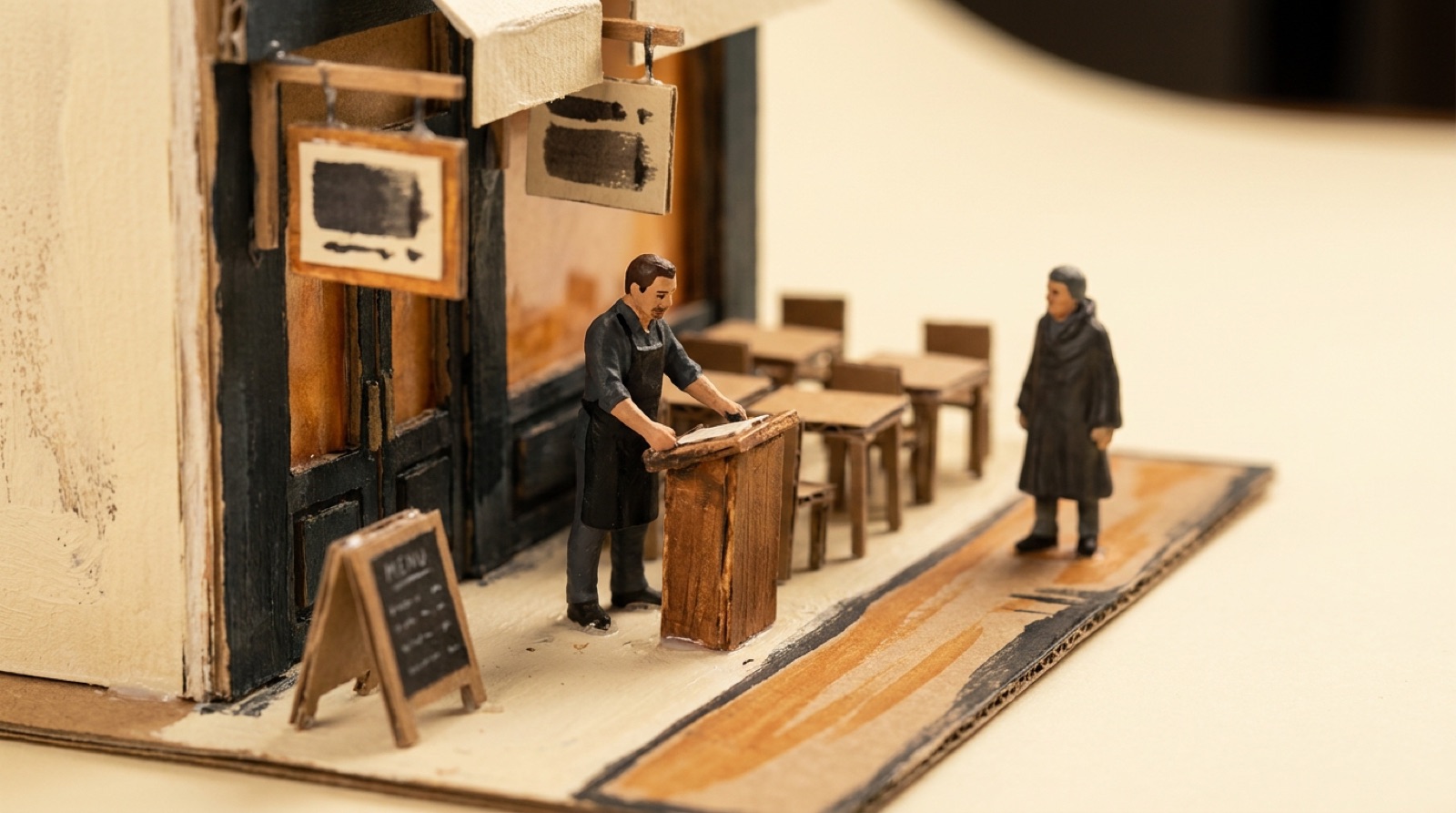
If your restaurant is still running, congratulations. That is not a small thing. The operators who are still open have already survived the hardest stretch. Now the goal shifts from surviving to building habits that hold up long-term.
Here are the four best practices you need to act on right now.
Why Does Signage Matter More Than Ever?
After interviewing tens of restaurant owners, one pain point came up over and over: customers simply do not know which restaurants are open.
Think about it from your customer’s perspective. They want to revisit a favorite spot. The first question they ask a friend is, “Are they even open? What are the new hours?” If you cannot answer that question before they get in the car, you lose the visit.
Your job right now is to use every square foot of dead space you have. Windows, doors, exterior walls. Put up signage that tells people you are open, when you are open, and how they can order. Aesthetics can take a back seat. Clarity wins.
How Do You Keep Your Online Information Consistent?
Signage on your physical location covers the people who walk or drive by. Your online presence covers everyone else, and that group is larger.
Update every platform you are on:
Google My Business has a dedicated field for temporary pandemic hours. Use it. Set your actual operating hours there so Google does not show stale information.
Yelp, your website, and all social media profiles need to match exactly. If Google shows you open at 3:00 pm, your website says 5:00 pm, and your Instagram says 4:30 pm, customers get confused. Confusion kills the visit. A confused customer does not take a chance on a wasted trip.
The rule is simple: every platform shows the same hours, updated the same day you change anything.
What Does It Mean to Diversify Your Revenue?
The uncertainty around when full dine-in service returns is the reason you cannot afford to have one revenue stream. Sitting still is not a strategy.
Look at what the large chains did. Starbucks and Chick-fil-A aggressively added drive-through locations. Curbside pickup became a standard offering across the industry. Those are infrastructure-heavy moves. You can move faster with lower overhead.
Some concrete options available to almost any food operator:
Meal kits. Package your signature dishes as take-home kits. Customers get a restaurant experience at home, and you get a higher ticket average.
House-made sauces and pantry items. If you have a sauce, a spice blend, or a staple that customers love, bottle it. Sell it as a grocery item. Customers skip a grocery run, you add revenue and brand recognition at the same time.
Courses and experiences. One operator I featured created an online bar experience and generated an extra fifty thousand dollars through online courses alone. Think about what knowledge or experience lives inside your concept that someone would pay to learn from home.
The point is not to do all of these at once. The point is to stop depending on a single format when that format is restricted.
How Should You Redesign Your Menu Right Now?
Your pre-pandemic menu was built for dine-in. It needs a rebuild for delivery.
First, audit for delivery viability. Fries in a closed container for thirty minutes turn soggy. That soggy order earns you a one-star review, and the reviewer is not wrong. If an item does not survive the time between leaving your kitchen and arriving at a door, pull it from the delivery menu or replace it with something that holds.
Second, lean into hearty and comforting food. That is what people are craving right now. Not fine dining, not trend-driven small plates. Food that feels like care. Comfort food has low barriers, broad appeal, and high emotional value.
Third, cut the low-margin, high-cost items. Right now the mission is to stay alive to fight another day. Any item that carries a high cost of goods and low volume does not belong on your menu. Keep only what generates strong margin and real demand.
Fourth, build around recycled ingredients. McDonald’s cut a significant portion of their menu for exactly this reason: fewer SKUs means less spoilage, more predictable ordering, and tighter cost of goods sold. If an ingredient only shows up in one dish, that ingredient is costing you money every time demand shifts. Design your menu so proteins, sauces, and produce move across multiple items.
How Do You Stay Connected With Your Customers?
When the pressure is high, the natural instinct is to put your head down and just get through the day. The problem is that your customers are looking for you right now, and they want to support you.
People genuinely want to support local businesses through hard times. But they need a reason to stay attached. That reason is your story.
Share what you are going through on social media. Share the hard days and the small wins. When you hit a milestone, celebrate it publicly with the people who follow you. That kind of transparency builds loyalty that no discount or promotion can manufacture. Loyal customers are built through shared struggle, not through coupons.
You do not need a polished content strategy. You need honesty and consistency. Show up, be real, and let your customers go on the journey with you.
The Bottom Line
Open clearly, diversify deliberately, simplify your menu around margin and delivery, and talk to your customers like they are on your team. Because right now, they are. The operators who come out of this stronger will be the ones who treated every constraint as a reason to build a better business, not a reason to hide. Stay visible, stay honest, and stay in the fight.
Watch the full video
Source — YouTube · the full breakdown, free
Tool — free · not sponsored, I built it
Want your exact numbers for a restaurant? The free calculator runs your cost to open, the ×1.4 cash reserve, and your break-even in about 30 seconds. Prefer paper? The One-Page Fundable Business Plan is the printable version.
Run your numbers →Questions owners actually ask
How do you handle ice cream delivery, specifically packaging and couriers?
The source material does not cover specific packaging boxes or courier services for frozen products like ice cream. What it does address is the broader principle: audit every menu item for whether it survives the delivery window. If an item degrades in thirty minutes (like fries going soggy), you need either purpose-built packaging or a different delivery approach entirely. For specialty items like ice cream, the packaging and carrier question is real and worth testing before you scale delivery, because a bad delivery experience earns you a bad review regardless of how good the product is in-store.
Is Facebook Ads Manager worth using for a restaurant?
The transcript does not cover Facebook Ads Manager specifically. What it does emphasize is the importance of maintaining and updating your online real estate, including social media, so that customers can find you and know you are open. Whether paid social advertising makes sense for your specific situation depends on your market and budget, but keeping your organic presence accurate and active is the non-negotiable first step before spending money on ads.
What online platforms should a restaurant update during operational changes?
At minimum: Google My Business, Yelp, your own website, and all active social media profiles. Google My Business even has a dedicated field for temporary pandemic or emergency hours. The critical rule is that every platform must show identical information. Discrepancies across platforms confuse customers and cost you visits.
What types of menu items work best for delivery?
Focus on hearty, comforting food that holds up in packaging. Items like fries that go soggy within thirty minutes hurt your reviews and your brand. Build your delivery menu around items that arrive in the same condition they left your kitchen. Comfort food fits this model well and matches what customers are actively craving.
How can a restaurant add revenue streams beyond dine-in?
Concrete options from the source include: curbside pickup, drive-through service where feasible, meal kits, house-made sauces and pantry items sold as grocery products, and experience-based offerings like online courses. One operator in the bar space generated an extra fifty thousand dollars through online courses alone. The goal is multiple formats so that a restriction on one does not shut down all your revenue.
Why should restaurants cut menu items right now?
Two reasons: margin and spoilage. Low-margin, high-cost items that are not selling in volume drain your cost of goods sold without contributing meaningfully to revenue. Items that use unique ingredients only appear in one dish create spoilage risk every time demand shifts. McDonald's cut a large portion of their menu during this period specifically to reduce SKUs, tighten ingredient recycling, and control waste. The same logic applies at any scale.
The Weekly Receipt
One brand story, one number, one answered question. 2 minutes, Tuesdays.
Free. Unsubscribe anytime, one click, no games.
You're in, friend. See you Tuesday.
Keep going: restaurant guides
How Much Does It Cost to Open a Restaurant? (2026 Complete Breakdown)
The real, itemized cost to open a full-service restaurant in 2026, including Wilson's x1.4 cash rule, break-ev
12 Restaurant Assets Every Owner Needs to Build
The 12 restaurant assets that build your brand, from logo to uniforms, ranked by priority before you open in 2
3 Tactics to Position Your Restaurant Brand for Growth
Awards, media features, and strategic associations are the three free tactics that build customer trust and po
3 Things to Know Before Opening a Restaurant (And What Happens If You Skip Them)
Wilson K Lee breaks down the three foundational principles every restaurant owner must master: know your numbe
360 Ads for Restaurants: How to Build Customer Touchpoints Across Every Channel
Learn how 360-degree advertising builds the 20 touchpoints your restaurant needs to turn strangers into custom
Low Labor Restaurant Concepts: Fast vs QSR Compared
Fast concept and QSR are the lowest labor restaurant concepts. See real costs, staffing needs, and revenue to
4 Actionable Steps to Prevent Your Restaurant from Going Bankrupt During a Crisis
Four concrete steps every restaurant owner needs to assess financial health, cut inefficiencies, secure fundin
5 Deadly Mistakes Every New Food Business Owner Makes
60% of restaurants fail in year one. Wilson K Lee breaks down the 5 deadly mistakes killing food businesses in