Restaurant · Guide Updated July 2026
6 Essential Instagram Designs Every Restaurant Must Create
Posting the same signature dish photo over and over stops working fast. Restaurants that grow on Instagram create six specific content types: campaign graphics, food photos, infographics, educational posts, dynamic social posts, and Instagram Stories graphics. Each one serves a different job, and together they give customers a real reason to follow, share, and return.
Most restaurants post pictures of their food, get a handful of likes, and wonder why Instagram never brings in new customers. The problem is not the food. The problem is the content strategy. You are giving people the same thing every single time, and there is no reason for them to share it, save it, or come back for more.
The fix is straightforward. You need six distinct design types working together on your feed. Each one does a different job. Here is exactly what they are and why each one matters.
Why “Just Post Your Food” Is Not Enough
When you post the same signature dish over and over, you train your audience to scroll past you. Social media audiences want variety, information, entertainment, and personality. Give them only one thing and you give them one reason to unfollow.
The brands that build real communities on Instagram give more than they take. That means creating content that serves the viewer, not just content that advertises the menu. Once you accept that shift, the six design types below make complete sense.
Design 1: Campaign Graphics
A campaign graphic is built around a specific theme or promotional event. Think of it as a visual announcement that ties your restaurant to something people already care about.
A strong example is a collaboration campaign. When two brands work together, say a burger restaurant and a regional content creator, both audiences see the content and the reach doubles without paying for ads. The campaign graphic itself communicates the partnership, the offer, and the energy of the event all at once.
You can also build campaigns around national food days. There is a national day for almost every food item on your menu. National Cheeseburger Day, National Chocolate Day, national days for fries, tacos, ice cream, and more. These are free, pre-built reasons to create a themed graphic and publish timely content that people are already searching and talking about.
The graphic itself should feature your branding, the theme, and a clear reason for someone to visit or share. Keep it clean. Keep it on-brand.
Design 2: Food Photos with a Purpose
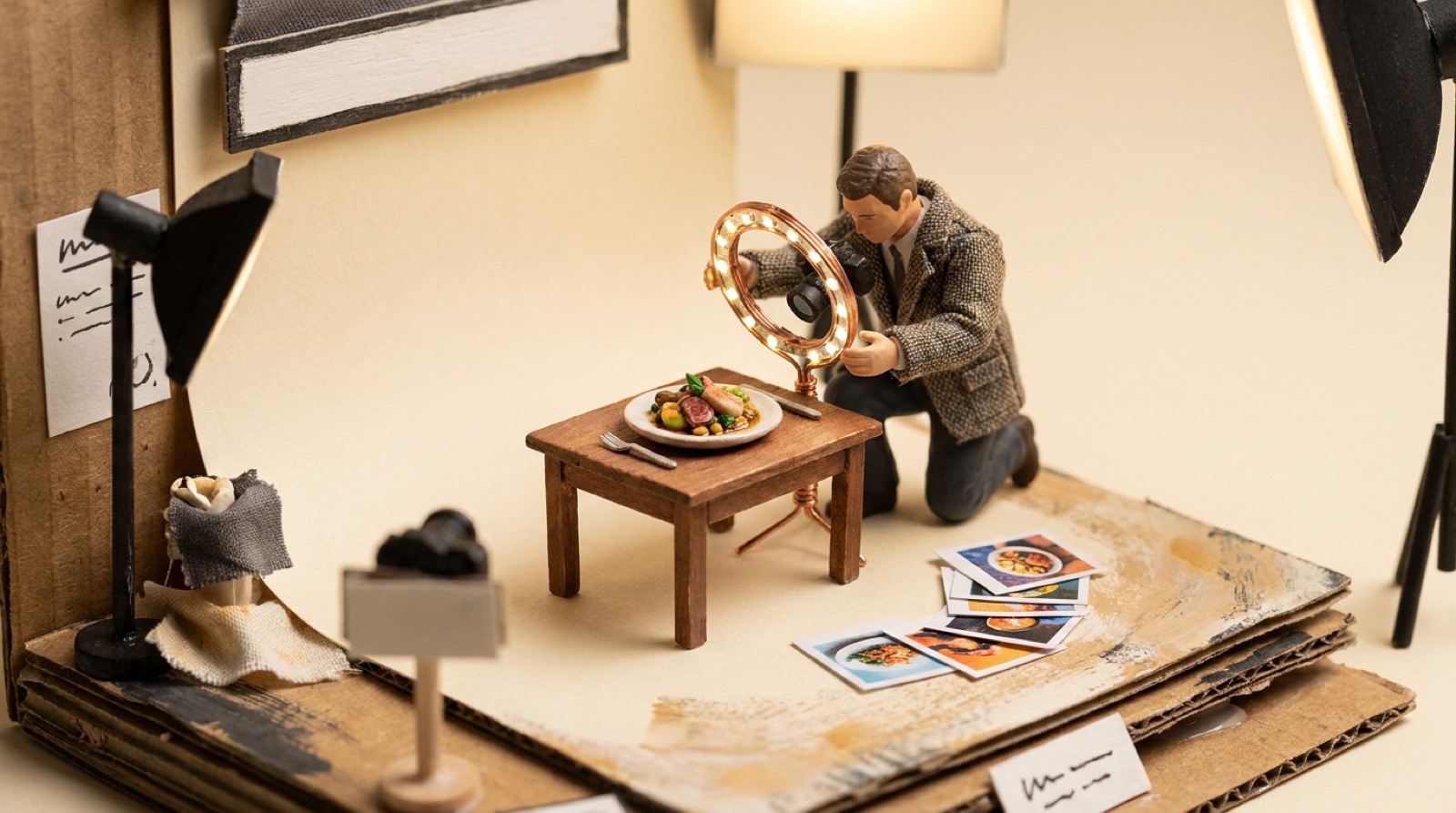
A well-shot food photo is still one of the most powerful posts you can publish, but it has to be intentional. A great food photo is a visual hook. It stops the scroll. It tells a story about quality, care, and experience before a single word is read.
The goal is not to document every item on your menu. The goal is to make someone feel something. A beautiful shot of your best item, styled properly and lit well, is an eye-catcher that communicates your restaurant’s character to the world.
Push these to your own Instagram account. When customers see them, they tag friends. When prospective visitors scroll your profile, they get an immediate impression of your standard. This is your most direct brand signal.
What Is an Infographic and Why Should Restaurants Use One?
An infographic takes information and presents it in a visual format. In plain terms, it turns complex or detailed content into something simple, shareable, and fast to absorb.
For a restaurant, this could be a graphic showing the history of a dish you serve, the origin of a key ingredient, a step-by-step breakdown of how something on your menu is made, or fun facts about a cuisine style. Content like this is genuinely interesting. It is not an ad. It is something a customer actually wants to read and share with a friend.
Here is the key insight: an infographic is far more shareable than a plain food photo. When someone shares a food photo, it is because they want to say “I ate here.” When someone shares an infographic, it is because the content itself is worth sharing. That is a completely different kind of reach, and it brings new eyes to your account who have never heard of your restaurant.
Design 4: Educational Content
Educational posts build trust in a way that promotional posts never can. When you teach your audience something, they associate your restaurant with expertise and authenticity.
Educational content for a restaurant can look like this: explaining why a certain cooking technique produces better results, showing how to identify a quality ingredient, breaking down what goes into a signature sauce, or sharing the story behind a recipe. The key is that the customer learns something real.
There is another benefit that most operators miss. When your own team members see educational content about their craft, it builds pride in the work. It reinforces why what they do every day matters. That internal culture effect is worth more than most owners realize.
Educational posts also tend to generate comments and saves, two signals that the Instagram algorithm rewards with broader reach.
Design 5: Dynamic Social Posts
A dynamic social post is content designed specifically to spark interaction. It is built to get your customers talking to each other and to you, inside your feed.
This type of post might be a poll, a question, a playful debate about menu items, or a behind-the-scenes moment that feels personal and unscripted. The purpose is to make your Instagram feel like a community gathering point, not a one-way broadcast channel.
When customers are engaging in your comments section, new visitors see that activity and read it as social proof. An active, lively comments section signals that people care about your restaurant. That signal influences buying decisions.
Dynamic social content also shows up in more feeds. Instagram’s algorithm reads engagement as a sign of quality and pushes engaging posts to a wider audience. More interaction means more organic reach, which means more potential customers seeing your restaurant without you spending a cent on ads.
Design 6: Instagram Stories Graphics
Instagram Stories is its own content channel inside Instagram. Over 500 million users watch Stories every single day. If you are not publishing to Stories, you are invisible to a massive part of the platform’s audience.
Stories graphics work differently from feed posts. They are full-screen, vertical, and built for quick consumption. They disappear after 24 hours, which creates urgency. A limited-time offer, a daily special, a behind-the-scenes moment, or a customer shoutout all work perfectly in Stories format.
The design for Stories needs to be visually appealing and quick to read. You have a few seconds to earn a tap-through or a swipe-up response. An appealing graphic with a clear, single message is what gets that response. A cluttered or poorly designed Story gets skipped.
Use Stories consistently. Restaurants that post appealing graphics to Stories regularly keep customers checking back daily. That daily habit is exactly the kind of relationship that turns a one-time visitor into a regular.
How to Actually Get These Designs Made
You do not need to hire a full agency or spend thousands of dollars to produce professional-quality graphics. High-quality, affordable design tools exist that let you create all six of these content types yourself or with minimal help. The barrier to great-looking Instagram content in 2026 is lower than it has ever been.
What matters most is consistency. A steady flow of good-looking, varied content across all six design types will outperform sporadic bursts of a single content type every time. Build templates for each design type once, then repeat them with fresh content week after week.
The Bottom Line
Six design types, each with a specific job: campaigns, food photography, infographics, educational posts, dynamic social content, and Stories graphics. Run all six and you stop being a restaurant that just posts food photos and start being a brand that your customers actually follow. The rule is simple: give more than you take from your audience, and the audience grows.
Watch the full video
Source — YouTube · the full breakdown, free
Tool — free · not sponsored, I built it
Want your exact numbers for a restaurant? The free calculator runs your cost to open, the ×1.4 cash reserve, and your break-even in about 30 seconds. Prefer paper? The One-Page Fundable Business Plan is the printable version.
Run your numbers →Questions owners actually ask
Why does posting only food photos hurt a restaurant's Instagram growth?
Posting the same dish over and over gives your audience no reason to share or re-engage with your content. Instagram rewards variety and genuine audience interaction. When you only broadcast menu items, you train followers to scroll past you, and the algorithm responds by showing your posts to fewer people.
What is a good campaign idea for a restaurant Instagram account?
Collaboration campaigns work well because they combine two audiences into one post. You can also build campaigns around national food days, which are free, pre-existing themes your audience is already interested in. Both approaches give customers a specific, timely reason to engage with your content.
How can an infographic help a restaurant get more Instagram reach?
An infographic is significantly more shareable than a standard food photo because the content itself has standalone value. When someone shares an infographic about a dish's history or a fun food fact, they are sharing information worth passing on. That kind of sharing brings new audiences to your profile who have never heard of your restaurant.
How many people use Instagram Stories every day?
More than 500 million users watch Instagram Stories every single day. That makes Stories a separate, high-traffic channel inside Instagram. Restaurants that skip Stories are missing exposure to an enormous portion of the platform's active audience.
What should a restaurant post to Instagram Stories?
Stories work best for time-sensitive, personal, or quick content: daily specials, limited-time offers, behind-the-scenes moments, and customer shoutouts. The graphic needs to be visually appealing and carry a single clear message, since viewers decide in seconds whether to engage or swipe past.
What is the main benefit of posting educational content as a restaurant?
Educational posts build trust and authority in a way that promotional posts cannot. When you teach your audience something real, such as how a dish is prepared or why an ingredient matters, customers associate your restaurant with expertise. Educational content also generates saves and comments, which the Instagram algorithm uses to push your posts to a wider audience.
The Weekly Receipt
One brand story, one number, one answered question. 2 minutes, Tuesdays.
Free. Unsubscribe anytime, one click, no games.
You're in, friend. See you Tuesday.
Keep going: restaurant guides
How Much Does It Cost to Open a Restaurant? (2026 Complete Breakdown)
The real, itemized cost to open a full-service restaurant in 2026, including Wilson's x1.4 cash rule, break-ev
12 Restaurant Assets Every Owner Needs to Build
The 12 restaurant assets that build your brand, from logo to uniforms, ranked by priority before you open in 2
3 Tactics to Position Your Restaurant Brand for Growth
Awards, media features, and strategic associations are the three free tactics that build customer trust and po
3 Things to Know Before Opening a Restaurant (And What Happens If You Skip Them)
Wilson K Lee breaks down the three foundational principles every restaurant owner must master: know your numbe
360 Ads for Restaurants: How to Build Customer Touchpoints Across Every Channel
Learn how 360-degree advertising builds the 20 touchpoints your restaurant needs to turn strangers into custom
Low Labor Restaurant Concepts: Fast vs QSR Compared
Fast concept and QSR are the lowest labor restaurant concepts. See real costs, staffing needs, and revenue to
4 Actionable Steps to Prevent Your Restaurant from Going Bankrupt During a Crisis
Four concrete steps every restaurant owner needs to assess financial health, cut inefficiencies, secure fundin
5 Deadly Mistakes Every New Food Business Owner Makes
60% of restaurants fail in year one. Wilson K Lee breaks down the 5 deadly mistakes killing food businesses in