Restaurant · Guide Updated August 2026
How to Plan a Restaurant Launch Campaign That Actually Gets People Through the Door
A restaurant launch campaign has two phases: setup and execution. The setup phase covers four parts: goal setting, timeline, offering, and design and photos. Nail these four parts before you open the doors and you create the kind of buzz that generates lines, earns press coverage, and gives your operations a real stress test before your grand opening.
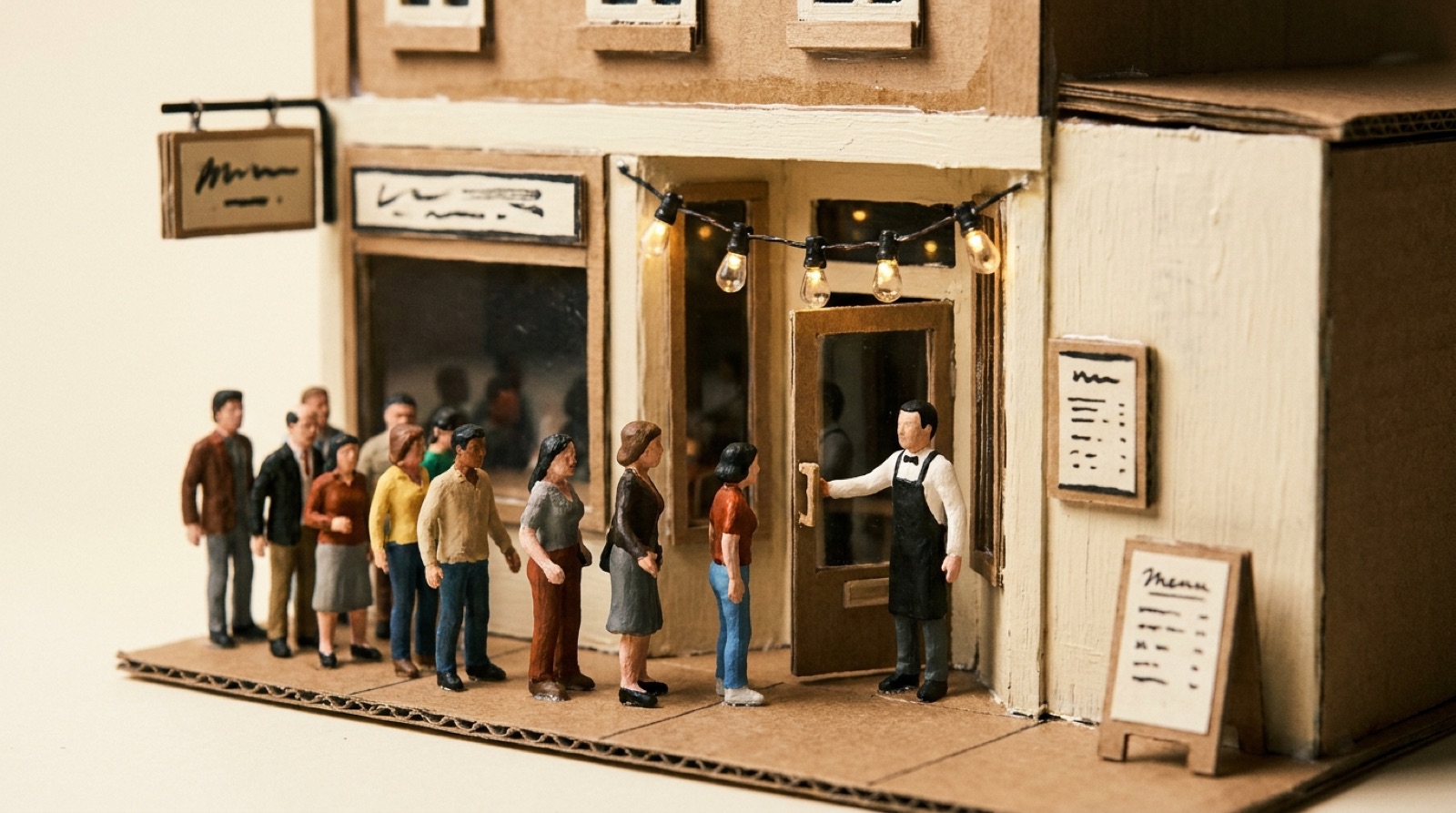
A restaurant launch campaign is not just a promotion. It is a structured, reverse-engineered plan that puts you on the map, stress-tests your operations, and gives you feedback before you ever hold a grand opening. The method works for a new shop, a new location, a new menu item, or an annual brand moment. Learn the principles once and you can run them over and over.
Why You Need a Kickstart Launch Campaign
When people drive past your shop and see a lineup outside, they talk. They pull out their phones. They tell friends. That lineup does not happen by accident.
At 720 Sweets, a strong launch campaign generated exactly that kind of line. More importantly, it exposed every operational weakness before the grand opening, when the stakes were lower and fixes were still easy to make. It also gave us a built-in feedback loop: we surveyed everyone who came through to find out what they loved, what they did not, and where we needed to improve.
The result of one well-run campaign was massive exposure and two franchise agreements signed within the first three months.
Running campaigns continuously is also how you stay relevant. New shops open all the time. If you go quiet, customers forget you exist. Understanding the structure of a launch campaign lets you repeat it as many times as you need.
Phase One: Setup (Four Parts You Must Complete Before Launch)
The entire launch campaign breaks into two phases: setup and execution. This guide covers the setup phase. There are four parts inside it.
Part 1: How Do You Set a Goal That Actually Guides the Campaign?
Start with your master business blueprint, because a campaign that contradicts your core goals will hurt you. One of the most common mistakes I see is a new operator copying a competitor’s discount promotion without understanding why that competitor is running it. You can dilute your brand, lose money, and chase the wrong customers all at once.
Every launch campaign needs a SMART goal: specific, measurable, attainable, relevant, and time-bound. Without a clear goal, you have no way to judge whether the campaign worked or how to improve the next one.
Ask yourself four questions before you plan anything else:
- What is the purpose of this campaign?
- How do I plan to carry it out?
- How will I measure performance?
- When does the campaign end?
Here is a real example from 720 Sweets. Every year on July 20th we celebrate 720 Day, our brand anniversary. For our fourth year, we wanted to do something big enough to create a genuine talking point. We decided to collaborate with a major global brand, Nespresso, and developed a limited-edition tiramisu flavor tied to their identity. Our goal was not short-term profit. It was brand awareness: PR hits, community sentiment, and the story people would tell about us. Sales would lift as a side effect, but that was not the core measure. The campaign ran July 19th through July 28th, with a two-week lead time from planning to launch.
Knowing that your goal is brand awareness, not revenue, changes every decision downstream. It changes your offer, your partners, your press strategy, and what you call a win at the end.
Part 2: How Do You Build a Launch Timeline That Keeps Everyone on Track?
Once your goal is set, reverse-engineer the timeline. Start from your launch date and work backwards, placing every major milestone on a calendar.
For the 720 Sweets x Nespresso campaign, here is how the timeline actually looked:
- June 17: Campaign idea finalized
- June 28: All campaign details confirmed; social media and email content drafted
- June 30: Tasting invites sent to influencers (they need more lead time than media)
- First week of July: Teaser posts go live to start building anticipation
- July 6: New tiramisu product developed and finalized
- July 13: Photo shoot and all final design assets completed
- July 14: Press release written and ready
- July 15 to 16: Press release sent to media outlets (PR typically takes two to three days to respond)
- July 19: Campaign launches
- July 28: Campaign closes, analysis begins
Each milestone on this list has its own sub-tasks. “Campaign posters arriving at all stores” means someone wrote a staff training guide, someone printed the posters, and someone physically delivered them. You do not need to list every sub-task on the master timeline or it becomes unmanageable. List only the milestones that matter most. The mini-tasks live inside those milestones.
The more detailed your timeline, the easier it is to communicate clearly with your team. They see the deadline, they understand the vision, and they know what role they play in hitting it.
Part 3: What Should Your Launch Offer Actually Be?
Your offer must match your goal. These two things cannot be disconnected.
If you want massive awareness and feedback, a high-volume, low-barrier offer works well. A local bubble tea shop ran a buy-one-get-one-free promotion on launch. The first 50 customers got their drink free. That created a line. It did not generate strong profit margins, but it was never meant to. The goal was awareness, and it delivered. A local publication picked up the story because free drinks are an easy, shareable headline.
If your goal is profit and revenue, your offer should point in a different direction. Bundles, limited-edition items, and add-ons generate higher margins than discounts. A bundle gives customers more perceived value without cutting your price.
Your offer also feeds your press strategy. Free items and collaborations with recognized brands give media outlets a reason to write about you. The easier you make it for a publication to tell a clear story, the more likely they are to feature you.
Part 4: Why Do Design and Photos Matter as Much as the Offer?
People eat with their eyes first. Every campaign asset, from social media posts to press release images to in-store posters, has to be visually sharp. If the photos are poor, the campaign does not spread. There is no viral factor without an image worth sharing.
High-quality photos and designed assets also make you far easier to cover. A press outlet is not going to send their own photographer to your shop for a launch story. If you hand them polished, ready-to-use images, you remove a major barrier to coverage. That single step dramatically increases your chances of being featured.
Your photo assets get used everywhere: social media, email campaigns, menus, flyers, press kits, and store posters. Invest the time in a proper photo shoot before the campaign launches. Plan your shot list, arrange your team and any production support, and get everything finalized at least a week before you need to send anything to press.
The Bottom Line
A launch campaign is a system, not a moment. Set a clear goal, build the timeline backwards from your launch date, design an offer that matches what you actually want to achieve, and make your photos impossible to ignore. Nail those four things and the execution phase has something real to work with. The operators who stay top of mind are the ones who treat every launch, every anniversary, and every new product as a reason to run this process again. As I tell every operator I work with: if you stop campaigning, you stop mattering.
Watch the full video
Source — YouTube · the full breakdown, free
Tool — free · not sponsored, I built it
Want your exact numbers for a restaurant? The free calculator runs your cost to open, the ×1.4 cash reserve, and your break-even in about 30 seconds. Prefer paper? The One-Page Fundable Business Plan is the printable version.
Run your numbers →Questions owners actually ask
What are the two phases of a restaurant launch campaign?
The two phases are setup and execution. The setup phase has four parts: goal setting, timeline, offering, and design and photos. The execution phase covers PR, influencer management, operations during the event, and post-campaign analysis. You must complete the setup phase fully before moving into execution.
How far in advance should I start planning a restaurant launch campaign?
At minimum, two weeks of lead time before your launch date is needed, and that assumes your product and brand assets are already in good shape. The 720 Sweets x Nespresso campaign was conceived on June 17th and launched July 19th, roughly four weeks later. That window included a photo shoot, product development, press release writing, influencer outreach, and staff training.
Should my launch offer focus on discounts or something else?
It depends entirely on your goal. If you want brand awareness and a high-volume opening, a free or heavily discounted offer, like free drinks for the first 50 customers, creates lines and press interest. If you want to generate revenue, bundles, add-ons, and limited-edition items produce better margins without cutting your price. Never copy a competitor's offer without knowing what goal they are trying to hit.
How do I get press coverage for my restaurant launch?
Send a press release two to three days before your launch date, since that is the typical window for a media outlet to accept or reject a submission. Make it easy for them by including polished, ready-to-use photos. Press outlets will not send their own photographers for a small launch. A compelling offer, like free product or a brand collaboration, also gives them a clear story to tell their audience.
Can I use a launch campaign for things other than a grand opening?
Yes. The same structure works for new store locations, new menu items, annual brand milestones, and seasonal promotions. At 720 Sweets, the launch campaign format was used every year for 720 Day. Learning the principles once lets you repeat the process as many times as you need to stay relevant as new competitors open around you.
Why is testing operations during a launch campaign important?
A high-volume launch event exposes every weakness in your process before your grand opening, when fixing problems still carries lower risk. At 720 Sweets, the lineup from a launch campaign revealed exactly where operations broke down. Those gaps were identified and fixed before the grand opening, which made the actual opening far smoother.
The Weekly Receipt
One brand story, one number, one answered question. 2 minutes, Tuesdays.
Free. Unsubscribe anytime, one click, no games.
You're in, friend. See you Tuesday.
Keep going: restaurant guides
How Much Does It Cost to Open a Restaurant? (2026 Complete Breakdown)
The real, itemized cost to open a full-service restaurant in 2026, including Wilson's x1.4 cash rule, break-ev
12 Restaurant Assets Every Owner Needs to Build
The 12 restaurant assets that build your brand, from logo to uniforms, ranked by priority before you open in 2
3 Tactics to Position Your Restaurant Brand for Growth
Awards, media features, and strategic associations are the three free tactics that build customer trust and po
3 Things to Know Before Opening a Restaurant (And What Happens If You Skip Them)
Wilson K Lee breaks down the three foundational principles every restaurant owner must master: know your numbe
360 Ads for Restaurants: How to Build Customer Touchpoints Across Every Channel
Learn how 360-degree advertising builds the 20 touchpoints your restaurant needs to turn strangers into custom
Low Labor Restaurant Concepts: Fast vs QSR Compared
Fast concept and QSR are the lowest labor restaurant concepts. See real costs, staffing needs, and revenue to
4 Actionable Steps to Prevent Your Restaurant from Going Bankrupt During a Crisis
Four concrete steps every restaurant owner needs to assess financial health, cut inefficiencies, secure fundin
5 Deadly Mistakes Every New Food Business Owner Makes
60% of restaurants fail in year one. Wilson K Lee breaks down the 5 deadly mistakes killing food businesses in