Restaurant · Guide Updated July 2026
Top 10 Restaurant Marketing Strategies That Actually Work
The ten foundational marketing strategies for any food and beverage business are: review sites, professional photography, website and SEO, social media, word of mouth, hosting events, PR, vendor catering deals, and treating every customer touchpoint as a deliberate marketing moment. None of these require a big agency budget. They are timeless because they are built around how people actually decide where to eat.
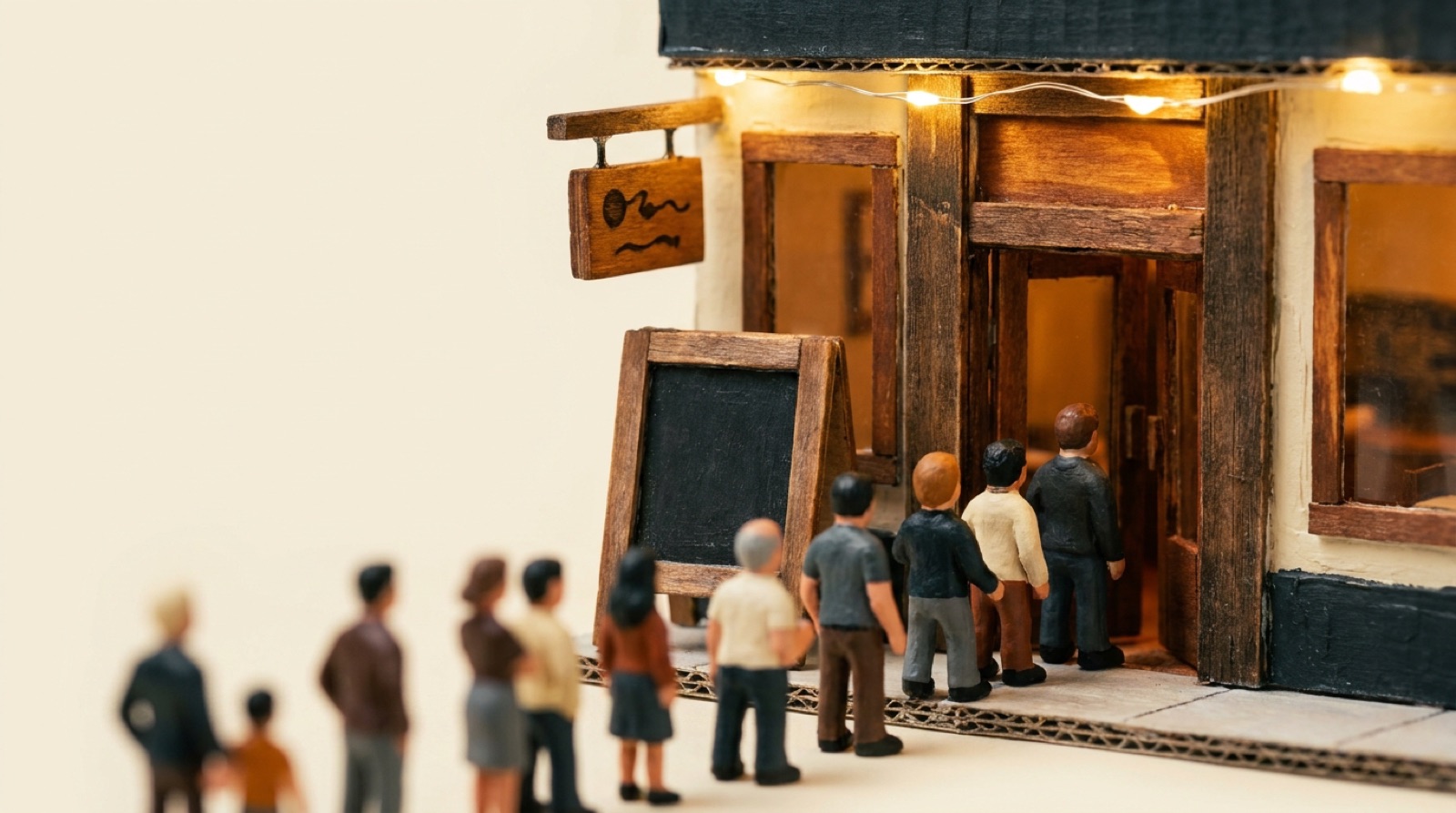
Getting customers through your door is not a mystery. More than 35% of diners check review sites before they decide where to eat. Most of them are doing it on a phone, scrolling through pictures, reading a handful of reviews, and clicking away inside of 60 seconds. Every strategy below is aimed at winning that moment.
Why Do Review Sites Matter So Much?
When someone wants to find a place to eat, they run through three sources in this order: word of mouth from someone they trust, the restaurant’s social media, and a review platform like Yelp or Google. Review sites are the tiebreaker.
Here is what actually happens. A customer searches, lands on your listing, reads two reviews, and if the experience looks bad, they click straight to a competitor. Your competitor has a 3.5 star rating but 4,000 reviews. Yours has a 4.0 star rating but two reviews. The competitor wins. Volume of authentic feedback beats a perfect score every time.
Reply to every review, good and bad. For a warranted bad review, own the mistake and explain what changed. If a guest waited 45 minutes because your chef was out sick, say exactly that. People are forgiving when you are honest. For a troll review with no substance, it is fine to reply with confidence and even a little wit. It shows other readers the character behind your business.
To get more reviews, ask. When a guest has a great meal, ask them directly to leave an honest review. If asking alone does not move them, offer an appetizer, a free drink, or a dessert in exchange for their honest feedback. This is one of the most underused tactics in the industry.
How Much Does Professional Photography Actually Matter?
It matters more than most owners want to admit. If your only photos are quick iPhone shots taken on a slow Tuesday, your shop looks like no one cares about it. That is the message those pictures send.
You have already spent tens of thousands of dollars on renovations, equipment, and staff. A professional photo shoot of your food, your interior, and your team costs a few hundred dollars. That investment pays for itself the first week the photos go live.
At 720 Sweets, every new flavor and every new promotion got a professionally shot set of images. Those photos got reused across the website, review sites, social media, and every marketing campaign. One shoot, multiple channels, compounding return. Do not cheap out on this.
Does Your Website Need to Be Professional?
Your website is a customer touchpoint. When someone has already decided they might want to eat at your place, they go to your site for one of three things: your location, your menu, or your phone number. If any of those three are missing, out of date, or hard to find, they leave and go to your competitor’s site.
A budget of $1,000 to $2,000 gets you a clean, professionally built restaurant website. That is not a large number relative to your total build-out cost, and it is not optional. Your site must also be mobile-compatible. The majority of your customers are on their phones when they make dining decisions.
While you are building the site, address SEO, which stands for search engine optimization. SEO means putting the right keywords into your site so that when someone searches “best ice cream in Vancouver,” your shop appears. When someone searches your specific cuisine or your neighborhood, your site appears. If you are not confident doing this yourself, hire a professional to lay the foundation. Once it is set up correctly, it works for you around the clock.
How Should You Use Social Media for Your Restaurant?
Social media acts as a digital menu. When my wife and I decide where to eat, we open our saved archive of food photos we have collected from Instagram, find something that looks appealing, click through to the restaurant, and go. That is a real and common decision-making path.
Post beautiful, high-quality pictures of your food and of the experience of being in your space. For more advanced content, post short videos showing how you prepare dishes or how you source ingredients. Use Instagram Stories to give followers a behind-the-scenes look at prep before service. Run polls and ask questions like “what do you think of this plating?” When followers can weigh in, they feel connected to your restaurant.
Repost your customers’ photos. It adds social proof, it makes the customer feel recognized, and it fills your content calendar with authentic material. The goal is to make your social media feel like an ongoing, engaging conversation, not a bulletin board.
What Is the Role of Word of Mouth?
Word of mouth carries more weight than anything you say about yourself. A recommendation from a friend or a stranger’s honest review lands harder than any ad you run. That means every single touchpoint in your customer’s journey has to be intentional.
A touchpoint is any moment a person interacts with your brand: finding your signage on the street, landing on your website, reading your reviews, being greeted at the door, receiving their food. If your signage is hard to read or your entrance is confusing, that is a broken touchpoint. Fix it.
When you improve every touchpoint, the experience improves. When the experience improves, people talk about it. When people talk about it, more customers come in. Better experience leads to better word of mouth, and better word of mouth leads to more customers. That cycle, once it starts, compounds on itself.
How Do You Use Events to Fill Slow Periods?
If your restaurant has slow periods during the week, events are the most cost-effective way to fill them. Your rent is a sunk cost. The space is sitting there. Why not use it to reach a brand new audience?
The model is simple. Find a local artist, instructor, or small business owner who needs a venue. Offer your space, either free or in exchange for a per-head food or drink minimum. They bring their own audience. You get exposure to customers who have never heard of you. Both sides win, and your cost is close to zero.
At 720 Sweets, we collaborated with calligraphy artists who hosted classes at our shop. They brought their students. We served our product. It was cross-promotion with no media budget required.
To find event partners, start with meetup.com, which lists local gatherings and organizers who need space. Facebook groups and Instagram are also useful for finding calligraphy instructors, floral class teachers, art workshops, and other talent who are actively looking for a venue.
How Do You Get Free PR for Your Restaurant?
PR gives you credibility that paid advertising cannot buy. When a well-known local publication features your restaurant, that endorsement carries real weight. It also gives you content you can share on social media and use in future marketing.
All of our PR at 720 Sweets was free. The process starts with having a genuine talking point, something that makes people stop and describe your restaurant to someone else. For us, it was smoke coming out of ice cream. That was visually striking and completely different from a standard cone. The product gave journalists and bloggers a reason to write about us, and it got us featured by one of the biggest local publications within our first two months of opening.
Once you have your wow element, you write a press release and do direct outreach to local publications, food blogs, and media outlets. The FOMO effect kicks in: once one outlet covers you, others notice and want in. You do not need a PR agency. You need a genuinely interesting story and the discipline to pitch it.
What Is the Vendor Catering Strategy?
Catering to other businesses and events creates a revenue stream that runs independently of your foot traffic. Even on a slow week in your dining room, a catering contract still generates income.
At 720 Sweets, we catered weddings with ice cream sandwiches. The pitch to wedding planners was straightforward: our product looks great, tastes great, and gives guests the feeling of supporting a local business. That angle resonated, and we landed consistent catering work from it.
Look at your own offering and ask who else needs it. Corporate offices, event planners, schools, private parties, and community events all need food. Reach out to vendors and planners in those spaces. Offer a sample and a clear proposal. A single recurring catering client can cover a meaningful portion of your monthly fixed costs.
The Bottom Line
Marketing a restaurant does not require a massive budget or an agency on retainer. It requires consistency across the channels your customers already use to make decisions: review sites, search, social media, and word of mouth. Nail your photography, keep your website current, build genuine relationships through events and partnerships, and earn press by being worth talking about. The operators who treat every customer touchpoint as a deliberate choice are the ones who end up with lines out the door.
Watch the full video
Source — YouTube · the full breakdown, free
Tool — free · not sponsored, I built it
Want your exact numbers for a restaurant? The free calculator runs your cost to open, the ×1.4 cash reserve, and your break-even in about 30 seconds. Prefer paper? The One-Page Fundable Business Plan is the printable version.
Run your numbers →Questions owners actually ask
What exactly is a review site and how is it different from a regular website?
A review site is a third-party platform, like Yelp or Google, where customers post public ratings and written feedback about a business. It is separate from your own website, which you control. Review sites matter because they show up in search results when someone looks for a place to eat, and they display ratings and comments from real customers that you did not write yourself. More than 35% of diners consult these platforms before choosing a restaurant.
How do I get more reviews without it feeling forced or fake?
Start by simply asking. After a guest has a good meal, ask them directly to leave an honest review. If asking alone does not work, offer a small incentive like a free appetizer, dessert, or drink in exchange for their genuine feedback. The word honest matters here: you want real reviews, not manufactured ones. A restaurant with 4,000 authentic reviews at 3.5 stars is more credible to most diners than one with a perfect score and only two reviews.
Do I need a template to reach out to potential event or collaboration partners?
There is no single template that fits every situation, but the structure is straightforward. Introduce yourself and your space, explain what you are offering (free or low-cost venue access), describe what you expect in return (their audience coming through your door, a per-head food or drink minimum, or simple cross-promotion), and make it easy for them to say yes with a clear next step. Keep it short. Platforms like meetup.com, Facebook groups, and Instagram are good places to find potential partners such as calligraphy instructors, floral class teachers, and art workshop organizers.
How do I get press coverage for my restaurant without paying a PR agency?
All of the PR at 720 Sweets was free. The foundation is having a genuine wow element, something visually striking or conceptually different that gives a journalist a reason to write about you. For 720 Sweets that was smoke coming out of ice cream. Once you have that talking point, you write a press release and pitch it directly to local publications and food bloggers. Getting one feature creates a FOMO effect where other outlets want to cover you too. The process compounds over time.
My food stall is not getting customers. What is the problem?
Based on the strategies covered here, the most likely gaps are visibility and trust signals. Start by auditing every customer touchpoint: does your stall have clear, attractive signage? Do you have any presence on review sites or social media with appealing photos? Word of mouth is the most powerful driver of new customers, but it only starts after people have had a reason to try you. If nobody is walking up, focus first on making the stall visually inviting, getting your first handful of reviews, and posting professional-quality photos of your product online so people can discover you before they arrive.
Is professional photography really necessary if I have a decent smartphone?
Professional photography is necessary. Smartphone shots, even good ones, rarely do food justice in a way that makes a stranger want to visit your shop. You have already invested tens of thousands of dollars in your build-out and equipment. A professional food and interior shoot costs a few hundred dollars and produces images you can use across your website, review profiles, social media, and paid campaigns. At 720 Sweets every new flavor and promotion got a professionally shot set of images that were reused across multiple channels. One shoot, many uses, lasting return.
The Weekly Receipt
One brand story, one number, one answered question. 2 minutes, Tuesdays.
Free. Unsubscribe anytime, one click, no games.
You're in, friend. See you Tuesday.
Keep going: restaurant guides
How Much Does It Cost to Open a Restaurant? (2026 Complete Breakdown)
The real, itemized cost to open a full-service restaurant in 2026, including Wilson's x1.4 cash rule, break-ev
12 Restaurant Assets Every Owner Needs to Build
The 12 restaurant assets that build your brand, from logo to uniforms, ranked by priority before you open in 2
3 Tactics to Position Your Restaurant Brand for Growth
Awards, media features, and strategic associations are the three free tactics that build customer trust and po
3 Things to Know Before Opening a Restaurant (And What Happens If You Skip Them)
Wilson K Lee breaks down the three foundational principles every restaurant owner must master: know your numbe
360 Ads for Restaurants: How to Build Customer Touchpoints Across Every Channel
Learn how 360-degree advertising builds the 20 touchpoints your restaurant needs to turn strangers into custom
Low Labor Restaurant Concepts: Fast vs QSR Compared
Fast concept and QSR are the lowest labor restaurant concepts. See real costs, staffing needs, and revenue to
4 Actionable Steps to Prevent Your Restaurant from Going Bankrupt During a Crisis
Four concrete steps every restaurant owner needs to assess financial health, cut inefficiencies, secure fundin
5 Deadly Mistakes Every New Food Business Owner Makes
60% of restaurants fail in year one. Wilson K Lee breaks down the 5 deadly mistakes killing food businesses in