Restaurant · Guide Updated July 2026
7 Steps to Create a Restaurant Marketing Strategy That Gets More Customers
A restaurant marketing plan works because it cuts through noise, keeps your team aligned, and gives you a measurable target to improve against. The seven steps are: identify your objective, brainstorm aligned activities, choose one platform to dominate, set SMART goals, work backwards from the end goal, execute with your team, and review results. Every step builds on the last, so skipping any one of them leaves you reacting to competitors instead of running your own race.
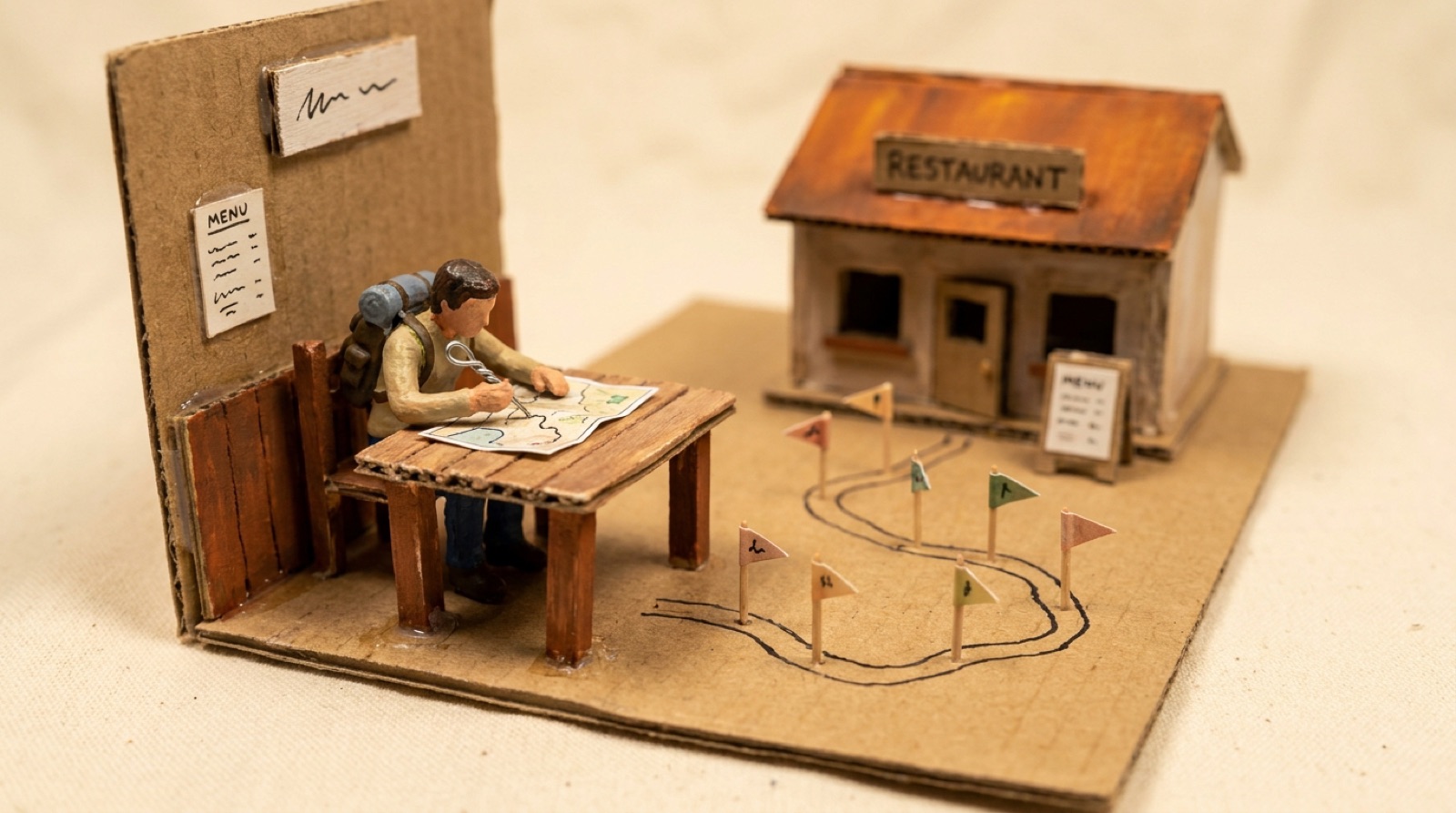
A restaurant marketing plan is not a nice-to-have. It is the difference between reacting to every competitor promotion and actually moving your business forward. Without one, you are bleeding money on campaigns that feel exciting but do nothing for your real objective. With one, your entire team rows in the same direction.
Here are the seven steps, exactly as we built them at 720 Sweets, the ice cream chain I grew from one shop to seven locations before selling it.
Why Does a Restaurant Even Need a Written Marketing Plan?
Walk down any busy street and you are bombarded with noise. Your competitor runs a buy-one-get-one promotion. You panic and copy it. That promotion does nothing for your actual goal and costs you margin. That is what happens without a plan.
A written plan does three things. It gives you clarity on what you are trying to achieve. It tells you what to measure, so you know whether you are winning or failing. And it lets your team operate without you explaining every decision from scratch. At 720 Sweets, we had Julie on graphic design, Jason on marketing, and Brian executing on the ground. The plan was the shared document that kept all three in sync.
If you do not write it down, you cannot improve it.
Step 1: Identify Your Objective
Before you touch any marketing tactic, pin down exactly what you want. “Get more customers” is not an objective. These two goals, increasing sales revenue and building a community, require completely different strategies. Chasing both at once produces neither.
At 720 Sweets our objective was to increase social media engagement and increase sales revenue. We made it concrete: sell 600 cups of ice cream. That number gave us a benchmark. Everything else in the plan had to push toward that number.
One useful frame right now: a lot of operators are not chasing profitability, they are chasing volume to keep their staff employed. One operator I referenced was selling 1,300 meals per day because he made his goal explicit. His goal was not margin. It was keeping 100 people on payroll. That clarity drove every decision. Yours will too, once you name it.
Step 2: Brainstorm Activities That Funnel to That Objective
Now you get to the creative part. Once the objective is fixed, brainstorm every activity that could move you toward it. If your goal is more sales, the list might include monthly promotions, seasonal specials, better street-level signage, sandwich boards, and outreach to offices, associations, and wedding planners. If your goal is community building, you are looking at events with local creatives, meetup groups, influencer collaborations, email list building, and giveaways.
Here is the rule: every activity on your brainstorm list must funnel to your stated objective. If it does not, cut it. This is where most restaurant owners go wrong. They see an idea they love, run with it, and three months later wonder why nothing moved. Check every idea against the objective before spending a dollar or an hour on it.
At 720 Sweets, because our objective was social media engagement, our activities included in-store posters, community posters placed at other local businesses, contest posts, flavor announcement posts, Facebook Lives, and newsletter posts. All of them pointed at one outcome: more engagement on our channels.
Step 3: Choose One Platform and Dominate It
There are more platforms available to you right now than any small team can manage well. Instagram, Facebook, YouTube, TikTok, LinkedIn, email. You do not need to be on all of them. You need to be where your customers actually spend their time.
For 720 Sweets, our customers were Millennials. Millennials consumed content on Instagram. So we put our energy into building a strong, consistent Instagram presence and ignored the rest. That focus produced a feed worth following.
The common mistake is platform-hopping. You see another restaurant crushing it on YouTube, so you start a channel. Then you see someone winning on Instagram, so you start posting there too. Now you have three half-finished presences and no traction anywhere. Pick the one platform where your customer is hanging out. Do that one thing exceptionally well.
Step 4: Set SMART Goals
You have an objective. You have activities. You have a platform. Now you need a specific, measurable target, or none of the previous steps have a finish line.
SMART stands for Specific, Measurable, Actionable, Realistic, and Timely. “I want 50k in sales” is not a SMART goal. It is a wish. Here is the difference in practice.
A SMART goal: increase monthly drink sales by 15% by August 2020. That goal is specific (drinks, not total revenue), measurable (15% gives you a benchmark), actionable (you can build tactics around it), realistic (incremental, not a moonshot), and timely (it has a deadline).
Another example: increase lunch-hour sales by 10% by July 2020. To hit that, you identify the tactics, reach out to nearby offices, banks, and schools; post more frequently about your lunch offerings. Most restaurant owners assume people already know about their lunch menu. They do not. Even people who work next door often have no idea what you serve at noon. Go tell them, repeatedly and on purpose.
At 720 Sweets in 2017, one campaign goal was to hit 600 likes and 80 comments by the end of a voting period running October 12 to October 31, and to gain 75 new followers in that same window. Nothing fancy. Written in plain text. It kept us accountable.
For community building, an example SMART goal looks like: grow the email list by 1,000 subscribers by August, using a giveaway with email-only entry and a Wi-Fi marketing capture tool. Another: host three community events per quarter by July. Both are specific and tied to a date.
Step 5: Work Backwards From the End Goal
Most operators set a goal and then ask, “What do I do first?” That question is hard to answer because you are looking at an empty road ahead of you.
Flip it. Start from the end and work backwards. Visualize the finished result, then reverse-engineer every milestone you need to hit to get there.
When we decided to collaborate with Nespresso, I did not start by asking what to do. I started with the end in mind. The end goal was this: Nespresso sponsors us, their machine appears in our marketing campaign, and everyone in Vancouver knows we collaborated with a major international brand. I was not looking for money from them. I wanted brand awareness.
Knowing that end goal told me exactly what I needed to build: a promotional plan and a collaborative proposal that made the partnership a genuine win for Nespresso too. I worked backwards from the desired outcome to craft an approach that gave them a reason to say yes. Without that end picture, I would have had no idea what kind of proposal to write.
Map your milestones on paper. What needs to be true two weeks before launch? One month before? Three months before? That map becomes your action plan.
Step 6: Assign Ownership and Execute
A plan with no owner is a document that sits in a folder. Every activity needs a name next to it and a deadline. At 720 Sweets, the plan named who was responsible for each piece. That removed the conversation about who was supposed to do what and let everyone focus on actually doing it.
This step is also where you look at what is possible given your current circumstances. During the pandemic period, a Mother’s Day half-gallon latte promotion by Narrative Coffee generated over 100 units sold at roughly $30 each, doing more business than usual, because the operator identified a clear target (moms stuck at home), built a product around that moment, and executed on it. The plan was simple. The execution was sharp.
When your team is small, be realistic about what you can actually ship. One excellent campaign beats five mediocre ones.
Step 7: Measure, Review, and Improve
SMART goals only matter if you go back and check them. Schedule a review at the end of every campaign window. Did you hit 15% growth in drink sales? Did you gain 75 new followers? If yes, identify what worked so you can repeat it. If no, identify the gap and adjust before the next campaign.
This is why you write things down. Not to create paperwork, but to create a feedback loop. Most restaurant owners never build this loop, so they run the same promotions year after year with no idea whether they are working.
The review meeting does not need to be long. Pull the numbers against your SMART goal, call out what moved and what did not, and update the plan. That is it.
The Bottom Line
A restaurant marketing plan is not about having a fancy document. It is about knowing what you want, building activities that aim at that target, and measuring whether you hit it. Start with one clear objective, let every activity serve that objective, pick one platform and own it, and set a deadline. Most restaurants fail at marketing because they skip step one and jump straight to tactics. Name your objective first, and the rest of the plan writes itself.
Watch the full video
Source — YouTube · the full breakdown, free
Tool — free · not sponsored, I built it
Want your exact numbers for a restaurant? The free calculator runs your cost to open, the ×1.4 cash reserve, and your break-even in about 30 seconds. Prefer paper? The One-Page Fundable Business Plan is the printable version.
Run your numbers →Questions owners actually ask
How do you get a big brand like Nespresso to collaborate with your restaurant?
Start with the end in mind. Before reaching out, define exactly what you want from the partnership. When Wilson approached Nespresso, the goal was brand awareness, not money: get Nespresso's machine into 720 Sweets' marketing campaign so that everyone in Vancouver associated the two brands. That clarity shaped the proposal. Wilson built a collaborative promotional plan that made the partnership a win for Nespresso too. A proposal that shows clear value for the brand you are approaching is what gets a yes.
Should you use different strategies for each social media platform?
Yes. Each platform has its own content format, audience behavior, and expectations. A strategy built for Instagram does not translate directly to YouTube or TikTok. More importantly, the audiences on each platform are different. 720 Sweets focused on Instagram because that is where their Millennial customers spent time. Wilson uses YouTube because that is where F&B operators look for business guidance. Identify the single platform where your customers are, dominate that one, and tailor your strategy specifically to how that platform works.
We are starting a restaurant inside an existing pub. Where do we begin with marketing?
Start with Step 1: identify your objective. Decide whether your priority is building awareness among the pub's existing customer base, driving new lunch or dinner covers, or building a community around the space. Once that is clear, brainstorm activities that funnel toward that specific goal and set a SMART goal with a measurable target and a deadline. An existing venue gives you a built-in audience, so outreach to regulars and partnerships with the pub's existing social channels are logical early activities.
What is a SMART goal for a restaurant, and how is it different from just setting a sales target?
A plain sales target like 'I want 50k in sales' is not a SMART goal because it lacks specificity, a timeline, and actionable steps. A SMART goal is Specific, Measurable, Actionable, Realistic, and Timely. An example Wilson uses: increase monthly drink sales by 15% by August 2020. That version names exactly what you are measuring (drink sales), by how much (15%), and by when. That structure tells you whether you are on track and what tactics to build around it.
Why should a restaurant focus on one platform instead of being everywhere?
Spreading across every platform means you produce average content everywhere and excellent content nowhere. The bigger issue is misalignment: if your customers are on Instagram and you are spending energy on LinkedIn, you are working hard for no return. At 720 Sweets, the target market was Millennials who consumed content on Instagram, so that is where all the creative energy went. Choose the platform where your actual customers spend their time, build a strong presence there, and ignore the rest until that one is genuinely working.
How do you brainstorm marketing activities without wasting time on things that do not work?
Run every idea through a single filter: does this activity funnel toward your stated objective? If the objective is increasing sales revenue, activities like outreach to nearby offices, seasonal promotions, and table signage for upsells all pass that test. A community art event might be fun but does not pass the test if revenue is the goal. Write the objective at the top of your brainstorm list and check every idea against it before committing any time or budget.
The Weekly Receipt
One brand story, one number, one answered question. 2 minutes, Tuesdays.
Free. Unsubscribe anytime, one click, no games.
You're in, friend. See you Tuesday.
Keep going: restaurant guides
How Much Does It Cost to Open a Restaurant? (2026 Complete Breakdown)
The real, itemized cost to open a full-service restaurant in 2026, including Wilson's x1.4 cash rule, break-ev
12 Restaurant Assets Every Owner Needs to Build
The 12 restaurant assets that build your brand, from logo to uniforms, ranked by priority before you open in 2
3 Tactics to Position Your Restaurant Brand for Growth
Awards, media features, and strategic associations are the three free tactics that build customer trust and po
3 Things to Know Before Opening a Restaurant (And What Happens If You Skip Them)
Wilson K Lee breaks down the three foundational principles every restaurant owner must master: know your numbe
360 Ads for Restaurants: How to Build Customer Touchpoints Across Every Channel
Learn how 360-degree advertising builds the 20 touchpoints your restaurant needs to turn strangers into custom
Low Labor Restaurant Concepts: Fast vs QSR Compared
Fast concept and QSR are the lowest labor restaurant concepts. See real costs, staffing needs, and revenue to
4 Actionable Steps to Prevent Your Restaurant from Going Bankrupt During a Crisis
Four concrete steps every restaurant owner needs to assess financial health, cut inefficiencies, secure fundin
5 Deadly Mistakes Every New Food Business Owner Makes
60% of restaurants fail in year one. Wilson K Lee breaks down the 5 deadly mistakes killing food businesses in