Restaurant · Guide Updated August 2026
3 Types of Marketing Content That Restaurant Customers Love (and How to Find Content Ideas Fast)
The three best ways to find content ideas for your restaurant are: study what is already working for your dream competitors, mine real customer questions from AnswerThePublic, and tie content to local and national events. Once you have those ideas, execute them through videos, high-quality photos, and Instagram Stories, then batch everything into one day per month so it does not consume your operation.
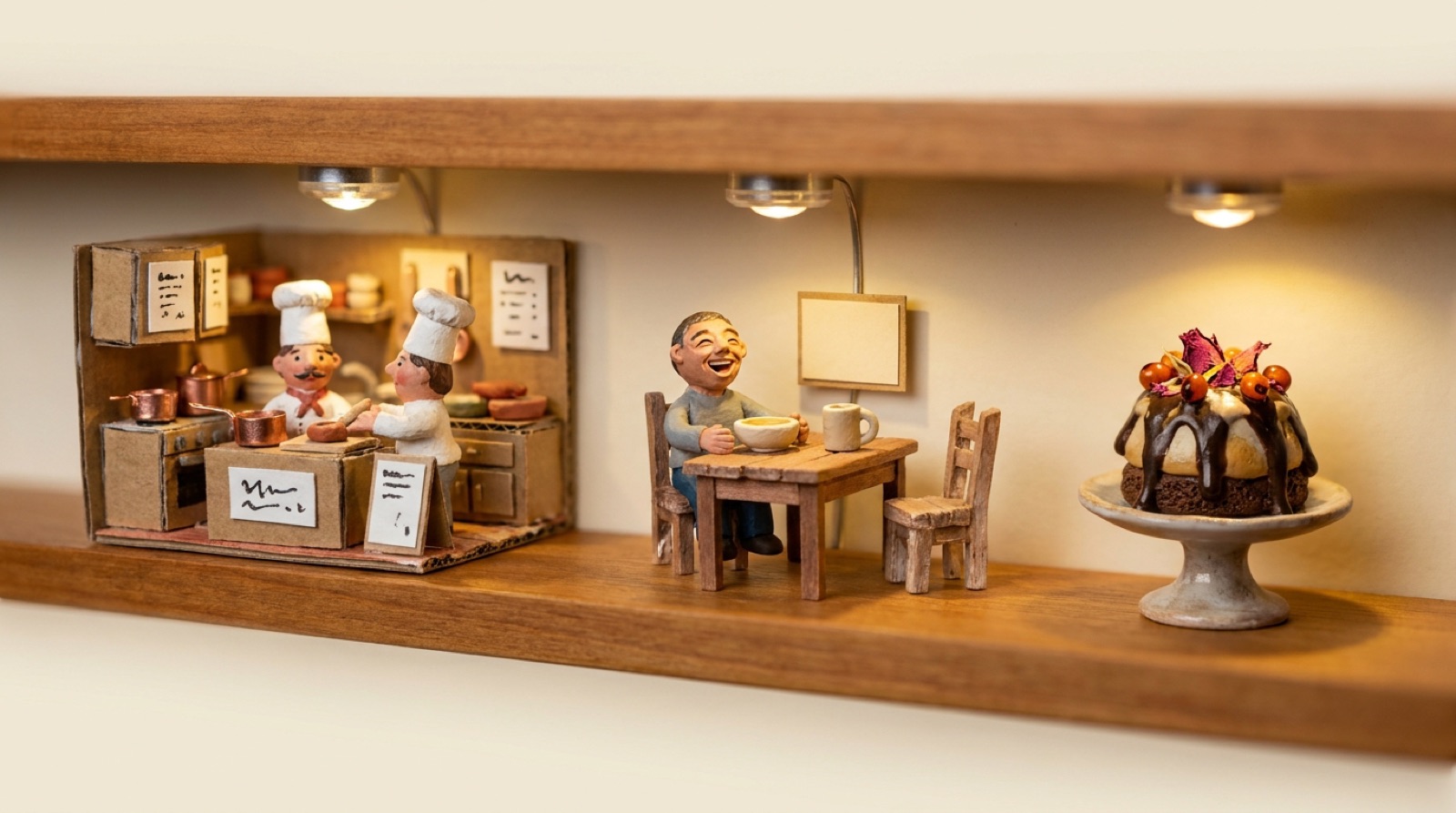
Social media is not optional for your food business. The lineups at my ice cream shops, 720 Sweets, had everything to do with Instagram and the content we posted consistently. If you are waiting for customers to find you some other way, you are leaving real revenue on the table.
The good news is that great content does not require a big team, a DSLR camera, or a marketing agency billing you thousands of dollars a month. You need a system. Here is the one that worked for us.
Why Social Media Deserves Your Serious Attention
People check Instagram, Facebook, and TikTok multiple times a day. They use those platforms to decide where to eat. Social media is a critical decision-making touchpoint, not just a nice-to-have brand exercise. If your feed is dead or inconsistent, customers notice and they choose the place that looks alive.
One more thing before we get into content ideas: dominate one platform first. Pick the one where your customers spend the most time, own it, then expand. Spreading yourself thin across every platform at once dilutes everything.
Should You Hire an Agency or Keep Social Media In-House?
This question comes up constantly from operators who are just getting started. Here is the honest breakdown.
In-house is cheaper. You have full control of the process, direct communication with your community, and an authentic, unpolished view into your kitchen that agencies cannot replicate. The downside is that it is time consuming and you will lack the expertise to hit every best practice right away.
An outside agency brings experience, resources, and the ability to grow your following faster. It also costs thousands of dollars a month, puts you at arm’s length from your own customers, and often produces content that feels overly polished and generic.
My recommendation: start in-house. That is exactly how we did it at 720 Sweets. Stay scrappy until you have proven demand, consistent cash flow, and real profitability. Once you reach that point, outsourcing makes sense. Until then, do it yourself or hire one person internally. The system below makes that manageable even when you are slammed running a shop.
Three Ways to Find Content Ideas Your Customers Will Love
1. Look at What Is Already Working
You do not need to reinvent the wheel. Go back to your customer research and your “dream dogs,” meaning the companies and people you aspire to become. Study their top ten performing posts. Look at the content style, the shot style, the caption approach, and the reactions from their audience.
Find the patterns. If their audience engages heavily with behind-the-scenes kitchen footage showing how ingredients are sourced, that tells you your customers want that too. If solo selfie-style posts get almost no engagement, stop wasting time on them. Double down on the formats that are already proving themselves. Your job is to spot what works and execute it for your own brand.
2. Mine Burning Questions
Go to AnswerThePublic.com and type in a keyword related to your food category. The tool surfaces every question real people are searching for online. Type in “tacos” and you get questions like “where do tacos come from,” “who invented tacos,” and “what are tacos made of.” Type in “sushi” and you get “how is sushi made,” “is sushi safe to eat,” “why is sushi made with raw fish.”
Every one of those questions is a content idea. Answer them on your feed, in your Stories, or in a short video. You are not guessing what people want to know. They already told you.
3. Tie Content to Events
Search for events that matter to your customers. That includes local events like car-free days, summer fireworks, and sports playoff games. It also includes national food and lifestyle days. Just Google “national food holidays” and a full calendar appears. National Ice Cream Day, National Taco Day, National Best Friend Day, all of these are ready-made reasons to create something new and give customers a reason to visit.
The key is to make it your own. Taco Tuesday is a perfect example. Taco John’s, a chain out of Wyoming, created Taco Tuesday because Tuesdays were their slowest day. They offered tacos for two bucks and turned a dead shift into a movement. That is the creativity these events are calling for. Do not just post a generic “Happy National Taco Day” graphic. Create a limited item, run a promotion, make it a reason to come in.
The Three Content Types You Should Be Posting
Videos
Video captures more attention and engagement than any other format. You do not need a production crew. A smartphone does the job. Some of the most viral food content ever posted was shot on an iPhone in thirty seconds.
The content that works is visual and satisfying. Cheese pulls. Popping the yolk on an eggs Benedict. Food that moves and looks incredible. Find what performs in your category and create more of it. Keep it simple, keep it authentic, and do not overthink the production.
High-Quality Photos
If it is not moving, it needs to stop someone mid-scroll. A blurry or poorly composed photo will not do that. High-quality photos are non-negotiable.
The photo is your first chance to stop the scroll. The caption is your second chance to connect. The more attractive your photo, the more likely someone reads your caption. The more they read your caption, the more they trust you. That is the whole point of social media for a food business: building trust, one post at a time. Think of your captions as storytelling, not just labeling.
Instagram Stories
Stories are how people consume content on Instagram right now. It is unpolished, behind-the-scenes, and immediate. That raw quality is exactly what makes it work. Customers feel like they are getting a live look at their favorite spot.
Use the built-in tools. Boomerangs, super zoom, rewind, polls, quizzes, Q&As, countdowns. A poll asking customers to vote on their favorite dessert item is both engaging content and free customer research. A Q&A lets your chef speak directly to your community. A countdown builds anticipation for a new menu item or promotion. Stories also extend any promotion you are running. Post it on the feed and post it as a Story. Double the reach, same asset.
How to Create a Full Month of Content in One Day
The biggest reason operators neglect social media is time. You are running a kitchen, managing staff, handling suppliers, and doing a dozen other things. You cannot sit down every day and think about what to post.
The answer is batching. Pick one day per month and create everything at once. Plan your posts, shoot your videos and photos, write your captions, and schedule it all out. When that one day is done, your social media runs on autopilot for the next thirty days. You do not scramble, you do not post inconsistently, and you do not fall off because a busy service week derailed your momentum.
This is what we did at 720 Sweets and it worked. One committed day replaces thirty days of daily stress.
The Bottom Line
Find content ideas by studying competitors, answering real customer questions, and riding events. Execute those ideas through videos, high-quality photos, and Stories. Batch your production into one focused day per month so it never competes with running your shop. The operator who shows up consistently on social media beats the operator who shows up perfectly once a month. Consistency is the advantage, and batching is how you build it.
Watch the full video
Source — YouTube · the full breakdown, free
Tool — free · not sponsored, I built it
Want your exact numbers for a restaurant? The free calculator runs your cost to open, the ×1.4 cash reserve, and your break-even in about 30 seconds. Prefer paper? The One-Page Fundable Business Plan is the printable version.
Run your numbers →Questions owners actually ask
Should I hire a social media agency when I first open my restaurant?
Start in-house. An agency can cost thousands of dollars per month and puts you at a distance from your own customers. Build in-house until you have proven demand, consistent cash flow, and real profitability. At that point, outsourcing becomes a reasonable investment.
What is AnswerThePublic and how do I use it for restaurant content?
AnswerThePublic.com aggregates the real questions people type into search engines around any keyword. Type in your food category, such as tacos or sushi, and it generates a full list of customer questions. Each question is a ready-made content idea you can turn into a post, video, or Story.
What kind of video content performs best for food businesses on social media?
Visually satisfying and simple footage works best. Examples include cheese pulls and popping the yolk on an eggs Benedict. You do not need professional equipment. A smartphone is enough. Focus on content that looks and feels appetizing, and do not overthink the production.
How do I use national food holidays to market my restaurant?
Search for national food and lifestyle days relevant to your category and use them as a reason to create a limited item, run a promotion, or engage your audience. The goal is to make it your own rather than posting a generic graphic. Taco John's created Taco Tuesday as a promotion for their slowest day, and it became a movement people still celebrate today.
How do I realistically keep up with social media while running a busy restaurant?
Batch your content creation into one dedicated day per month. Plan, shoot, write captions, and schedule everything at once. This removes the daily pressure of figuring out what to post and keeps your feed consistent even through your busiest weeks.
Why are Instagram Stories important for a food business?
Stories are how a large portion of Instagram users consume content today. The unpolished, behind-the-scenes format builds authenticity and trust. Built-in tools like polls, Q&As, and boomerangs make Stories interactive, giving you a direct research channel into what your customers want.
The Weekly Receipt
One brand story, one number, one answered question. 2 minutes, Tuesdays.
Free. Unsubscribe anytime, one click, no games.
You're in, friend. See you Tuesday.
Keep going: restaurant guides
How Much Does It Cost to Open a Restaurant? (2026 Complete Breakdown)
The real, itemized cost to open a full-service restaurant in 2026, including Wilson's x1.4 cash rule, break-ev
12 Restaurant Assets Every Owner Needs to Build
The 12 restaurant assets that build your brand, from logo to uniforms, ranked by priority before you open in 2
3 Tactics to Position Your Restaurant Brand for Growth
Awards, media features, and strategic associations are the three free tactics that build customer trust and po
3 Things to Know Before Opening a Restaurant (And What Happens If You Skip Them)
Wilson K Lee breaks down the three foundational principles every restaurant owner must master: know your numbe
360 Ads for Restaurants: How to Build Customer Touchpoints Across Every Channel
Learn how 360-degree advertising builds the 20 touchpoints your restaurant needs to turn strangers into custom
Low Labor Restaurant Concepts: Fast vs QSR Compared
Fast concept and QSR are the lowest labor restaurant concepts. See real costs, staffing needs, and revenue to
4 Actionable Steps to Prevent Your Restaurant from Going Bankrupt During a Crisis
Four concrete steps every restaurant owner needs to assess financial health, cut inefficiencies, secure fundin
5 Deadly Mistakes Every New Food Business Owner Makes
60% of restaurants fail in year one. Wilson K Lee breaks down the 5 deadly mistakes killing food businesses in