Restaurant · Guide Updated July 2026
3 Rookie Mistakes New Food Business Owners Make
Most new food businesses fail early because of three avoidable mistakes: not preparing properly before opening, not educating yourself on the full scope of running a food business, and taking advice from the wrong people instead of identifying your specific customer. Fix these three things and your odds of building something sustainable go up dramatically.
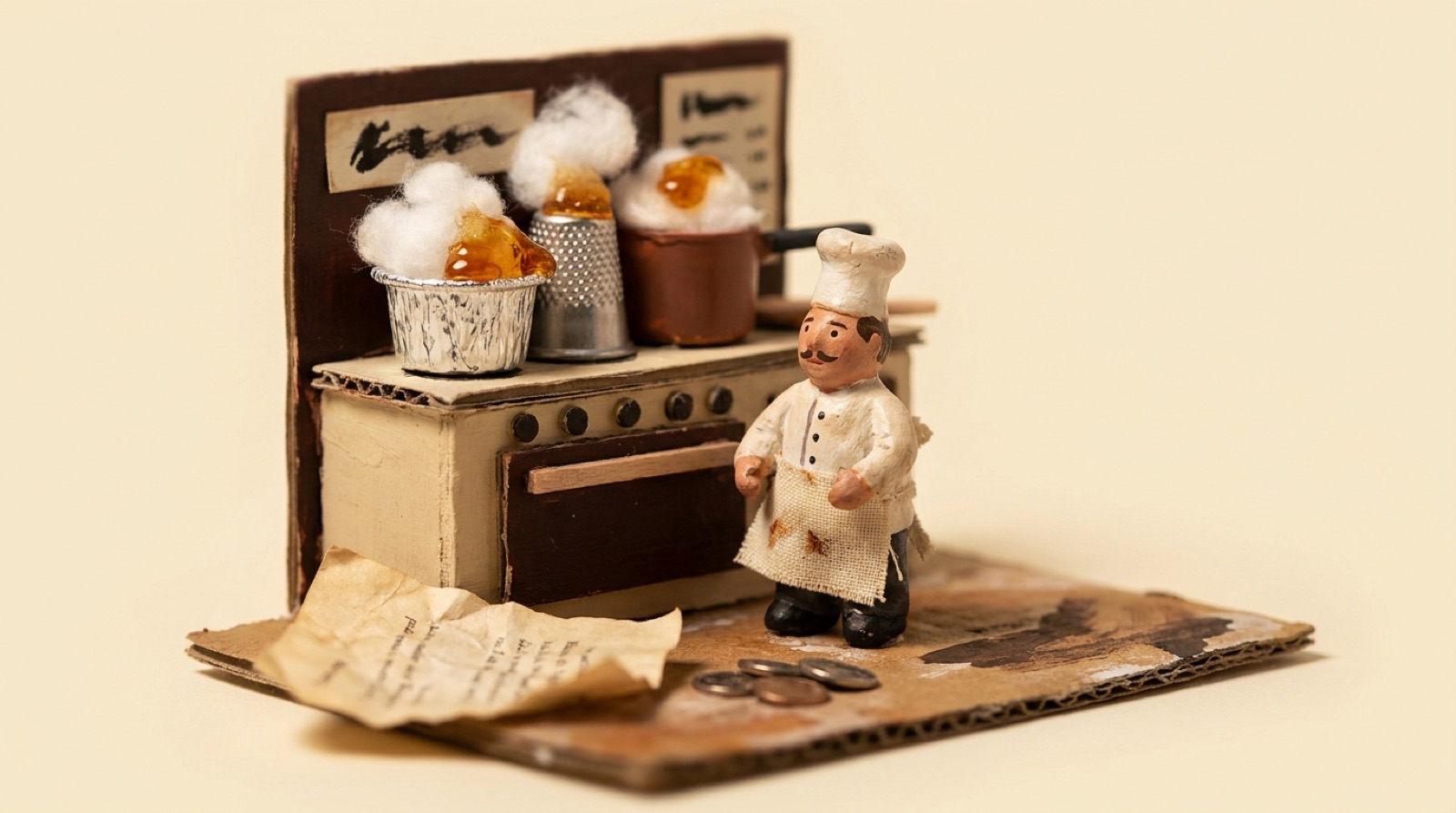
Most new food business owners are not failing because they lack passion or work ethic. They are failing because nobody gave them the right information before they started spending money. I see this pattern every day with my students and consultation clients, and it is not their fault. These are three mistakes I wish someone had spelled out for me when I opened my first ice cream shop. Learn them now, and you save yourself an enormous amount of stress, money, and wasted time.
Mistake 1: Not Doing Your Preparation
Jumping into a food business without proper preparation causes high stress, burnout, bad decisions, and a chaotic operation that is nearly impossible to fix once it is running. You spend thousands of dollars and countless hours building something you have not thought through, and then you cannot confidently answer basic questions about it when your partners, investors, or customers ask.
Preparation starts with a business plan. That means working through the critical research that gives you real insight into your business before a single dollar is spent. Who is your customer? Where is your location and how much walk-by traffic does it get? What is your menu? What are your prices, and do those prices actually produce a profit? What are your strengths versus competitors, and what threats could put you out of business? Do you have a clear vision you can rally your team and customers around?
The second layer of preparation is planning your operations and your finances. People joke that leaving a nine-to-five means walking into a twenty-four-seven glorified job. There is real truth in that, but only if you skip this step. When you build the systems and processes early, you create a machine that can eventually run without you standing in the middle of it every hour. Skip the systems, and you are stuck there forever.
Financial planning is not optional. You can work seventy-plus hours a week baking cookies, sell out every batch, and still have nothing in your bank account at the end of the month because you never baked your profit margin into your pricing. That is how rookies lose money right from the start, not because business is slow, but because the math was never done.
Mistake 2: Not Educating Yourself
There is no excuse in 2026 for going into a food business without educating yourself. YouTube, books, mentors, and operator communities exist precisely so you do not have to figure everything out the hard way. Winging it sounds confident. It is actually the most expensive approach available.
Running a food business requires competence in a long list of areas at the same time: cooking, accounting, pricing, marketing, logistics, equipment selection, and customer-facing service. Each one of those areas carries real financial consequences when you get it wrong. Wrong equipment is tens of thousands of dollars. A wrong menu costs thousands in missed profits. A wrong location is one of the most deadly mistakes you can make, because the cost of fixing it after signing a lease is massive.
The combination of those short-term decisions, made without proper knowledge, can put you hundreds of thousands of dollars in the hole before your shop even opens.
I made a thirty-thousand-dollar mistake early in my food business career that I could have avoided entirely if someone with more experience had been willing to share what they knew. That number still bothers me, because it was not a complex problem. It was a knowledge gap. I did not need to learn it the expensive way. Neither do you.
The point is not that you need to know everything before you start. The point is that you need to seek out the right information and the right guidance before you make irreversible decisions. Free resources exist. Paid mentorship exists for people who want step-by-step support. Use whatever is appropriate for where you are. Just do not skip this step.
Mistake 3: Taking Advice from the Wrong People
This one is subtle, and it catches even motivated, feedback-hungry operators. When you open a food business, everyone around you has opinions: friends, family, customers, reviewers. You get a flood of conflicting feedback. This is too sweet. This is not sweet enough. The texture is off. The portions are too small. If you try to respond to all of it, you iterate your product into something generic that does not satisfy anyone, and worse, you lose your own voice in the process.
Your job is not to please everyone. It is to serve one specific demographic exceptionally well.
There is a cake shop in Vancouver I genuinely love called Remy. Their cakes are not very sweet. They are aesthetically clean, light, and fluffy. That profile fits me and a lot of my friends because of our background and taste preferences. But when my Caucasian friends try the same cake, their reaction is that it does not have enough sweetness or flavor. That is not a problem with the cake. That is two different taste profiles. Remy knows exactly who they are making cakes for, and they do not apologize for it. Because of that clarity, the business works.
When you speak to everyone, you speak to no one. Identify your specific customer. Understand their fears, their preferences, their psychographics. Build every part of the experience around them: the menu, the pricing, the aesthetic, the marketing. Your confidence as an operator goes up when you stop chasing approval from people who were never your customer in the first place.
Taking the right advice means filtering every piece of feedback through one question: is this person in my target demographic? If yes, that feedback matters. If not, you can hear it, nod politely, and move on.
The Bottom Line
Preparation, education, and knowing whose voice to listen to: these are not glamorous concepts, but they are what separate food businesses that survive from ones that burn through savings and close within two years. Do the math before you open. Seek out people who have done what you are trying to do. Pick one customer and build everything for them. As I learned the hard way, the cost of skipping these steps is not abstract. It shows up as a thirty-thousand-dollar bill, a seventy-hour week with nothing in the bank, and a menu that satisfies nobody. Do the work upfront, and you build something you are genuinely proud of.
Watch the full video
Source — YouTube · the full breakdown, free
Tool — free · not sponsored, I built it
Want your exact numbers for a restaurant? The free calculator runs your cost to open, the ×1.4 cash reserve, and your break-even in about 30 seconds. Prefer paper? The One-Page Fundable Business Plan is the printable version.
Run your numbers →Questions owners actually ask
How do I figure out the right target customer for my food business?
Start by looking honestly at who your food naturally appeals to, based on flavor profile, price point, and aesthetic. Think about the demographic you belong to or understand deeply, because those are the people whose preferences you can anticipate and serve well. Once you identify that group, filter all feedback and business decisions through one question: is this person in my target demographic? If the answer is no, their feedback is interesting but not actionable for your brand.
What marketing strategies help you focus on the right crowd for the right vibe?
The foundation is knowing your customer's psychographics, not just their age or income, but their fears, preferences, and what experience they are looking for. Every marketing decision, from the visual aesthetic of your content to the platforms you use to the language you write in, should be built around that one specific person. When you try to market to everyone, your message loses its edge and attracts nobody in particular. Narrow focus in your marketing produces stronger results than broad reach.
How can bad financial planning cause a food business to lose money even when sales are strong?
If you do not build your profit margin into your pricing before you start selling, you can be fully booked, sold out every day, and still have nothing left at the end of the month. The most common version of this is pricing based on what feels fair or what competitors charge, without actually calculating your full cost of goods, labor, and overhead. Seventy-plus hours of work per week with empty bank accounts is the direct result of skipping this step.
Why is a wrong location such a serious mistake for a food business?
Location is one of the costliest decisions you make, because it is very difficult to reverse once you have signed a lease. Poor foot traffic, the wrong neighborhood demographic, or a space that does not fit your operational needs can translate to tens of thousands of dollars in losses before you have had a real chance to build a customer base. This is exactly the kind of decision that proper preparation and research is designed to protect you from.
Is it worth spending money on a mentor or paid program when free resources exist?
Free resources cover a lot of ground and are a legitimate starting point. The case for paid mentorship is that it compresses the learning curve and keeps you from making irreversible decisions in isolation. Wilson made a thirty-thousand-dollar mistake early in his food business that he credits directly to not having someone experienced in his corner. Compared to that kind of loss, structured guidance at a fraction of the cost is straightforward math.
What types of signage should a food business use inside and outside the shop?
The source material does not cover signage types in detail, but the broader principle from the transcript applies: every customer-facing element, including signage, should be designed with your specific target demographic in mind. Signage that speaks clearly to your intended customer reinforces your brand identity and helps the right people self-select into your shop.
The Weekly Receipt
One brand story, one number, one answered question. 2 minutes, Tuesdays.
Free. Unsubscribe anytime, one click, no games.
You're in, friend. See you Tuesday.
Keep going: restaurant guides
How Much Does It Cost to Open a Restaurant? (2026 Complete Breakdown)
The real, itemized cost to open a full-service restaurant in 2026, including Wilson's x1.4 cash rule, break-ev
12 Restaurant Assets Every Owner Needs to Build
The 12 restaurant assets that build your brand, from logo to uniforms, ranked by priority before you open in 2
3 Tactics to Position Your Restaurant Brand for Growth
Awards, media features, and strategic associations are the three free tactics that build customer trust and po
3 Things to Know Before Opening a Restaurant (And What Happens If You Skip Them)
Wilson K Lee breaks down the three foundational principles every restaurant owner must master: know your numbe
360 Ads for Restaurants: How to Build Customer Touchpoints Across Every Channel
Learn how 360-degree advertising builds the 20 touchpoints your restaurant needs to turn strangers into custom
Low Labor Restaurant Concepts: Fast vs QSR Compared
Fast concept and QSR are the lowest labor restaurant concepts. See real costs, staffing needs, and revenue to
5 Deadly Mistakes Every New Food Business Owner Makes
60% of restaurants fail in year one. Wilson K Lee breaks down the 5 deadly mistakes killing food businesses in
4 Actionable Steps to Prevent Your Restaurant from Going Bankrupt During a Crisis
Four concrete steps every restaurant owner needs to assess financial health, cut inefficiencies, secure fundin