Restaurant · Guide Updated August 2026
4 Things Stopping You From Being a Successful Restaurant or Small Business Owner
Four things keep most restaurant and small business owners from breaking through: staying in their comfort zone, imposter syndrome, waiting for fancy equipment, and consuming content without taking action. None of these are circumstances you're born into. They are habits you can change starting today.
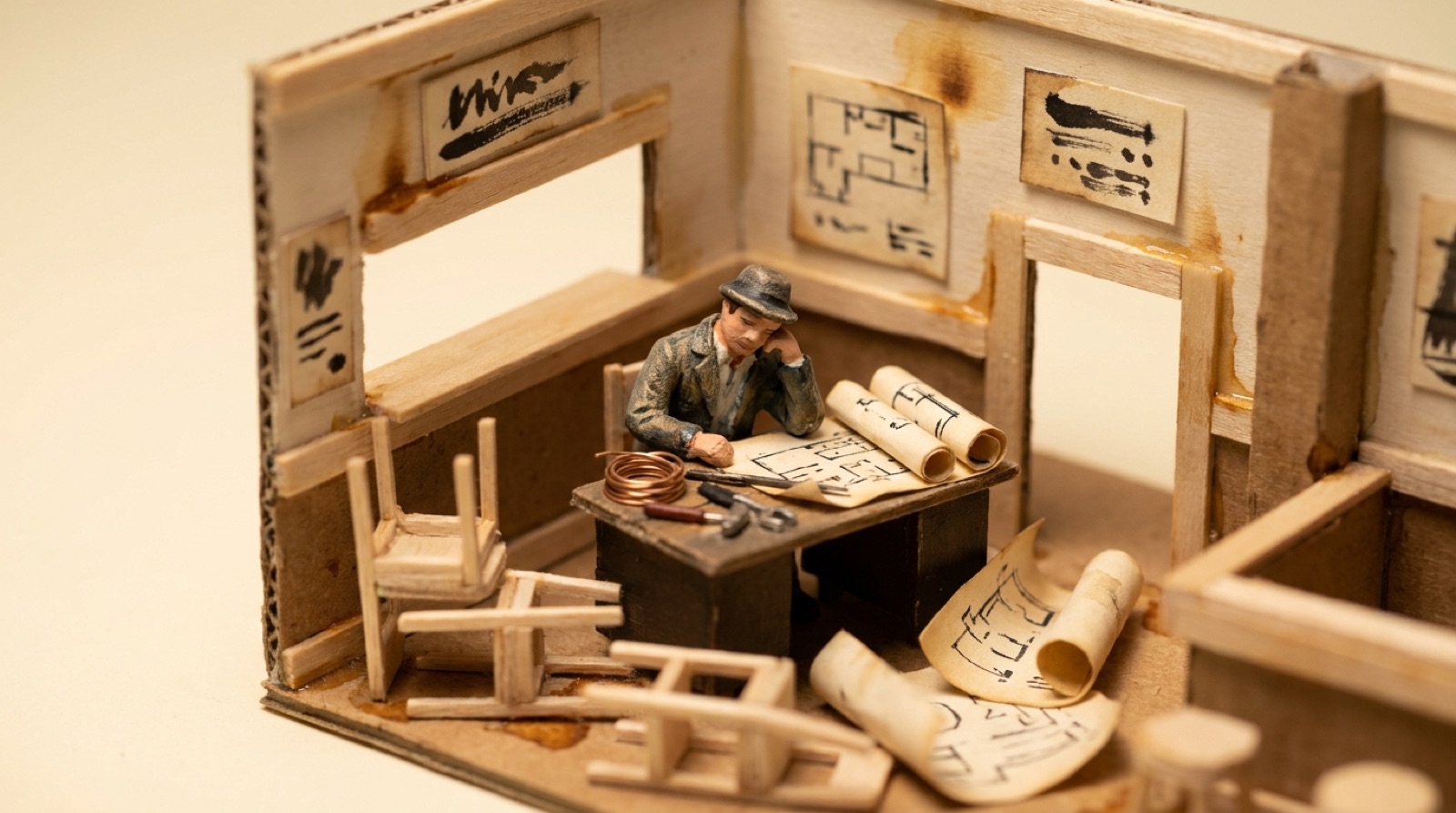
You are not stuck because of bad luck or bad timing. You are stuck because of one or more of four very specific patterns. Name the pattern, fix the pattern, and your business moves forward.
Here are the four things that stop entrepreneurs and small business owners from reaching their potential, and what to do about each one.
Are You Playing It Too Safe?
Complacency is the first barrier. It feels safe, which is exactly why it is so dangerous.
When I first started out, I was working at Shaw Telecommunications on the call center. As a fresh graduate making around five thousand dollars a month, I thought I had arrived. My friends weren’t making anything close to that. The problem was my tutoring side business had real potential, and I was doing nothing with it. Nothing, because I had a comfortable paycheck and I wasn’t willing to risk it.
After two and a half years, I quit that job with no plan B. I went all-in on the tutoring business. Three years after that, the business was acquired.
That is what leaving your comfort zone produces. Not always an acquisition, but always growth you cannot get from inside your bubble.
Comfort zone work looks like attending seminars you’d normally skip, having the conversation that makes you nervous, opening that first location before you feel completely ready. I have never once regretted doing something that made me uncomfortable, whether the outcome was positive or negative. Every uncomfortable step teaches you something.
If your shop is flat, if your concept is sitting on a napkin, if you have been “almost ready” for six months, complacency is the culprit.
Do You Feel Like a Fake?
Imposter syndrome is the second barrier, and it hits harder than most people admit.
When I started this YouTube channel, the internal dialogue was brutal. Who am I to talk about building a restaurant? I’m not Gordon Ramsay. I’m a faker. Nobody cares what I think. I ran through every version of that script.
Then I stopped and looked at the actual record. I built an ice cream shop from one location to seven, got the company acquired within five years, and built multiple businesses along the way. Nobody gets to tell me that isn’t enough to have an opinion worth sharing.
The same logic applies to you. If you have cooked that recipe a hundred times and people keep coming back for it, you have earned the right to put it in front of the world. If you have run a kitchen, managed a team, or figured out a concept that works, that knowledge belongs to you.
Imposter syndrome is a feeling, not a fact. Feelings do not get a vote on whether you act. I am giving you permission to step forward in your trade, because waiting for some external authority to validate you means waiting forever.
Even now, I still get moments of doubt. The difference is I act anyway.
Are You Waiting for Better Equipment?
Being “fancy” is the third barrier, and it is one of the most convenient excuses available.
Before I had any kind of production setup for this channel, I told myself I needed the DSLR camera, the backdrop, the lighting rig, the perfect lens kit. A $2,000 camera feels like a real business expense, and not having it feels like a real reason to wait. It isn’t. It is a comfortable story.
The same pattern shows up in restaurants all the time. You want the custom millwork, the imported tiles, the top-of-the-line espresso machine, before you prove the concept. Equipment is a nice-to-have after you have a proven product-market fit. Before that, it is a distraction you are paying for.
Nothing replaces doing the work. A great camera does not make a great channel. Beautiful interiors do not make a great restaurant. The work makes those things. If you do not commit to the work, no tool in the world will get you a result.
Start with what you have. Prove the concept. Upgrade once the proof is there.
Are You Consuming Instead of Doing?
The fourth barrier is the most common one of all, and it is the quietest. It is doing what 99% of people do: consuming content, buying courses, going to networking events, reading books, watching videos, and never actually doing anything that moves the needle.
Knowledge without action is just an expensive hobby.
This is not an argument against learning. Conferences, courses, and content all have value. The problem is when preparation becomes a permanent state. When learning feels productive enough that taking actual risk never seems necessary.
If your goal is a fine dining restaurant that becomes one of the best in the world, you do not start there. You start by building the first concept. You prove the product-market fit. You take one step, then the next. Break the full vision into pieces small enough to act on today.
The mountain looks impossible from the base. It stops looking impossible once you take the first step, then the second. Before long, you have covered ground you never thought you could.
The difference between people who build something and people who are always about to build something is simple. The builders act. They do not wait for perfect conditions, perfect knowledge, or perfect equipment. They move.
The Bottom Line
Four things stop most restaurant and small business owners: playing it safe, doubting your own credibility, waiting for the right tools, and preparing forever without acting. Every one of these is a choice, which means every one of them is fixable. Start with the one that hit closest to home when you read this, and take one concrete step on it today. The operators who build great businesses are not the ones who had all the answers first. They are the ones who started before they felt ready.
Watch the full video
Source — YouTube · the full breakdown, free
Tool — free · not sponsored, I built it
Want your exact numbers for a restaurant? The free calculator runs your cost to open, the ×1.4 cash reserve, and your break-even in about 30 seconds. Prefer paper? The One-Page Fundable Business Plan is the printable version.
Run your numbers →Questions owners actually ask
I'm 13 and want to open a restaurant but don't have the money. What should I do?
Start before you have the money by proving your concept first. If you cook something amazing, put it in front of people now, whether that means cooking for neighbors, selling at a school event, or getting family feedback. Wilson built his first business as a side hustle while working another job, and only went all-in once he had evidence it could work. At 13, your job is to prove the product and build the skill. The money follows the proof, not the other way around.
How do I get over feeling like I'm not qualified enough to open a restaurant?
Imposter syndrome is a feeling, not a fact, and nearly every operator experiences it. Wilson felt like a faker when he started sharing restaurant advice, until he reminded himself he had grown 720 Sweets from one shop to seven locations and gotten it acquired in five years. Your version of that record is whatever real experience you actually have. Acknowledge the feeling, then act anyway. Waiting until you feel qualified enough means waiting forever.
Do I need expensive equipment to open a successful restaurant?
No. Equipment is a nice-to-have after you have a proven concept, not a prerequisite for starting. Investing in expensive gear before proving your product-market fit is a common way operators spend money without generating results. Prove the concept first with what you have, then upgrade once the business justifies it.
What does 'taking action' actually mean when your restaurant goal feels overwhelming?
It means breaking your big vision into the smallest step you can take today. If your goal is a world-class fine dining restaurant, your first step is building and proving the first concept, not the final version. Wilson's advice is to chip away at the goal one day at a time. Taking that one next step consistently is what separates the operators who build something from those who are always about to.
Is it okay to keep learning and going to conferences before I open my restaurant?
Learning has real value, but it becomes a barrier when it replaces action. Wilson identifies constant content consumption without doing anything as the most common thing that stops entrepreneurs. Courses, conferences, and networking are useful tools. The problem is using them as a reason to delay the step that actually carries risk. Learn and act at the same time.
The Weekly Receipt
One brand story, one number, one answered question. 2 minutes, Tuesdays.
Free. Unsubscribe anytime, one click, no games.
You're in, friend. See you Tuesday.
Keep going: restaurant guides
How Much Does It Cost to Open a Restaurant? (2026 Complete Breakdown)
The real, itemized cost to open a full-service restaurant in 2026, including Wilson's x1.4 cash rule, break-ev
12 Restaurant Assets Every Owner Needs to Build
The 12 restaurant assets that build your brand, from logo to uniforms, ranked by priority before you open in 2
3 Tactics to Position Your Restaurant Brand for Growth
Awards, media features, and strategic associations are the three free tactics that build customer trust and po
3 Things to Know Before Opening a Restaurant (And What Happens If You Skip Them)
Wilson K Lee breaks down the three foundational principles every restaurant owner must master: know your numbe
360 Ads for Restaurants: How to Build Customer Touchpoints Across Every Channel
Learn how 360-degree advertising builds the 20 touchpoints your restaurant needs to turn strangers into custom
Low Labor Restaurant Concepts: Fast vs QSR Compared
Fast concept and QSR are the lowest labor restaurant concepts. See real costs, staffing needs, and revenue to
4 Actionable Steps to Prevent Your Restaurant from Going Bankrupt During a Crisis
Four concrete steps every restaurant owner needs to assess financial health, cut inefficiencies, secure fundin
5 Deadly Mistakes Every New Food Business Owner Makes
60% of restaurants fail in year one. Wilson K Lee breaks down the 5 deadly mistakes killing food businesses in