Restaurant · Guide Updated July 2026
3 Viral Restaurant Marketing Ideas That Actually Drive Sales
Three content types are driving real restaurant traffic right now: sold-out scarcity videos, genuine customer first-bite reactions, and staff storytelling. Each one works because it tells a story, and people buy into stories, not just food. You do not need fancy equipment or a big budget to execute any of them.
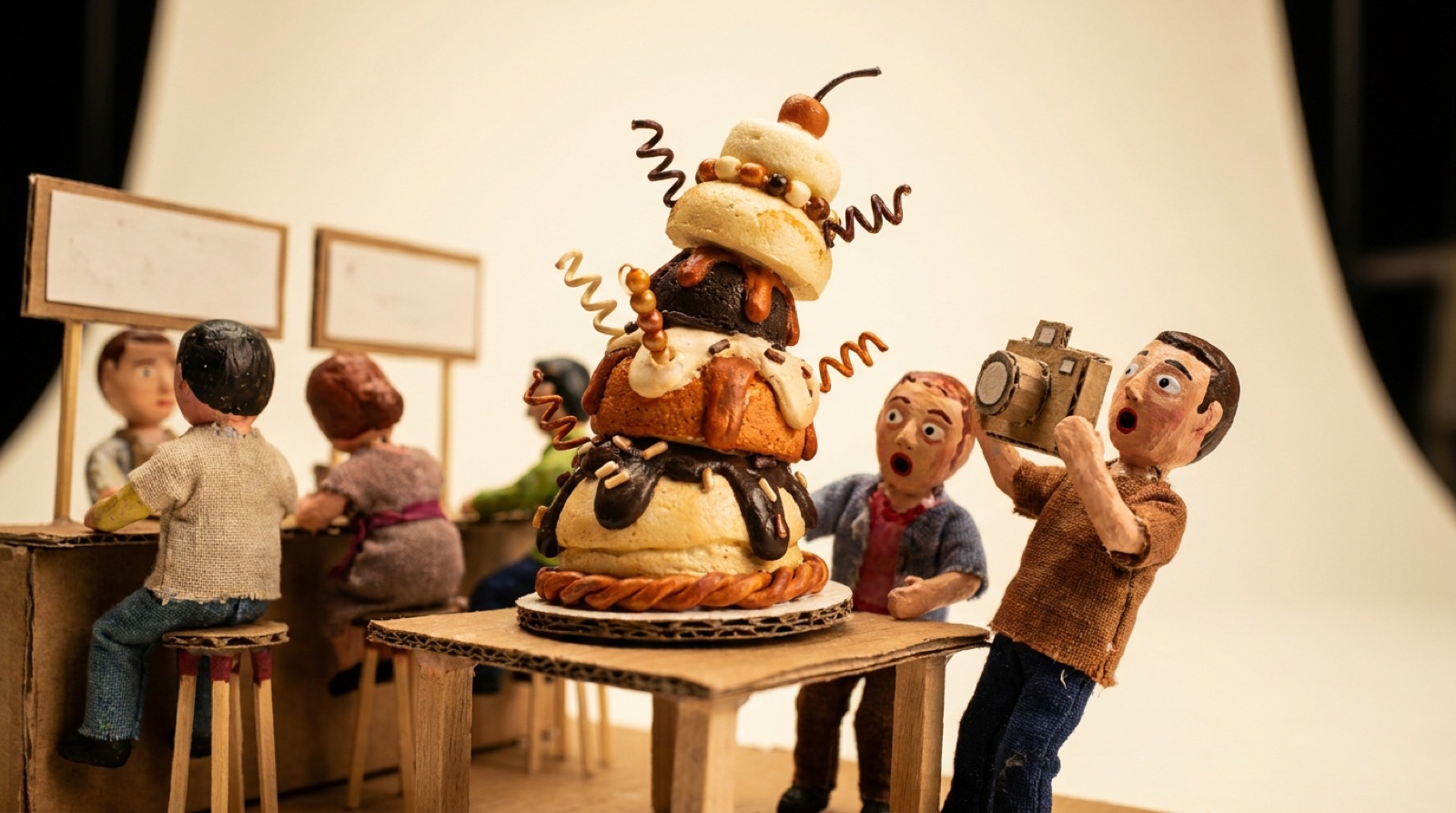
Three content types are driving real restaurant foot traffic right now, and none of them require a production crew or an ad budget. Sold-out scarcity videos, genuine customer reaction clips, and staff storytelling are blowing up because they all do the same thing: they tell a story people want to buy into. Here is exactly how each one works and how you can start filming today.
Why Does a “Sold Out” Sign Make People Want Your Food More?
Scarcity is not a trick. It is psychology that has worked for decades, the same playbook behind sneaker drops. When people see something gone, it reinforces desirability and FOMO kicks in hard.
The sold-out video works across three compounding factors.
Scarcity psychology. The moment a product disappears, people want it more. You are not just selling food anymore. You are selling a moment that might not come back.
The line becomes the ad. When someone sees a crowd and a sold-out sign, their brain skips straight to “this must be incredible.” You do not need to convince them. The crowd does the convincing for you.
The content loop. After the sellout, people tell their friends. Get there early. Pre-book. Line up. The next drop draws a longer line. You film that longer line. It goes more viral. The cycle feeds itself.
When I was running 720 Sweets, our dessert franchise, we did a limited collaboration with Nespresso. Lineups were outside for weeks. It was not because the product was wildly different. It was because we made it a scarce item. People showed up because they felt FOMO.
Here is the part most operators miss: when someone shows up and it is sold out, they still buy something else. They already made the trip. They already stood in line for 30 minutes. You are not losing the sale. You are gaining foot traffic and building demand for the next round.
The smart balance is manufacturing scarcity intentionally. Make too much and you waste cost of goods. Make too little and you leave revenue on the table. The sweet spot is producing enough to sell out consistently while creating the perception that getting your product requires effort.
Are Customer Reaction Videos Worth More Than Paid Ads?
Yes. A genuine first-bite reaction on camera carries more weight than anything you can write about yourself, and it costs nothing but a phone pointed at the right moment.
Three reasons this content consistently outperforms paid advertising.
Emotional contagion. When you watch someone’s face light up on a first bite, your brain mirrors that emotion. You start craving the food even though you are just watching a screen. It is the same mirror-neuron response you get watching any immersive content, but even more powerful here because it is unscripted, pure joy.
Trust transfer. What other people say about you carries far more weight than what you say about yourself. A customer reacting on camera is a powerful testimonial that does not feel like a testimonial. It feels like a friend recommending something to you personally. That is exactly why it converts.
The stacking effect. One reaction is one moment. Five in a row is a pattern. Ten becomes undeniable. Stack them in a compilation and you create a perception of consensus. Your viewer’s brain reads it as: everyone loves this, it must be worth trying. That shift from watching to driving to your restaurant is the whole game.
You do not need fancy equipment to capture these moments. A camera pointed at a customer’s face when the plate lands is all it takes. Ask permission, film the reaction, post it. That is the entire workflow.
Does Putting Your Staff on Camera Actually Build Loyalty?
Most restaurant content puts the food front and center. The restaurants building real communities right now are putting their people on camera, and it is working for two audiences at once: customers and the staff themselves.
Character attachment. Customers do not just buy the product. They buy the story. When your audience starts to recognize your barista, your line cook, your floor manager as real people with real personalities, they follow them. They come back not just for the food but to see those people. It is the same psychology that makes someone tune into a TV show every week. You are giving your restaurant characters, and characters create loyalty.
Humanization. People in 2026 are craving real connection. When your team is laughing, competing, celebrating on camera, your restaurant stops being a business and starts being a community hub. People want to go to places, not businesses. That distinction matters more now than it ever has.
Retention. The restaurant industry runs at 73% annual turnover. That means nearly three out of four people leave within a year. But when you celebrate your staff publicly, when your barista has followers from your page, when your kitchen crew feels seen and part of something, they are invested. They are far less likely to leave for a dollar more somewhere else because they have job satisfaction and a sense of belonging. You are not just making content. You are building culture.
What Should You Actually Film?
Start simple. You do not need a content strategy document or a production schedule.
Film your barista doing latte art. Film the kitchen crew on a Friday night crushing a full house. Film the moment someone nails a brand new recipe for the first time. Film the sold-out sign at the end of service. Point a camera at a customer when the first plate hits the table.
Those are the moments that bring people through your doors. Document what is already happening. The story is already there.
The Bottom Line
Every one of these content types works because it tells a story, and people buy into stories, not menus. Scarcity turns your product into a moment. Customer reactions build trust no ad budget can replicate. Staff content builds a community that keeps both customers and employees coming back. Start filming what is real, and the marketing takes care of itself.
Watch the full video
Source — YouTube · the full breakdown, free
Tool — free · not sponsored, I built it
Want your exact numbers for a restaurant? The free calculator runs your cost to open, the ×1.4 cash reserve, and your break-even in about 30 seconds. Prefer paper? The One-Page Fundable Business Plan is the printable version.
Run your numbers →Questions owners actually ask
What is the best type of viral content for a restaurant with no marketing budget?
Customer reaction videos are the highest-return option because they require nothing but a phone and permission to film. Point the camera at a customer's face when their first plate arrives. That unscripted moment of genuine joy does more convincing than any paid ad, because it reads as a personal recommendation rather than a brand message.
How does manufactured scarcity work without frustrating customers who miss out?
The key insight is that customers who show up and find a sold-out item still buy something else, because they already made the trip and waited in line. You are not losing the sale. You are gaining foot traffic and building demand for the next round. The frustration of missing out is exactly what drives them to show up earlier next time.
Does putting staff on camera actually reduce employee turnover?
The restaurant industry runs at 73% annual staff turnover. When you feature your team publicly and give them a following on your page, they feel seen and part of something bigger than a shift. That sense of belonging makes them far less likely to leave for a slightly higher wage elsewhere. You are building culture, not just content.
How many customer reaction clips do I need before the stacking effect works?
One reaction is a single moment. Five in a row establishes a pattern. Ten in a compilation creates what Wilson calls 'undeniable consensus,' where the viewer's brain concludes that everyone loves this product and it must be worth trying. Aim for at least ten clips before cutting a compilation.
What are the financial basics for opening a street food cart or QSR?
Wilson's content to date focuses on full-service restaurants, where opening costs run roughly $727,000 to $1,211,500 as of 2026, with a recommended cash reserve of around $1,356,500 before signing a lease. Street food cart and QSR cost structures are a separate and distinct topic that deserves its own dedicated breakdown, covering equipment, permits, COGS ratios, and revenue per service hour, and has not been covered in detail in this guide.
The Weekly Receipt
One brand story, one number, one answered question. 2 minutes, Tuesdays.
Free. Unsubscribe anytime, one click, no games.
You're in, friend. See you Tuesday.
Keep going: restaurant guides
How Much Does It Cost to Open a Restaurant? (2026 Complete Breakdown)
The real, itemized cost to open a full-service restaurant in 2026, including Wilson's x1.4 cash rule, break-ev
12 Restaurant Assets Every Owner Needs to Build
The 12 restaurant assets that build your brand, from logo to uniforms, ranked by priority before you open in 2
3 Tactics to Position Your Restaurant Brand for Growth
Awards, media features, and strategic associations are the three free tactics that build customer trust and po
3 Things to Know Before Opening a Restaurant (And What Happens If You Skip Them)
Wilson K Lee breaks down the three foundational principles every restaurant owner must master: know your numbe
360 Ads for Restaurants: How to Build Customer Touchpoints Across Every Channel
Learn how 360-degree advertising builds the 20 touchpoints your restaurant needs to turn strangers into custom
Low Labor Restaurant Concepts: Fast vs QSR Compared
Fast concept and QSR are the lowest labor restaurant concepts. See real costs, staffing needs, and revenue to
5 Deadly Mistakes Every New Food Business Owner Makes
60% of restaurants fail in year one. Wilson K Lee breaks down the 5 deadly mistakes killing food businesses in
4 Actionable Steps to Prevent Your Restaurant from Going Bankrupt During a Crisis
Four concrete steps every restaurant owner needs to assess financial health, cut inefficiencies, secure fundin