Restaurant · Guide Updated August 2026
Why You Won't Start Your Restaurant This Year (And How to Fix It)
The single biggest reason aspiring restaurant owners never start is fear of failure, specifically the fear of being seen as a failure by the people they love. That fear is beatable. Viewing progress as a process, starting small, and finding a guide who has already made the mistakes removes the paralysis and gets you moving.
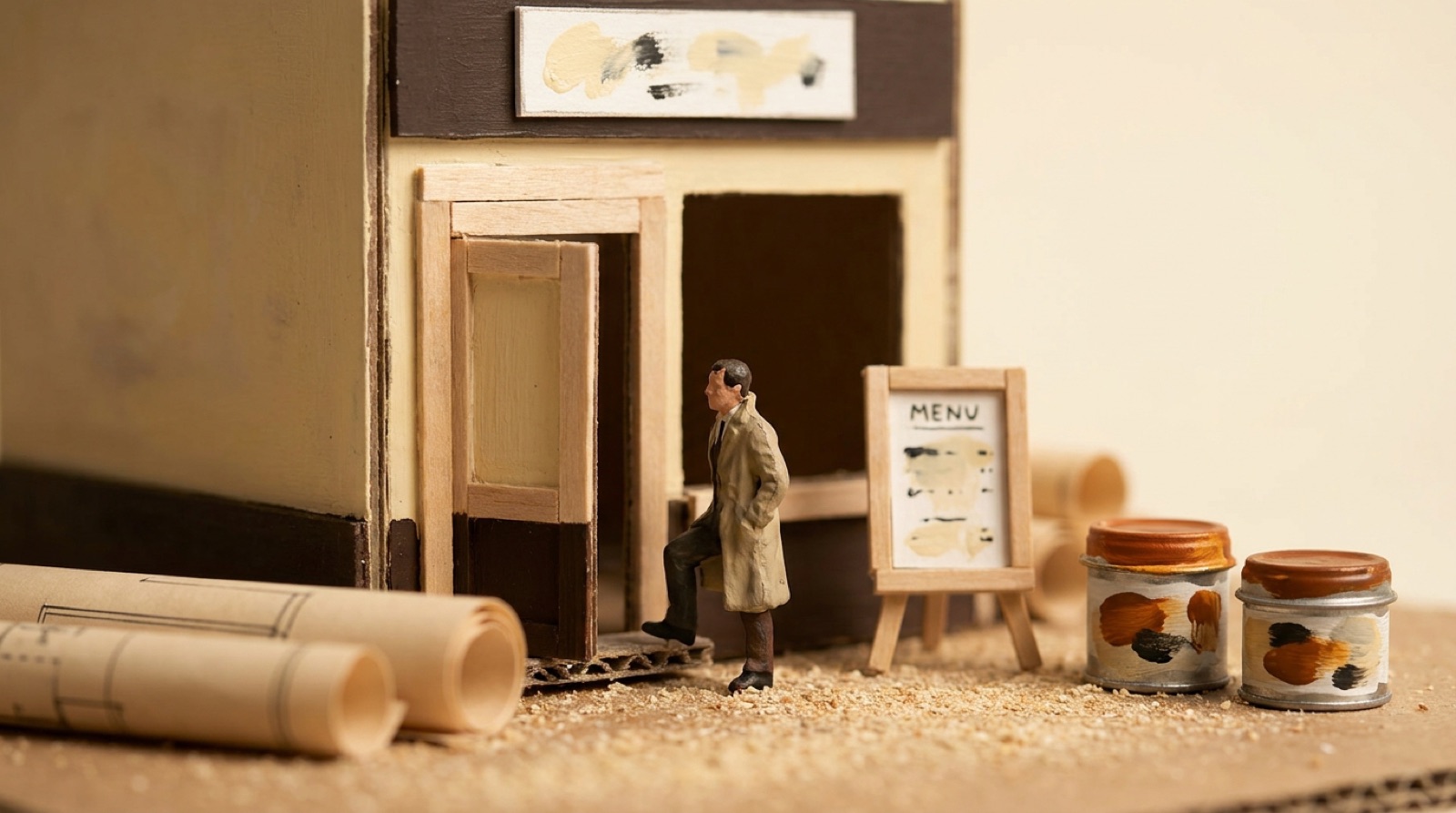
The real reason your restaurant idea is still just an idea is not money, not timing, and not the economy. It is fear. Specifically, it is the fear of failing in front of the people who matter to you. Once you name that fear clearly, you can beat it.
Why Are So Many Aspiring Owners Stuck?
You have done the research. You have watched the videos, joined the forums, built the fantasy menu in your head. You can picture the room, the branding, the regulars. And yet nothing has moved.
Over 40 percent of the aspiring operators who have joined my community name fear of failure as their single biggest barrier. That is not a small number. That is nearly half of every motivated, research-doing, genuinely-passionate person who shows up ready to learn.
According to Wakefield Research, one in three Americans is more afraid to start a business than to jump out of an airplane. Read that again. An airplane. People will strap on a parachute before they will sign a lease.
That is not laziness. That is a deeply programmed response.
Where Does the Fear Actually Come From?
From childhood, you are trained to avoid failing. Fail a test, disappoint your parents. Fail your driver’s license, feel embarrassed. The fear is never really about the business. It is about disappointing the people whose opinions matter most to you: your spouse, your parents, your investors, yourself.
That is the root. The fantasy restaurant is not scary. The imagined look on your spouse’s face when things go wrong, that is scary. Understanding that distinction matters because it tells you exactly what you are actually managing.
Step 1: View Your Business Journey as a Process
Nobody hits home runs every time. If they did, we would all be professional athletes.
Think about skiing or biking. You fall. You hurt yourself. You get back on. The falling is not a sign you should stop. It is the mechanism by which you learn. Business works the same way.
Over the last decade I have built dozens of projects and businesses that never took off. The ones people see now, the successes, exist because of what I learned from the ones that did not work. Elon Musk, Bill Gates, Steve Jobs, Gordon Ramsay, every one of them stacked failures before they stacked wins.
Failure is not the opposite of success. It is part of the path toward it.
Step 2: Stop Comparing Yourself to Other Operators
Someone can be making a million dollars and feel like a complete failure. Someone else making two hundred thousand dollars can feel like they are crushing it. Success is relative, and comparing your starting point to someone else’s midpoint is a trap.
The fact that you are taking one step forward already puts you ahead of the vast majority of people who talk about starting but never move. Measuring yourself against your own last position is the only comparison worth making.
Step 3: Start Small and Break the Mountain Into Steps
When your goal is to climb Everest, the mountain looks paralyzing from the base. But nobody summits in one leap. Every climber takes one step, then another.
Your restaurant is the same. When you fall in love with a business idea, your brain immediately jumps to marketing, hiring, location scouting, business plans, financing, and a dozen other things at once. That pile is what freezes you.
Break the whole journey into small, achievable steps. Reach one milestone, build momentum, reach the next. A proper business plan does exactly this: it turns an overwhelming mountain into a checklist you can actually execute. When you have a step in front of you instead of a summit above you, you can move.
Step 4: Learn From Someone Who Has Already Made the Mistakes
If you wanted to climb Everest, you would hire a guide. Not because you lack courage, but because a guide has already seen the cliffs that will kill you. They can show you the right path and stop you from stepping off the wrong one.
Find someone in the restaurant space who has been there and done that. Not just someone with opinions, but someone who has actually operated, failed, adjusted, and built something real. Learn from their mistakes so you do not have to make each one yourself.
I invest five figures every year in mentors, even now, after more than a decade of running multiple food concepts. That investment is not optional for me. It is how I keep moving forward without reinventing the wheel at every turn.
The right guide does two things: shows you the steps to take and tells you which ones to avoid. Both matter equally.
Step 5: Join a Community of People Who Get It
When I started building my first businesses, the thing I wanted most was someone to bounce ideas off. I would sit at my whiteboard alone, wishing I had a partner who understood what I was trying to do and could push back, support, and challenge me in equal measure.
Most people in your life, your friends, your coworkers, your family, do not understand what it feels like to want to build something. They care about you, but they cannot relate to the specific stress of deciding whether to sign a commercial lease or how to price a menu for margin.
A community of like-minded operators can. When you are surrounded by people asking the same questions, sharing the same fears, and celebrating the same small wins, the mountain becomes something you are climbing together. That shared momentum is real. It changes what you believe is possible.
The Bottom Line
Fear of failure is not a personality flaw. It is a learned response, and learned responses can be unlearned. View your journey as a process, stop measuring yourself against other people’s timelines, break your goal into small steps, find a guide who has the scars, and build your circle around people who are on the same road. You already have more tools than you think. The only thing left is the first step.
Watch the full video
Source — YouTube · the full breakdown, free
Tool — free · not sponsored, I built it
Want your exact numbers for a restaurant? The free calculator runs your cost to open, the ×1.4 cash reserve, and your break-even in about 30 seconds. Prefer paper? The One-Page Fundable Business Plan is the printable version.
Run your numbers →Questions owners actually ask
Do you offer coaching or mentorship programs for restaurant owners?
Yes. Beyond the free resources and community, Wilson works with aspiring and current operators who want a guide through the process. The starting point is the free masterclass, which covers concept development, connecting with customers, and building toward profitability. From there, additional coaching programs are available for operators who want more direct support.
What is your take on opening a restaurant after the COVID-19 pandemic, given fears of another lockdown?
Fear of another disruption is real, but it is also a version of the same fear of failure this guide addresses. The operators who came out of the pandemic strongest were the ones who had built strong concepts, loyal customer bases, and adaptable business models before the crisis hit. The answer to pandemic fear is not to wait. It is to build something solid enough to survive disruption.
What if I cannot cook the menu I have always dreamed of serving?
Your ability to cook the menu yourself is not the requirement. The requirement is knowing the concept clearly enough to hire, train, and manage the people who can execute it. Many successful operators are not the ones behind the line. Your job as an owner is to build and run the business, not necessarily to be the chef.
Why do so many people research restaurants for years but never actually open one?
Research feels like progress, but it is also a safe place to stay. According to the data from Wilson's community, over 40 percent of aspiring operators say fear of failure is their top barrier. Watching videos and joining groups can become a substitute for the action itself. The fix is to move from research mode into execution mode by taking one concrete, small step, such as writing the first section of a business plan.
How do successful entrepreneurs like Elon Musk and Gordon Ramsay deal with failure?
They treat it as part of the process, not as a final verdict. Wilson points to Musk, Gates, Jobs, and Ramsay as examples of people who stacked multiple failures before reaching any major success. The difference is not that they failed less. It is that they kept moving after each failure and applied what they learned to the next attempt.
The Weekly Receipt
One brand story, one number, one answered question. 2 minutes, Tuesdays.
Free. Unsubscribe anytime, one click, no games.
You're in, friend. See you Tuesday.
Keep going: restaurant guides
How Much Does It Cost to Open a Restaurant? (2026 Complete Breakdown)
The real, itemized cost to open a full-service restaurant in 2026, including Wilson's x1.4 cash rule, break-ev
12 Restaurant Assets Every Owner Needs to Build
The 12 restaurant assets that build your brand, from logo to uniforms, ranked by priority before you open in 2
3 Tactics to Position Your Restaurant Brand for Growth
Awards, media features, and strategic associations are the three free tactics that build customer trust and po
3 Things to Know Before Opening a Restaurant (And What Happens If You Skip Them)
Wilson K Lee breaks down the three foundational principles every restaurant owner must master: know your numbe
360 Ads for Restaurants: How to Build Customer Touchpoints Across Every Channel
Learn how 360-degree advertising builds the 20 touchpoints your restaurant needs to turn strangers into custom
Low Labor Restaurant Concepts: Fast vs QSR Compared
Fast concept and QSR are the lowest labor restaurant concepts. See real costs, staffing needs, and revenue to
4 Actionable Steps to Prevent Your Restaurant from Going Bankrupt During a Crisis
Four concrete steps every restaurant owner needs to assess financial health, cut inefficiencies, secure fundin
5 Deadly Mistakes Every New Food Business Owner Makes
60% of restaurants fail in year one. Wilson K Lee breaks down the 5 deadly mistakes killing food businesses in