Coffee shop · Guide Updated August 2026
How to Get Cafe Customers Without Discounts: 4 Modern Marketing Strategies
You do not need discounts or paid ads to grow a cafe in 2026. The four strategies that actually work are: riding the high-protein and global flavor trend to raise average order value, creating content that shows who you are, building your shop into a community hub, and running limited drops that sell out fast. Each one builds loyalty and drives revenue without cutting into your margins.
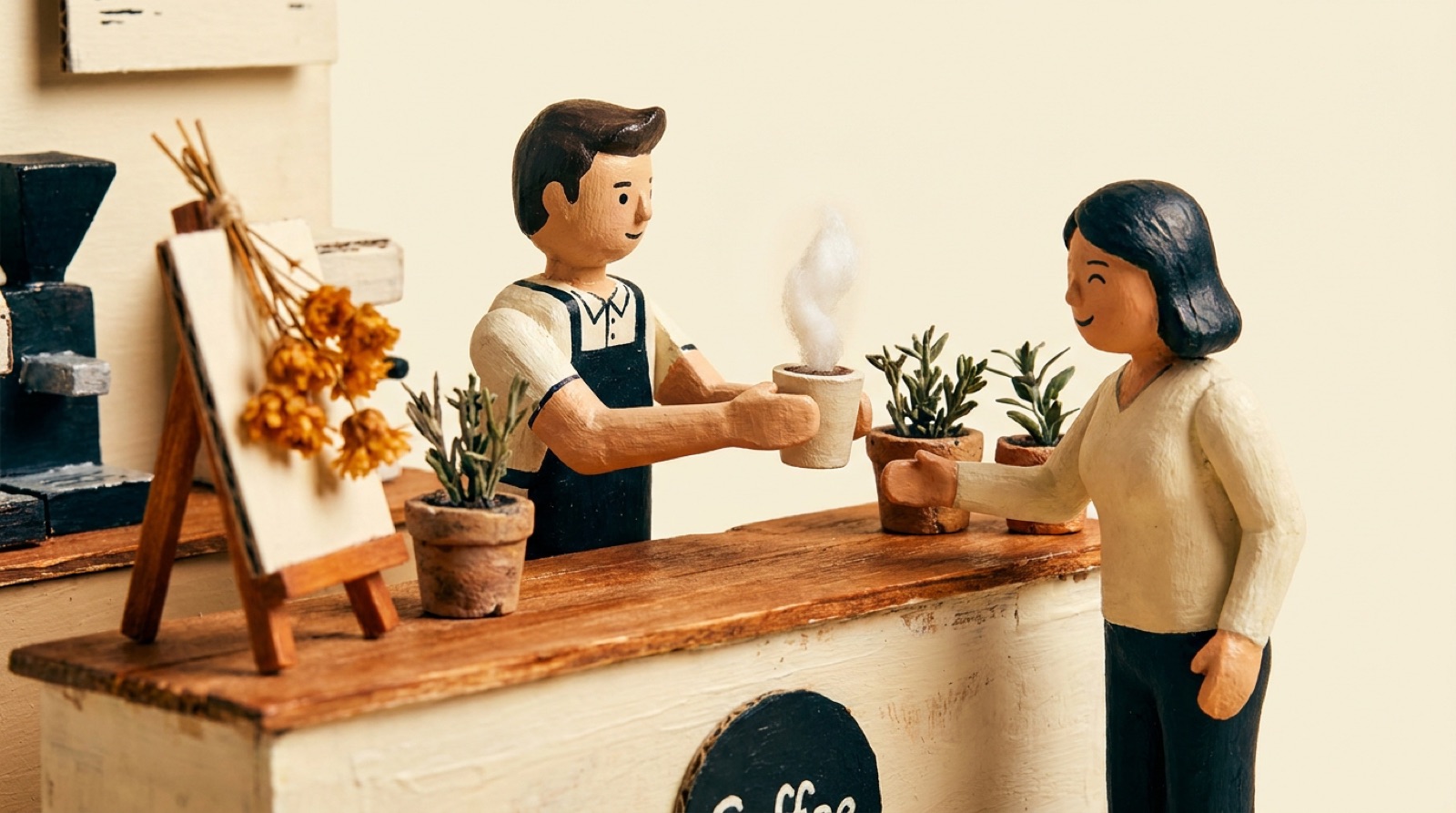
Discounts train your customers to wait for a deal. They shrink your margins and attract the wrong crowd. There are four marketing strategies that build a full cafe without a single coupon, and every one of them is available to you right now regardless of your budget.
Why Discounting Is the Wrong Default
When you discount, you are telling the market that your product is not worth the full price. Do that enough and your regulars start expecting it. Your average order value drops, your labor costs stay the same, and you end up working harder for less money.
The good news is that the cafes winning in 2026 are not competing on price. They are competing on identity, community, and experience. Here is how they do it.
Strategy 1: Position Your Menu Around the High-Protein and Global Flavor Shift
Look at what is happening around you. Pickleball, Pilates, SoulCycle, Hyrox, marathons. These are not niche hobbies anymore. People are putting their health first for performance and longevity, and that shift is showing up in what they order.
High-protein milk is already in grocery stores. Starbucks is selling high-protein drinks with cold foam. Chipotle has high-protein menu items. This is a global shift in consumption, not a fad. Fads come and go in a month or two. This one is structural.
The practical move for your cafe is simple: you do not need to rebuild your menu. Add a high-protein option to what you already serve. Swap regular milk for high-protein milk and offer it as an upcharge. When a customer is trying to hit 50 grams of protein today, a $2 add-on is an easy yes. They are not thinking about the price. They are thinking about the goal.
The second piece of this same strategy is global flavors. Matcha sales have blown through the roof, and if you look at major Asian cities, matcha is a staple, not a trend. If your customer walks in with a friend and only one of them drinks coffee, you lose an order the moment that friend has nothing to choose from. A broader menu built around what people already want raises your average order value without any discounting.
The rule here: follow global shifts in consumption, not social media fads.
Strategy 2: Create Content That Shows Who You Are
You do not need a production budget. You need a phone and a point of view.
Cow Dog made close to a million dollars by documenting their no-tipping policy on video. A video of one woman eating mozzarella sticks increased that restaurant chain’s sales by more than 40%. These are not outliers. They are proof that authentic content, made consistently, moves product.
The goal of your content is not just to feed an algorithm. The goal is to show your audience who you are so they can connect with you before they ever walk through your door. Film your recipe experiments. Document a day at the farmers market. Show the behind-the-scenes of prepping a new drink. These moments bring your community along on the journey.
The key insight about content in 2026 is volume. Throw a lot at the wall and see what sticks. Do not overthink every post. Post it, learn from it, and post again. The cafes that blow up are the ones that keep showing up, not the ones that wait until everything is perfect.
Strategy 3: Turn Your Cafe Into a Community Hub
People are starved for real-life connection. They want a place where they feel like they belong. A cafe in 2026 is not just a place to buy coffee. It is the space where a specific group of people looks around and thinks, this place is for me.
There are coffee shops right now throwing rave parties at 9:00 a.m. and they are packed. When you host cyclists, runners, early risers, creatives, or any other group and you create a space that feels built for them, they keep coming back. Not because you gave them a discount. Because you gave them a community.
Treat your regulars like friends. When people feel like they belong somewhere, they become your best marketing. They talk about you, bring their friends, and show up consistently without any promotion required.
Here is the compounding benefit: every event you host is also content. When you create moments for your community, capture them. Put that footage out into the world. The people watching who are not yet regulars will see it and think, I want to be part of that. That is how cafes build real momentum in 2026. Not by selling coffee, but by building something people cannot stop talking about.
Strategy 4: Run Limited Drops to Create Scarcity and Social Proof
Think about sneaker culture. Limited drops sell out in minutes. That model has worked for years because scarcity turns a product into a moment, and your cafe can use the exact same psychology.
Here is how it works in practice. Instead of adding a new drink or pastry to your menu permanently, release it as a limited item: 50 per day. When it is gone, it is gone. You might worry you are leaving money on the table by capping the quantity. You are not. When a customer lines up for 10 or 20 minutes for that special item and it has already sold out, the odds are strong they buy something else. They are already there. They are already in the mindset of buying from you.
More importantly, sold-out items create social proof. When people see that something is gone, it reinforces how desirable it is. Scarcity drives attention. When something is only available for a short window, people feel the urgency and they act.
Erewhon sells $20 smoothies and has made that price point mainstream. They always sell limited items. That is not a coincidence.
When I was running 720 Sweets, we did a collaboration with Nespresso as a limited item. We had lines out the door for weeks just to try it. One limited release created weeks of foot traffic and buzz. That is what a well-executed drop can do.
The Bottom Line
You have four concrete strategies to grow your cafe without cutting prices: ride the high-protein and global flavor trend to raise your average order value, create content consistently to show who you are, build a community that people feel compelled to return to, and use limited drops to turn your products into moments. None of these require a marketing budget. All of them require intention. The cafes that win are not the cheapest ones. They are the ones people cannot stop thinking about.
Watch the full video
Source — YouTube · the full breakdown, free
Tool — free · not sponsored, I built it
Want your exact numbers for a coffee shop? The free calculator runs your cost to open, the ×1.4 cash reserve, and your break-even in about 30 seconds. Prefer paper? The Startup Budget Worksheet is the printable version.
Run your numbers →Questions owners actually ask
How do you explain a limited-drop quantity to customers who want more?
Be direct and own it. Tell customers the item is limited to 50 per day and when it is gone, it is gone. Most customers accept scarcity when it is framed as intentional, not a supply failure. The sold-out nature of the item is actually the point: it reinforces how desirable the product is and keeps people coming back earlier the next time to make sure they get one. Customers who miss out will often buy something else from your menu rather than leave empty-handed after already making the trip.
Do I need to completely redesign my menu to add high-protein options?
No. The strategy is to add a high-protein option to what you already serve, not rebuild from scratch. A straightforward starting point is swapping regular milk for high-protein milk and offering it as a paid upcharge. Customers who are actively tracking their protein intake are motivated to pay that extra $2 without hesitation because it helps them hit a personal goal.
What kind of content should a cafe be posting?
Post anything that shows who you are and brings your audience along on the journey: recipe experiments, a day at the farmers market, behind-the-scenes prep, or footage from events you host. The goal is connection, not perfection. Volume matters more than polish right now, so post consistently and learn what resonates rather than waiting until every video feels finished.
How does hosting community events help with marketing?
When a specific group of people, whether cyclists, runners, or early-morning creatives, feels like your cafe was built for them, they become regulars who bring others. Events also generate content. Film the moments you create, share them, and the people watching who have not visited yet will want to be part of it. That word-of-mouth and social content costs far less than paid advertising and tends to be far more durable.
Why is matcha worth adding to a cafe menu?
Matcha is a staple in major Asian cities, which makes it a long-term category rather than a short-lived trend. The practical reason to add it is simple: if a customer walks in with a friend who does not drink coffee and you only serve coffee, you lose that second order entirely. A broader menu built around global shifts in consumption keeps both people spending.
The Weekly Receipt
One brand story, one number, one answered question. 2 minutes, Tuesdays.
Free. Unsubscribe anytime, one click, no games.
You're in, friend. See you Tuesday.
Keep going: coffee shop guides
How Much Does It Cost to Open a Coffee Shop in 2026?
The real 2026 cost to open a coffee shop: $457,000 all-in, $640,000 cash before you sign, and the daily break-
8 Steps to Building a Profitable Coffee Shop Business
Wilson K Lee breaks down the 8 essential steps to start and run a profitable coffee shop, from knowing your cu
Why a Market Downturn Is the Best Time to Open a Restaurant or Cafe
Four concrete strategic advantages that make opening a restaurant during an economic downturn smarter than wai
How One Coffee Shop Owner Paid Rent in 24 Hours During COVID-19 Lockdown
Narrative Coffee's Max pivoted to half-gallon lattes during COVID-19 lockdown and covered rent and salary in t
How a Former Disney Manager Built a Multi-Location Coffee Shop From Scratch
Andrea went from Disney World hospitality to sleeping under her espresso machine to running two Rhode Island c
How Grounds & Hounds Built a $1.2M Online Coffee Business with a Mission-Driven Brand
Wilson K Lee breaks down how Grounds & Hounds went from $100K to $1.2M in revenue selling coffee online by bui
How to Calculate Food Cost Percentage (and Actually Use It to Make More Money)
Learn how to calculate food cost percentage, the difference between ideal and actual food cost, and how to use
How to Open a Cafe in 2026: An 8-Step Playbook to Avoid the 80% Failure Rate
Wilson K Lee's modern 8-step playbook for opening a profitable cafe in 2026, using audience-building, AI tools