Coffee shop · Guide Updated August 2026
How One Coffee Shop Owner Paid Rent in 24 Hours During COVID-19 Lockdown
Max, owner of Narrative Coffee in Everett, Washington, pivoted to selling half-gallon lattes for curbside pickup when the dine-in ban hit in March 2020. By removing the labor cost attached to in-store service and packaging coffee as a retail product, he covered his rent and his own salary within the first 24 hours of launching the new format. The core lesson: know your numbers cold before a crisis hits, and be ready to move the same night the governor speaks.
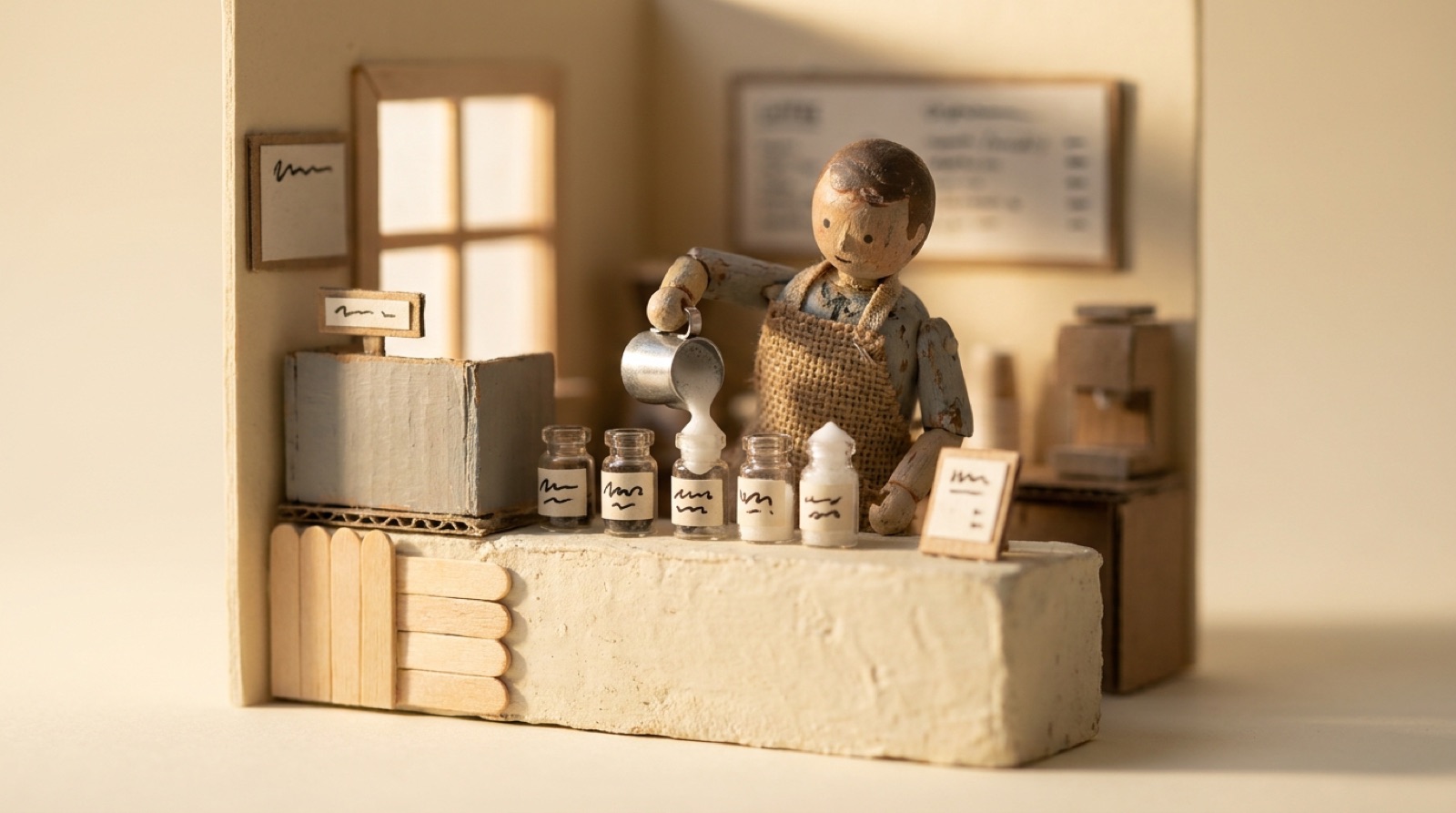
When the Washington State dine-in ban dropped on a Sunday night in March 2020, Max from Narrative Coffee in Everett drove straight to his shop and started building a curbside operation from scratch. By the next morning he was live. Within 24 hours of launching his half-gallon latte concept, he had covered his rent and his own salary. No payroll costs attached. No dine-in guests required.
This is not a story about luck. It is a story about preparation, knowing your numbers, and moving fast when the environment forces your hand.
Who Is Narrative Coffee and What Was Working Before COVID?
Max launched Narrative Coffee with a pop-up in a park in downtown Everett, Washington on July 4th, 2016. After a few months testing the concept, he found a brick-and-mortar space and opened the full café in June 2017. Everett sits about 45 minutes outside Seattle. Max describes it as a working-class city with its own distinct culture, not just a suburb. His goal was to introduce specialty coffee to a community that did not yet have an established culture around it.
The growth was real and steady. When they launched, monthly revenue was around $34,000. By their pre-COVID peak, they were hitting $67,000 a month. That growth came from two things: excellent coffee across multiple roasters, and a from-scratch food program built specifically because the community needed it. The county building and city building sit directly across the street. Roughly 3,000 employees are within half a block. Those workers wanted a good lunch option. Max built one.
That is his operating philosophy in one line: find the need, then fill it in a way that brings real value.
How Did Narrative Coffee Prepare Before the Lockdown Hit?
Everett has a specific place in COVID-19 history. The first confirmed U.S. case landed there on January 21st, 2020, less than a mile from the shop. Max was paying attention from that moment forward.
When the first case of community spread appeared, he called a staff meeting and rolled out a seven-step plan. Long before the government issued any mandates, Narrative Coffee had already made changes. They removed self-serve stations, pulled the kids’ toy bin, and started what Max called “sanitation parties,” stopping everything on the hour to disinfect every touch surface in the shop. They communicated all of it directly to guests.
The result: business held flat all the way through those early weeks. When Amazon and Seattle’s tech companies sent employees home, those workers, who lived in Everett but normally commuted into the city, started showing up at the café. They trusted the place because they could see the extra steps being taken.
Managing expectations is a form of customer service. Max treats it that way.
What Happened the Night the Dine-In Ban Was Announced?
The Washington governor announced the dine-in ban on a Sunday night, with it taking effect the next day. Eighty percent of Narrative Coffee’s guests normally sat inside the café. That revenue was gone in one announcement.
Max did not wait until Monday morning. He left his house, drove to the shop that Sunday night, and started converting the operation for curbside pickup. He made signs. He texted the mayor’s office asking if he could convert a few parking spaces out front into designated pickup spots. The answer came back: yes, whatever you need.
The shop had switched its POS system to Toast in January, which included an online ordering platform. It was not fully dialed in yet, but it was functional. Max pushed it live that night. Monday was not just survivable; it was slightly busier than a normal Monday.
Then Tuesday hit. Revenue dropped roughly 50%. That was the moment Max opened up the financial models and started stress-testing the numbers.
How Did He Build the Half-Gallon Latte Idea?
Here is the raw business logic Max explained: when you sell a half-gallon latte as a packaged retail product, you strip out the service labor that normally sits on top of every cup. There is no barista standing tableside. There is no table to clean. You are essentially manufacturing a product in your existing kitchen, with your existing equipment and your existing inventory, and selling it in volume.
From a cash flow perspective, that changes everything. His exact words: “I don’t have any payroll costs attached to this, and I paid for my rent and my salary in the first 24 hours.”
The half-gallon format also solves a real customer problem during a lockdown. Families are home. They want café-quality coffee without making a trip every single morning. A half-gallon holds enough for multiple servings, it feels like a value purchase, and it fits in the fridge. The product matched the moment perfectly.
What Does It Actually Take to Pivot This Fast?
Max would tell you the pivot was only possible because the groundwork was already laid. Three things made it work:
Know your numbers before the crisis. Max had a strong 2019. He knew his cash buffer, his burn rate, and exactly how long he could stay closed and still pay his staff and cover rent. When the dine-in ban hit, he did not have to guess. He ran the models on Thursday, walked his entire team through the P&L and the bank account, and showed them the markers the business needed to hit in order to stay open. Transparency with staff is not just good management. It is how you make fast, clean decisions together.
Have your systems ready before you need them. The Toast POS switch happened in January. Max had been tentatively building the online ordering piece. It was not perfect, but it existed. When Monday arrived, he could take orders. Operators who had not touched their tech setup in years scrambled. Max did not.
Fill a need, not your ego. The half-gallon latte was not a creative indulgence. It matched what customers actually needed in a lockdown: convenience, value, and café quality at home. Max’s entire business philosophy, from the from-scratch food menu to the specialty coffee roaster rotation, runs on the same idea. You ask what the community needs, then you deliver that thing excellently.
When Did He Decide to Close Completely?
This part matters because it shows the difference between a revenue decision and a values decision.
By Friday and Saturday of that first week, Narrative Coffee had bounced back. Business was sustainable. Max would have kept going. But he had confirmed COVID-positive guests coming through the curbside line and trying to use the in-store pickup area. His staff of ten started feeling unsafe. He had already been working toward providing health insurance for his team but had not yet closed on a plan, which meant several employees had no coverage.
Max made the call to close. Not because the numbers forced him, but because he had made a commitment to take care of his people, and staying open was violating that commitment.
He also named something most operators feel but do not say out loud: the cognitive dissonance of being told by every public health voice to keep people home, while also being classified as an essential business that needs foot traffic to survive. That tension is real. Naming it honestly is part of running a shop with integrity.
The Bottom Line
The half-gallon latte did not save Narrative Coffee. The preparation did. Max had clean financials, a flexible POS, a community that trusted him because he over-communicated, and a staff that was looped in at every step. The product pivot was the visible move. The invisible work was everything that made the pivot possible in the first place.
Know your numbers before you need them. Communicate before your guests ask. And when you do pivot, make sure you are solving a real problem for real people. That is the only kind of pivot that sticks.
Watch the full video
Source — YouTube · the full breakdown, free
Tool — free · not sponsored, I built it
Want your exact numbers for a coffee shop? The free calculator runs your cost to open, the ×1.4 cash reserve, and your break-even in about 30 seconds. Prefer paper? The Startup Budget Worksheet is the printable version.
Run your numbers →Questions owners actually ask
How did Max come up with the half-gallon latte idea?
Max developed the half-gallon latte as a direct response to the dine-in ban. His thinking was rooted in cost structure: by packaging coffee as a retail take-home product, he removed the in-store service labor that normally attaches to every cup sold. He also recognized that customers stuck at home during lockdown needed café-quality coffee in a format that lasted multiple servings. The idea came from reading the actual need in the market, not from a customer request or an employee suggestion, though his broader philosophy was always to identify community needs first and then build products around them.
How do you make lattes in advance for a half-gallon format?
Max specifically offered the half-gallon lattes through curbside pickup, and the format that makes practical sense for advance preparation is an iced latte. Cold espresso or cold brew concentrate blended with milk holds well in a sealed half-gallon container in the fridge without the texture and temperature degradation you would get with a hot drink. The transcript does not detail the exact recipe or preparation method Max used, but the curbside, refrigerated take-home context points clearly to a cold format.
How much revenue did Narrative Coffee do before COVID hit?
At their pre-COVID peak, Narrative Coffee was generating around $67,000 per month. When they launched in 2017, monthly revenue was approximately $34,000. That steady growth came from building a specialty coffee culture in Everett and adding a from-scratch food program that served the thousands of city and county workers located within half a block of the shop.
How did Narrative Coffee maintain revenue during the early weeks of COVID before the dine-in ban?
Max implemented precautionary measures well before any government mandates, including hourly sanitation stops, removal of self-serve stations, and direct communication with guests about every step being taken. When Seattle's tech companies sent employees home, those workers, who lived in Everett but normally commuted, started visiting the café during the day. Business held flat all the way until the dine-in ban took effect on March 21st, 2020.
What role did knowing his financials play in Max's ability to pivot?
It was central to every decision he made. Max had modeled Narrative Coffee's cash position, burn rate, and financial buffer before the crisis hit, partly because 2019 had been a strong year. When the dine-in ban dropped, he could run the numbers the same week and know exactly how long he could operate or stay closed while still paying staff and covering rent. He also walked his entire team through the P&L and bank account in a Thursday staff meeting so everyone understood the situation and the plan together.
The Weekly Receipt
One brand story, one number, one answered question. 2 minutes, Tuesdays.
Free. Unsubscribe anytime, one click, no games.
You're in, friend. See you Tuesday.
Keep going: coffee shop guides
How Much Does It Cost to Open a Coffee Shop in 2026?
The real 2026 cost to open a coffee shop: $457,000 all-in, $640,000 cash before you sign, and the daily break-
8 Steps to Building a Profitable Coffee Shop Business
Wilson K Lee breaks down the 8 essential steps to start and run a profitable coffee shop, from knowing your cu
Why a Market Downturn Is the Best Time to Open a Restaurant or Cafe
Four concrete strategic advantages that make opening a restaurant during an economic downturn smarter than wai
How to Get Cafe Customers Without Discounts: 4 Modern Marketing Strategies
Stop cutting prices to fill seats. These 4 cafe marketing strategies build real customer loyalty and increase
How a Former Disney Manager Built a Multi-Location Coffee Shop From Scratch
Andrea went from Disney World hospitality to sleeping under her espresso machine to running two Rhode Island c
How Grounds & Hounds Built a $1.2M Online Coffee Business with a Mission-Driven Brand
Wilson K Lee breaks down how Grounds & Hounds went from $100K to $1.2M in revenue selling coffee online by bui
How to Calculate Food Cost Percentage (and Actually Use It to Make More Money)
Learn how to calculate food cost percentage, the difference between ideal and actual food cost, and how to use
How to Open a Cafe in 2026: An 8-Step Playbook to Avoid the 80% Failure Rate
Wilson K Lee's modern 8-step playbook for opening a profitable cafe in 2026, using audience-building, AI tools