Ice cream shop · Guide Updated July 2026
How to Open an Ice Cream Shop: A Three-Step Framework for New Operators
Opening a successful ice cream shop comes down to three things: knowing your end product, knowing your numbers and your customer, and building marketing on a solid foundation before spending a dollar on ads. Get those three right and you have the operating skeleton every profitable dessert shop runs on.
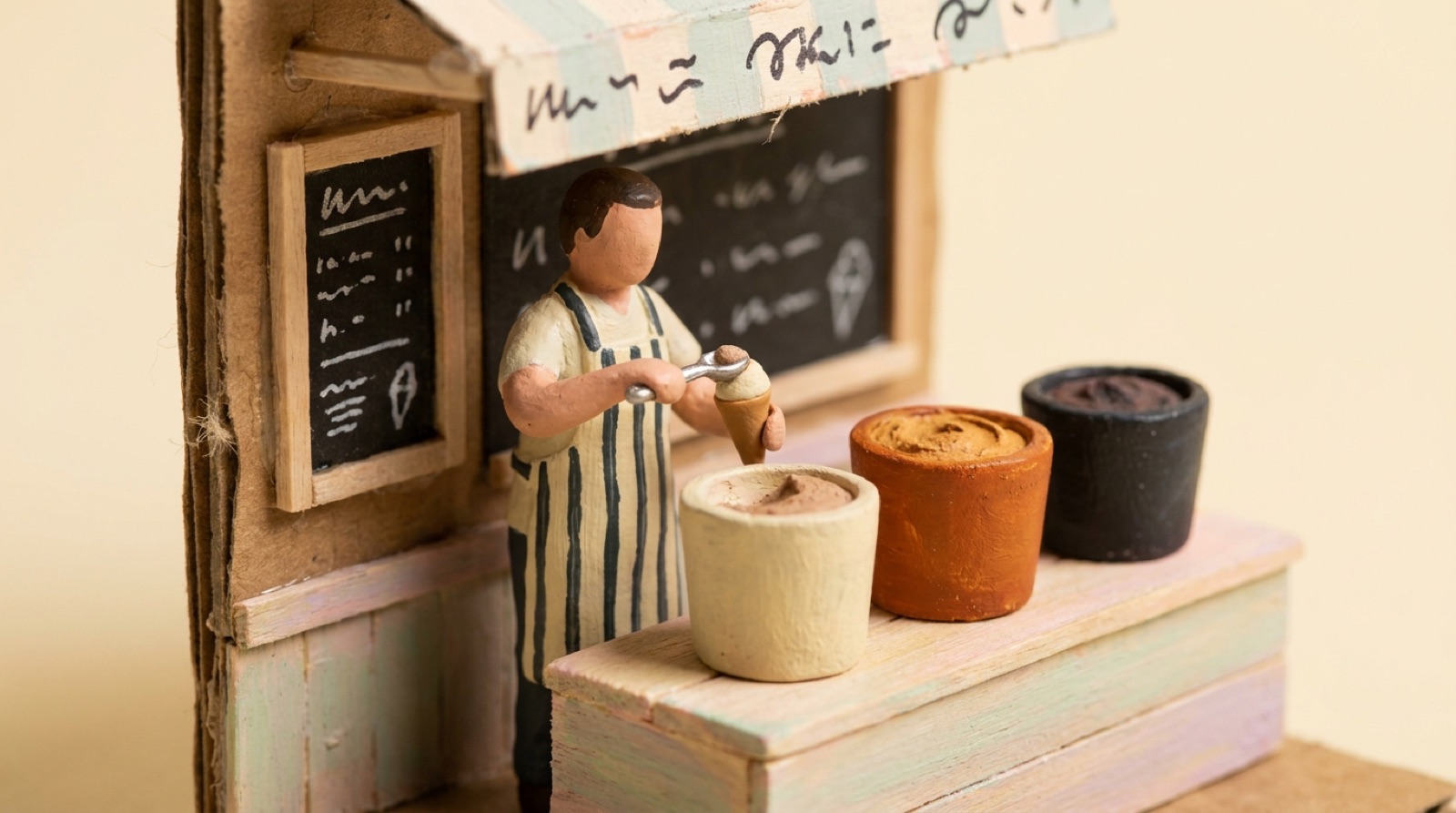
Opening an ice cream shop is not complicated, but it does require a clear framework before you sign a lease or buy a single machine. I built 720 Sweets from one location to an international chain in three years by following the same three steps every time. Here they are, straight.
Step One: Know Your End Product Before You Do Anything Else
The frozen dessert category is wide. Soft serve, gelato, premium ice cream, frozen custard, icy bowls, rolled ice cream, these are not interchangeable products. Each one demands different equipment, different storage space, and different logistics. You cannot design a shop, write a budget, or brief a supplier until you know exactly what you are serving.
Two standards define every frozen dessert product.
Butterfat content determines richness and creaminess. Soft serve runs 3 to 5% butterfat. Premium ice cream, think Häagen-Dazs, runs 12 to 14%. The higher the butterfat, the smoother and denser the product. If your ice cream tastes icy and crystallized, low butterfat is almost always the culprit.
Overrun (air content) determines density. High overrun gives you a fluffy, airy product. Low overrun gives you a dense, heavy scoop. Both are valid, but you need to decide intentionally, not by accident.
These two variables also dictate your equipment. A soft serve operation uses a machine you pour mix into and pump product out of on demand. No blast freezing, no holding, no tempering step. A traditional ice cream or gelato operation requires a batch freezer, a blast freezer, cold storage, and a tempering protocol before service. The space requirements, staffing complexity, and capital cost are completely different.
Here is the practical shortcut: once you decide on your product, your supplier does most of the heavy lifting. Good suppliers will tell you what mix to use, what machine fits your volume, and what square footage your operation needs. But you have to give them a clear answer on the product first. That answer is yours to make, not theirs.
Step Two: Know Your Three “Yours”, Yourself, Your Numbers, and Your Customer
Know Yourself
You are the captain. You carry the vision of what the customer experience looks and feels like. Your job is to translate that vision clearly enough that your team can execute it without you standing over every transaction. Operators who skip this step end up with a shop that runs differently every shift. Get your vision out of your head and into a format your team can follow.
Know Your Numbers
I am not a math person. That cost me hundreds of thousands of dollars in government fines because I did not keep proper books or records. It was one of the most painful lessons of my career, and I will not let you repeat it. Once I got serious about my numbers, we went from one shop to an international chain within three years. The numbers are not optional.
Watch three figures above everything else.
Rent: no more than 15% of monthly revenue. If your shop does $20,000 in revenue, your rent cannot exceed $3,000. This is a benchmark, not a guarantee, but it is a hard ceiling to plan around. As of 2026, planning budgets for a dessert shop start around $303,500 on the low end and can reach $505,500 depending on market and buildout. Have roughly 1.4 times your total startup cost in accessible cash before you sign anything.
Food cost: no more than 30% of monthly revenue. Food cost is every direct input that goes into the product: mix, milk, eggs, packaging, sleeves, toppings. On $20,000 in revenue, that is $6,000 maximum. You control this number through spoilage management, theft prevention, and tight inventory tracking. All three matter.
Labor cost: no more than 30% of monthly revenue. This covers every person on your floor, your manager, and you. On $20,000 in revenue, that is $6,000. The single most common mistake I see new operators make is leaving their own wage out of this calculation. If you work in the shop and you do not pay yourself, your labor cost looks artificially low and your profit looks artificially high. You are lying to yourself, and that false picture stops you from making the small adjustments that would actually put money in your pocket.
Know Your Customer
Businesses fail here not because they ignore customers, but because they serve customers what they think they want instead of what they actually want. Your customer tells you the right flavors, the right atmosphere, and the right menu if you ask. Ask directly. Then deliver exactly what they said.
Step Three: Build Your Marketing in the Right Order
Marketing is a broad topic. I have used every category of it to grow 720 Sweets. But the order matters more than the tactics.
Partnerships First
Partner with local businesses, local artists, local musicians. Their existing audience becomes your audience. Too many shops blend into a street and nobody knows they exist. A well-chosen local partnership makes your shop visible and gives people a reason to walk in the first time.
Claim Your Digital Real Estate
Control your presence on Google Business, Yelp, TripAdvisor, Facebook, and Instagram. These platforms are where people decide whether to visit you before they ever leave their house. They are also where you show off your product. This step is free and most operators neglect it completely. Do not be that operator.
If you are comfortable going further, layer in keyword optimization, SEO, and email newsletters. These compound over time and cost almost nothing.
Advertise Only After You Have Alignment and Connection
This is the part most people rush, and it is where they waste real money. Before you spend a cent on paid ads, you need two things in place.
Alignment means you know exactly why your shop exists, what makes it yours, and why customers are drawn to you specifically. People buy into the person behind the business, not just the product.
Connection means you have given your customers a reason to follow your story and trust you. Trust is what converts a first-time visitor into a loyal regular. No paid ad buys trust. It only amplifies what is already there.
Once alignment and connection are solid, paid advertising, Facebook ads, Instagram ads, Google ads, influencer collaborations, print, actually delivers a return. Without that foundation, you are paying to send strangers to a shop they have no reason to come back to.
On Promotions: Run Them With Intent
Buy-one-get-one, 50% off, happy hour, these are not inherently bad tactics. They become bad when you run them because a competitor is running them, without understanding the margin impact. Every promotion needs a clear purpose and a clear end date.
Loyalty Programs That Actually Work
A punch card is not a loyalty program. A loyalty program is something customers treat like a game. Make it fun, make it engaging, and customers will come back more often and spend more each visit. Engagement is the mechanism. The format is secondary.
The Bottom Line
Know your product before you spend money on equipment. Know your three numbers (rent at 15%, food cost at 30%, labor at 30%) and include your own wage in the math. Build marketing on alignment and real customer connection before you pay for a single ad. The operators who struggle are almost always missing one of these three, and it is usually the numbers. As I tell every operator I work with: the scoreboard does not lie, so you might as well read it.
Watch the full video
Source — YouTube · the full breakdown, free
Tool — free · not sponsored, I built it
Want your exact numbers for a ice cream shop? The free calculator runs your cost to open, the ×1.4 cash reserve, and your break-even in about 30 seconds. Prefer paper? The Startup Budget Worksheet is the printable version.
Run your numbers →Questions owners actually ask
Should I launch with a wide menu of flavors or specialize in a few to start?
Start narrow and make those flavors famous. Your customer tells you what to add next, so ask them directly. Serving customers what you think they want instead of what they actually want is one of the most common mistakes in this business. Get feedback early, then expand based on real demand rather than guessing.
How do I know if my rent is too high before I even open?
Work backwards from a realistic revenue target and apply the 15% rule. If your projected monthly revenue is $20,000, your rent ceiling is $3,000. If the space you are looking at costs more than that, your revenue target has to go up or the location does not work. As of 2026, total startup costs for a dessert shop typically run $303,500 to $505,500, so build your rent math into that full picture before you sign.
How do I start an ice cream shop with no cash? Are there grants?
The transcript does not cover specific grant programs, so I will not point you to sources I cannot stand behind. What I can tell you is the capital requirement is real: as of 2026, a dessert shop startup runs $303,500 to $505,500, and you want roughly 1.4 times that figure in accessible cash before signing a lease. Start by building your numbers model first, then approach lenders or investors with a plan that shows you understand your rent, food cost, and labor targets.
I don't know how to make ice cream. How do I learn, and do I need to before I open?
Understanding your product is Step One of the framework, but you do not need to be the one making it. Once you decide on your product type, your suppliers will guide you on mix, equipment, and process. Butterfat content and overrun (air content) are the two standards that define every frozen dessert, and your supplier can walk you through both once you know what category you are targeting.
What are the three costs every ice cream shop owner must track?
Rent, food cost, and labor cost. Rent should stay at or below 15% of monthly revenue. Food cost, meaning every direct input that goes into the product, should stay at or below 30%. Labor cost, including your own wage if you work in the shop, should also stay at or below 30%. On $20,000 in monthly revenue those ceilings are $3,000, $6,000, and $6,000 respectively.
Why does Wilson say to include your own wage in labor costs?
Leaving your wage out creates a false picture of profitability. You might show $2,000 or $3,000 in apparent profit while actually working for free. Including your wage forces you to see the real cost structure and make the adjustments needed to actually take money home. The goal is to build a business that pays you, not a job you own.
When is the right time to run paid advertising like Facebook or Instagram ads?
Only after you have alignment and connection in place. Alignment means you know exactly what your shop stands for and why customers choose you. Connection means you have built enough trust with your audience that paid ads amplify something real. Running paid ads before those foundations exist wastes money because you are sending strangers to a shop they have no reason to return to.
The Weekly Receipt
One brand story, one number, one answered question. 2 minutes, Tuesdays.
Free. Unsubscribe anytime, one click, no games.
You're in, friend. See you Tuesday.
Keep going: ice cream shop guides
How Much Does It Cost to Open an Ice Cream Shop? (2026)
Opening an ice cream shop costs $404,500 in 2026 ($303,500-$505,500 range). Wilson K Lee, who built 720 Sweets
How a Cookie Brand Sells 20,000 Cookies a Month: Key Lessons for Food Business Owners
Wilson K Lee breaks down how Bang Cookies went from a farmers market to 20,000 cookies a month. Real lessons f
How to Add $50,000 Extra Revenue to Your Ice Cream Shop
Six concrete steps to diversify your ice cream shop income by building and selling online workshops, adding up
How Two First-Time F&B Operators Built an Ice Cream Chain and Got Acquired in Five Years
Wilson K Lee and his partner Brian built 720 Sweets from one Vancouver ice cream shop to an international fran
How to Write an Ice Cream Shop Business Plan
A step-by-step guide to writing an ice cream shop business plan, covering concept, target market, team, locati
How Much Does It Cost to Open an Ice Cream Shop?
A full breakdown of ice cream shop startup costs, from renovations and equipment to runway cash, based on real
Is a $12 Pint of Ice Cream Worth the Money? What F&B Operators Need to Know
Wilson K Lee breaks down why premium ice cream pints cost $12 or more, what drives ingredient costs, and what
2 Biggest Lessons From Building and Selling an Ice Cream Business
Wilson K Lee built 720 Sweets from one shop to seven locations, then sold it. Here are the two lessons every F