Ice cream shop · Guide Updated August 2026
Is a $12 Pint of Ice Cream Worth the Money? What F&B Operators Need to Know
A $12 pint of premium ice cream is not a rip-off. The cost of quality ingredients alone runs $4 to $5 per pint at artisanal scale, before labor, packaging, or overhead. The real story behind that price tag is air content, ingredient sourcing, and emotional positioning, and every F&B operator can learn something from it.
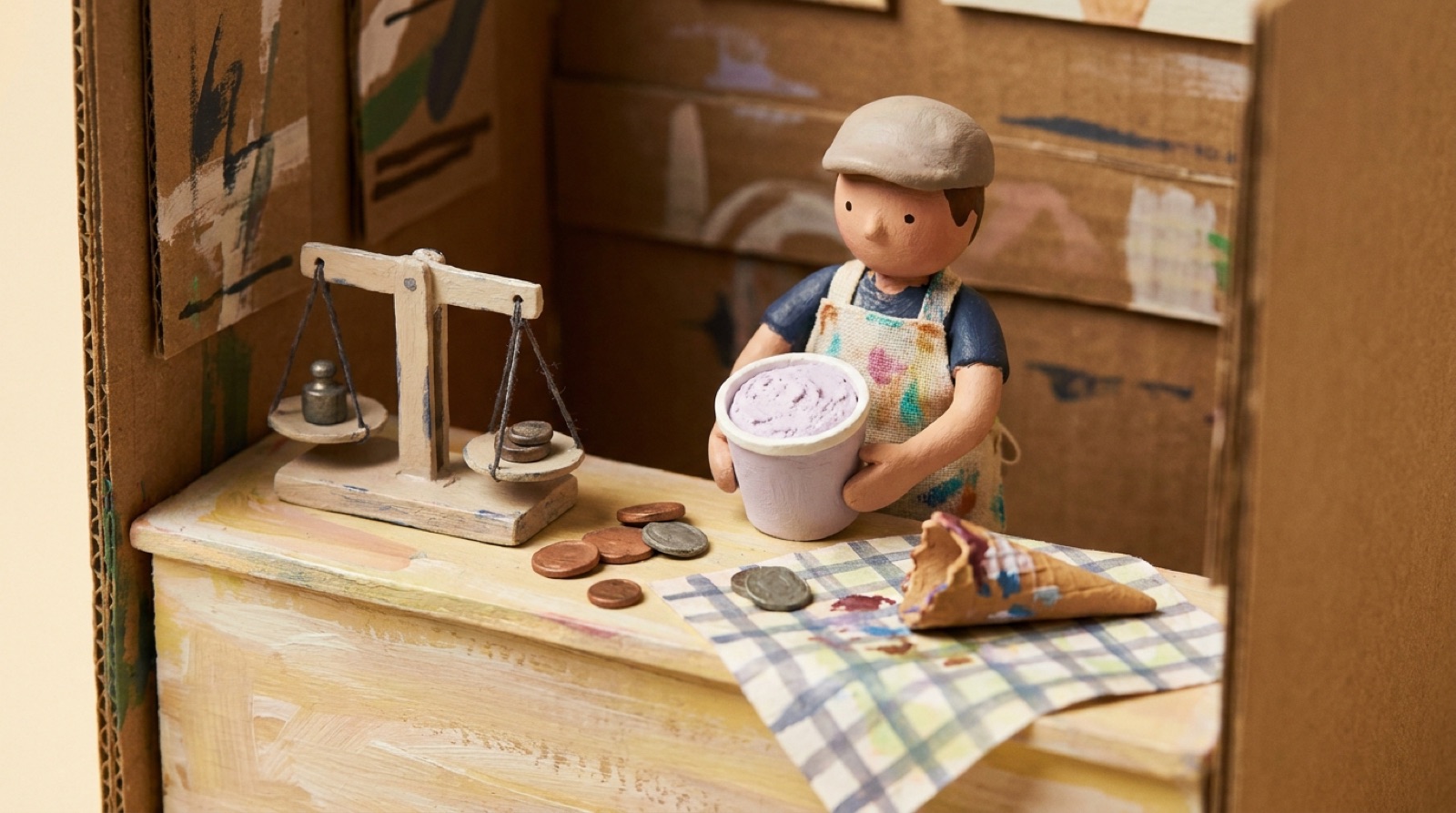
The real reason a $12 pint is not crazy
You are paying for density. Standard mass-market ice cream is 40 to 50 percent air. That is not a metaphor. Manufacturers pump air into the mix because air is free, it stretches the volume, and it lets them price a pint at four or five dollars and still make money. When you hold a pint from a premium brand, you can feel the difference in your hand. It is heavier. That weight is actual ice cream, not nothing.
The ingredient cost alone for a genuinely artisanal pint, using real, quality ingredients and no filler air, runs about $4 to $5 per unit. So when someone says they would never pay more than three dollars for a pint, the math does not work. You cannot make a real product, pay anyone to produce it, and sell it below cost. That three-dollar person is just used to buying air.
Why ingredient costs keep climbing
This is not a temporary problem. Three forces are pushing ingredient costs up simultaneously.
First, inflation raises the price of every input. Milk increased 12 percent nationally in 2019 alone. Vanilla surpassed silver in price per kilo, reaching $600 per kilogram. These are not rounding errors on a cost sheet.
Second, labor shortages drive wages up at every point in the supply chain, from the farm to the factory to your shop.
Third, logistics costs have risen sharply. Getting ingredients from their source to your production facility is itself a significant line item.
On top of all three, consumer expectations are forcing a reformulation movement across the industry. Ice cream companies are cleaning up their ingredient lists, removing artificial additives, and sourcing better inputs. Cleaner labels mean higher input costs. There is no way around it.
What you can learn from Halo Top’s rise
In 2017, Halo Top became the top-selling ice cream pint in the United States with $347 million in sales. It beat both Ben and Jerry’s and Häagen-Dazs. That did not happen because of clever marketing alone. It happened because a large segment of consumers had changed what they wanted from frozen dessert.
Calorie counts matter to those buyers. Ingredient labels matter. The “healthy” positioning was not a trend in 2017, and it is not a trend now. It is a lifestyle. Any brand that is not willing to engage with how people think about what they are eating is selling to a shrinking audience.
The ice cream industry is worth over $61 billion globally and is expected to grow another 13 percent over the following five years from that measurement. The premium and better-for-you segments are driving a large share of that growth.
How Little Baby’s built six stores on wacky flavors and $11,000
Little Baby’s Ice Cream in Philadelphia was founded in 2011. Their edge is unconventional flavor combinations. Earl grey and sriracha came from a founder who could not sleep, went to his kitchen, made an earl grey base, squirted in hot sauce as a joke, and woke up the next day to something genuinely good. Chocolate pomegranate and wheatgrass followed the same instinct.
By 2018, $11,000 in seed money had grown into six store locations and over $1 million in revenue.
Here is the lesson, and it is not “make weird flavors.” The lesson is that they identified a very specific customer, owned that position completely, and never tried to out-Häagen-Dazs Häagen-Dazs. As they put it, they were never going to make a better, cheaper chocolate ice cream than Häagen-Dazs, so they did not try.
Before you copy any flavor strategy, you need to know your actual customer base. A wacky flavor menu requires enough of the right demographic in your trade area to sustain it. Know who you are serving before you build your menu around a concept.
Why ice cream pricing is really about emotion
Ample Hills in New York describes their ice cream as a time machine. They make everything from scratch, operate as much like a bakery as an ice cream factory, and they use the ratatouille analogy: one taste transports you back to childhood. That emotional connection is what justifies the price to the customer.
This is not a soft or fluffy idea. It is a practical pricing insight. Ice cream is attached to emotional milestones. People celebrate with it. People comfort themselves with it. They have been doing both since childhood. The product carries meaning that goes beyond the calories or the flavor profile, and you cannot put a dollar ceiling on a genuine emotional experience.
When you frame your shop around selling an emotion rather than selling a commodity, the price conversation changes completely. You are no longer competing on cost per ounce. You are competing on what the experience means to the person buying it.
What the premium pint market means if you are starting a shop
The global market and the case studies are useful context, but here is what matters if you are planning to open.
As of 2026, opening an ice cream or dessert concept in the US costs roughly $404,500 on average, with a realistic range of $303,500 to $505,500. Before you sign a lease, you need about 1.4 times your estimated startup cost in accessible cash, which puts your pre-signing war chest at approximately $566,500. At an average ticket of $9, you need around 68 customers per day to reach break-even.
Those numbers make two things clear. First, this is a real capital commitment, not a hobby project. Second, your average ticket matters enormously. A shop selling premium, low-air-content ice cream at justifiable prices has a path to that $9 average. A shop trying to compete with gas station novelties on price does not.
Your position in the market has to be defined before you open, not figured out after. Are you the clean-label, farm-to-table shop? The wild-flavor destination? The nostalgia-forward, made-from-scratch experience? Each of those is a real and defensible position. “We sell ice cream” is not a position.
Is the $12 pint real or a fad?
It is real. The demand for ultra-premium ice cream is not softening. Generation Z and millennials consistently say they want something unique, they want clean ingredient labels, and they are willing to pay for both. As the cost of quality ingredients continues to rise across the board, premium pricing becomes more justified, not less.
The brands that will struggle are the ones caught in the middle: not cheap enough to win on price, not differentiated enough to win on experience. The brands that will grow are the ones that find a clear position and hold it.
The bottom line
A $12 pint is worth the money when the product is dense, the ingredients are real, and the brand has built a genuine emotional connection with its customers. As an operator, your job is to know exactly where you stand in the market, own that position, and price your product to reflect the actual cost of making it well. You are not selling frozen sugar. You are selling a moment people will remember.
Watch the full video
Source — YouTube · the full breakdown, free
Tool — free · not sponsored, I built it
Want your exact numbers for a ice cream shop? The free calculator runs your cost to open, the ×1.4 cash reserve, and your break-even in about 30 seconds. Prefer paper? The Startup Budget Worksheet is the printable version.
Run your numbers →Questions owners actually ask
Is Little Baby's Ice Cream a good brand to study for starting an ice cream business?
Little Baby's is a strong case study for niche positioning. They launched in Philadelphia in 2011 with $11,000 in seed money, built around unconventional flavors like earl grey sriracha, and grew to six locations with over $1 million in revenue by 2018. The key takeaway is not the wacky flavors themselves, it is that they identified a specific customer and never tried to compete where they could not win.
Why does premium ice cream cost so much more than regular grocery store ice cream?
The biggest factor is air content. Standard ice cream is 40 to 50 percent air by volume, which allows mass producers to keep prices at four to five dollars. Premium ice cream has significantly less air, meaning more actual product per pint, which requires more milk, more cream, and more ingredients. On top of that, quality ingredient costs have risen sharply, with milk up 12 percent nationally in 2019 alone and vanilla reaching $600 per kilogram.
What does it actually cost in ingredients to make a pint of artisanal ice cream?
Using real, quality ingredients at artisanal scale, ingredient cost alone runs about $4 to $5 per pint. That figure does not include labor, packaging, overhead, or any margin. It is the floor, which is why anyone expecting to pay three dollars for a quality pint is not accounting for what it actually costs to make one.
How much does it cost to open an ice cream shop in 2026?
The average cost to open an ice cream or dessert concept in the US is approximately $404,500, with a range of $303,500 to $505,500 depending on location, buildout, and equipment. Before signing a lease, you should have roughly $566,500 in accessible cash, which applies a 1.4x multiplier to your estimated startup cost. Break-even typically requires around 68 customers per day at a $9 average ticket.
Is the premium ice cream market growing or is it just a trend?
The global ice cream industry is worth over $61 billion and was projected to grow another 13 percent over the five years following that measurement. The premium and better-for-you segments are real drivers of that growth. Halo Top alone hit $347 million in US pint sales in 2017, surpassing both Ben and Jerry's and Häagen-Dazs. Consumer demand for clean labels and unique experiences is a durable shift, not a fad.
Does having no air in ice cream really make a difference to the product?
The difference is significant in both texture and cost. High-air ice cream is bubbly and light because you are literally eating air. Low-air ice cream is denser, richer, and heavier in the hand. Brands like Ample Hills and Jenny's Splendid note that customers can feel the difference just by holding a pint. That density requires more milk and cream per unit, which is a direct driver of the higher retail price.
The Weekly Receipt
One brand story, one number, one answered question. 2 minutes, Tuesdays.
Free. Unsubscribe anytime, one click, no games.
You're in, friend. See you Tuesday.
Keep going: ice cream shop guides
How Much Does It Cost to Open an Ice Cream Shop? (2026)
Opening an ice cream shop costs $404,500 in 2026 ($303,500-$505,500 range). Wilson K Lee, who built 720 Sweets
How a Cookie Brand Sells 20,000 Cookies a Month: Key Lessons for Food Business Owners
Wilson K Lee breaks down how Bang Cookies went from a farmers market to 20,000 cookies a month. Real lessons f
How to Add $50,000 Extra Revenue to Your Ice Cream Shop
Six concrete steps to diversify your ice cream shop income by building and selling online workshops, adding up
How Two First-Time F&B Operators Built an Ice Cream Chain and Got Acquired in Five Years
Wilson K Lee and his partner Brian built 720 Sweets from one Vancouver ice cream shop to an international fran
How to Open an Ice Cream Shop: A Three-Step Framework for New Operators
Wilson K Lee breaks down the exact three-step framework he used to grow 720 Sweets from one shop to an interna
How to Write an Ice Cream Shop Business Plan
A step-by-step guide to writing an ice cream shop business plan, covering concept, target market, team, locati
How Much Does It Cost to Open an Ice Cream Shop?
A full breakdown of ice cream shop startup costs, from renovations and equipment to runway cash, based on real
2 Biggest Lessons From Building and Selling an Ice Cream Business
Wilson K Lee built 720 Sweets from one shop to seven locations, then sold it. Here are the two lessons every F