Coffee shop · Guide Updated September 2026
What It Really Costs to Open and Run a Small Coffee Shop
Opening a coffee shop in 2026 runs around $457,000, and you need close to $640,000 in the bank before you sign a lease. Most owners never calculate their prime cost or burn rate, so they can't tell a good sales day from a slow bleed. And if foot traffic feels inconsistent no matter how much you spend on marketing, check your repeat customer rate before you check your ad budget. A falling repeat rate is a product problem, not an acquisition problem, and no amount of marketing fixes it.
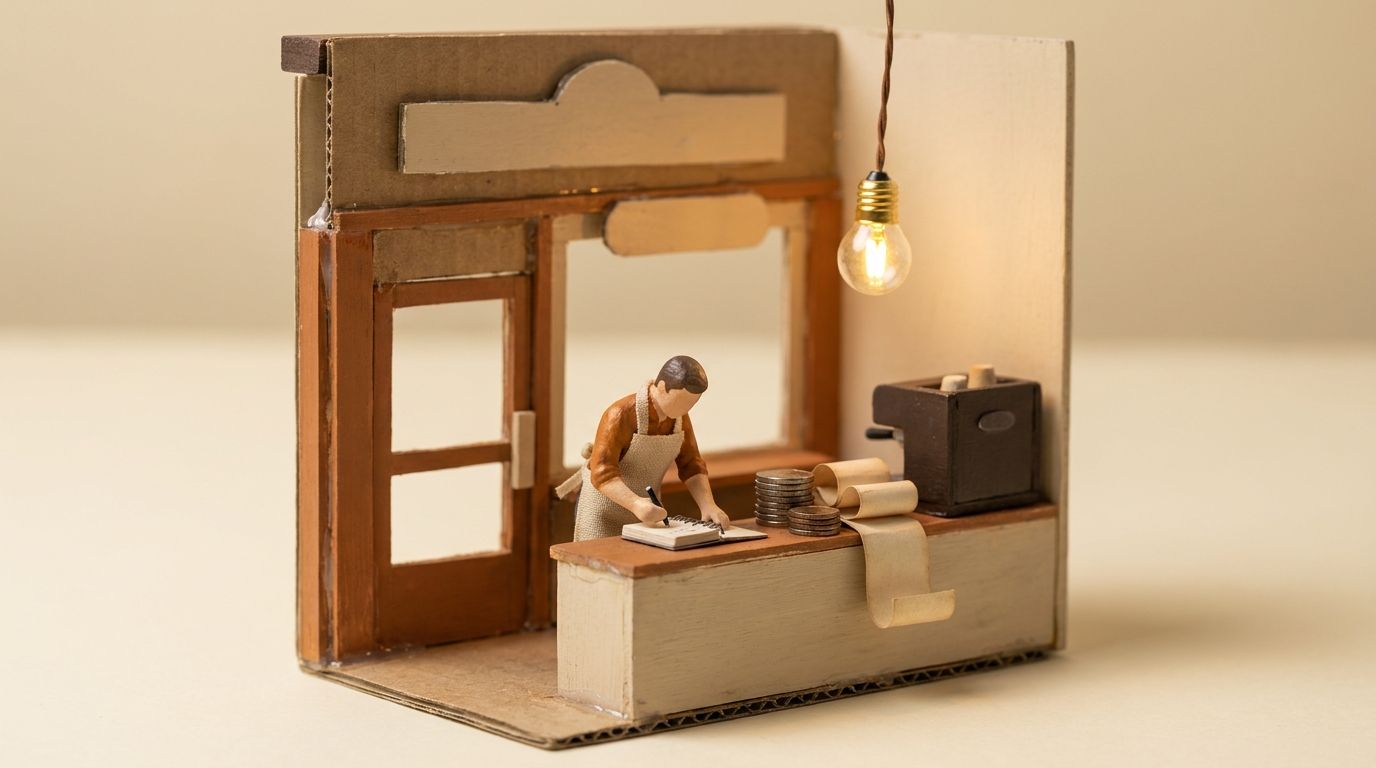
The number that breaks new coffee shop owners
Every new cafe owner asks the same question: how much does it cost to open this thing? The honest answer for 2026 is around $457,000 to get the doors open. But that number is the trap. The real number you need in the bank before you even sign a lease is closer to $640,000, because you need cash sitting there for the months after opening when sales are still building and every bill still comes due.
Break-even on a typical cafe lands around 84 cups a day at an $8 average ticket. That’s not a scary number on its own. What scares owners is not knowing where they stand against it, week to week, because nobody taught them to track it.
Know your three numbers or you’re flying blind
There are three numbers every coffee shop owner has to know cold. If you can’t say all three out loud right now, you are flying blind, and no amount of foot traffic fixes that.
First is AOV, your average order value. What’s the average dollar amount per ticket, right now, this week. Second is prime cost. Think of it as a 25/25/25 split: roughly 25% of revenue to your ingredients (coffee, milk, cups, syrups), 25% to labor, 25% to rent and overhead. Third is burn rate, meaning what you’d be forking out of pocket every month if zero customers walked in the door.
Here’s why this matters more than marketing. Coffee shop margins run 3 to 5%. There is no cushion for vibes. I’ve watched owners look at a busy Saturday, feel great about it, then check the bank account and see it sitting at $1,000, sometimes negative. Busy is not the same as profitable, and you cannot tell the difference without these three numbers. Go get them before you touch anything else.
Foot traffic isn’t the problem you think it is
Owners tell me the same thing over and over: “I’m marketing hard and traffic still feels inconsistent.” The instinct is to spend more on ads. That’s usually the wrong move.
The number that actually tells you what’s happening is your repeat customer rate, tracked week over week. Not the level, the trend. If your repeat rate has been sliding for three straight weeks, stop everything else and look at your product and experience, because that’s the real signal. Your profit and loss statement lags 30 to 60 days behind reality. By the time your numbers on paper look bad, the problem has already been eating at you for two months.
I had a consulting client who opened in late 2024. First 90 days looked fine on the surface. By month four they called me for a check-in, and inside a weekend I found their repeat rate had been dropping week over week since week two. The whole time, they’d been pouring money into acquisition. The acquisition was actually working fine. The bucket had a hole in it, and no amount of new customers fixes a bucket with a hole.
If your repeat rate is flat or climbing and traffic still feels soft, that’s an acquisition problem, and marketing spend makes sense. If your repeat rate is falling, marketing spend on top of that is just pouring money into a leak.
Fix the menu before you touch the ad budget
Before you spend another dollar on marketing, look at your menu. The fewer things you sell, the better you can sell them. A small menu means a faster line, less waste, and drinks that come out the same every single time. A bloated menu does the opposite: it slows your baristas down, ties up cash in ingredients that barely move, and makes every drink a little bit average.
In-N-Out runs four items on their menu and still outsells a McDonald’s roughly 2 to 1 per store. That’s not an accident and it’s not luck. Every limit they’ve put on themselves is actually their edge.
If sales feel flat, count your SKUs before you count your ad spend. Cut down to your real top sellers. Build one or two bundles, a drink plus a pastry, that push your average ticket up without you having to find a single new customer. Then re-check your pricing against that 25/25/25 prime cost target. A tighter menu with the right bundle can move your ticket from a single drink to close to triple, and that shows up in your numbers faster than any ad campaign will.
What to do this week
Write down your AOV, your prime cost, and your monthly burn rate today. If you don’t have them, that’s job one, before any marketing decision. Then pull your last six weeks of repeat customer data and look at the trend, not the number. If it’s falling, put the ad budget down and fix the product and the menu first. If it’s steady or climbing, your marketing dollars are landing on solid ground and you can push harder there with confidence.
Tool — free · not sponsored, I built it
Want your exact numbers for a coffee shop? The free calculator runs your cost to open, the ×1.4 cash reserve, and your break-even in about 30 seconds. Prefer paper? The Startup Budget Worksheet is the printable version.
Run your numbers →Questions owners actually ask
How much does it really cost to open a coffee shop in 2026?
Plan on roughly $457,000 to open the doors, but you need closer to $640,000 sitting in the bank before you sign a lease. That extra cushion covers the months after opening when sales are still building and every bill still comes due.
Why does my coffee shop feel busy but I'm still not making money?
Busy and profitable are not the same thing. Check your prime cost, roughly 25% ingredients, 25% labor, 25% rent and overhead, against your actual revenue. Margins in this business run 3 to 5%, so a few points off in any category eats your whole profit.
Should I spend more on marketing if foot traffic feels inconsistent?
Check your repeat customer rate week over week first. If it's flat or climbing, spend on marketing, that's an acquisition problem. If it's falling for three straight weeks, marketing spend won't fix it. That's a product or experience problem, and it needs to be fixed first.
How do I get more repeat customers instead of just new ones?
Start by tightening your menu. Fewer items means faster service and more consistent drinks, both of which bring people back. Then build a bundle, like a drink plus a pastry, to raise your average ticket without needing new customers at all.
The Weekly Receipt
One brand story, one number, one answered question. 2 minutes, Tuesdays.
Free. Unsubscribe anytime, one click, no games.
You're in, friend. See you Tuesday.
Keep going: coffee shop guides
How Much Does It Cost to Open a Coffee Shop in 2026?
The real 2026 cost to open a coffee shop: $457,000 all-in, $640,000 cash before you sign, and the daily break-
8 Steps to Building a Profitable Coffee Shop Business
Wilson K Lee breaks down the 8 essential steps to start and run a profitable coffee shop, from knowing your cu
Why a Market Downturn Is the Best Time to Open a Restaurant or Cafe
Four concrete strategic advantages that make opening a restaurant during an economic downturn smarter than wai
How to Get Cafe Customers Without Discounts: 4 Modern Marketing Strategies
Stop cutting prices to fill seats. These 4 cafe marketing strategies build real customer loyalty and increase
How One Coffee Shop Owner Paid Rent in 24 Hours During COVID-19 Lockdown
Narrative Coffee's Max pivoted to half-gallon lattes during COVID-19 lockdown and covered rent and salary in t
How a Former Disney Manager Built a Multi-Location Coffee Shop From Scratch
Andrea went from Disney World hospitality to sleeping under her espresso machine to running two Rhode Island c
How to Calculate Food Cost Percentage (and Actually Use It to Make More Money)
Learn how to calculate food cost percentage, the difference between ideal and actual food cost, and how to use
How to Open a Cafe in 2026: An 8-Step Playbook to Avoid the 80% Failure Rate
Wilson K Lee's modern 8-step playbook for opening a profitable cafe in 2026, using audience-building, AI tools