Cloud kitchen · Guide Updated August 2026
Why Chicken Wings Are the Best Food Item for a Ghost Kitchen
Chicken wings are the single best food item to sell in a ghost kitchen. They carry 60 to 70% margins, survived a pandemic year with sales up 7% even as restaurant trips fell 11%, and every major brand from Applebee's to WingsZone is pouring money into the category. If you differentiate your brand and account for price volatility, you have a real shot at a profitable operation from day one.
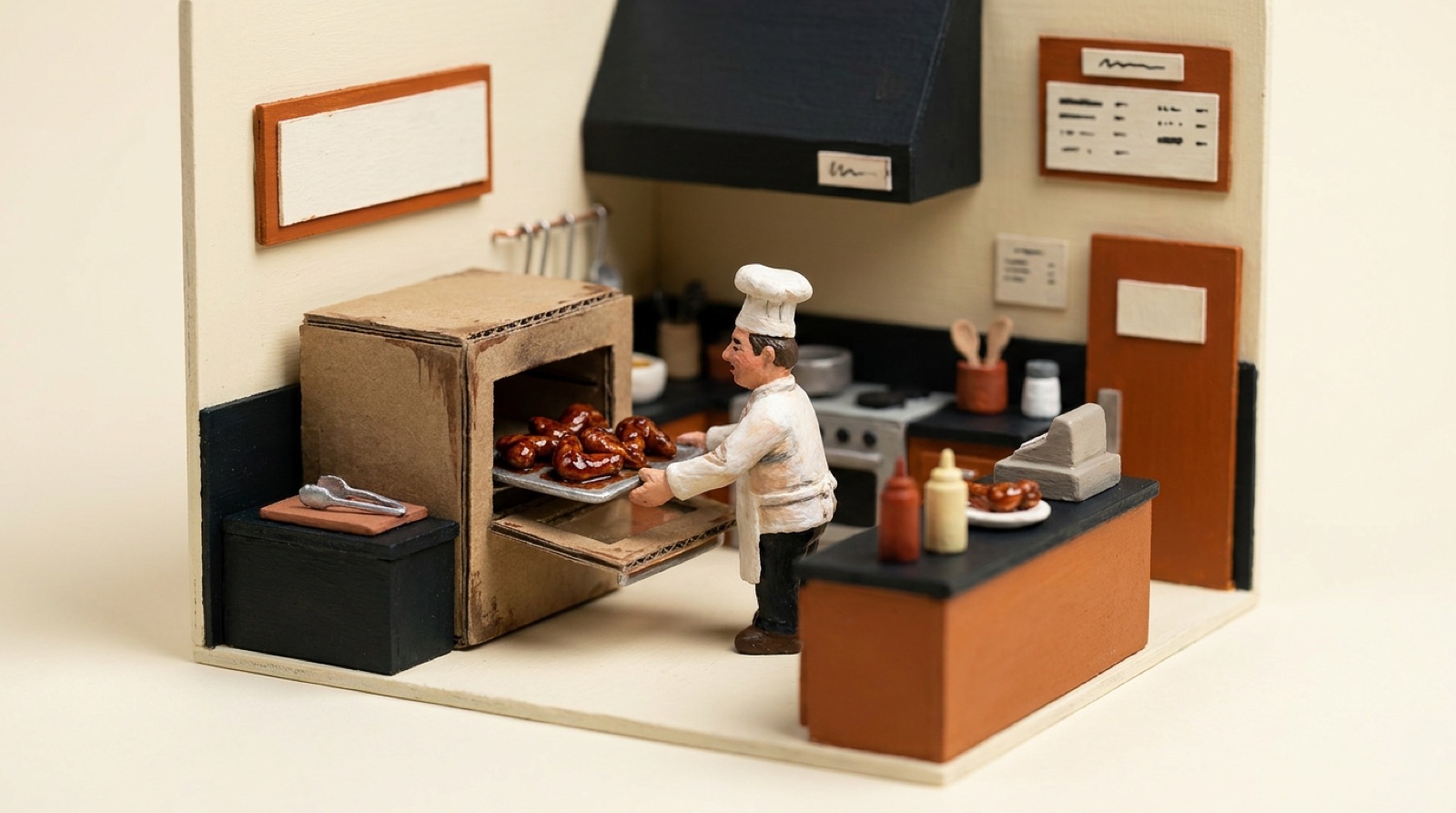
Chicken wings are the best food item to sell in a ghost kitchen right now. The demand is proven, the margins are strong, and the biggest restaurant brands in the country are betting serious money on the category. If you are still searching for the right item to build your ghost kitchen around, stop searching.
Why Does the Food Item You Choose Matter So Much?
Most first-time ghost kitchen operators get stuck in the same trap. There are thousands of things you could sell, so they pick something they personally love or something that feels trendy. Then they open, the sales are thin, margins are razor-thin, and they spend months grinding before they admit the item was wrong from the start.
Your food item is the foundation of everything: your cost structure, your marketing angle, your packaging, your repeat order rate. Pick the wrong one and every other good decision you make still leads to a slow bleed. Pick the right one and you have the wind at your back.
Why Is Chicken the Right Category for Ghost Kitchens?
Chicken wings are a staple food item. They cross cultures, age groups, and income levels. Everyone knows what a wing is, and almost everyone has a preference about how they like them. That universal familiarity removes a major friction point: you do not have to educate your customer on what they are buying.
Wings also fit every eating occasion. They work as a main, a side, or a shared platter. That versatility means one customer might order them for a solo weeknight dinner and the same customer orders a large family pack on game day. That kind of range is rare in a single menu item.
Comfort food demand also plays a real role. When people are stressed, uncertain, or just staying home, they reach for food that feels familiar and satisfying. Wings check that box every time.
What Do the Numbers Say About Wing Demand?
The data on wings is not a gut feeling. It is documented.
According to the National Purchase Diary, more than 900 million servings of wings were consumed in the United States in 2019. That is before the delivery boom fully kicked in.
Then 2020 happened. Restaurant trips fell 11% across the country because of the pandemic. Wing sales went up 7%, according to the National Chicken Council’s annual wing report. An 11% drop in traffic and the category still grew. That is how sticky the demand is.
WingsZone saw sales spike more than 25% from March 2020 to September 2020 compared to the same period the prior year. Their CEO described it as the greatest sales surge in their 27-year history. Atomic Wings reported more than 100% increases at some of their locations during the same stretch.
What Are the Big Brands Doing, and Why Should You Care?
Here is a rule I follow when advising operators: watch what the big brands invest in, then move in the same direction as a nimble small operator.
Large chains spend enormous amounts of money on market research, trend analysis, and consumer data before they commit to a new concept. When multiple big brands all start moving into the same category at the same time, that is not coincidence. That is a validated market signal.
Applebee’s is a clear example. Their vice president of strategy stated publicly that wings are a top-selling menu item at Applebee’s, especially for takeout, in 2020. That insight led them to launch a standalone delivery brand called Cosmic Wings. That brand was reportedly pulling in hundreds of thousands of dollars in sales every single week shortly after launch.
When a national chain with thousands of locations decides to spin up a separate virtual brand just for wings, that tells you everything you need to know about where the demand is.
What Does the Pricing and Margin Structure Look Like?
Wholesale chicken wings have historically run around $2.50 per pound. One pound yields roughly four to five wings, putting your cost per wing at approximately $0.40 to $0.60.
At retail, you can price individual wings at $1.00 to $1.50 depending on your market and your positioning. That pricing structure produces gross margins in the range of 60 to 70%. For a ghost kitchen with lean overhead, those margins can support a real profit after delivery commissions.
There is a caveat you need to plan for. Wing prices are volatile. Around major sporting events like the Super Bowl, wholesale prices can spike to $3.00 or even $3.50 per pound because demand surges all at once across every wing-selling restaurant in the country. That kind of swing compresses your margin fast if you have not built in buffer room.
The fix is simple: price with the volatility already baked in. Do not set your retail price at the floor of your margin. Give yourself room so that when prices spike, you are still profitable rather than breaking even or worse.
As of 2026, opening a ghost kitchen runs approximately $156,000 to $260,000, with a planning target of around $208,000. Before you sign a lease, you want roughly 1.4 times that amount in accessible cash, around $291,000, to cover build-out surprises, ramp-up inventory, and the first months before you hit your stride. Break-even in this model tends to land around 20 customers per day at a $22 average ticket, which a well-priced wing menu can realistically hit.
How Do You Actually Compete with the Big Wing Brands?
This is the part most people skip. Yes, wings are validated. Yes, the demand is real. But if you open a generic wing concept with the same six flavors every other shop already has, you are walking into a fight against brands that have been at it for decades and have national marketing budgets.
Your advantage as a small operator is exactly what makes the big brands slow: you can move fast, test freely, and take risks they cannot.
You can build a regional flavor story around ingredients or sauces specific to your city or culture. You can test a rotating “wildcard” flavor every two weeks that generates its own social media buzz. You can create combination platters or dipping sauce pairings that nobody else offers in your delivery radius. Big brands cannot do that. Their menus go through months of corporate approval before anything changes. You can update your menu on a Tuesday because a flavor idea felt right.
The one rule is this: differentiate before you launch, not after. Know your angle going in. Pick a lane, commit to it, and make sure someone who sees your listing on a delivery app immediately understands why you are not just another wing shop.
The Bottom Line
Chicken wings are not a trend. The demand existed before the pandemic, grew through it, and has the backing of every major chain that can afford to do serious market research. Your job is to ride that validated wave with a brand that stands for something specific.
Price for volatility, build your margin in from the start, and differentiate hard. A ghost kitchen selling wings with a real identity behind the brand is not competing with Applebee’s. It is serving the customer Applebee’s cannot reach: the one who wants something with a real local story and a flavor they have never seen before.
Watch the full video
Source — YouTube · the full breakdown, free
Tool — free · not sponsored, I built it
Want your exact numbers for a cloud kitchen? The free calculator runs your cost to open, the ×1.4 cash reserve, and your break-even in about 30 seconds. Prefer paper? The Startup Budget Worksheet is the printable version.
Run your numbers →Questions owners actually ask
Is there really a shortage of chicken wings, and how does that affect pricing?
Wing prices are genuinely volatile, not just occasionally but predictably. At baseline, wholesale wings run around $2.50 per pound. During high-demand events like the Super Bowl, that price can jump to $3.00 to $3.50 per pound as restaurants across the country compete for the same supply. The practical fix is to build your retail pricing above your floor margin so those spikes hurt your wallet a little rather than wiping out your profit for the month.
Does a ghost kitchen generate better monthly cash flow than a brick-and-mortar, especially when relying entirely on third-party delivery?
Ghost kitchens have lower overhead than brick-and-mortar because you are not paying for front-of-house staff, dining room build-out, or the same level of foot-traffic-dependent rent. However, total reliance on third-party delivery platforms does eat into your margins significantly through their commission fees. The 60 to 70% gross margin on chicken wings helps absorb that cost better than most food categories, which is one reason wings are particularly well-suited to the ghost kitchen model.
How do you track loyal and repeat customers in a ghost kitchen without a traditional POS loyalty program?
The transcript does not prescribe a specific POS or loyalty tool, but the underlying principle Wilson teaches is that you need a system in place from day one, not after you have grown. For a ghost kitchen relying on delivery platforms, those platforms own the customer relationship by default, which makes building your own repeat-order tracking harder. Setting up a direct channel, such as a branded ordering page or an email list, from the moment you open gives you data on returning customers that third-party apps will not share with you.
What permits and licenses do I need to open a ghost kitchen?
The specific permits required are not covered in this source material, as the requirements vary by state, county, and city. What Wilson emphasizes broadly is that laying the right business foundation before you open, understanding the legal and operational requirements for your market, is as important as choosing the right menu item. Checking with your local health department and a small business attorney in your state is the right starting point.
I have access to a free kitchen. Does that change my approach to opening a ghost kitchen?
Having a kitchen at no cost is a meaningful head start because rent is one of the larger fixed costs in any ghost kitchen operation. The core planning numbers still apply to your other costs: equipment, insurance, licenses, packaging, and the marketing spend needed to build visibility on delivery platforms. Wilson's consistent advice is to use low overhead moments to test your concept and differentiate your brand before you are locked into higher fixed costs.
Is a dessert-only ghost kitchen that operates at night a viable idea?
Wilson's framework for validating any ghost kitchen concept rests on three things: proven demand, good volume potential, and healthy margins. A night-only dessert concept targeting an underserved delivery window, such as evening donut delivery, can check those boxes if you have confirmed the demand exists in your specific delivery area. The differentiation angle, doing the classics in a fun or unexpected way, is exactly the kind of brand edge Wilson says you need to stand out on any delivery platform.
The Weekly Receipt
One brand story, one number, one answered question. 2 minutes, Tuesdays.
Free. Unsubscribe anytime, one click, no games.
You're in, friend. See you Tuesday.
Keep going: cloud kitchen guides
Cloud Kitchen Cost in 2026: The Full Breakdown
See the real 2026 cloud kitchen cost, $208,000 line-by-line, the cash you need before signing, and break-even
How a Tech Sales Guy Built a Profitable Automated Cloud Kitchen With Zero Food Experience
A tech sales professional built an automated mozzarella stick ghost kitchen business in NYC, hitting $3,800/mo
4 Benefits of Running Multiple Brands in One Cloud Kitchen
Running multiple brands from one cloud kitchen cuts costs, widens your audience, and lets you test new concept
6 Cloud Kitchen Business Models Every F&B Operator Should Know
A plain-English breakdown of the six cloud kitchen business models, from independent single-brand to hub-and-s
Cloud Kitchen Business Plan Report: 10 Must-Have Parts
A cloud kitchen business plan report needs 10 parts: concept, team, market, location, menu, design, SWOT, mark
7 Cloud Kitchen Marketing Channels You Must Master to Drive Sales
Wilson K Lee breaks down the 7 essential marketing channels every ghost kitchen operator must own, from Instag
5 Cloud Kitchen Mistakes That Will Bankrupt Your Business
Wilson K Lee breaks down the 5 most common cloud kitchen mistakes that kill ghost kitchen businesses, and exac
Ghost Kitchen vs Cloud Kitchen: What's the Real Difference?
Ghost kitchen and cloud kitchen are the same delivery-only model. Wilson breaks down costs, margins, and pros/