Cloud kitchen · Guide Updated July 2026
7 Cloud Kitchen Marketing Channels You Must Master to Drive Sales
There are seven marketing channels every cloud kitchen operator must actively own: Instagram, your website, PR, Google My Business, review sites, third-party delivery apps, and TikTok. Ignoring any one of them costs you sales to competitors who show up where you don't. Master all seven and you build a compounding discovery engine that works around the clock.
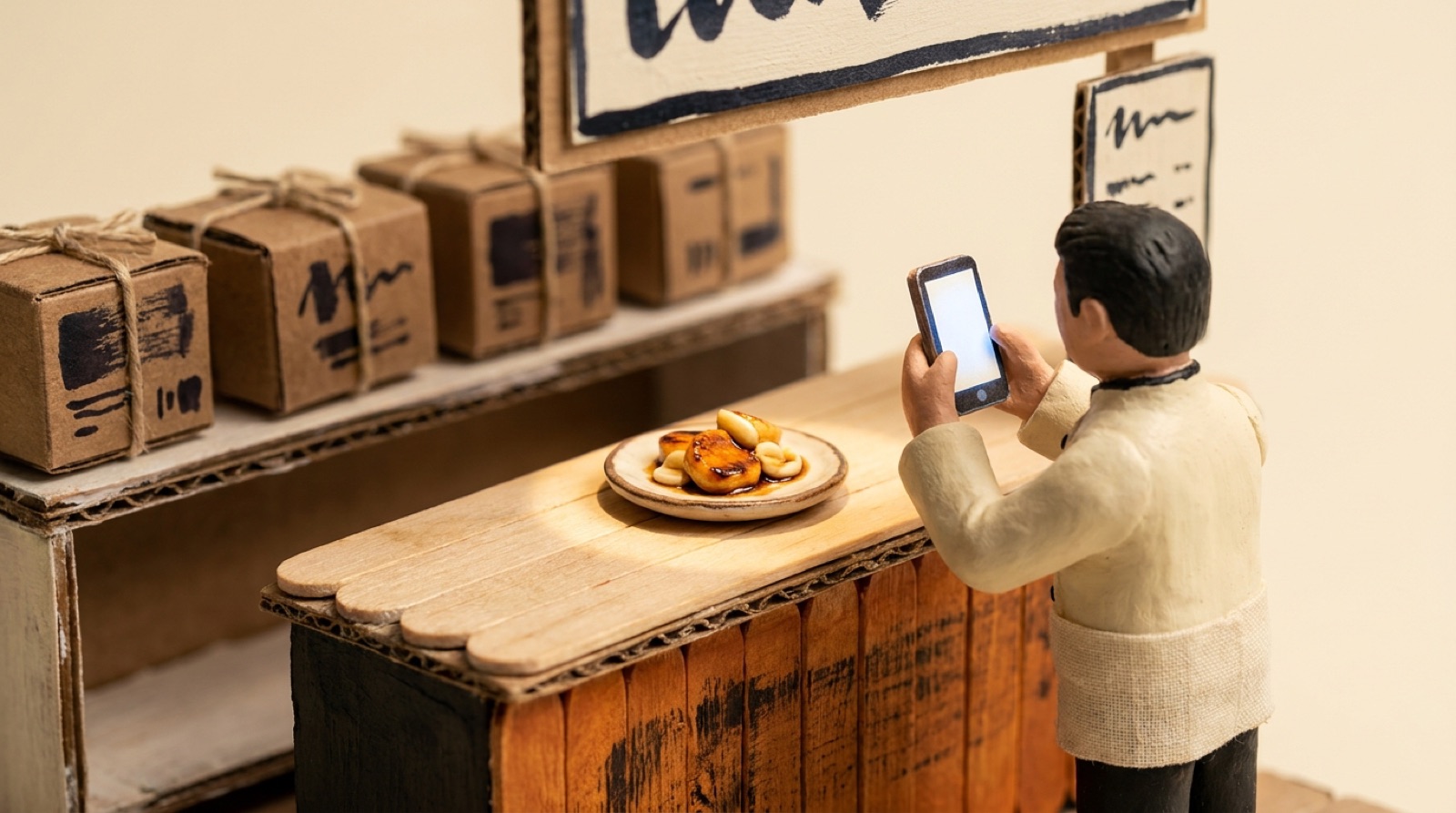
Your cloud kitchen lives or dies on discovery. Nobody walks past your storefront, nobody sees your signage, nobody stumbles in for a glass of water. Every single customer finds you through a screen. That means marketing is not optional overhead; it is your front door.
These are the seven channels you must own. Not try. Not dabble in. Own.
1. Instagram: Where Your Customers Are Already Bookmarking Food
Instagram has more than one billion active monthly users. Whether or not you post, your customers are on there right now saving places they want to order from. That gap, between your absence and their saved-posts folder, is costing you orders every weekend.
Here is how I know this matters. Every time my wife and I can not decide what to eat on a weekend, we open Instagram and scroll through our saved bookmarks. We pick something from that list. Your customers do the exact same thing. If you are not in that list, you are not in the running.
For your cloud kitchen specifically, post drool-worthy photos of your food. Use Reels consistently; the reach is disproportionate to the effort. Use Stories to show behind the scenes and let your personality come through. And build collaborations with food influencers who can cross-promote your brand to audiences that already trust them.
The phone eats first. Feed it.
2. Your Website: The Decision-Maker Most Operators Ignore
More than 77% of diners visit a restaurant or cloud kitchen website before they decide to order. That number alone should make you treat your website like a full-time employee.
A bad website has five telltale problems: slow load times, pages that break on mobile, bad food photos, confusing navigation, and zero SEO. Any one of those sends a potential customer straight to your competitor. All five together and you are hemorrhaging free traffic every single day.
SEO matters because Google rankings are free traffic. When someone searches for your food category in your area and your competitor appears above you, that competitor gets the sale, not you. You are not just missing a click; you are handing over revenue you already earned through your cooking.
Fix the load time, make it mobile-responsive, invest in real food photography, and optimize for local search terms. Your website should be the hub that all your other channels point back to.
3. PR: You Have to Hand Editors the Story
Most operators sit back and assume good food will attract press coverage on its own. It will not. PR is strategic work, and you are responsible for initiating it.
Editors are always hunting for a good story. Your job is to hand it to them pre-packaged. Research how the editors at your local publications prefer their content. Some want list formats, some want first-person experiences, some want trend angles. Then get clear on what makes your brand genuinely different, why you exist in the marketplace, and what problem you solve for customers.
Getting featured in local news and local publications does two things. First, it puts your brand in front of audiences who have never heard of you. Second, it gives you powerful social proof to repost across Instagram, Google My Business, and everywhere else. A news article about your ghost kitchen is marketing material that keeps paying long after publication day.
4. Google My Business: The Most Underrated Channel in the Stack
There are more than 5.6 billion searches on Google every month. Of those, more than 46% have local intent, meaning people are searching for what to eat or what to do near them right now. If your cloud kitchen ranks at the top of those local results, you convert that intent into orders.
A few non-negotiables for your Google My Business listing. Keep every piece of information accurate and aligned with your website; outdated hours or a wrong address destroys trust instantly. Answer every question in the Q&A feature. If one customer asked it, dozens more had the same question and never typed it. Post new photos regularly so visitors can see you are active and open.
Here is the big one: you can link your website and third-party delivery apps directly from your GMB listing. Someone finds you, reads your reviews, likes what they see, and orders in one tap. That is the full conversion funnel in a single listing.
One important rule to know: as of when this was written, businesses that only sell through third-party apps are not eligible for a GMB listing. You must offer at least takeout or direct ordering to qualify.
5. Review Sites: Half a Star Is Worth Thousands of Dollars
Customers use review sites to de-risk their order. Yelp, TripAdvisor, Google reviews, they all carry real weight. A UC Berkeley study found that going from four stars to four and a half stars increases conversion by 30 to 40% on a peak-night booking. For a cloud kitchen doing volume, that half-star is thousands of dollars in revenue.
Block time every week to check and respond to your ratings across every platform. Treat good reviews as intelligence: that is your strength, so double down on it and use it as marketing content. Treat warranted bad reviews as free consulting: acknowledge them, show you are learning, and fix the issue.
Troll reviews are a different beast. My approach is straightforward. I let my character come through in the reply, I call it out directly, and I move on. You do not owe a polished corporate response to someone acting in bad faith.
To proactively build your review count, include an insert card in every single delivery order asking for an honest review. You can also follow up via SMS or email newsletter if you have collected customer contact information. Ask directly and you will get far more reviews than operators who just wait and hope.
6. Third-Party Delivery Apps: Stop Fighting Them and Start Using Them Properly
Yes, UberEats, DoorDash, and similar platforms charge high fees. That is real and it is frustrating. But if you are running a cloud kitchen, these apps are not just logistics providers; they are marketing platforms with their own internal search algorithms, sponsored listing programs, and promotional campaigns.
Think about it this way. If someone searches “chicken wings” on UberEats and your listing always appears at the top, you capture the majority of those orders. People click what they see first. The operators who stay at the top are the ones who understand each app’s internal dashboard, enroll in every program and promotion available, and treat these platforms as active marketing channels rather than a necessary evil.
There is a golden window early in your presence on each platform where engaging fully with everything they offer, including paid visibility programs, rewards you with algorithmic placement. Use that window. Pay attention to the nuances of each app because most of your competitors are not, and that is your advantage.
7. TikTok: The Algorithm That Does Not Care How Many Followers You Have
TikTok proved in 2020 that it is not a platform for teenagers. Financial advice, cooking tutorials, business storytelling, every category is thriving there, and the reason is the algorithm. On TikTok, great consistent content can blow up regardless of your follower count. That is genuinely rare. On Instagram or YouTube, a brand-new account with zero followers gets almost no organic reach. On TikTok, one well-made video can reach hundreds of thousands of people overnight.
I have seen operators go from zero to overwhelmed with orders because a single TikTok video caught fire. That kind of exposure changes your business permanently. You do not need a production crew. You need your phone, your food, and consistency.
Post regularly. Show the food, the process, the story behind your brand. TikTok rewards volume and authenticity over polish. Start now, not after you have perfected it.
The Bottom Line
You are not competing on food alone. You are competing on visibility, and visibility is earned channel by channel. Own your Instagram presence, build a fast and searchable website, pursue local press, optimize your Google listing, manage your reviews actively, master your delivery app dashboards, and post on TikTok consistently. Miss one and a competitor who is showing up there takes the customer you could have had. The operators who win in cloud kitchens are not always the best cooks. They are the ones who show up everywhere their customers are looking.
Watch the full video
Source — YouTube · the full breakdown, free
Tool — free · not sponsored, I built it
Want your exact numbers for a cloud kitchen? The free calculator runs your cost to open, the ×1.4 cash reserve, and your break-even in about 30 seconds. Prefer paper? The Startup Budget Worksheet is the printable version.
Run your numbers →Questions owners actually ask
Can I run multiple virtual brands from one cloud kitchen location on UberEats?
Yes, it is already being done by operators in many markets. Each virtual brand gets its own listing on the platform, all fulfilled from the same kitchen. The key is treating each brand as its own marketing entity with its own menu, photos, and positioning on the app. Some operators use third-party tools to manage multiple brand storefronts from a single tablet, which is worth researching based on what UberEats supports in your specific market at the time you launch.
How do you ask for reviews when every order is a delivery and you never meet the customer?
Include a physical insert card in every single delivery bag asking customers to leave an honest review. It is a one-time setup cost that works on every order automatically. You can also follow up through SMS if you have collected customer phone numbers, or via email newsletter if they have subscribed. Ask directly and specifically, and you will generate far more reviews than operators who rely on customers to volunteer them.
Do I need a certified commercial kitchen to run a cloud kitchen?
This question comes up constantly and the answer matters for your legal compliance. The source material focuses on marketing rather than licensing requirements, so the direct answer is: check your local health department regulations, because home kitchens are not permitted for commercial food production in most US jurisdictions. A cloud or ghost kitchen, by definition, operates from a licensed commercial kitchen space. Opening costs for a cloud kitchen run approximately $156,000 to $260,000 as of 2026, with a recommended cash reserve of around $291,000 before signing a lease.
Should I build an Instagram page before my cloud kitchen is open?
Yes, build it before you open. Use the pre-launch period to post behind-the-scenes content, show the kitchen coming together, and hint at your menu. This builds an audience before your first order ever goes out, so you have people ready to order on day one instead of starting from zero. Stories and Reels during the build phase generate real anticipation and cost you nothing.
How much does a half-star improvement in ratings actually affect sales?
According to a UC Berkeley study cited in the source material, moving from four stars to four and a half stars increases your conversion rate by 30 to 40% on a peak-night booking. For a cloud kitchen doing meaningful volume, that improvement translates to thousands of dollars in additional revenue. Proactively managing your reviews with insert cards, SMS follow-ups, and weekly response time is one of the highest-return activities you can do.
Is Google My Business useful if my cloud kitchen only sells through delivery apps?
Not immediately. As of the time this was published, Google My Business listings are only available to businesses that offer at least takeout or direct ordering. If you sell exclusively through third-party apps with no direct ordering option, you are not eligible for a GMB listing. Adding a direct takeout option, even a simple one, opens up the GMB channel and gives you access to the more than 5.6 billion monthly Google searches, 46% of which carry local intent.
The Weekly Receipt
One brand story, one number, one answered question. 2 minutes, Tuesdays.
Free. Unsubscribe anytime, one click, no games.
You're in, friend. See you Tuesday.
Keep going: cloud kitchen guides
Cloud Kitchen Cost in 2026: The Full Breakdown
See the real 2026 cloud kitchen cost, $208,000 line-by-line, the cash you need before signing, and break-even
How a Tech Sales Guy Built a Profitable Automated Cloud Kitchen With Zero Food Experience
A tech sales professional built an automated mozzarella stick ghost kitchen business in NYC, hitting $3,800/mo
4 Benefits of Running Multiple Brands in One Cloud Kitchen
Running multiple brands from one cloud kitchen cuts costs, widens your audience, and lets you test new concept
Why Chicken Wings Are the Best Food Item for a Ghost Kitchen
Chicken wings offer proven demand, 60 to 70% margins, and major brand validation. Here's why they're the top f
6 Cloud Kitchen Business Models Every F&B Operator Should Know
A plain-English breakdown of the six cloud kitchen business models, from independent single-brand to hub-and-s
Cloud Kitchen Business Plan Report: 10 Must-Have Parts
A cloud kitchen business plan report needs 10 parts: concept, team, market, location, menu, design, SWOT, mark
5 Cloud Kitchen Mistakes That Will Bankrupt Your Business
Wilson K Lee breaks down the 5 most common cloud kitchen mistakes that kill ghost kitchen businesses, and exac
Ghost Kitchen vs Cloud Kitchen: What's the Real Difference?
Ghost kitchen and cloud kitchen are the same delivery-only model. Wilson breaks down costs, margins, and pros/