Cloud kitchen · Guide Updated July 2026
5 Cloud Kitchen Mistakes That Will Bankrupt Your Business
Most cloud kitchens fail not because the food is bad, but because operators ignore five avoidable mistakes: assuming customers will show up on their own, running loose food systems, overloading the menu, ignoring the customer profile, and relying entirely on third-party apps for marketing. Fix these five things and your ghost kitchen has a real shot at profitability.
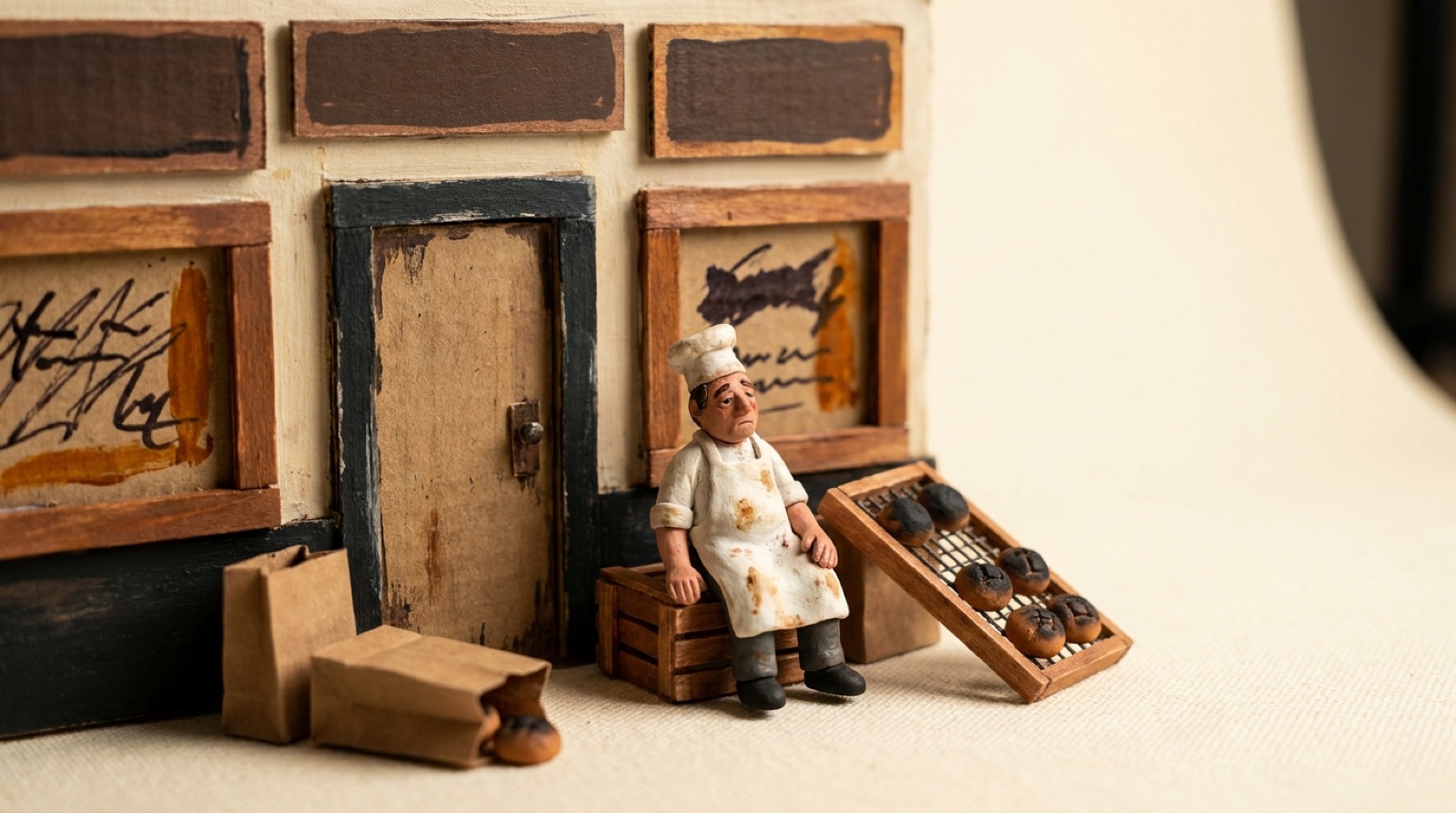
Opening a cloud kitchen is one of the most accessible ways to get into the restaurant business right now. But accessibility does not mean automatic success. These five mistakes quietly bankrupt operators who go in assuming the format will do the work for them.
Mistake 1: “Build It and They Will Come”
This is the most fundamental, most common, and most expensive mistake you can make.
You have a great recipe. You have a concept you believe in. You rent the kitchen space, list on a delivery app, and wait. Nobody comes.
Third-party apps like DoorDash, Uber Eats, and Grubhub work exactly like a search engine. If you are not showing up on the first page of results for a given category in your delivery zone, you are invisible. Think about how you use Google. When did you last scroll to page two? Most people click one of the top three or four results and move on. The same behavior happens inside every delivery app.
Before you commit to a food concept, you need to understand how customers search and buy on these platforms. Study what is already popular in your delivery area. Understand where demand already exists. Then shape your concept around that demand, not around what you personally want to cook.
Knowing your customer profile before you spend a dollar is not optional. It is the whole plan.
Mistake 2: Weak Management and Loose Food Systems
A cloud kitchen removes a lot of the operational weight of a traditional restaurant. You do not have a dining room to staff, a host stand to run, or tables to turn. But it does not remove the need for tight systems inside your kitchen.
The most common way this breaks operators: ingredients come through the door and do not get used fast enough. They expire. You throw them away. That is pure cost of goods walking out your back door, and it compounds fast.
The fix is to engineer your menu so ingredients overlap across dishes. If chicken is on your menu, build two or three dishes around it. That one protein gets fully utilized before it turns. Less spoilage means lower cost of goods sold, which means more margin in your pocket.
The deeper reason to build systems is not just food cost. It is freedom. When you have documented processes, you can put a staff member in your position. You stop working in the business flipping every order yourself and start working on the business, handling marketing, planning, and growth. That is what being a real operator looks like.
Mistake 3: Too Many Items on Your Menu
Decision paralysis is real, and it destroys conversion.
Operators think giving customers more choices is a service. It is not. When someone opens a delivery app hungry and sees 25 menu items, they feel overwhelmed. They close your listing and order from somewhere simpler. You just lost a sale to a shorter menu.
Cap your menu at 10 items. Five to ten is the right range. A tighter menu does three things at once: it makes ingredient planning easier, it reduces spoilage, and it forces you to keep only high-margin items.
That last point matters enormously in a cloud kitchen context. Third-party apps take 20 to 30 percent of every order. If you are selling low-margin items, you are not just breaking even on those dishes. You are losing money on every single one. Every item on your menu needs to be high-margin, easy to execute, and built from ingredients that recycle across your other dishes.
Ten items, maximum. Cut everything else.
Mistake 4: Not Knowing Your Customers
A lot of operators make food for themselves, not for the market they are operating in.
You think you make the best chicken nuggets in the city. But if chicken is not part of the culture or demographic in your delivery zone, you are selling to a market that does not want what you have. The food quality is irrelevant if the demand is not there.
Research what is already selling well around you. Look at what restaurants in your area are popular, what cuisines are doing volume, and what people are already ordering. Then bring your own twist to a concept that has proven demand. Rebel is a good example of a company that does this rigorously. They analyze which restaurant concepts are already popular in a given area and launch cloud kitchen concepts based on that existing demand before they ever open.
You do not have to be first with an idea. You have to serve what people in your specific area actually want.
Mistake 5: Relying Entirely on Third-Party Apps for Marketing
This is the mistake that operators make when things are going well, and it is the one that eventually puts them out of business.
Third-party apps bring real traffic. It feels comfortable. It feels safe. So you stop thinking about any other channel. Then one day the platform changes its algorithm, raises its commission rate, or removes your listing entirely. Everything you built, every bit of brand recognition and customer loyalty, disappears with it. You never owned any of it.
You need to own your customer relationships. Start building alternative acquisition channels from day one.
An insert card in every delivery order is one of the simplest tools available. Include an incentive. Offer a free appetizer, a recipe, or entry into a loyalty program in exchange for an email sign-up. That email address is yours. No platform can take it from you.
If you have the volume to support it, a branded app gives you even more control. You capture customer data directly, you can market to repeat buyers without paying a platform fee, and you build loyalty that lives outside the apps.
The rule here is simple: never let any single channel control your entire customer base. The third-party apps charge 20 to 30 percent per order and they hold your distribution. If you do not diversify, they hold your entire business.
What Does It Cost to Open a Cloud Kitchen in 2026?
If you are in the planning stage, here are current US ranges to build into your model. The typical cost to open a cloud or ghost kitchen runs around $208,000, with a realistic range of $156,000 to $260,000 depending on your market and buildout. Before you sign any lease, you should have roughly 1.4 times that figure in available cash, which puts your pre-signing target at around $291,000. A reasonable break-even benchmark is about 20 customers per day at a $22 average ticket. These are planning ranges as of 2026, not guarantees, but they give you a concrete number to work backward from.
The Bottom Line
Cloud kitchens are not a shortcut. They reduce certain costs and complexities, but they do not remove the need for real operator discipline. Know your customer before you choose your concept, keep your menu tight, build systems that run without you, and own your marketing channels instead of renting them from a platform. The operators who survive long-term are the ones who treat the delivery apps as one tool among many, not as the whole business.
Watch the full video
Source — YouTube · the full breakdown, free
Tool — free · not sponsored, I built it
Want your exact numbers for a cloud kitchen? The free calculator runs your cost to open, the ×1.4 cash reserve, and your break-even in about 30 seconds. Prefer paper? The Startup Budget Worksheet is the printable version.
Run your numbers →Questions owners actually ask
How do I market my cloud kitchen on third-party delivery apps?
Third-party apps function like search engines. If your listing does not appear near the top of results for your food category in your delivery zone, most customers will never see you. Study what concepts are already popular in your area before you commit to a food concept, so you are entering a category where demand already exists. From there, optimize your listing around the search behavior of buyers on those platforms.
What data can a virtual restaurant gather from customers if third-party apps control the data?
The apps own the transaction data, so you need to build your own collection channels. The most practical method is an insert card in every delivery order that gives customers a reason to hand over their email address directly, such as a free appetizer, a loyalty reward, or exclusive recipes. That email list is yours and no platform can take it from you. A branded app is a further step that gives you even more direct data ownership.
Should my cloud kitchen menu have 10 items with or without modifications?
The 10-item cap refers to distinct menu items. The goal is to prevent decision paralysis for the customer and to keep your ingredient list manageable so you can recycle proteins and produce across multiple dishes. Modifications can sit within those items, but the core menu should not exceed 10 options.
How do I figure out whether a location or area fits my food concept?
Research what restaurants are already popular in that delivery zone and what cuisines are doing real volume. If demand for your category already exists in the market, your concept has a foundation to build on. If you are trying to introduce a concept with no existing demand in that area, you are spending money to educate a market rather than serve one that is ready to buy.
What licenses do you need to open a cloud kitchen in the US?
The transcript does not detail specific US license requirements, as licensing varies by city and state. At minimum, plan for a business license, a food handler or food manager certification, and a health department permit for the kitchen facility. Check with your local county health department and city business office for the exact requirements in your market.
What is the approximate cost to convert a warehouse into multiple cloud kitchens?
As of 2026, the typical cost to open a single cloud or ghost kitchen in the US is around $208,000, with a range of $156,000 to $260,000 per kitchen depending on your market and the extent of the buildout. For a multi-kitchen warehouse conversion, multiply that range by the number of kitchen units you plan to build out, and budget for shared infrastructure like ventilation, plumbing, and electrical as potential areas where per-unit costs can come down at scale.
How do I find the right location for a dark kitchen or cloud kitchen setup?
The location decision starts with your customer, not the real estate. Identify where your target demographic is ordering delivery, then find kitchen space inside that delivery radius. Third-party apps show you which areas generate the most order volume for a given food category. Choose a location where you can reach high-demand areas within a viable delivery window, since fulfillment speed directly affects your app ranking and customer satisfaction.
The Weekly Receipt
One brand story, one number, one answered question. 2 minutes, Tuesdays.
Free. Unsubscribe anytime, one click, no games.
You're in, friend. See you Tuesday.
Keep going: cloud kitchen guides
Cloud Kitchen Cost in 2026: The Full Breakdown
See the real 2026 cloud kitchen cost, $208,000 line-by-line, the cash you need before signing, and break-even
How a Tech Sales Guy Built a Profitable Automated Cloud Kitchen With Zero Food Experience
A tech sales professional built an automated mozzarella stick ghost kitchen business in NYC, hitting $3,800/mo
4 Benefits of Running Multiple Brands in One Cloud Kitchen
Running multiple brands from one cloud kitchen cuts costs, widens your audience, and lets you test new concept
Why Chicken Wings Are the Best Food Item for a Ghost Kitchen
Chicken wings offer proven demand, 60 to 70% margins, and major brand validation. Here's why they're the top f
6 Cloud Kitchen Business Models Every F&B Operator Should Know
A plain-English breakdown of the six cloud kitchen business models, from independent single-brand to hub-and-s
Cloud Kitchen Business Plan Report: 10 Must-Have Parts
A cloud kitchen business plan report needs 10 parts: concept, team, market, location, menu, design, SWOT, mark
7 Cloud Kitchen Marketing Channels You Must Master to Drive Sales
Wilson K Lee breaks down the 7 essential marketing channels every ghost kitchen operator must own, from Instag
Ghost Kitchen vs Cloud Kitchen: What's the Real Difference?
Ghost kitchen and cloud kitchen are the same delivery-only model. Wilson breaks down costs, margins, and pros/