Ice cream shop · Guide Updated August 2026
How a Philippine Coffee Cart Selling 100 Cups a Day Proves Product-Market Fit Works
A roadside coffee cart in the Philippines built to 100-plus cups a day by doing three things right: listening to customers instead of pushing what the owners wanted to sell, sourcing local ingredients to create familiarity, and selling an experience rather than just a drink. These are not coffee-specific lessons. They apply to any food business you are building right now.
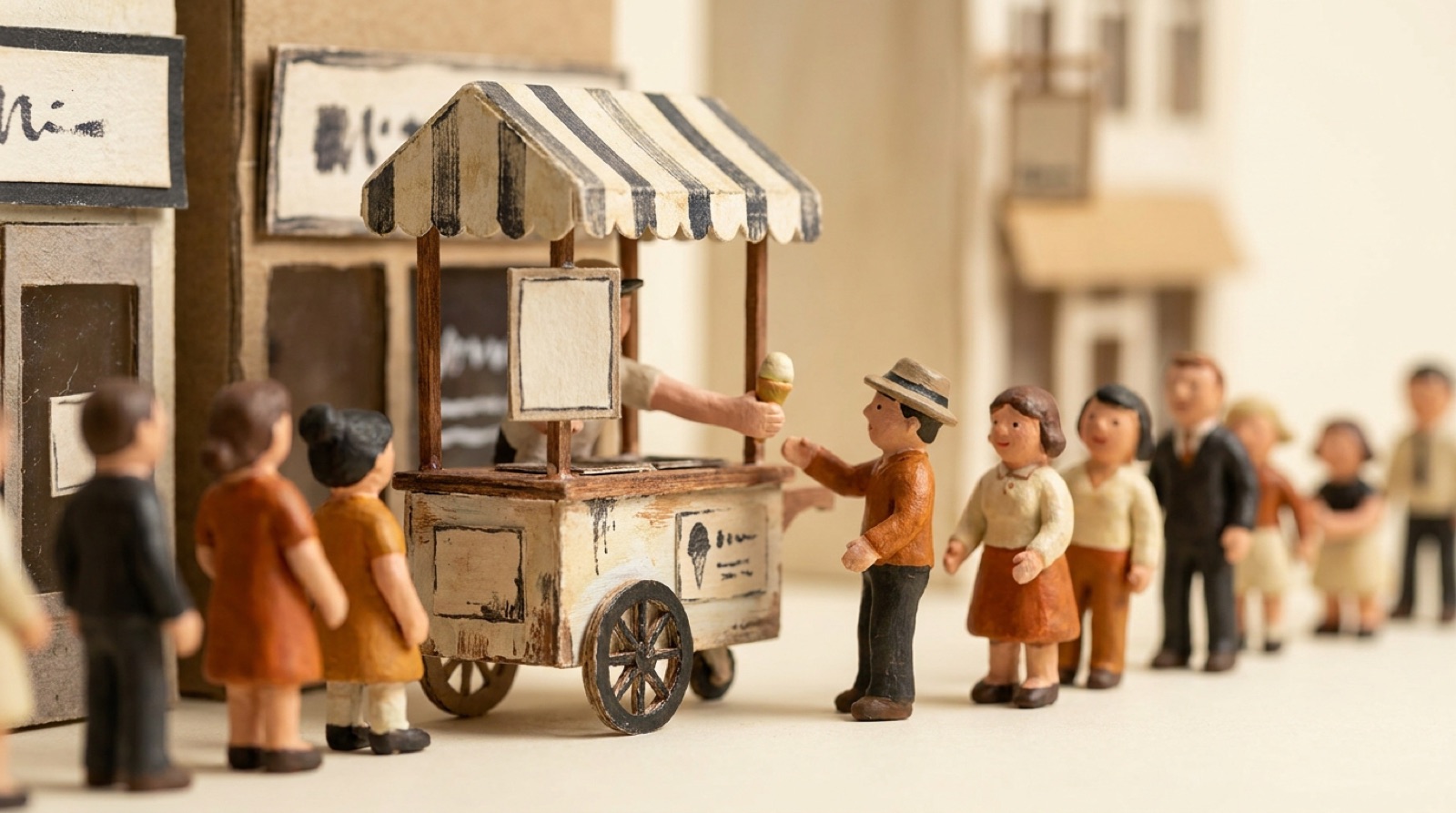
A roadside coffee cart in the Philippines went from zero to over 100 cups a day during a pandemic. No big budget. No fancy shop. Just a clear reading of what customers actually wanted. Here is what they did, and what you should take from it.
What Is Product-Market Fit, and Why Does It Decide Everything?
Product-market fit is not a startup buzzword. It is the simple truth that a business only survives if it sells what the market wants to buy, not what the owner wants to make.
Most food business owners get this backwards. They start with something they are passionate about, then push it at customers and wonder why sales are slow. The coffee cart in the Philippines did the opposite. They started by watching what customers were asking for, then built around that demand.
They found that people in their area wanted a good cup of brewed coffee. Instant coffee was already everywhere. It did not solve the problem. Brewed coffee did. So that is what they sold. That single decision is why 100 cups a day became possible.
Your own version of this: before you finalize your menu, spend time around your target customer. Watch what they order. Listen to what they complain is missing. Then build the product around that gap, not around your personal preference.
Why Sourcing Local Is a Marketing Decision, Not Just a Supply Chain One
The cart sourced its coffee beans locally, including from Batangas and northern growing regions. On the surface that sounds like a sourcing choice. It is actually a marketing choice.
When customers know the beans came from a place they recognize, something shifts. There is familiarity. There is a sense of supporting the local community. In uncertain times, people reach for what feels safe and known. Comfort and familiarity drive purchasing decisions more than most operators realize.
This matters for you regardless of what you are selling. Can you source an ingredient locally and name it on your menu or signage? If yes, do it. That story gives customers a reason to feel good about the purchase beyond the product itself.
How They Sold an Experience, Not Just a Coffee
The cart created a specific aesthetic. Minimalist setup. Natural surroundings. A visual identity that signaled a lifestyle, not just a caffeine fix.
This was not accidental. They studied what their customers were chasing. People who seek out brewed specialty coffee are often looking for a moment, a pause, a feeling that they are living well. The cart gave them that feeling. The coffee was the vehicle; the experience was the product.
This is why user-generated content worked so well for them. Customers posted photos because the setting gave them something worth sharing. And as I always say, what other people say about you carries far more weight than anything you post about yourself. UGC is not a tactic you bolt on at the end. It has to be built into the experience from the beginning.
Should You Ignore Negative Feedback to Protect Your Confidence?
No. Ignoring negative feedback is one of the costliest mistakes an operator makes.
There are two types of negative feedback. The first is noise from people who are not your customer and never will be. You can acknowledge it and move on. The second is constructive criticism from actual customers telling you something specific: the food is too salty, the wait is too long, the portion is too small. That feedback is a gift.
When I started getting feedback that I was not getting to the point fast enough in my own content, I changed. I did not defend myself. I adjusted. The same principle applies to your shop. If customers are telling you the same thing repeatedly, that is data. Analyze it. Act on it. Stubbornness is not confidence; it is just expensive.
Why the First Sale Is the Hardest One You Will Ever Make
The coffee cart started with two cups. Then ten. Then fifty. Then over a hundred a day.
That progression is the point. The hardest sale is not the hundredth cup. It is the first one. Not because of the product, but because of the mental barrier that comes with putting yourself on the field.
Most aspiring food business owners will build a website, set up social media, perfect the recipe, and tweak the branding endlessly. What they will not do is go out and charge someone money for the first time. They tell themselves the product is not ready. The real reason is simpler: if you are never on the field, you can never lose. Staying in preparation mode feels safe.
But you cannot improve a game you are not playing. That first transaction, even if it goes badly, puts you inside the real feedback loop. From that point on you can get better. Before it, you are just practicing in a vacuum.
Sell the first cup. Or the first cookie. Or the first cone. Worry about perfecting it after you have a real customer in front of you.
What Kind of Person Actually Succeeds at This?
In my experience running 720 Sweets across seven locations and working with hundreds of operators in my academy, the most committed students are not the ones with the most free time or the most money. They are the ones who have multiple jobs, a family to support, and a dream they put aside for too long.
They are committed precisely because they cannot afford not to be. They trust the process. They put in the work. They care genuinely about solving a customer’s problem rather than just making a sale. Age does not factor in. Work ethic and customer obsession do.
The coffee cart owners showed that same quality. They did not wait for perfect conditions. They started during a pandemic, when the majority of people were waiting for circumstances to improve on their own. That is the 20 percent mindset. Get on the field while others are waiting on the sidelines.
The Bottom Line
A 100-cup-a-day roadside cart in the Philippines is proof that you do not need a big space or a big budget to build a real food business. You need to start with what customers want, source with intention, build an experience worth talking about, and take the feedback seriously. Start with two cups. Get on the field. The operator maxim that holds here: you cannot improve a sale you never made.
Watch the full video
Source — YouTube · the full breakdown, free
Tool — free · not sponsored, I built it
Want your exact numbers for a ice cream shop? The free calculator runs your cost to open, the ×1.4 cash reserve, and your break-even in about 30 seconds. Prefer paper? The Startup Budget Worksheet is the printable version.
Run your numbers →Questions owners actually ask
What is product-market fit and why does it matter for a small food business?
Product-market fit means you are selling what your market actually wants to buy, not what you personally want to make. The Philippine coffee cart found that customers wanted brewed coffee, not instant, so they built around that demand. If you are not solving a real problem for a real customer, you do not have a sustainable business. Start by observing and listening to your target customer before you lock in your menu or concept.
How did the coffee cart grow from almost nothing to 100 cups a day?
They started with two cups, then scaled to ten, then fifty, then over a hundred a day. The growth came from listening to customer feedback, improving the product in response to that feedback, and building an experience that customers wanted to share. There was no single shortcut; it was incremental and driven by real-world market response.
Why is sourcing ingredients locally a smart marketing move?
Local sourcing creates familiarity and trust with customers, especially during uncertain times when people gravitate toward what feels safe and known. The coffee cart sourced beans from Batangas and other local regions, which gave customers a sense of supporting their own community. That emotional connection is part of what kept people coming back and talking about the cart.
Should a new food business owner take negative customer feedback seriously?
Yes, always. There are two kinds of negative feedback: noise from people who are not your customer, which you can filter out, and constructive criticism from real customers pointing to a specific problem. If customers are repeatedly telling you the food is too salty or the wait is too long, that is data you need to act on. Ignoring it is not confidence; it costs you repeat business.
Why do so many food business owners stall before making their first sale?
The first sale is a mental barrier more than a practical one. Many operators prepare endlessly, building websites and perfecting recipes, because staying in preparation mode means they cannot fail. But if you are never on the field, you can never improve. The coffee cart started with just two cups. Making that first sale, even imperfectly, is what puts you inside the real feedback loop where growth actually happens.
How important is user-generated content for a small food business?
It is one of the highest-value marketing tools available, and it has to be built into the experience from the start. What customers say and post about your business carries far more weight than anything you post about yourself. The coffee cart created a minimalist, visually appealing setup that gave customers something worth photographing and sharing, which drove organic awareness without paid advertising.
The Weekly Receipt
One brand story, one number, one answered question. 2 minutes, Tuesdays.
Free. Unsubscribe anytime, one click, no games.
You're in, friend. See you Tuesday.
Keep going: ice cream shop guides
How Much Does It Cost to Open an Ice Cream Shop? (2026)
Opening an ice cream shop costs $404,500 in 2026 ($303,500-$505,500 range). Wilson K Lee, who built 720 Sweets
How a Cookie Brand Sells 20,000 Cookies a Month: Key Lessons for Food Business Owners
Wilson K Lee breaks down how Bang Cookies went from a farmers market to 20,000 cookies a month. Real lessons f
How to Add $50,000 Extra Revenue to Your Ice Cream Shop
Six concrete steps to diversify your ice cream shop income by building and selling online workshops, adding up
How Two First-Time F&B Operators Built an Ice Cream Chain and Got Acquired in Five Years
Wilson K Lee and his partner Brian built 720 Sweets from one Vancouver ice cream shop to an international fran
How to Open an Ice Cream Shop: A Three-Step Framework for New Operators
Wilson K Lee breaks down the exact three-step framework he used to grow 720 Sweets from one shop to an interna
How to Write an Ice Cream Shop Business Plan
A step-by-step guide to writing an ice cream shop business plan, covering concept, target market, team, locati
How Much Does It Cost to Open an Ice Cream Shop?
A full breakdown of ice cream shop startup costs, from renovations and equipment to runway cash, based on real
Is a $12 Pint of Ice Cream Worth the Money? What F&B Operators Need to Know
Wilson K Lee breaks down why premium ice cream pints cost $12 or more, what drives ingredient costs, and what