Cloud kitchen · Guide Updated July 2026
How to Make a Cloud Kitchen Profitable: 3 Critical Elements
A cloud kitchen lives or dies on three things: pricing your menu to absorb every real cost (including third-party app commissions), marketing your brand aggressively instead of waiting for delivery apps to do it for you, and relentlessly optimizing labor and food costs around your actual peak hours. Miss any one of these and the lower rent advantage disappears fast.
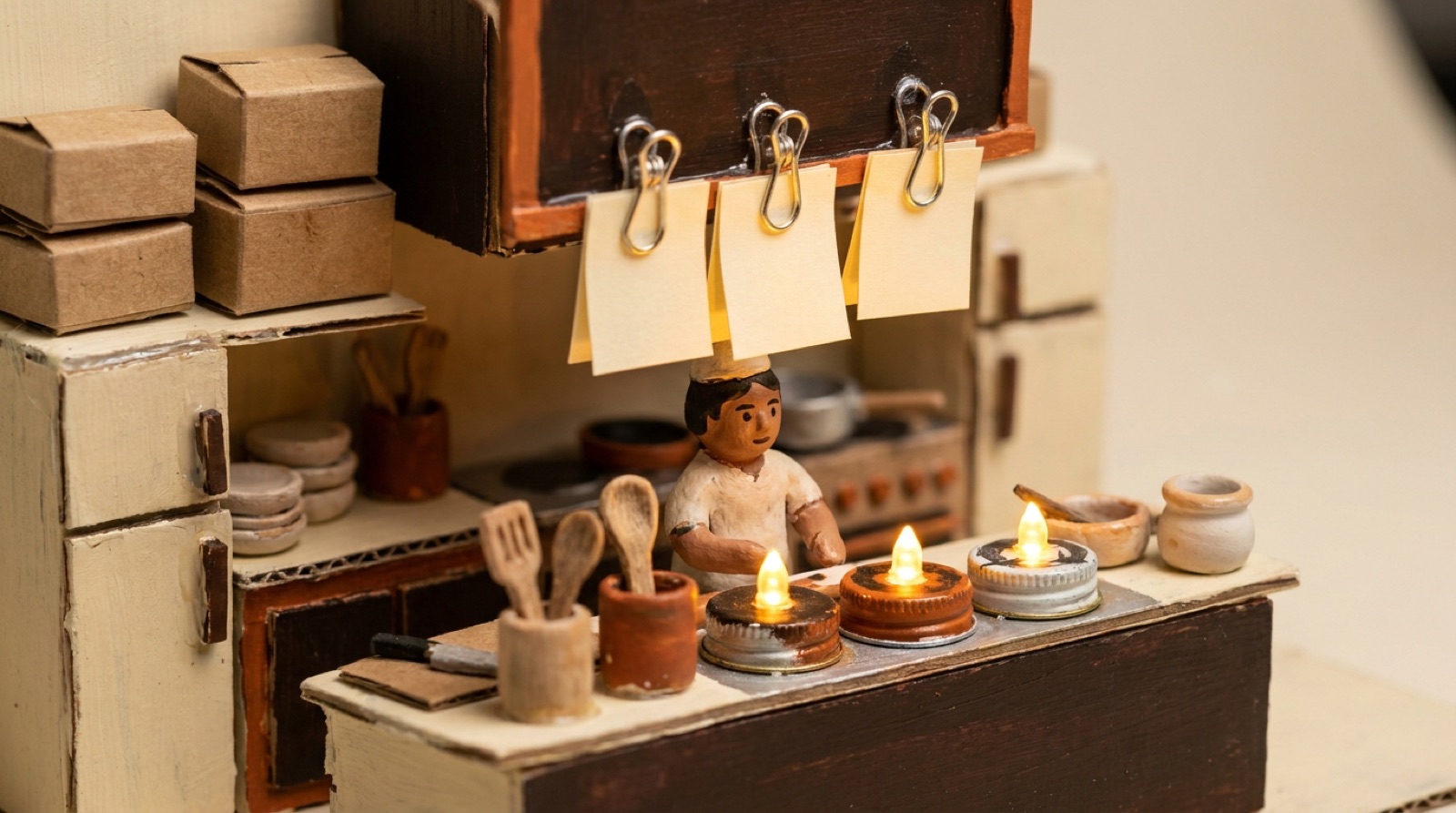
Cloud kitchens promise lower rent, lower overhead, and a fast path to profitability. That part is true. What nobody warns you about is that the lower barrier to entry also means furious competition, and if you do not manage your numbers, you will bleed out before you build an audience. Here are the three things that actually determine whether your ghost kitchen makes money.
Why Do So Many Cloud Kitchens Fail?
The pitch is simple: no dining room, no front-of-house staff, just a kitchen and a delivery app. But that low-investment story attracts everyone, which means the delivery platforms are crowded. The brands that are winning, the ones you see expanding across cities right now, are not winning because they got lucky. They know how to manage food costs, labor costs, and operational costs. That discipline is the whole game.
Opening a cloud kitchen in 2026 costs roughly $208,000 on average (planning range: $156,000 to $260,000). Before you sign a lease, you need about $291,000 in accessible cash, using a 1.4x rule to cover the unknowns. At a $22 average ticket, you need around 20 customers a day to break even. Those are the stakes. Now here is how you protect your margin.
Element 1: How Should You Price Your Cloud Kitchen Menu?
Menu pricing is the difference between profiting and bleeding out. There is no single formula, because much of this is trial and error, but there is a set of costs you must account for before you set a single price.
Third-party app commissions are never just the headline rate. A platform might quote you 20%, but your real cost includes refund processing, promotional spend, and marketing fees layered on top. That total can hit 30% or more. If you do not build that full number into your menu price, you are losing money on every order you take.
Packaging costs more than you think. Boxes, paper bags, sauce cups, they add up to $0.50 to $1.00 per order or more. If your margins are already thin, that gap closes fast. Price every item as if packaging is a line-item ingredient, because it is.
Start plain, upgrade later. When you are first proving out a concept, you do not need custom printed packaging. Denny’s launched their ghost kitchen operation in plain white boxes. Mr. Beast Burgers, built by one of the biggest creators on the internet, did not invest in custom packaging until months after launch and after proven demand. Prove the concept first, then invest in the brand experience.
Never compete on price. If a competitor is selling a burger for $10, do not undercut them to $8. You do not know their strategy. They might be profitable on other menu items. They might be running a loss-leader intentionally. When you match or beat someone else’s price without understanding your own economics, you just guaranteed yourself a loss. Price for your costs, not your competitor’s menu.
Bonus for existing restaurant operators: If you already run a kitchen, build your virtual brand around ingredients you already stock. As Joe Lye, the Chief Operating Officer at Kitchen United, put it, your new concept should be complementary to your existing operation, not a completely separate one. This alone can cut your ingredient cost dramatically.
Element 2: Why Do You Need to Market Like a Brand-New Business?
Most ghost kitchen operators assume that being listed on a delivery app is enough. It is not. Getting on a platform gets you visible to hungry people scrolling through dozens of options. It does not make you memorable, trusted, or chosen.
You need to maximize every customer touchpoint you have. That means:
- A website that is search-engine optimized, so when someone searches “best chicken wings near me” your brand actually appears.
- Active social media channels, whether that is Instagram, TikTok, or Twitter, whichever fits your product and audience.
- Influencer marketing to generate real social proof from people your target customers already follow.
- Promotions run directly inside the delivery apps to improve your ranking and visibility.
- Email capture from every customer you can reach. Email is especially powerful for a ghost kitchen because your customers have no physical location to walk past. They will forget you exist unless you remind them.
The core mindset here is this: consumers do not know what you are doing until you tell them. Your kitchen is invisible. Your brand has to do the work that a storefront window, a sign, and foot traffic would otherwise do for a traditional restaurant. That means marketing is not optional overhead. It is your visibility infrastructure.
Element 3: How Do You Optimize Labor and Food Costs?
This is where ghost kitchens get into trouble. Lower rent is real, but you are entirely dependent on delivery revenue. Third-party app commissions take 20 to 30 cents of every dollar. What is left has to cover labor and food costs. If you do not manage both tightly, the math does not work.
Staff around your real peak hours. For most food concepts, lunch and dinner are the busiest windows. Plan for roughly two hours of peak staffing at lunch and two at dinner. Load your team during those windows and you maximize output without carrying excess hours.
Cross-train your staff. During slow periods, a trained team member should be able to handle ordering, bookkeeping, or basic marketing tasks. That is not multitasking for fun. It is how you keep labor hours productive across the full shift instead of paying people to stand around.
Test before you assume anything. Here is where a lot of operators go wrong: they schedule based on assumptions instead of data. One Dog House franchisee kept hearing from customers that they wished the kitchen stayed open later. He tested it. The result was that more than 50% of his sales now come between 9 PM and 2 AM. He never would have found that by guessing.
Pull your delivery app data. Look at when orders actually come in. Look at when they slow down. Your peak hours might be completely different from what you expect, especially depending on your food category. Test, measure, adjust. Repeat that process continuously.
The Bottom Line
A cloud kitchen is not a shortcut. It is a different business model with its own set of disciplines. Price every menu item to absorb your real costs including commissions and packaging, not just food. Market your brand like nobody knows you exist, because at first, nobody does. Staff around your actual data, not your assumptions. The operators who build this the right way earn the advantage that lower overhead promises. The ones who skip these steps just pay less rent on their way out.
Watch the full video
Source — YouTube · the full breakdown, free
Tool — free · not sponsored, I built it
Want your exact numbers for a cloud kitchen? The free calculator runs your cost to open, the ×1.4 cash reserve, and your break-even in about 30 seconds. Prefer paper? The Startup Budget Worksheet is the printable version.
Run your numbers →Questions owners actually ask
What should I consider when setting up a food court model where I rent space to other vendors?
The fundamentals still apply: your tenants' success depends on the same three pillars covered here, pricing, marketing, and cost control. When evaluating vendors to rent to, look at whether they understand their food and packaging costs and whether they have a plan to market themselves. A food court full of operators who have not done that math will generate low sales volume, which hurts your occupancy and your reputation. Set clear expectations about minimum operating standards and promotional participation from day one.
What are the biggest tips for someone starting a cloud kitchen in the next few months?
Three things matter most before you open. First, map out every real cost per menu item including third-party commissions at their full rate, packaging, and labor during peak windows. Second, build your marketing channels before you launch, not after. Have your website, social media, and email capture ready on day one. Third, do not assume you know your peak hours. Start collecting order data from week one and let it tell you when to staff up and when to scale back.
How much do third-party app commissions actually cost a cloud kitchen?
Platforms typically quote 20%, but your real cost is higher once you factor in refund handling, in-app promotional fees, and marketing charges. The total can reach 30% or more per order. That is why you must price your menu with the full commission rate built in, not the headline number, otherwise you are losing money on every sale.
Do I need custom packaging when I first open a ghost kitchen?
No. Start with standard packaging and prove that customers want your product first. Denny's launched their ghost kitchen in plain white boxes, and Mr. Beast Burgers held off on custom packaging for months after launch. Once you have consistent order volume and loyal repeat customers, that is the right time to invest in branded packaging and charge accordingly.
How do I know what hours to staff my cloud kitchen?
Start with the reasonable assumption that lunch and dinner are your peaks, roughly two hours each. But treat that as a hypothesis, not a fact. Pull your actual order data weekly and look at when volume spikes and when it drops. One Dog House franchisee discovered that more than 50% of his sales came between 9 PM and 2 AM after listening to customer feedback and testing extended hours. Your data will tell you the truth faster than any assumption will.
The Weekly Receipt
One brand story, one number, one answered question. 2 minutes, Tuesdays.
Free. Unsubscribe anytime, one click, no games.
You're in, friend. See you Tuesday.
Keep going: cloud kitchen guides
Cloud Kitchen Cost in 2026: The Full Breakdown
See the real 2026 cloud kitchen cost, $208,000 line-by-line, the cash you need before signing, and break-even
How a Tech Sales Guy Built a Profitable Automated Cloud Kitchen With Zero Food Experience
A tech sales professional built an automated mozzarella stick ghost kitchen business in NYC, hitting $3,800/mo
4 Benefits of Running Multiple Brands in One Cloud Kitchen
Running multiple brands from one cloud kitchen cuts costs, widens your audience, and lets you test new concept
Why Chicken Wings Are the Best Food Item for a Ghost Kitchen
Chicken wings offer proven demand, 60 to 70% margins, and major brand validation. Here's why they're the top f
6 Cloud Kitchen Business Models Every F&B Operator Should Know
A plain-English breakdown of the six cloud kitchen business models, from independent single-brand to hub-and-s
Cloud Kitchen Business Plan Report: 10 Must-Have Parts
A cloud kitchen business plan report needs 10 parts: concept, team, market, location, menu, design, SWOT, mark
7 Cloud Kitchen Marketing Channels You Must Master to Drive Sales
Wilson K Lee breaks down the 7 essential marketing channels every ghost kitchen operator must own, from Instag
5 Cloud Kitchen Mistakes That Will Bankrupt Your Business
Wilson K Lee breaks down the 5 most common cloud kitchen mistakes that kill ghost kitchen businesses, and exac