Guide Updated August 2026
28 Food and Beverage Startup Cost Statistics for 2026
The cheapest food business to open in 2026 is a food truck at $155,000; the most expensive of the eight standard concepts is a full restaurant at $969,000, a 6.3x spread. Every concept needs 1.4 times its build cost in accessible cash before lease signing. All 28 statistics below come from Wilson K Lee's own startup-cost calculator model: standard build, mid-size US market, 2026 planning ranges.

Every number on this page is a 2026 planning figure for a standard build in a mid-size US market, computed from the same engine as my free startup-cost calculator. Cite any statistic on its own; each one stands alone. If you need the line-item breakdown behind a number, the complete guide for that concept has it.
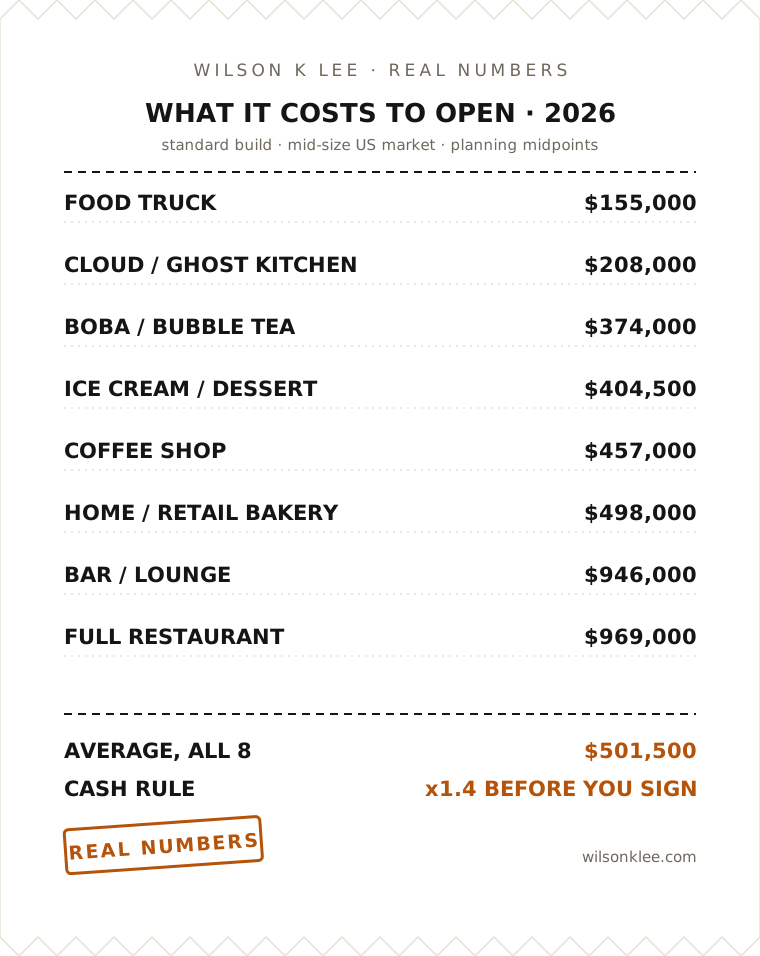
Want this chart for your own article or deck? Take it, just credit wilsonklee.com.
What does a food truck cost to start in 2026?
- Opening a standard food truck costs $155,000 in 2026 (planning band $116,500 to $194,000).
- A food truck owner needs $217,000 in accessible cash before committing (the x1.4 rule).
- A food truck breaks even at roughly 21 customers per day (about $8,800 per month) at a $14 average ticket, with a monthly fixed-cost burn of $4,700 at zero sales.
The truck build is the whole budget here. The recurring costs first-timers forget are the commissary, permits, and parking.
What does a cloud kitchen cost to start in 2026?
- Opening a standard cloud kitchen costs $208,000 in 2026 (planning band $156,000 to $260,000).
- A cloud kitchen owner needs $291,000 in accessible cash before signing (the x1.4 rule).
- A cloud kitchen breaks even at roughly 20 customers per day (about $13,200 per month) at a $22 average ticket, with a monthly fixed-cost burn of $7,000 at zero sales.
Price in the app tax from day one: delivery platforms take 20 to 30 percent of every order.
What does a boba shop cost to open in 2026?
- Opening a standard boba shop costs $374,000 in 2026 (planning band $280,500 to $467,500).
- A boba shop owner needs $523,500 in accessible cash before signing a lease (the x1.4 rule).
- A boba shop breaks even at roughly 87 customers per day (about $18,300 per month) at a $7 average ticket, with a monthly fixed-cost burn of $10,500 at zero sales.
At a $7 ticket, throughput is everything. My own shops ran two drinks a minute at peak, on systems, not talent.
What does an ice cream shop cost to open in 2026?
- Opening a standard ice cream shop costs $404,500 in 2026 (planning band $303,500 to $505,500).
- An ice cream shop owner needs $566,500 in accessible cash before signing a lease (the x1.4 rule).
- An ice cream shop breaks even at roughly 68 customers per day (about $18,400 per month) at a $9 average ticket, with a monthly fixed-cost burn of $10,500 at zero sales.
What does a coffee shop cost to open in 2026?
- Opening a standard coffee shop costs $457,000 in 2026 (planning band $343,000 to $571,500).
- A coffee shop owner needs $640,000 in accessible cash before signing a lease (the x1.4 rule).
- A coffee shop breaks even at roughly 84 customers per day (about $20,200 per month) at an $8 average ticket, with a monthly fixed-cost burn of $12,000 at zero sales.
Espresso equipment is where coffee budgets blow up: a 2-group machine, grinders, and water treatment run more than most first-timers plan for.
What does a bakery cost to open in 2026?
- Opening a standard retail bakery costs $498,000 in 2026 (planning band $373,500 to $622,500).
- A bakery owner needs $697,000 in accessible cash before signing a lease (the x1.4 rule).
- A bakery breaks even at roughly 70 customers per day (about $25,200 per month) at a $12 average ticket, with a monthly fixed-cost burn of $13,500 at zero sales.
What does a bar cost to open in 2026?
- Opening a standard bar or lounge costs $946,000 in 2026 (planning band $709,500 to $1,182,500).
- A bar owner needs $1,324,500 in accessible cash before signing a lease (the x1.4 rule).
- A bar breaks even at roughly 50 customers per day (about $42,000 per month) at a $28 average ticket, with a monthly fixed-cost burn of $24,000 at zero sales.
What does a full restaurant cost to open in 2026?
- Opening a standard full-service restaurant costs $969,000 in 2026 (planning band $727,000 to $1,211,500).
- A restaurant owner needs $1,356,500 in accessible cash before signing a lease (the x1.4 rule).
- A full restaurant breaks even at roughly 50 covers per day (about $52,500 per month) at a $35 average ticket, with a monthly fixed-cost burn of $26,000 at zero sales.
Labor is the silent killer here: full service runs the widest hours and the highest headcount of any concept.
How do the eight concepts compare?
- The cheapest way into food service in 2026 is a food truck at $155,000; the most expensive of the eight standard concepts is a full restaurant at $969,000.
- The most expensive standard concept costs 6.3x the cheapest one ($969,000 vs $155,000).
- Averaged across all eight standard concepts, opening a food business in a mid-size US market costs about $501,500 in 2026.
- Every concept needs 40% more cash than its build cost before lease signing: the x1.4 reserve covers construction overruns, permit delays, and the slow first months.
Where these numbers come from
These statistics are computed from my own startup-cost calculator model, the same engine behind the free tool at start.wilsonklee.com. They assume a standard build in a mid-size US market with 2026 pricing, and every figure is a planning range, not a quote. Your city, your deal, and your concept will move the numbers. Treat them as reference, not Bible, and run your own before you sign anything.
Tool — free · not sponsored, I built it
Want your exact numbers? The free calculator runs your cost to open, the ×1.4 cash reserve, and your break-even in about 30 seconds. Prefer paper? The Startup Budget Worksheet is the printable version.
Run your numbers →Questions owners actually ask
What is the cheapest food business to open in 2026?
A food truck is the cheapest food business to open in 2026 at $155,000 all-in, followed by a cloud kitchen at $208,000. Both skip the dining-room build-out that pushes bars and full restaurants toward $1 million.
How much does the average food business cost to open in 2026?
Averaged across the eight standard concepts, opening a food business in a mid-size US market costs about $501,500 in 2026. The range runs from $155,000 for a food truck to $969,000 for a full-service restaurant.
How much cash do you need before signing a lease for a food business?
You need 1.4 times your total opening cost in accessible cash before signing any lease. For a $457,000 coffee shop that means $640,000 within reach; for a $969,000 restaurant it means $1,356,500. The 40% buffer covers construction overruns, permit delays, and the slow first months.
How much does it cost to open a boba shop in 2026?
Opening a standard boba shop costs $374,000 in 2026, with a planning band of $280,500 to $467,500. You need $523,500 in accessible cash before signing a lease, and break-even lands at roughly 87 customers a day at a $7 average ticket.
How many customers a day does a restaurant need to break even?
A full restaurant breaks even at roughly 50 covers a day at a $35 average ticket, about $52,500 a month in revenue. A coffee shop needs about 84 customers at $8, a boba shop about 87 at $7, and a food truck about 21 at $14.
How much more expensive is a restaurant than a food truck?
A full restaurant costs 6.3 times more to open than a food truck: $969,000 versus $155,000 in 2026. The monthly fixed-cost gap is even sharper: $26,000 of burn at zero sales versus $4,700.
The Weekly Receipt
One brand story, one number, one answered question. 2 minutes, Tuesdays.
Free. Unsubscribe anytime, one click, no games.
You're in, friend. See you Tuesday.
Keep going
How Much Does a Food Truck Cost to Start? (2026)
The real cost to start a food truck in 2026, line by line, plus the cash you need up front and the traps that
Start hereHow Much Does It Cost to Open a Bakery? (2026)
Opening a bakery costs $498,000 plus $13,500 a month in fixed costs at zero sales. Here is the full breakdown.
Start hereHow Much Does It Cost to Open a Bar? (2026)
Real 2026 bar opening costs line by line: $946,000 total, the x1.4 cash rule, break-even math, and where to tr
Start hereHow Much Does It Cost to Open a Boba Tea Shop in 2026?
The real line-by-line cost to open a boba shop in 2026: $374,000 total, $523,500 cash to sign a lease, and the
Start hereHow Much Does It Cost to Open a Coffee Shop in 2026?
The real 2026 cost to open a coffee shop: $457,000 all-in, $640,000 cash before you sign, and the daily break-
Start hereHow Much Does It Cost to Open a Restaurant in 2026?
The real line-by-line cost to open a restaurant in 2026, plus the cash you need before you sign and the break-
Start hereHow Much Does It Cost to Open an Ice Cream Shop? (2026)
Opening an ice cream shop costs $404,500 in 2026 ($303,500-$505,500 range). Wilson K Lee, who built 720 Sweets
Start hereCloud Kitchen Cost in 2026: The Full Breakdown
See the real 2026 cloud kitchen cost, $208,000 line-by-line, the cash you need before signing, and break-even